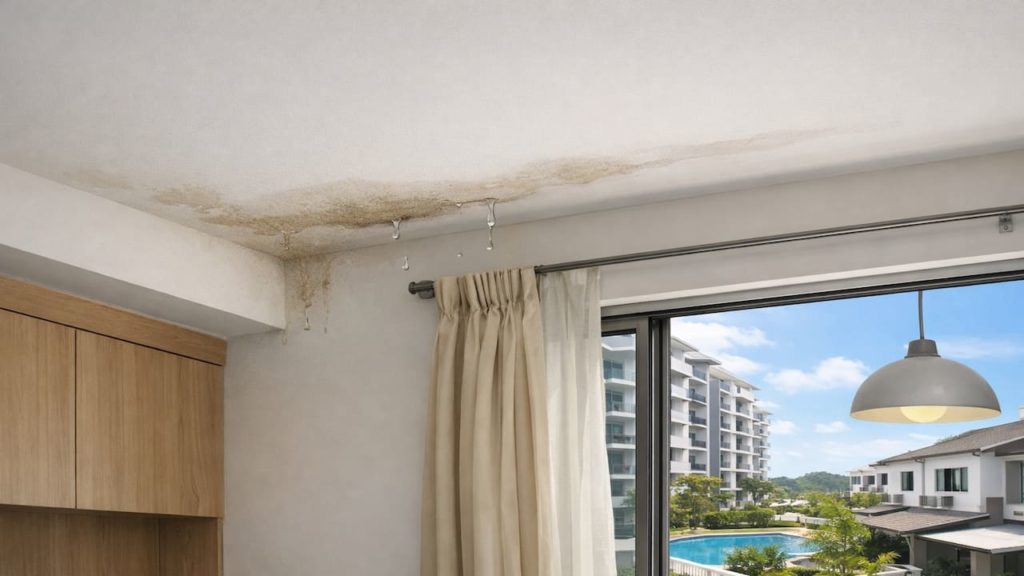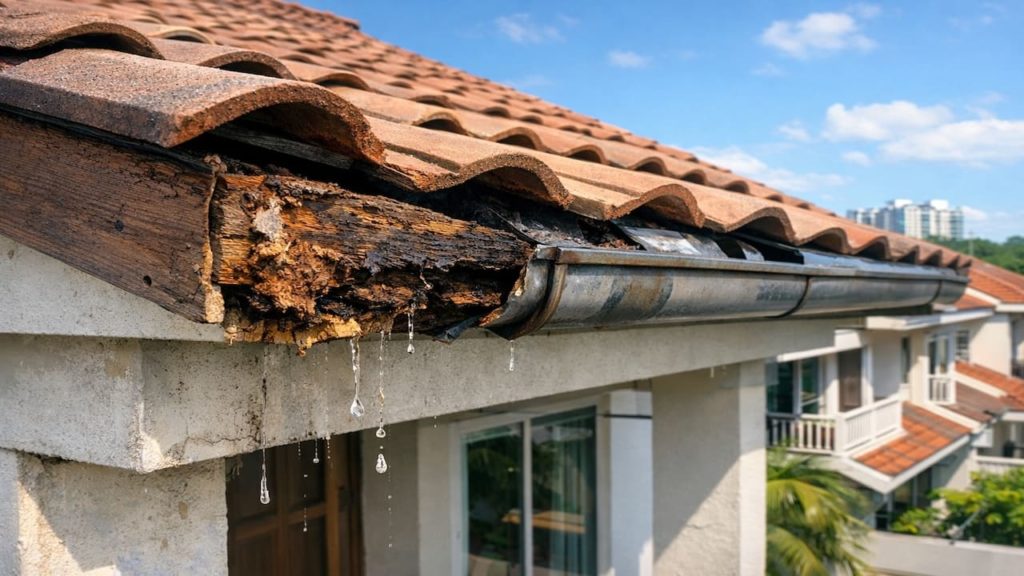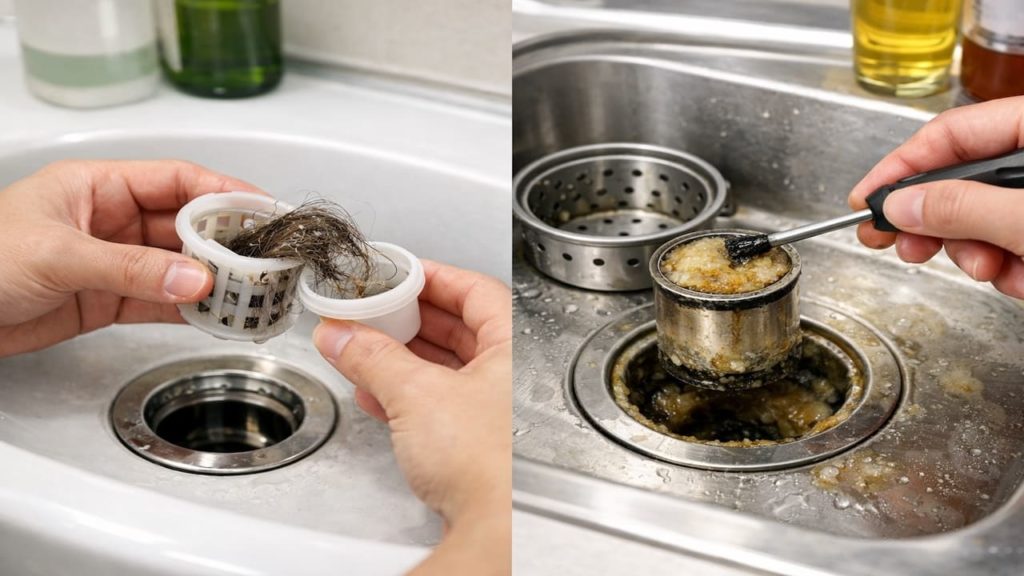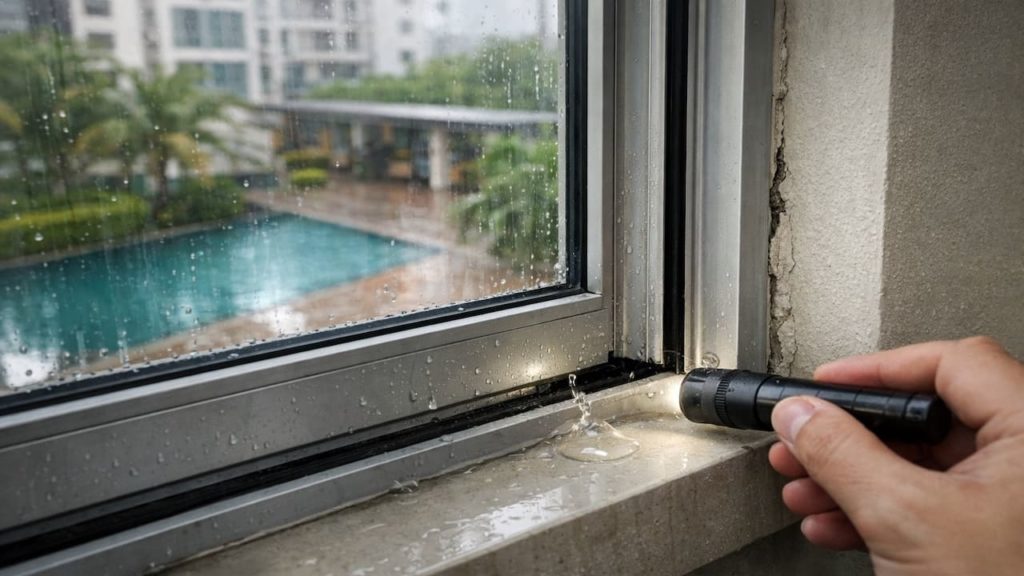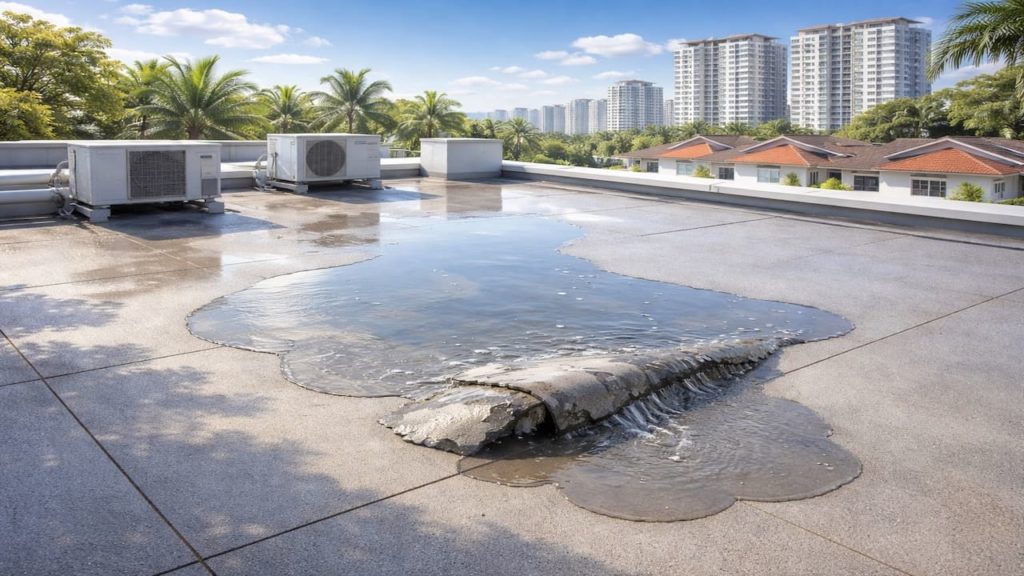
A roof leak on a flat roof feels sneaky, because the room stays dry for weeks and then the ceiling suddenly blooms after one hard Malaysian downpour.
Flat roofs fail in several ways, from tiny membrane splits to blocked scuppers, and ponding water makes even small weaknesses act big without warning.
In this guide, you’ll learn how to check flat roof leaks without guessing so you can confirm ponding, spot weak waterproofing, and protect condo top floors and terrace house extensions in humid weather.

Hi, I’m Ken. I write practical home guides for Malaysia—no fluff, just what works.
I hold a formal building design qualification and have spent about 20 years on job sites across hundreds of projects. My goal is simple: help you avoid costly mistakes with clear, safe steps—a quick way to decide what to do next.
1. Roof leak on flat roof: 5 checks
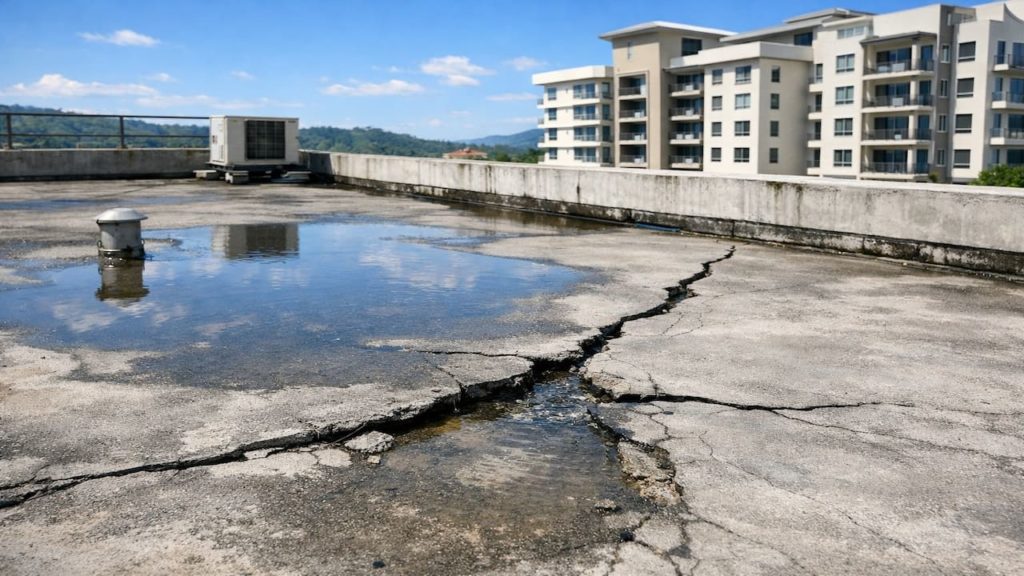
Ponding water turns small defects into leaks.
On a flat roof, water sits instead of running off—so any pinhole, blister, or joint gap gets hours of pressure during Malaysia rain and hot afternoons.
Typical.
- Mark ponding zones after rainfall dries
- Check scupper opening for leaves and sand
- Inspect membrane seams at wall upturns
- Press blistered areas for trapped water
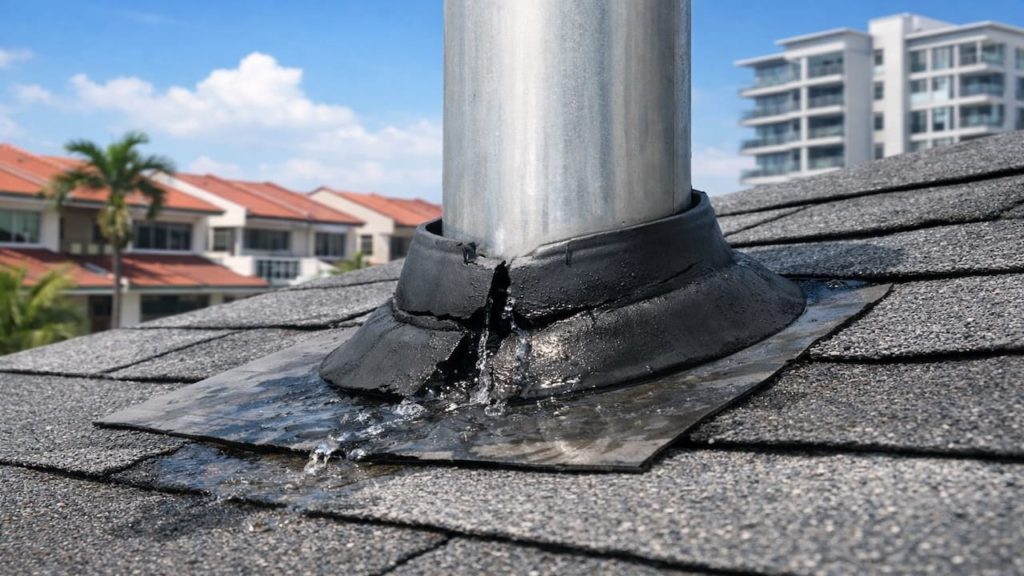
- Look for cracks around pipe penetrations
You may think a flat roof is “sealed everywhere” so a leak must be from the wall or window, not the roof.
But standing water amplifies tiny weaknesses, so start with the flat roof checks and confirm the true entry point.
2. Ponding water finds weak waterproofing
Standing water exposes weak waterproofing fast.
When water ponds, it slowly works under laps and into hairline splits—then the first sunny afternoon bakes it and pushes it deeper.
Slow torture.
- Check low spots with a straight edge
- Inspect parapet base for wet tide marks
- Look for algae lines showing long ponding
- Test outlet flow with a bucket pour
- Scan edges for lifted termination strips
Some homeowners accept ponding as normal because the roof is “flat anyway,” and small puddles look harmless.
But ponding is a time multiplier, so reduce standing water and repair weak waterproofing before the next storm.
3. Why flat roofs leak in Malaysia: heat cycles and joints
Heat cycles pull joints apart over time.
Malaysia roofs get hot, then cool in sudden rain, and that expansion and contraction stresses seams, corners, and upturns more than the open field.
Physics.
- Inspect corner fillets for separation lines
- Check flashing chase for cracked sealant
- Look for membrane wrinkles near parapets
- Check tile skirting for loose grout gaps
- Inspect rain head box for overflow stains
People often blame “old age” and stop there, which feels true but does not help you fix anything.
Age matters, but joints fail first, so focus on seams and corners and you find the leak faster.
4. How to stop a flat roof leak: isolate and repair the right zone
Isolate the leak zone before any coating work.
Start with safe indoor protection, then test the roof in zones—because blanket coating on a wet roof can trap moisture in Malaysia humidity.
Evidence first.
- Turn off nearby light circuit at DB
- Cover furniture with plastic and towels
- Map drip timing against rain intensity
- Hose test one zone for 15 minutes
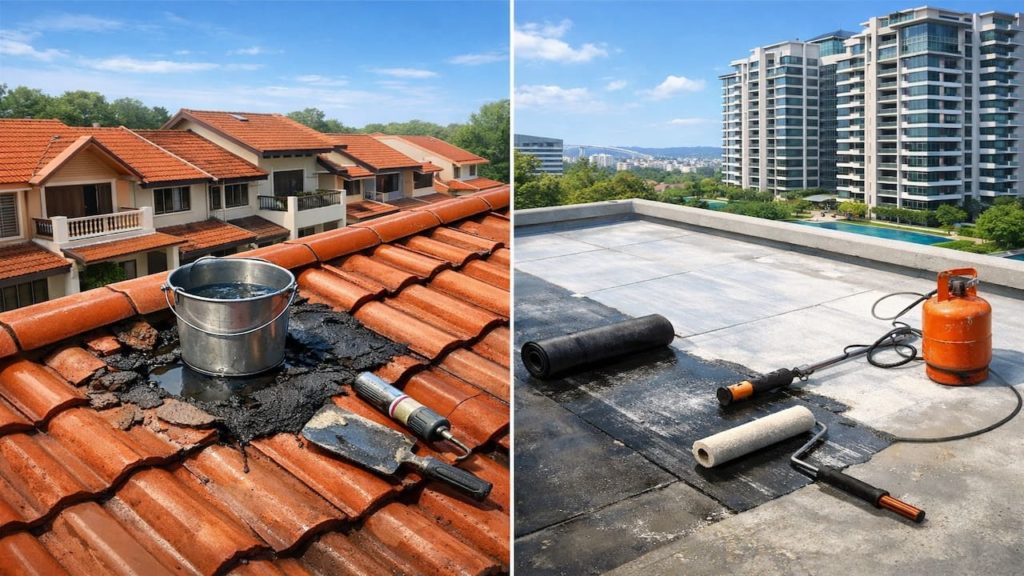
- Patch seam defects with compatible membrane repair
Some contractors suggest coating everything in one visit because it looks clean and sounds decisive.
But if you coat over ponding and loose seams, it fails again, so isolate the zone, fix the joint details, and then consider a full system refresh.
5. FAQs
Q1. Is ponding water always a problem on flat roofs?
Small short-lived puddles can happen, but ponding that stays past a day increases leak risk. In Malaysia, repeated storms make that risk compound.
Q2. Why does the leak show far from the ponding area?
Water can travel along the slab surface or inside the ceiling void before dripping. Track the highest wet point and follow the slope direction.
Q3. Can I just add more sealant to the crack I see?
You can do a short stopgap, but it often fails if the membrane beneath is loose. Use it only after cleaning and drying, and plan a proper repair.
Q4. What is the quickest way to check if the outlet is blocked?
Pour a bucket of water at the inlet and watch if it clears fast. Slow drain means ponding will keep feeding leaks even after a patch.
Q5. When should I call a waterproofing specialist?
If leaks repeat after two storms, or if you see widespread blisters and lifted seams, call early. Waiting usually expands the repair area.
Pro’s Tough Talk

I’ve been on site for 20+ years and handled hundreds of jobs, and flat roof leaks in Malaysia are the kind that smile at you while they ruin your ceiling. You get one stain, you tell yourself it is “minor,” then the wet season laughs. That’s the usual.
Cause 1 is ponding, because the roof is not truly flat, it is a shallow bowl. Cause 2 is seam and corner fatigue, because heat cycles tug the joints like a rubber band all day. Cause 3 is blocked outlets, because leaves, sand, and bird mess love the quiet corners. The trilogy.
Step 1, protect inside first and kill power near the wet spot, because wet wiring is a surprise party nobody wants. Step 2, test in zones and take photos, because memory lies when you are stressed. Step 3, fix the detail, not the vibe, because corners and seams are the weak teeth in the zipper. Real talk.
Ponding is a leak accelerator not a harmless puddle. Don’t blame yourself, because most people never go on their roof until the ceiling tattles, and not every contractor is evil either. But the structure is cold: standing water is like a slow weight on tape, and sun after rain is like a hot iron on cheap glue, so shortcuts peel.
And the “just paint it with magic coating” guy gets a side-eye, because coatings hate wet substrate and Malaysia humidity makes drying a joke. You know the relatable moment: bucket under the drip, WhatsApp the contractor, then stare at the stain like it might apologize. Ignore it, and the roof will keep collecting trophies on your ceiling. Congrats.
Summary
Flat roof leaks usually start with ponding, weak seams, or blocked outlets, and Malaysia heat plus sudden rain makes those weaknesses show up fast.
If the leak repeats, grows, or shows new stains after each storm, treat it as a system and drainage problem, not just a single crack.
Do the outlet check and zone test today and then repair the seams and ponding cause, and if you want the next guide, read the one on leaks near aircond piping.