A roof leak DIY inspection sounds scary, because you want answers fast but you do not want to climb high in Malaysia rain and heat.
The leak could be from gutters, parapet walls, roof joints, or aircond penetrations, and indoor stains can mislead you when humidity slows drying.
In this guide, you’ll learn how to inspect a roof leak safely from low risk spots so you can gather proof, reduce damage, and plan repairs for terrace houses and condo units.

Hi, I’m Ken. I write practical home guides for Malaysia—no fluff, just what works.
I hold a formal building design qualification and have spent about 20 years on job sites across hundreds of projects. My goal is simple: help you avoid costly mistakes with clear, safe steps—a quick way to decide what to do next.
1. Roof leak DIY inspection: 5 steps
You can find the likely entry point without rooftops.
Most useful checks happen from inside the house, from windows, or from safe ground views—because Malaysia wet season makes roofs slippery and risky.
Safety first.
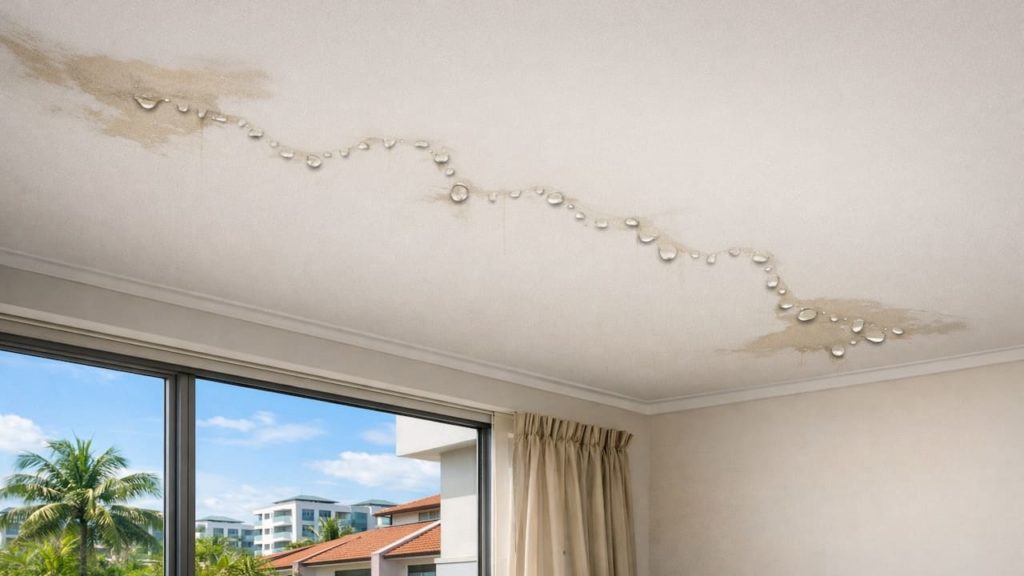
- Turn off circuit near wet ceiling area
- Mark stain edge with pencil and date
- Check drip timing during and after rain
- Inspect gutters and downpipes from ground view
- Photograph roof edges and wall joints clearly
Some people feel they must climb up to be serious, because leaks feel like a roof-only problem.
But evidence from safe spots is often enough to locate the zone and avoid a dangerous fall.
2. Check safely without climbing high
Use safe viewpoints and controlled water tests.
In Malaysia, humidity keeps surfaces slippery, so use windows, balcony edges, and long-handle tools to inspect joints, gutters, and parapets from stable ground.
Low risk method.
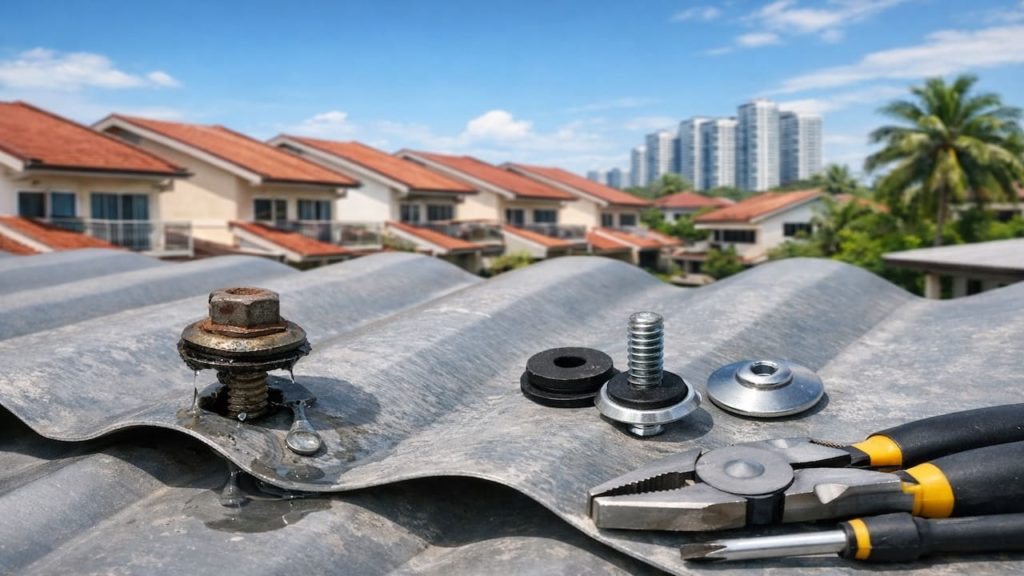
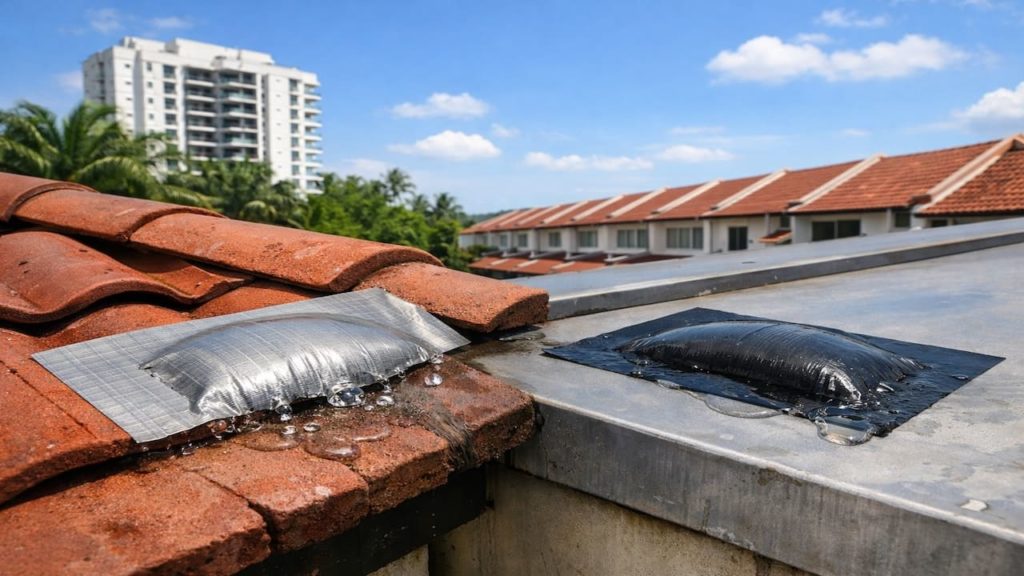
- Use binoculars to scan ridge and flashing
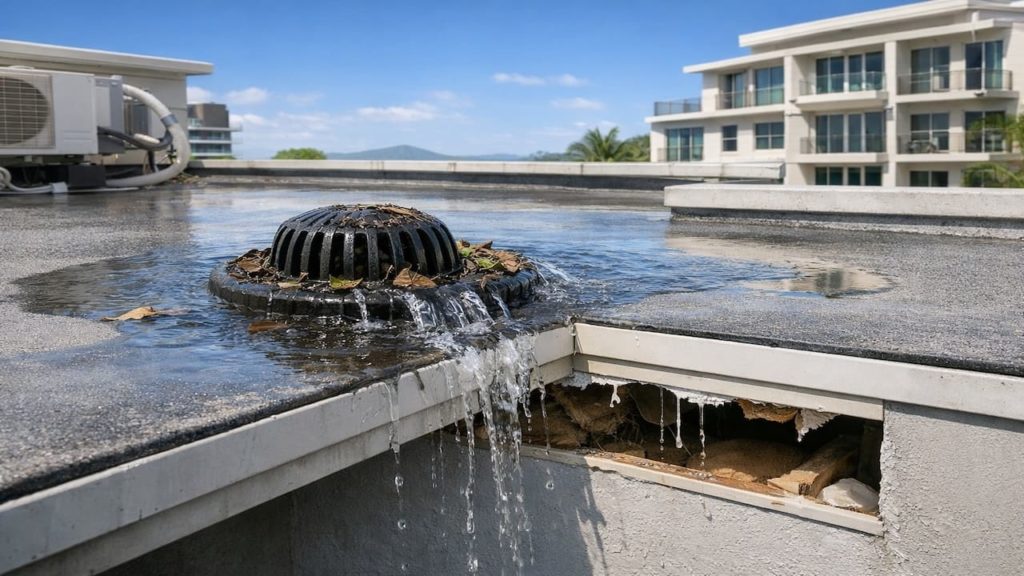
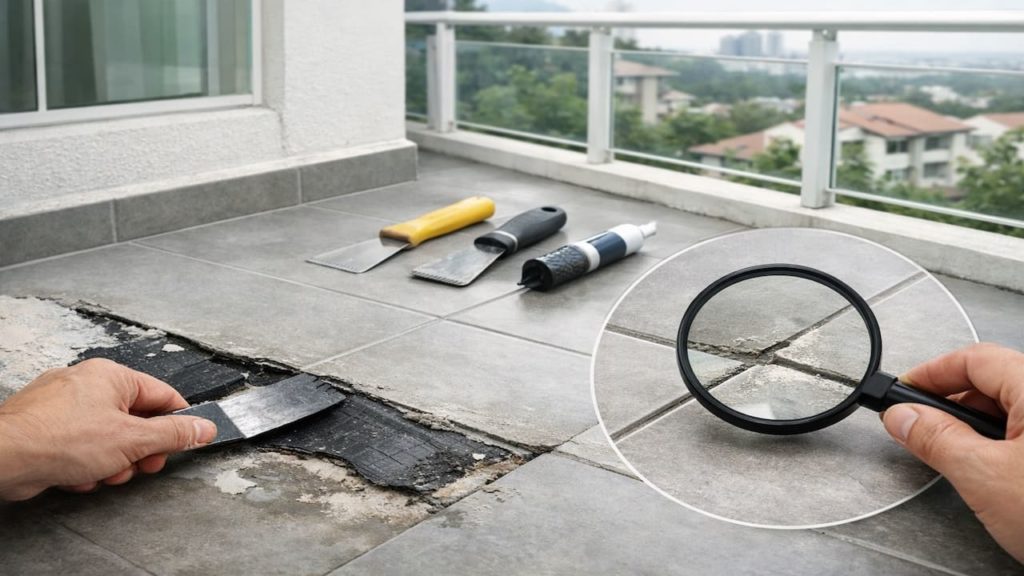
- Check parapet cracks from balcony eye level
- Look for gutter overflow stains under eaves
- Use phone zoom for joint closeups
- Hose test one roof edge zone from ground
You might think hose testing is pointless because real rain is stronger and comes with wind.
But zone testing isolates entry points, so it reduces guesswork and helps contractors fix the right detail.
3. Why DIY inspections fail: wrong assumptions and hidden paths
Indoor stains are not the same as entry points.
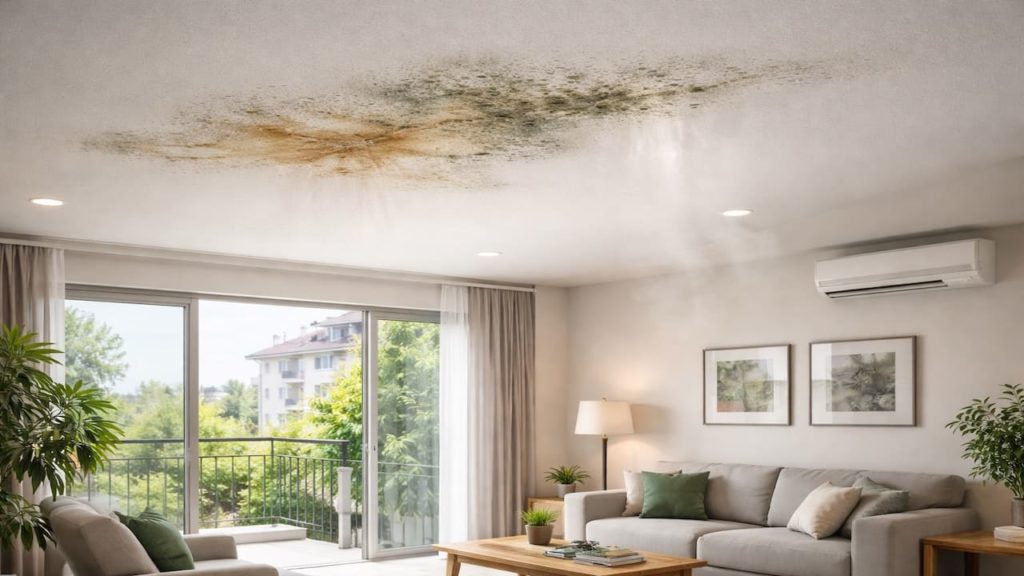
Water can travel along beams and conduits, then drip far away from the roof defect, and Malaysia humidity makes stains spread and look older fast.
Misleading trail.
- Track highest wet point not darkest stain
- Check aircond usage for condensation patterns
- Inspect corners near parapet and wall upturns
- Look for musty smell near ceiling access panel
- Note wind direction during storm if possible
People often chase the biggest stain because it looks like the main problem and it is emotionally loud.
But the entry point can be small, so follow timing and structure, then the path becomes clearer.
4. How to prep for repair visits: simple proof package
Good notes save money and reduce wrong repairs.
Contractors in Malaysia get busy during wet season, so a clean timeline and photos help them quote correctly and avoid random sealing that fails again.
Documentation matters.
- Write a drip timeline with rain start time
- Take three photos daily from same angle
- Circle suspected roof zone on a simple sketch
- Photograph gutter outlets and downpipe joints
- List past roof works and recent renovations
Some homeowners worry that notes look pushy and might annoy contractors.
But clear evidence speeds diagnosis, so it protects you from paying for broad coating when a joint detail is the real fault.
5. FAQs
Q1. What is the safest first step when I see a ceiling drip?
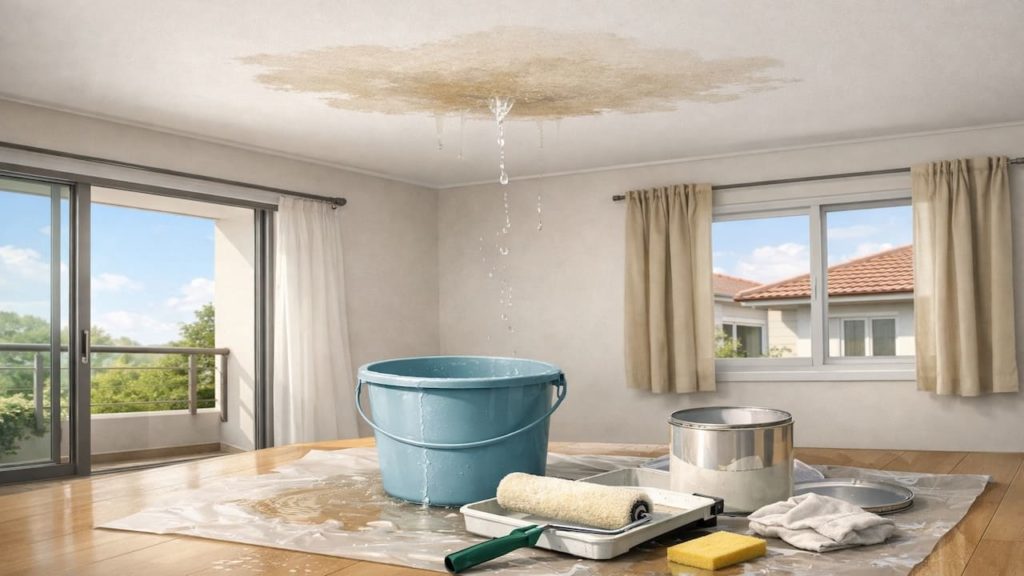
Turn off the circuit at the DB for nearby lights and fans, then place a bucket and plastic to contain the drip. In Malaysia humidity, moisture can linger near wiring.
Q2. Can I inspect the roof during rain to find the leak?
No, because wet roofs are dangerous and wind can push you off balance. Wait until rain stops and do ground or balcony checks with zoom and binoculars.
Q3. How do I know if it is aircond piping and not roof?
Turn the aircond off and watch if the drip stops, then check trunking and drain outlet flow. Condensation and drain backup can mimic rain leaks in condos.
Q4. What simple test can I do without climbing?
Use a controlled hose test on one edge zone from ground, with someone inside watching for drip timing. One zone testing beats spraying everything and keeps you safe.
Q5. When should I stop DIY and call a professional?
If the leak is near electrical points, the ceiling softens, or stains spread after each storm, call a roofer or waterproofing specialist. Safety and speed matter.
Pro’s Tough Talk

I’ve been on site for 20+ years and handled hundreds of jobs, and the biggest DIY mistake in Malaysia is climbing a wet roof like a movie hero. You slip once and the leak becomes your second problem. Hard truth.
Cause 1 is panic, so people run outside in rain and do dumb stuff. Cause 2 is chasing the stain, not the entry point, because ceilings lie. Cause 3 is thinking “more sealing” fixes everything, because it feels decisive. Same cycle.
Step 1, kill power near the wet spot and control the drip, because wet wiring is a trap. Step 2, use safe viewpoints, binoculars, and phone zoom, because height is not required for evidence. Step 3, do one-zone hose tests from ground, because proof beats guessing. Simple.
Safety beats speed every single time. Don’t blame yourself, because everyone wants the leak solved now, and not every contractor is a villain either. But the structure is cold: water moves like ants in walls, and Malaysia humidity keeps the trail alive, like a wet sponge that refuses to dry.
And the “just go up and check bro” advice gets a side-eye, because that is how people get hurt. Relatable moment 1: bucket dance at midnight. Relatable moment 2: staring at the stain and bargaining with it. Stay on the ground and let the leak be the only drama.
Summary
DIY roof leak inspection works best when you focus on safe indoor checks, drip timing, and roof edge clues you can see from ground or balcony in Malaysia conditions.
If leaks repeat or spread, use zone testing and clear documentation, and treat the entry point as the real target, not the biggest stain on the ceiling.
Turn off power and start your safe timeline today then gather photos for a cleaner repair quote, and next read the guides on wet season damage control and roof joint leaks.