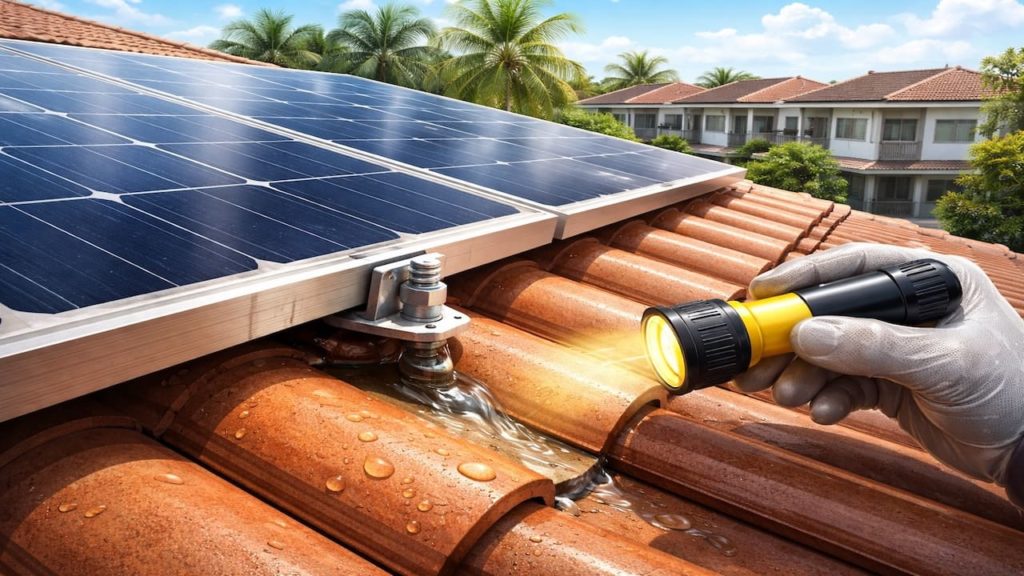
A roof leak around a solar panel feels frustrating, because you invested in savings but Malaysia rain can turn one mount point into a ceiling stain.
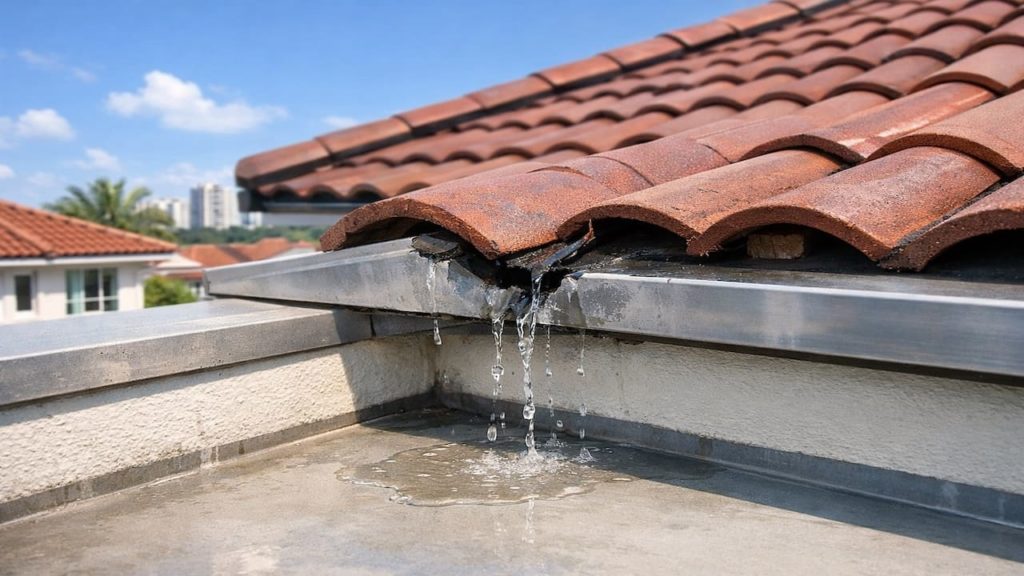
Leaks can come from mount bolts, flashing, cable penetrations, or disturbed tiles, and humid weather makes small drips spread inside roof cavities.
In this guide, you’ll learn how to check solar mount leak points safely so you can confirm the source, reduce damage, and plan the right repair for terrace houses and condo top floors.

Hi, I’m Ken. I write practical home guides for Malaysia—no fluff, just what works.
I hold a formal building design qualification and have spent about 20 years on job sites across hundreds of projects. My goal is simple: help you avoid costly mistakes with clear, safe steps—a quick way to decide what to do next.
1. Roof leak around solar panel: 5 checks
Most solar related leaks start at penetrations.
Panels add bolts and brackets, and every penetration is a risk point—especially after Malaysia heat cycles and sudden storms stress sealant and washers.
High risk zone.
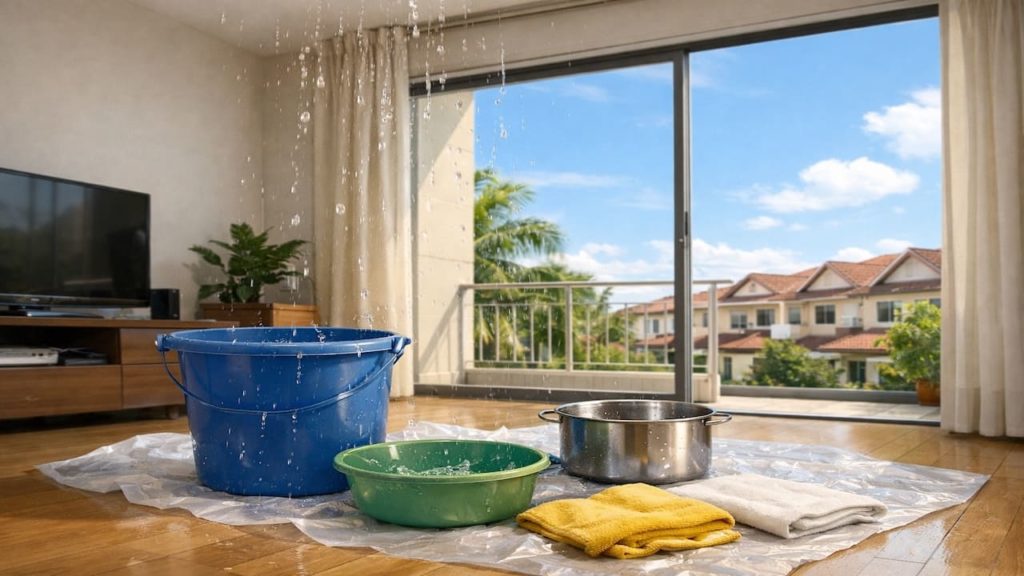
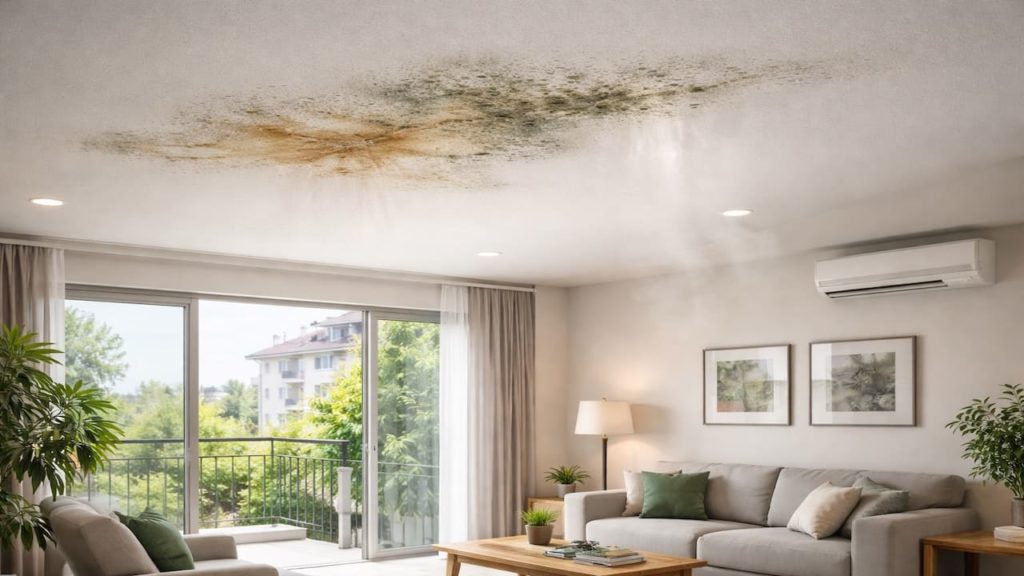
- Check ceiling stain location under panel row
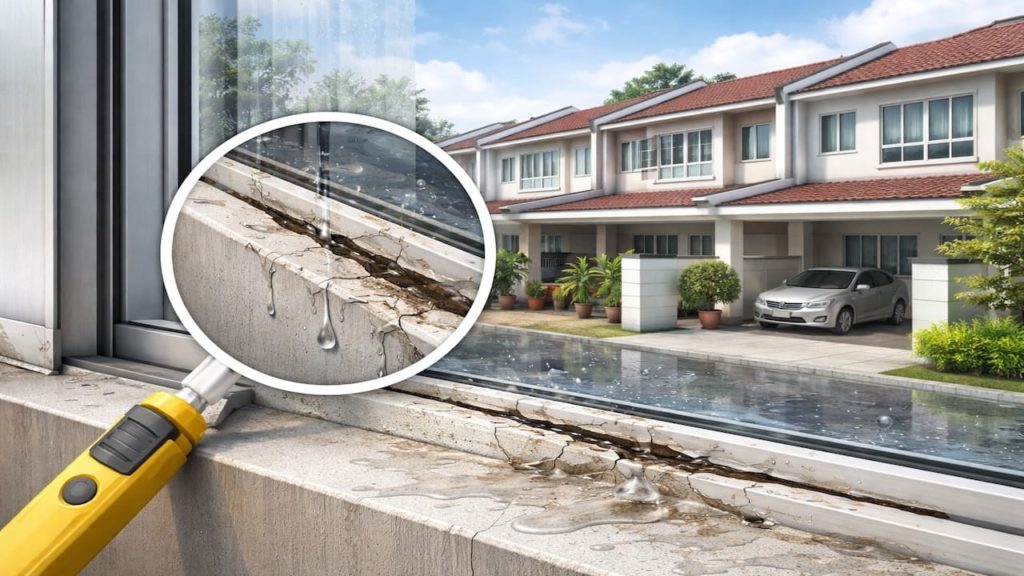
- Inspect bracket bolt areas for wet tide marks
- Look for shifted tiles around mounting feet
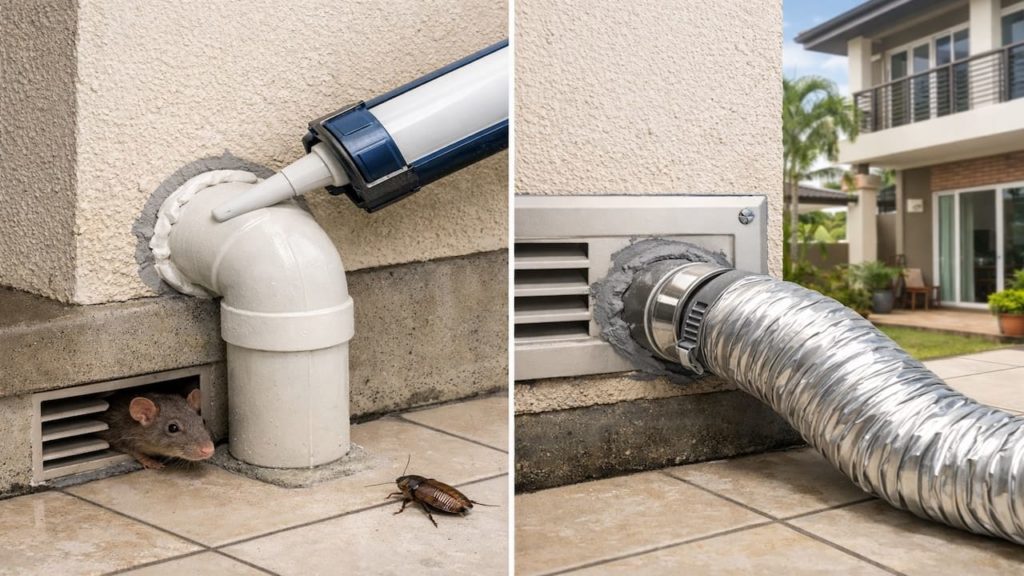
- Check cable entry point for cracked sealant
- Note leak timing during heavy rain and wind
Some people assume the panel itself is leaking like a tank, so they blame the hardware and stop thinking.
But the panel is not the roof, so focus on mount points and penetrations and you find the true entry path.
2. Mount bolts are common leak points
Mount bolts fail when seals lose compression.
Rubber washers harden, bolts loosen slightly, and sealant shrinks in Malaysia sun, then rain pushes water down the bolt path into rafters or slab edges.
Bolt funnel.
- Look for rust ring around bolt head
- Check washer condition for cracks and flattening
- Inspect sealant bead for shrink gap line
- Check bracket foot for rocking movement
- Check under tile for dampness near bolt
You might think tightening bolts hard will solve it because more force sounds safer.
But overtightening can crack tiles and squeeze out seals, so repair the seal detail and torque correctly instead.
3. Why solar panel leaks show up in Malaysia roofs
Heat and storm cycles punish roof interfaces.
Malaysia roofs heat up hard, then cool fast in rain, and that expansion and contraction stresses brackets, flashing, and cable glands more than the open roof.
Stress points.
- Inspect flashing under bracket for lifting edge
- Check tile overlap around panel edge line
- Look for cracked mortar near ridge brackets
- Check gutter overflow marks near panel downflow
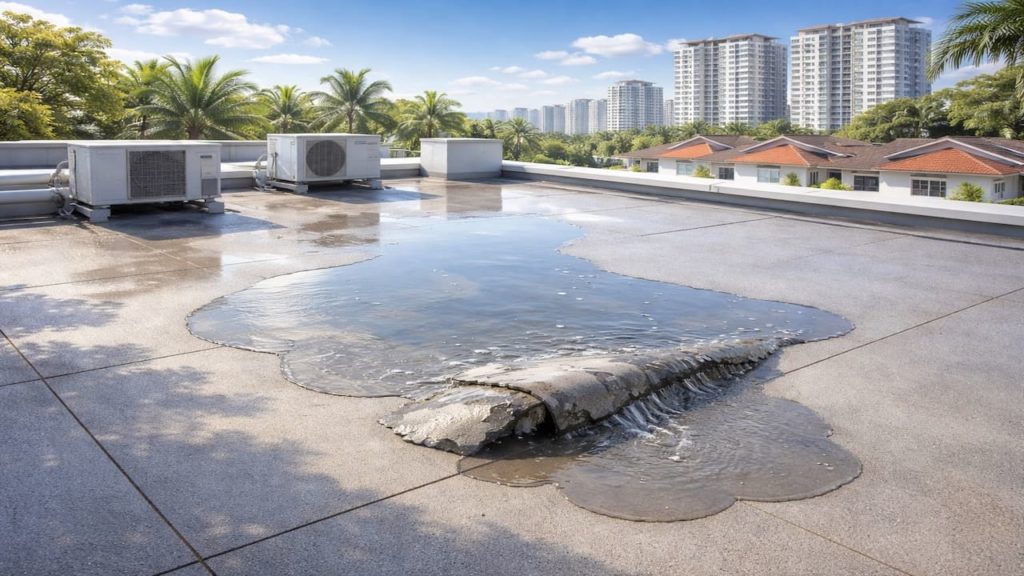
- Inspect parapet cap joints near panel area
People often blame the installer as lazy and sometimes workmanship is rough, fair.
But even good installs age in tropical conditions, so inspect maintenance items like seals, washers, and cable glands regularly.
4. How to confirm the leak source and plan repair
Use timing logs and zone tests not guesses.
Start with electrical safety, then document leak timing, and do controlled water tests from safe viewpoints, because Malaysia wet season makes roofs slippery.
Proof first.
- Turn off circuit near wet ceiling area
- Mark stain edge and take daily photos
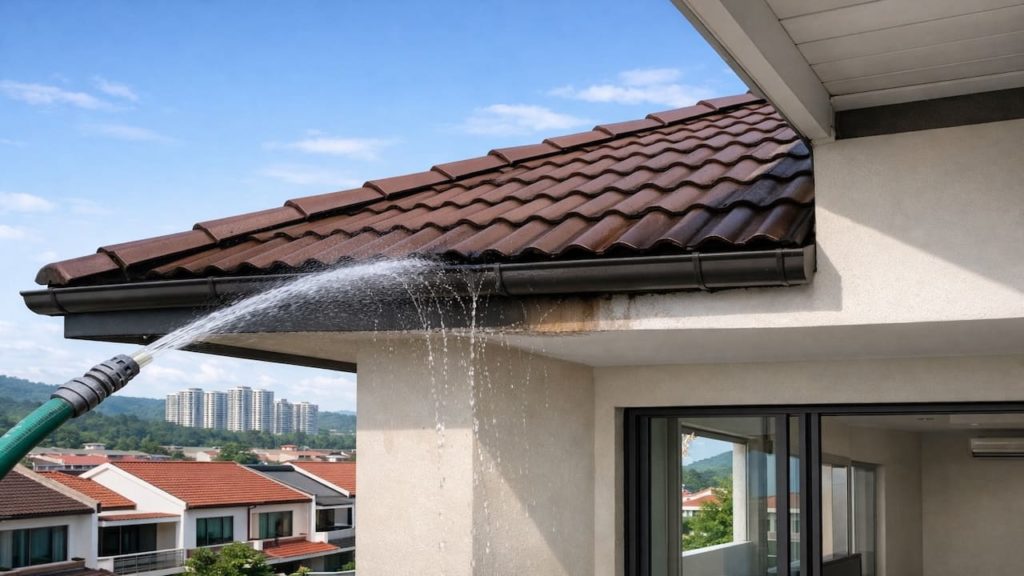
- Pause panel washing during leak investigation
- Hose test uphill of mount points in zones
- Request installer check torque and sealing kit
Some homeowners want to rip panels off immediately because they fear ongoing damage and big repair costs.
But removal is expensive and risky, so confirm the mount points first, then do targeted resealing or flashing repair with the installer.
5. FAQs
Q1. Can solar panel cleaning cause leaks?
Yes, if water is sprayed into cable entries or under lifted tiles, it can reveal weak seals. In Malaysia, repeated washing plus heat can degrade sealant faster.
Q2. Is it safe to go on the roof to check mounts?
Not during rain or when the roof is hot and slippery, and panel areas can be slick. Use ground or balcony views first and call the installer for roof access.
Q3. Why does the leak appear far from the panel area?
Water can travel along rafters, slab edges, and conduits before dripping. Map the stain to the uphill roof zone where the mount points sit.
Q4. What is the fastest clue that bolts are the issue?
Look for rust rings, flattened cracked washers, or sealant gaps around bracket feet. Bolt paths can channel rain like tiny pipes into the roof cavity.
Q5. Should I call a roofer or the solar installer first?
Call the solar installer first because they know the mount system and warranty terms. If the roof membrane or tiles are damaged beyond mounts, bring in a roofer too.
Pro’s Tough Talk

I’ve been on site for 20+ years and handled hundreds of jobs, and solar leaks in Malaysia usually come from the boring stuff, not the fancy panels. The panel is innocent, the bolt hole is the troublemaker. That’s the plot twist.
Cause 1 is mount bolts that lost seal compression, because heat cooks rubber and shrink happens. Cause 2 is tiles disturbed during install, because one shifted overlap becomes a rain door. Cause 3 is cable penetrations sealed with lazy silicone, because storms and UV peel it like cheap sticker. Three classics.
Step 1, shut off power near the wet spot and protect the room, because water near wiring is a trap. Step 2, document timing and map the stain under the panel row, because you need proof, not guesses. Step 3, get the installer to check torque and sealing kits, because they own the mount detail. Simple.
Solar leaks are almost always penetration leaks. Don’t blame yourself, because nobody buys panels to become a roof inspector, and not every installer is a villain either, tropical weather is brutal. But the structure is cold: a bolt hole is like a straw, and Malaysia rain will use it, then the ceiling spreads it like a sponge on a table. Two metaphors.
And the “just tighten everything hard bro” advice gets a side-eye, because that is how tiles crack and leaks multiply. Relatable moment 1: you stare at the inverter app while the ceiling drips. Relatable moment 2: you keep checking the stain like it might calm down. Ignore the bolts, and your roof will keep charging you for your own sunshine. Nice deal.
Summary
Roof leaks around solar panels usually come from mount bolts, washers, flashing, or cable penetrations, and Malaysia heat cycles make those interfaces fail over time.
If stains repeat during heavy rain, document timing, map the stain to the uphill panel row, and have the installer inspect seal compression and disturbed tiles.
Start your photo log and call the installer today then keep the repair targeted to the mount points, and next read the guides on roof joint leaks and parapet wall leaks.