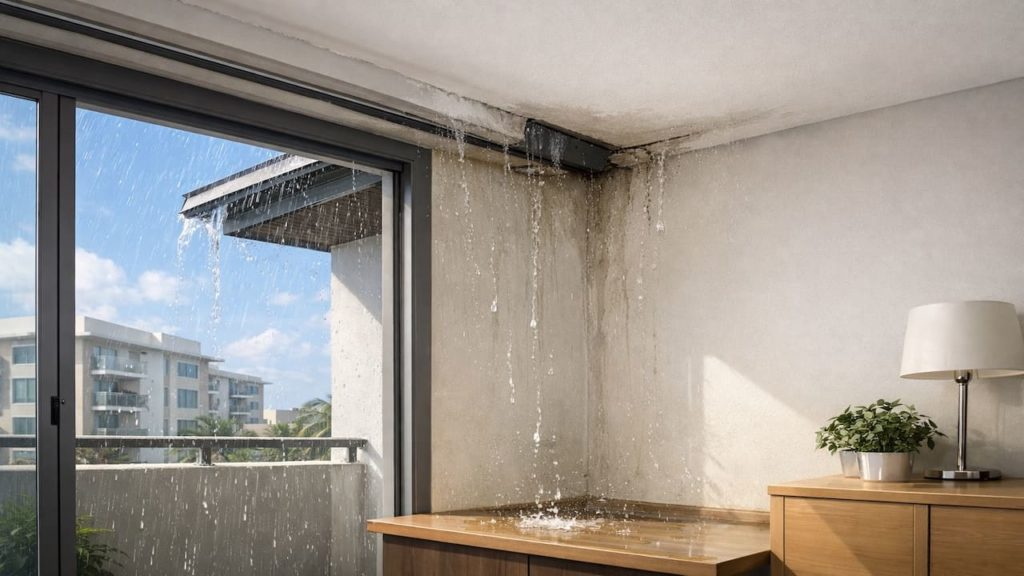
A roof leak in a corner room feels unfair, because the damage usually hits one spot hard while the rest of the house looks fine in Malaysia storms.
Corner rooms sit near roof edges, parapets, and gutters, so wind-driven rain and overflow can slip into flashing gaps that stay hidden on calm days.
In this guide, you’ll learn how to check corner room leaks from safe locations so you can trace edge flashing failure, reduce damage, and plan repairs for terrace houses and condo top floors.

Hi, I’m Ken. I write practical home guides for Malaysia—no fluff, just what works.
I hold a formal building design qualification and have spent about 20 years on job sites across hundreds of projects. My goal is simple: help you avoid costly mistakes with clear, safe steps—a quick way to decide what to do next.
1. Roof leak in corner room: 5 checks
Corner room leaks usually come from roof edges and walls.
Edges get hammered by wind-driven rain, and Malaysia wet season downpours overwhelm small gaps, so start by checking the nearest roof edge zone.
Edge problem.
- Match corner stain to nearest roof edge line
- Check ceiling corner for damp band on walls
- Inspect window top frame for water tracks
- Look for gutter overflow streaks outside corner
- Note leak timing during wind and heavy rain
Some people assume the roof must leak at the highest point above the room because that sounds logical.
But corner rooms often leak from horizontal edge details, so check edges and wall junctions first.
2. Edge flashing fails in strong rain
Flashing gaps act like funnels when wind pushes rain.
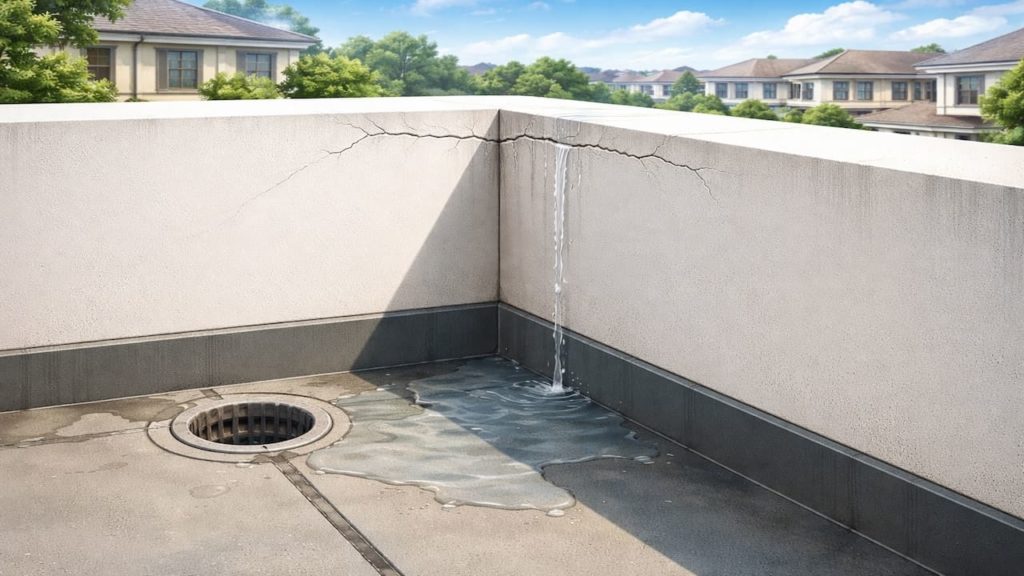
When strong rain hits sideways, water can lift under flashing ends and cap joints, then travel inside the corner wall and drip into the room.
Funnel effect.
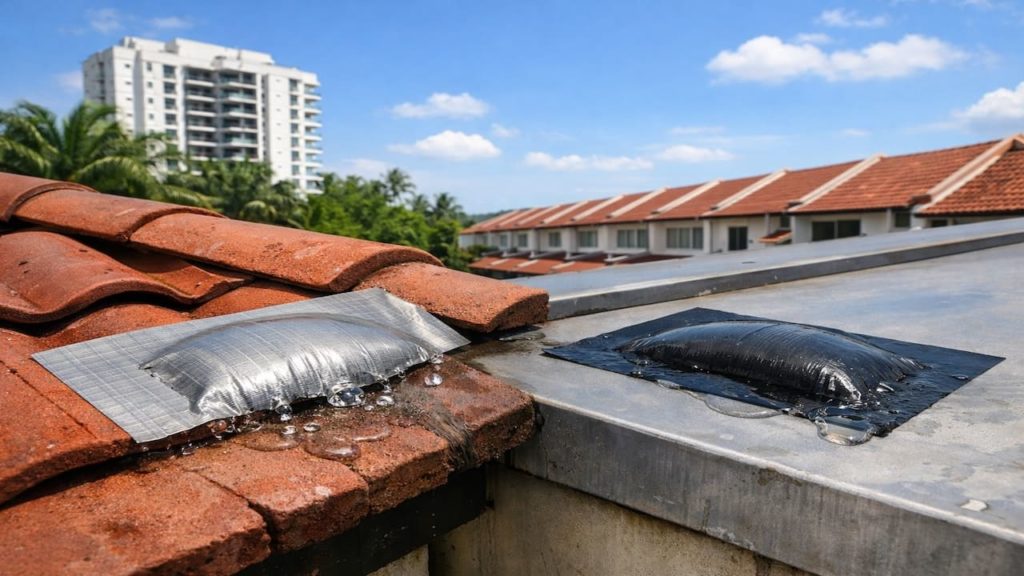
- Inspect flashing end caps for lifted edges
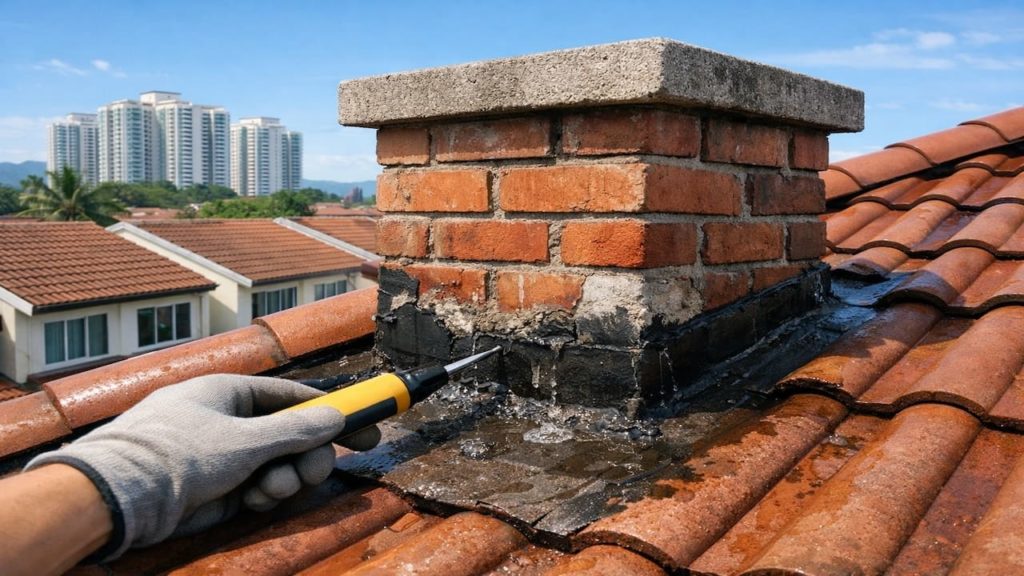
- Check sealant bead for shrink gap line
- Look for missing screws or loose fasteners
- Check parapet cap joints above the corner
- Inspect soffit and fascia corners for openings
You might think silicone on the outside will stop it because it looks like a clean line.
But if flashing is loose or gaps open under wind load, sealant alone fails, so fix the flashing fit first.
3. Why corner rooms leak more in Malaysia homes
Corners collect multiple water systems in one spot.
Gutters, downpipes, parapets, and roof edges often meet at corners, and Malaysia storms can overload drainage, so one failure feeds the same corner cavity.
Stacked risk.
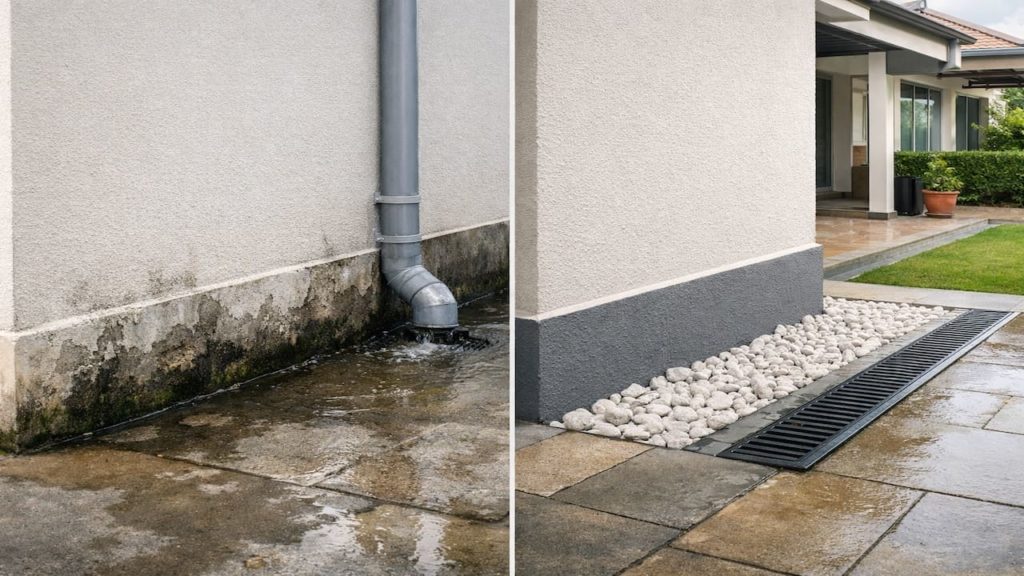
- Check downpipe connection for backflow splash
- Inspect gutter slope for ponding near corner
- Look for hairline cracks on parapet wall face
- Check roof joint lines pointing toward corner
- Inspect AC piping sleeve near corner ceiling line
People sometimes blame the window first because the leak appears near the corner wall.
Windows can leak, but roof edge failures can drip down inside the wall and look like a window issue.
4. How to test and document corner leaks safely
Use safe mapping and one-zone water testing.
Do not climb a wet roof, and instead use balcony or ground views, then test one edge zone at a time, because Malaysia wet season roofs are slippery.
Safe method.
- Turn off circuit near wet corner ceiling area
- Mark stain edge and note drip start time
- Take outside photos of corner eaves and gutter
- Hose test parapet cap and flashing ends in zones
- Keep a timeline log for each storm event
Some homeowners spray water everywhere to force a leak and it feels fast and aggressive.
But spraying everything hides the true entry zone, so isolate one detail at a time and you get a clean answer.
5. FAQs
Q1. Could a corner room leak be from the window instead of the roof?
Yes, but first confirm timing with rain direction and check roof edges above the corner. Water can enter at flashing and travel inside the wall before showing near the window.
Q2. What is the quickest clue that gutters are involved?
Overflow streaks outside the corner, water pooling near the gutter end, or drips that start during peak rainfall intensity. Malaysia downpours can overwhelm small downpipes.
Q3. How do I handle a leak if it reaches a light near the corner?
Turn off the circuit at the DB and keep it off until dry. Water near wiring is a safety issue before any roof diagnosis.
Q4. What single area should I check first for strong wind rain leaks?
Start at flashing end caps and parapet cap joints above the corner, because wind pushes water under loose edges. Edge joints fail before flat surfaces do in storms.
Q5. When should I call a professional?
If the corner wall stays damp, paint bubbles, or the leak repeats each storm, call a roofer or waterproofing specialist. Hidden wall wetting can grow mold fast.
Pro’s Tough Talk

I’ve been on site for 20+ years and handled hundreds of jobs, and corner room leaks in Malaysia are the “storm angle” special. On calm rain days, nothing happens, then one windy downpour and your corner ceiling starts acting up. Typical.
Cause 1 is edge flashing end caps lifting, so wind-driven rain sneaks under like it owns the place. Cause 2 is gutter overflow at the corner, so water runs behind fascia and into the wall. Cause 3 is parapet hairline cracks acting like funnels, feeding the same corner cavity. Three classics.
Step 1, power off near the wet corner and contain the drip, because water plus wiring is a trap. Step 2, check outside corner eaves and gutter for overflow streaks, because corners show the evidence. Step 3, test one zone at a time with a hose from safe ground, because spraying everything is just making your own rain. Fact.
Corner leaks are edge detail leaks most of the time. Don’t blame yourself, because wind-driven rain is sneaky and humidity keeps it damp, and not every contractor is a villain either, edges just age faster. But the structure is cold: water moves like ants in walls, and a corner is like a drain funnel that collects every mistake in one spot.
And the “just add silicone everywhere bro” advice gets a side-eye, because silicone on loose flashing is lipstick on a wobbly table. Relatable moment 1: you hear rain hit sideways and your stomach sinks. Relatable moment 2: you stare at the corner stain like it is plotting. Fix the edge details, or that corner will keep winning every storm.
Summary
Corner room roof leaks often come from edge flashing, parapet joints, or gutter overflow, and Malaysia wind-driven rain forces water into small edge gaps.
Trace timing with wind and heavy rain, check outside corner evidence, and isolate hose tests to flashing ends and parapet caps before doing broad sealing.
Inspect the corner eaves and log rain timing today then build a simple proof set for targeted repairs, and next read the guides on parapet wall leaks and water mark mapping.