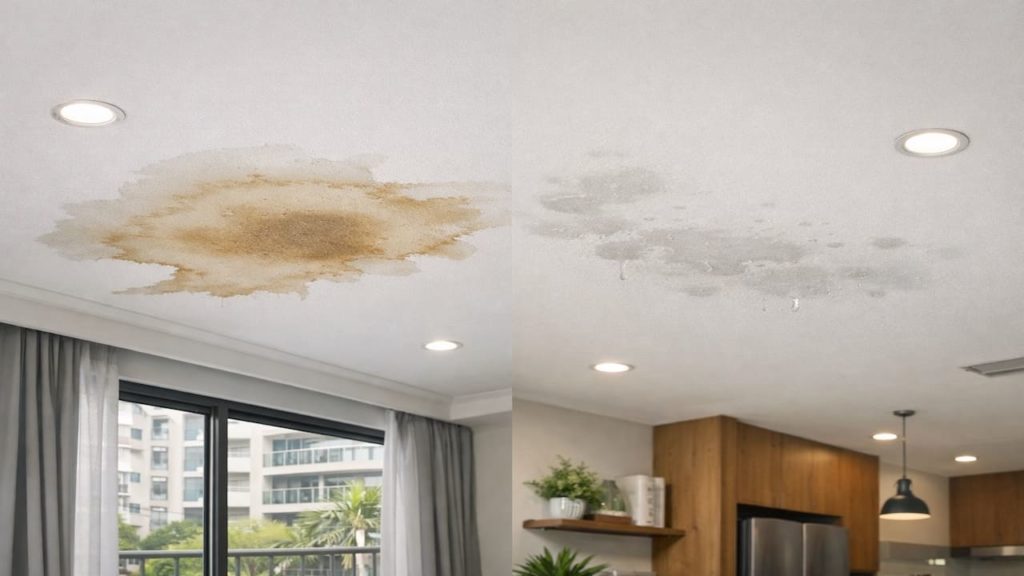
You found a brown ceiling stain and typed “repair ceiling stain” because you do not want guesswork or another surprise drip.
In Malaysia, humidity and sudden downpours make small leaks look bigger fast, especially in condos with upstairs units and terrace homes with shared roof lines.
In this guide, you’ll learn how to trace ceiling stains before repainting so you can stop the source, dry the area, and only then touch up paint with confidence.

Hi, I’m Ken. I write practical home guides for Malaysia—no fluff, just what works.
I hold a formal building design qualification and have spent about 20 years on job sites across hundreds of projects. My goal is simple: help you avoid costly mistakes with clear, safe steps—a quick way to decide what to do next.
1. Repair ceiling stain: 5 checks
Find the leak source before you touch paint.
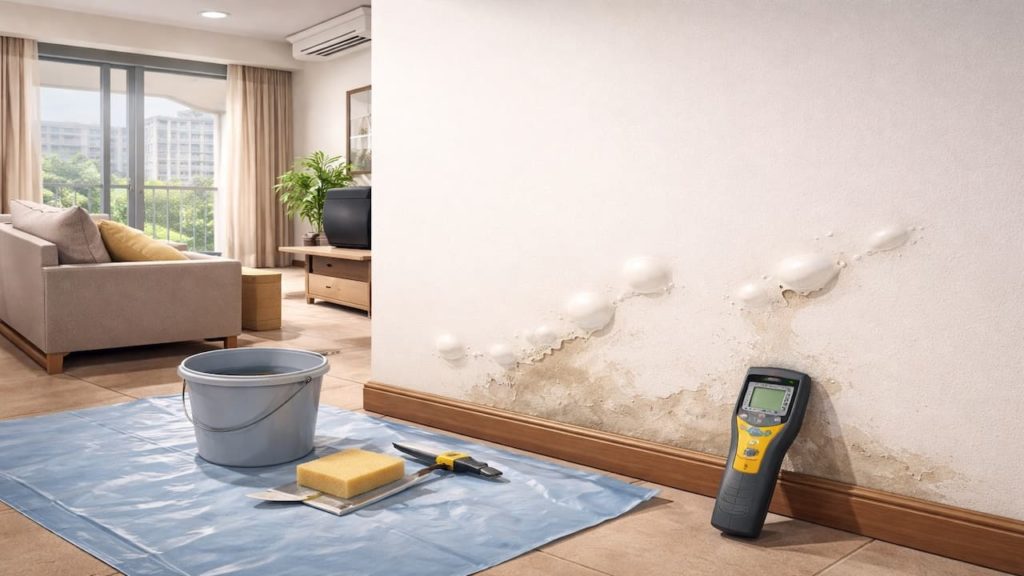
A stain is only the messenger, not the problem. In Malaysia’s damp air, trapped moisture can linger above plasterboard—then the mark keeps widening. Quick check. Start with what sits directly above the spot and what runs nearby.
- Mark stain outline with pencil on dry paint
- Check upstairs bathroom floor for wet grout
- Look at aircon drain pipe for drips
- Inspect window frame corners for rain seepage
- Smell ceiling area for musty damp odor
“It’s just old paint” is the tempting story, until the next rain or the next shower brings it back. Repainting can hide clues and delay real repair. Do the checks first, then you earn the repaint.
2. Trace leaks before repainting
Trace the water path using one variable at a time.
Water rarely falls straight down in a condo ceiling or a terrace ceiling cavity. It can travel along beams, pipes, and cable trays. That is why tracing beats repainting—paint is the final step. Simple.
- Run water 5 minutes in one fixture
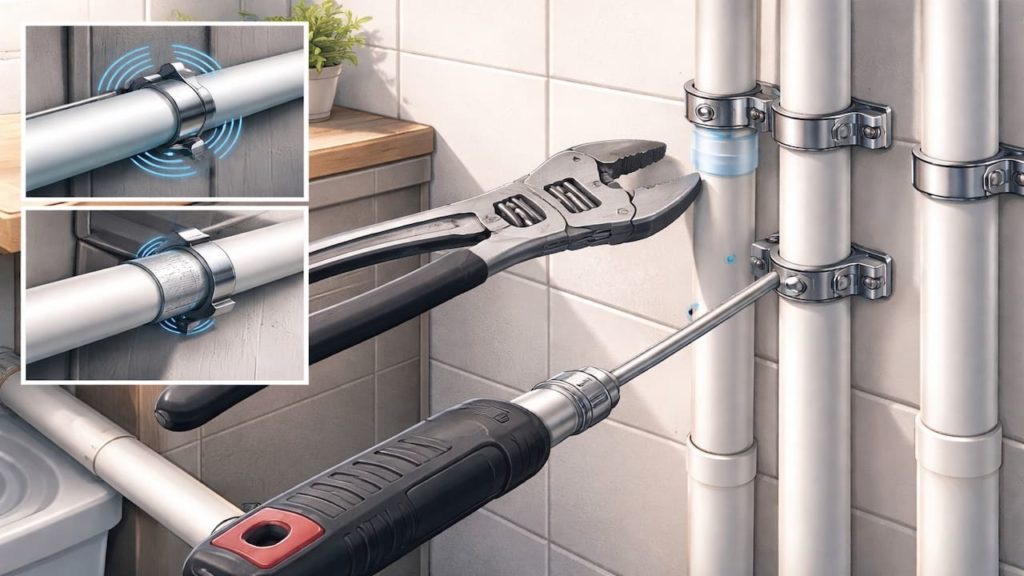
- Use tissue test under suspect pipe joints
- Watch stain edge after heavy afternoon rain
- Check roof flashing line above stain location
- Record humidity and AC runtime for patterns
Some people say “Just call a painter and finish.” Sure, a painter can make it look nicer today. But if the source is active, the stain returns and your money burns twice. Trace first, repaint once.
3. Why ceiling stains keep coming back in Malaysia homes
Humidity makes small leaks behave like big leaks.
Malaysia’s heat loads your roof, then rain cools it, then heat returns. That movement opens tiny gaps in sealant and flashing. Water can travel sideways inside ceilings before it shows up—so the source may be elsewhere. Sneaky physics.
- Assume old skim coat hides earlier water damage
- Expect roof micro cracks after hot sun cycles
- Consider upstairs plumbing pinholes under constant pressure
- Recognize AC condensate lines above living rooms
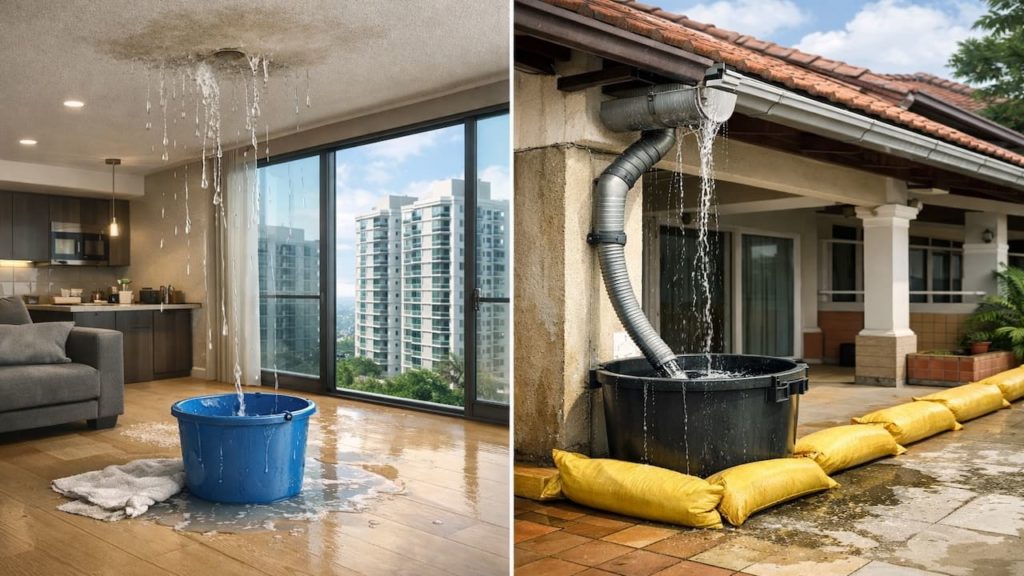
- Remember terrace gutters overflow during sudden storms
Yes, sometimes it is a one-off spill upstairs. But repeated stains usually mean an entry point that still exists. Treat the stain as evidence, not decoration. That mindset saves headaches.
4. How to repair the source and set a budget
Stop water dry the cavity then repaint with stain block.
Budget matters, because “small leak” can become “big ceiling job” if you delay. In Malaysia, a basic inspection or handyman call-out often starts around RM80–RM150, and minor leak fixes land around RM200–RM600 before parts or high-rise access fees. Numbers vary, but a range keeps you calm. A plan. Treat repair as a sequence—stop water, dry, seal, then paint.
- Call management office to confirm common area leaks
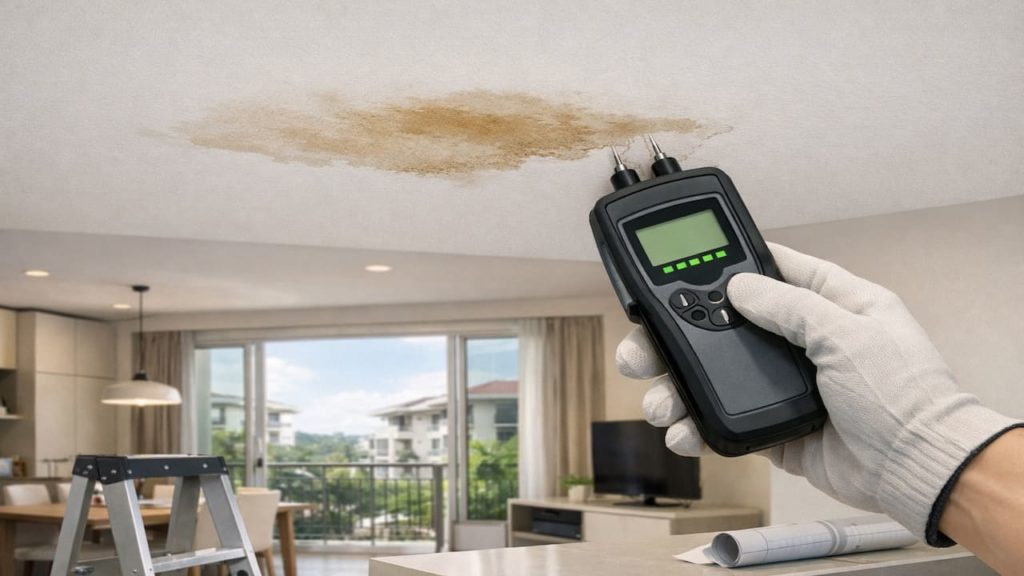
- Ask contractor for moisture meter reading before quote
- Dry ceiling cavity with fan and dehumidifier
- Seal entry point with appropriate roof or pipe sealant
- Prime stain block layer before final repaint
“I’ll wait for it to happen again” sounds practical. But in humid weather, hidden mold and softened gypsum can grow quietly. Fixing early is cheaper than replacing boards later. Act now, then repaint with peace.
5. FAQs
Q1. Can I just repaint a ceiling stain and forget it?
You can, but it rarely lasts in Malaysia’s humidity. If the source is active, the mark returns after the next rain or the next upstairs shower. Paint is not a seal.
Q2. How do I tell roof leak vs plumbing leak?
Roof leaks usually worsen after storms, while plumbing shows up after specific fixture use. Test one variable at a time and watch timing. Pattern beats guessing.
Q3. What if I live in a condo and the leak is above?
Start with your management office and document the stain with dated photos. Ask for an inspection path that includes the unit above and shared pipe shafts. Evidence makes disputes end faster.
Q4. Is a ceiling stain dangerous or just ugly?
It can be both. Persistent damp can soften plasterboard and encourage mold in warm air. Do not ignore a growing stain.
Q5. When should I replace the ceiling board instead of patching?
If the board feels spongy, crumbles, or smells musty even after drying, replacement is safer. In rainy season, delayed replacement often spreads damage. Fix once, then finish.
Pro’s Tough Talk

Listen, I’ve been on site for 20+ years and handled hundreds of jobs, and ceiling stains in Malaysia are never “just cosmetic.” Humid air is a sponge, and rain hits like a drum. You’re not crazy for worrying. Real.
Most stains come from 3 buckets. Roof and flashing gaps after heat and rain cycles. Plumbing joints or pinholes that only weep under pressure. AC condensate lines that drip when filters clog. That’s the boring truth.
Here’s the 3-step move. First, isolate one water source and test it, not everything at once. Second, open a small inspection point and dry the cavity hard with fan plus dehumidifier. Third, seal the entry point and only then patch and repaint. Do it clean.
You don’t need a miracle, you need a process. Trace it dry it seal it then repaint. And yeah, some contractors will shrug and blame “weather” like it’s a ghost. That’s the jab.
Relatable moment: you notice the stain only at night, then it “vanishes” in the morning light. Another one: you repaint, feel proud, then the next storm laughs at you. Fix the source, or keep feeding the ceiling. Your call.
Summary
Ceiling stains are evidence of moisture, not a paint problem. In Malaysia, humidity makes small leaks linger and spread, especially in condos and terrace roof lines. No mystery.
If the stain grows, smells musty, or returns after rain or specific fixture use, treat it as an active leak and budget for inspection plus a small fix first. If boards feel soft after drying, plan replacement.
Start today by tracing timing, isolating one water source, and documenting photos, then dry and seal before repainting. One careful check now beats two repaints later. If you also see peeling paint or moldy corners, read the next guide on moisture control and safe drying.