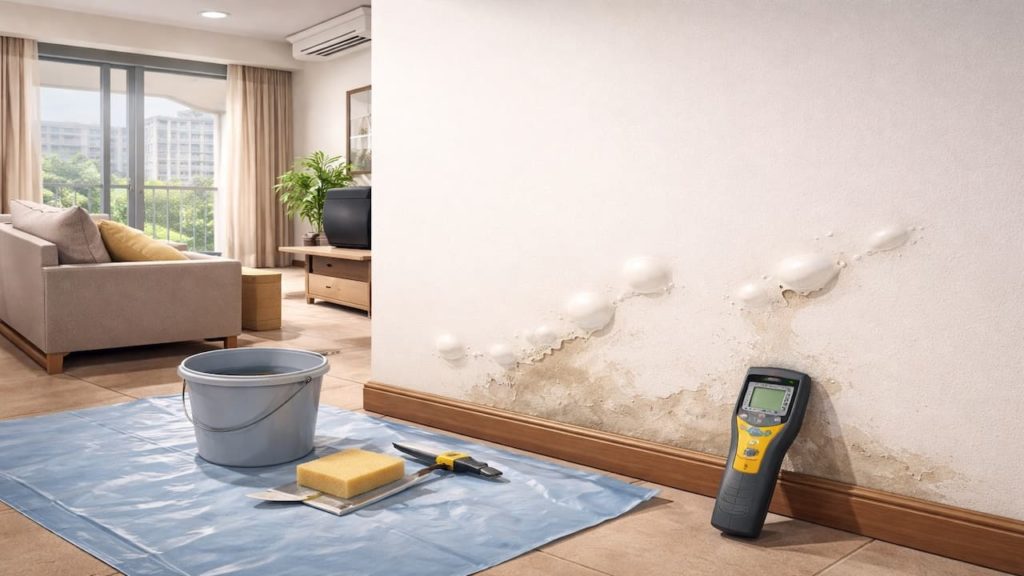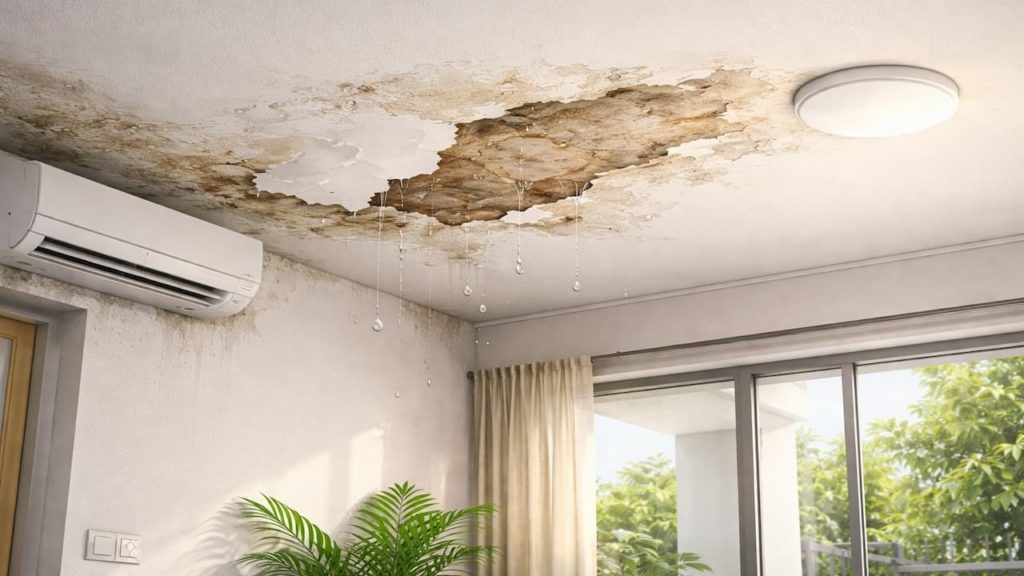
You searched “repair peeling ceiling” because paint is bubbling or flaking, and you fear it will spread across the room.
In Malaysia, humidity stays high, rainy season pushes moisture into tiny gaps, and aircon can create cold surfaces that keep ceilings damp longer.
In this guide, you’ll learn how to find hidden damp and fix ventilation before repainting so the peeling stops for good and you do not paint over a wet problem.

Hi, I’m Ken. I write practical home guides for Malaysia—no fluff, just what works.
I hold a formal building design qualification and have spent about 20 years on job sites across hundreds of projects. My goal is simple: help you avoid costly mistakes with clear, safe steps—a quick way to decide what to do next.
1. Repair peeling ceiling: 5 reasons
Peeling happens when moisture breaks paint adhesion.
Most peeling ceilings are not “bad paint,” they are wet paint layers losing grip. Malaysia heat and humidity accelerate that failure, especially in bathrooms, kitchens, and top floor rooms. Truth.
- Check if peeling worsens after heavy rain days
- Look for yellow brown stains near peeling edge
- Press area gently and feel for soft plaster
- Check AC indoor drip marks along ceiling line
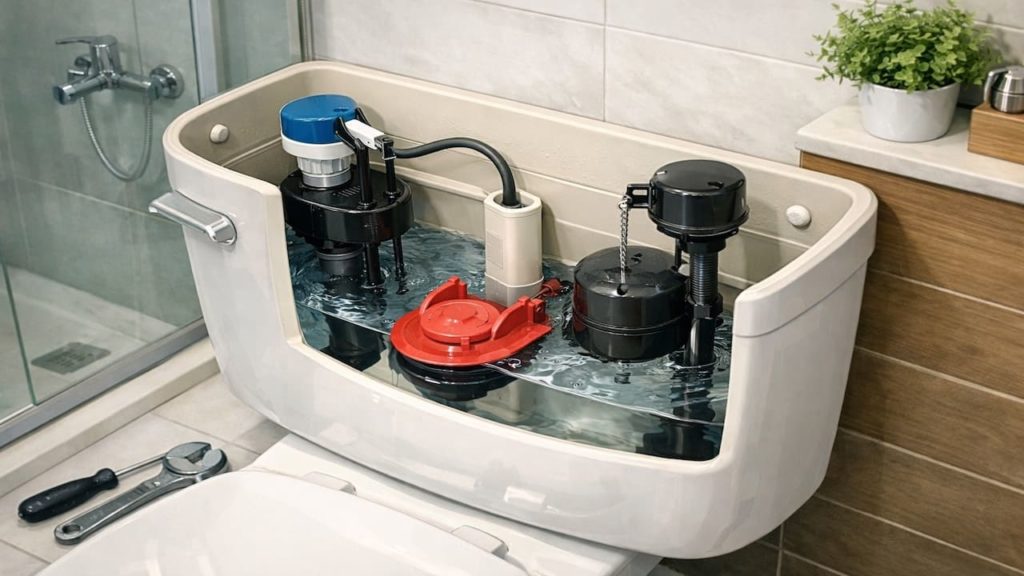
- Inspect bathroom exhaust fan performance and airflow
Some people repaint immediately to hide it. That looks good for a week, then moisture pushes through again. Fix the damp source first, then repaint once.
2. Hidden damp and poor ventilation
Ventilation failure keeps ceilings wet even without leaks.
Steam from showers and cooking rises and sits at the ceiling, then condenses on cooler surfaces. In Malaysia, that moisture has nowhere to go if ventilation is weak, so paint blisters slowly. Quiet damage.
- Run exhaust fan 20 minutes after shower
- Open door slightly to improve air exchange
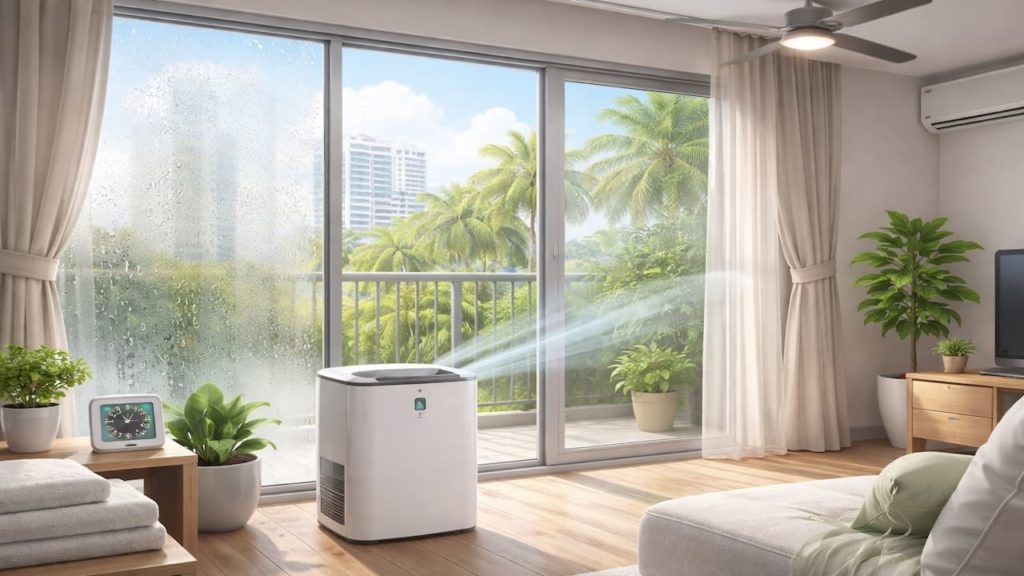
- Use dehumidifier near damp room for 2 hours
- Check fan duct outlet for blockage and dust
- Wipe ceiling corners and check for mold specks
“My bathroom has a fan so it is fine” is not always true. Fans clog, ducts detach, and airflow drops, especially in humid climates. Verify airflow with tissue test and fix the path.
3. Why ceilings peel more in Malaysia homes
Moisture sources stack and dry out slowly in humid air.
Roof seepage, plumbing leaks, condensation, and trapped steam can all feed the same ceiling zone. In condos, leaks can travel from above units, while terrace homes can get roof flashing issues during storms. Malaysia makes drying slow. Reality.
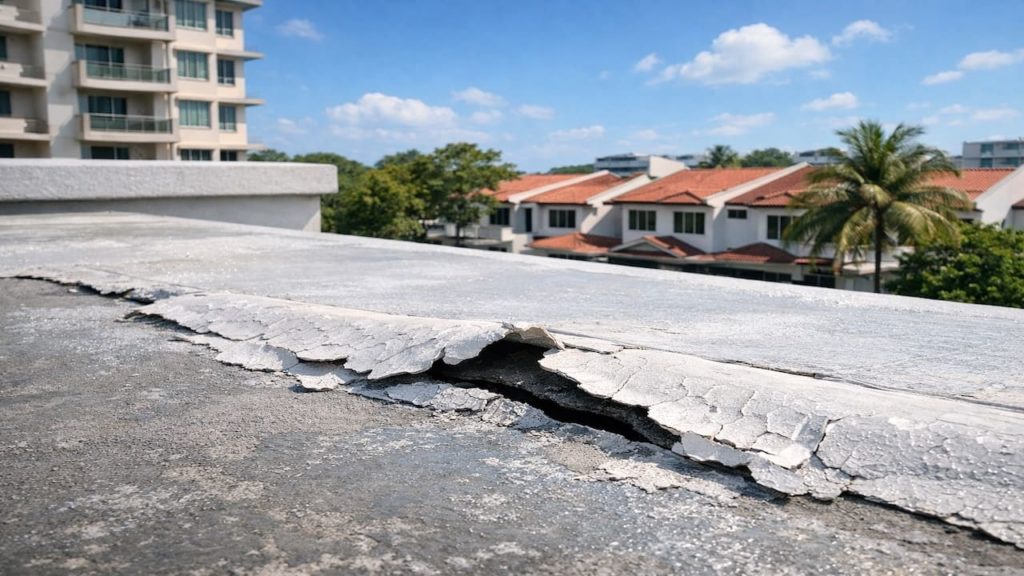
- Roof or slab seepage after storm pushes dampness
- Pipe leaks above ceiling wet plasterboard joints
- Aircon cold pipes cause condensation and drip lines
- Wet laundry indoors raises humidity toward ceiling
- Poor insulation cools ceiling and attracts condensation
Yes, cheap paint can fail sooner. But even premium paint peels if the ceiling is wet under it. Diagnose moisture first, then choose materials.
4. How to repair peeling ceiling and avoid repeat work
Dry the substrate fully then prime and repaint correctly.
Use a simple workflow: stop water, dry, prep, prime, repaint. In Malaysia, a minor ceiling patch and repaint might land around RM200–RM600, while leak diagnosis and repair can range widely depending on access and whether it involves roof or upper units. Guardrails. Do not spend on paint until the ceiling is dry.
- Fix leak source or ventilation issue first
- Scrape loose paint back to firm edge
- Dry area with fan and dehumidifier 48 hours
- Apply stain blocking primer and let cure
- Repaint with moisture resistant ceiling paint
Some people skim coat over damp plaster. That traps moisture and creates bigger bubbles later. Dry time is not optional, especially in Malaysia humidity. Patience pays.
5. FAQs
Q1. How can I tell if the peeling is from a leak?
Leaks often leave brown stains, concentrated edges, or drip marks that worsen after rain or upstairs water use. Condensation peeling is more diffuse and often near bathrooms or cold aircon zones.
Q2. Should I use waterproof paint to solve it?
Waterproof paint can help after the ceiling is dry, but it will not stop active moisture from behind. Find and fix the moisture source first.
Q3. How long should I dry the ceiling before repainting?
In Malaysia, allow extra drying time because ambient humidity is high. Dry substrate matters more than paint brand. Use a fan and dehumidifier and confirm the plaster feels firm.
Q4. What if the ceiling is soft or sagging?
That can indicate waterlogged plasterboard and risk of collapse. Turn off nearby power if needed, stop the water source, and call a professional to assess replacement.
Q5. Can poor ventilation alone cause peeling?
Yes, especially in bathrooms and kitchens where steam collects at the ceiling daily. If you see mold specks and no stain lines, improve ventilation and dehumidifying first.
Pro’s Tough Talk

Alright, I’ve been on site for 20+ years and handled hundreds of jobs, and peeling ceilings in Malaysia are usually wet ceilings wearing a paint mask. Humidity keeps it damp, then the paint gives up. Predictable.
Three causes show up again and again. One, hidden leaks from roof, slab, or upstairs plumbing. Two, condensation from cold aircon lines and chilly surfaces meeting wet air. Three, poor ventilation, steam sits at the ceiling like a wet blanket. That’s the structure.
Do 3 steps and stop repainting the lie. Step one, trace the damp source by timing, rain, upstairs usage, and AC drip paths. Step two, fix the source and dry hard with fan plus dehumidifier. Step three, scrape to firm edges, prime stain block, then repaint. Simple.
You didn’t fail and the painter is not always a villain, but nobody can paint over water and win. Stop moisture first then paint becomes easy. Anyone selling “just one more coat” is selling you hope in a bucket. That’s my jab.
Relatable moment one, you repaint and it peels again right after the next storm. Relatable moment two, you smell that damp ceiling funk at night and pretend it is outside. Fix the wet, or enjoy your ceiling doing confetti drops forever.
Summary
Peeling ceilings happen when moisture breaks paint adhesion, often from hidden damp, condensation, or poor ventilation in Malaysia’s humid climate. The paint is the symptom.
If stains track with rain or upstairs water use, prioritize leak tracing and repair before any repaint. If peeling clusters near bathrooms or aircon lines, improve ventilation, airflow, and dehumidifying, then prep properly.
Start today by checking timing, fixing ventilation, and drying the ceiling before scraping and priming. Dry first then repaint once and it lasts. If you also have ceiling stains or AC drips indoors, read those guides next and connect the moisture chain.