You searched “repair hairline plaster” because thin lines keep showing through paint and you want a clean flat wall again.
In Malaysia, humidity and heat cycles make plaster joints move a little, so hairline cracks can reopen even after repainting in condos and terrace homes.
In this guide, you’ll learn how to patch hairline plaster cleanly with proper prep and drying so the repair stays flat and does not ghost back later.

Hi, I’m Ken. I write practical home guides for Malaysia—no fluff, just what works.
I hold a formal building design qualification and have spent about 20 years on job sites across hundreds of projects. My goal is simple: help you avoid costly mistakes with clear, safe steps—a quick way to decide what to do next.
1. Repair hairline plaster: 5 steps
Hairline cracks need prep and reinforcement not thick filler.
A hairline crack is small, but it is a moving joint. If you smear paste on top, it bridges weakly and reappears with Malaysia humidity changes. Flat finish needs the right sequence. Method.
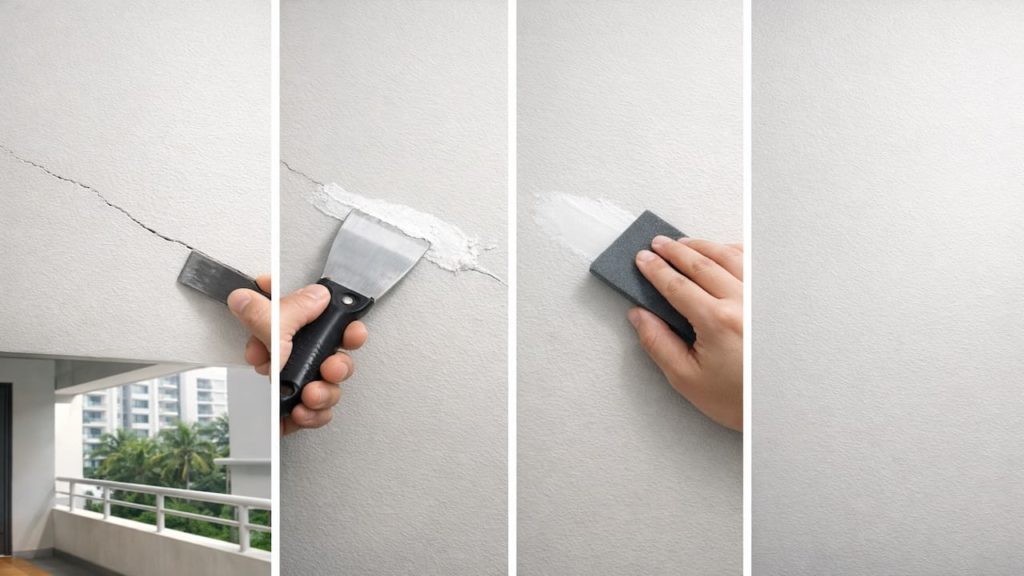
- Cut crack into V groove using utility knife
- Brush dust out and wipe with damp cloth
- Apply bonding primer and let dry fully
- Embed mesh tape centered along crack line
- Skim coat thin layers and feather edges wide
Some people skip the V groove and mesh to save time. That usually means the line returns as a shadow. Do the prep once and your wall stays calm.
2. Patch cleanly so it stays flat
Thin layers and wide feathering prevent ridges.
Flat repairs are about blending, not filling height. In Malaysia, drying is slower, so thick coats shrink and leave waves. Two thin coats with sanding between is cleaner. Clean work.
- Use wide putty knife for smooth feather edges
- Apply first coat thin and leave slight hollow
- Sand lightly with 240 grit after full dry
- Apply second coat wider and thinner than first
- Spot prime repaired strip before final painting
“More compound will hide it faster” is the trap. More compound often makes a bump you see under light. Keep it thin and feather wide.
3. Why hairline plaster cracks return in Malaysia
Humidity swings reopen weak patches at the same line.
Plaster joints move slightly when the room cycles between aircon and humid outdoor air. Rainy season adds moisture load, and the crack line telegraphs through paint if the patch is brittle. Reality.
- Check indoor humidity using cheap hygrometer device
- Inspect window leaks near cracked wall area
- Check bathroom wall moisture behind paint film
- Look for door frame movement and latch misfit
- Observe if crack grows after heavy rain days
Some blame only poor workmanship. Workmanship matters, but moisture and movement decide if it returns. Stabilize the environment and the patch lasts longer.
4. How to patch like a pro and keep costs sane
Prime bond tape skim sand then repaint with patience.
DIY can do most hairlines, but you need time for drying. In Malaysia, a handyman patch and touch up might land around RM150–RM400 for a small wall section, while full room repainting is more. Guardrails. Do not pay for repaint until the patch is flat and dry.
- Dry room with fan and dehumidifier 24 hours
- Use flexible crack filler only for tiny lines
- Use mesh tape for recurring hairline joint lines
- Sand with light and shadow check from angle
- Paint two thin coats with proper drying time
Some people rush paint the same day and it looks fine, then shrinks and shows a ridge. Malaysia humidity makes that worse. Wait for full dry, then finish.
5. FAQs
Q1. Do I need mesh tape for a tiny hairline crack?
If it is a one-off cosmetic line, flexible filler can be enough. If it reappears in the same place, use mesh tape and skim coat to stop it returning.
Q2. Why does my patch look bumpy under light?
The feather edge is too narrow or the compound coat is too thick. Sand lightly, widen the second skim coat, and check with a side light before painting.
Q3. Can I paint without primer?
Primer helps the patch and old paint absorb evenly, so the repair disappears. Prime the patch or it will flash through paint. This is common in Malaysia humid drying conditions.
Q4. How long should I wait between coats?
Wait until the compound is fully dry and firm, not cool or soft. In Malaysia, that can be overnight for thicker spots, so use airflow and dehumidifying.
Q5. What if cracks keep appearing across many walls?
Check for humidity issues, leaks, or building movement patterns. If cracks widen or doors stick, consider a professional inspection to rule out bigger movement.
Pro’s Tough Talk

Alright, I’ve been on site for 20+ years and handled hundreds of jobs, and hairline plaster cracks in Malaysia are like that one friend who keeps coming back. You “fix” it, then rainy season hits and it shows again. Classic.
Three causes make it happen. One, you patched on top without opening and bonding the crack. Two, thick compound shrank because the room stayed humid. Three, moisture or movement keeps flexing the same line around frames and joints. That’s the structure.
Do 3 steps and stop smearing paste like peanut butter. Step one, cut a tiny V groove and clean the dust. Step two, prime and tape if it is a repeat line, then skim thin. Step three, sand with side light and only then paint. Simple.
You didn’t fail and you don’t need magic products, you need sequence. Thin coats wide feathering keeps repairs flat. Anyone telling you “just dab more and repaint” is selling you a treadmill, you keep running and go nowhere. That’s my jab.
Relatable moment one, it looks perfect until the sunlight hits at 4 p.m. Relatable moment two, guests never notice but you stare at it forever. Patch it right once, or keep playing Spot the Line every week.
Summary
Hairline plaster cracks are small movement lines that need proper prep, bonding, and thin layered skim coats to stay flat. Malaysia humidity makes rushed thick patches shrink and show.
If the line keeps returning, use mesh tape and a wider feathered skim to spread stress. If the wall shows damp signs or cracks grow after rain, fix moisture sources before cosmetic patching.
Start today by cutting a small V groove, priming, applying thin coats with full drying, and spot priming before paint. Prep and patience make hairlines disappear. If you also have wall cracks or peeling ceilings, read those guides next and connect the damp and movement story.