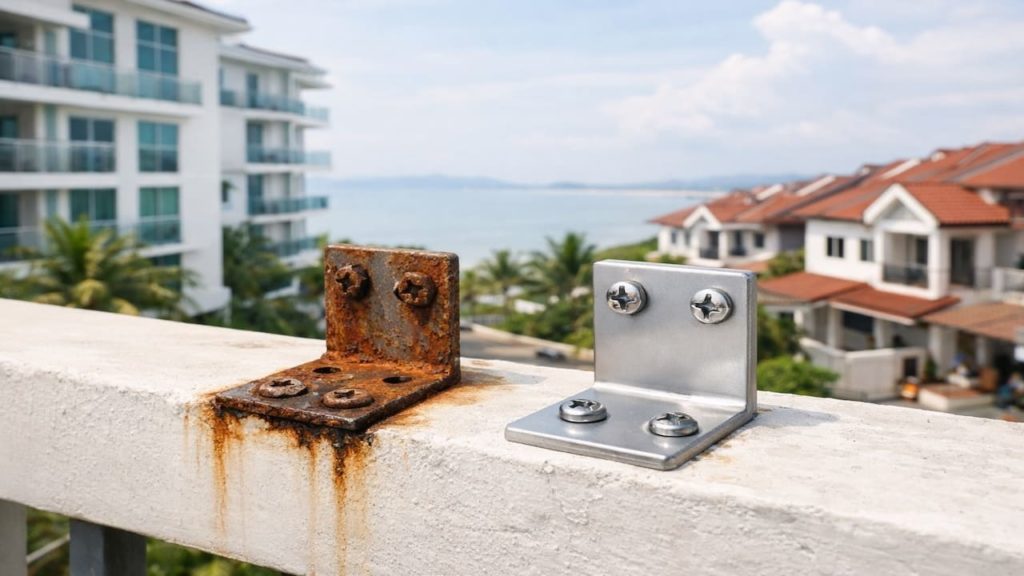
You searched “repair rusted brackets” because a bracket looks flaky, screws are stained orange, or a shelf, awning, or outdoor unit support feels loose.
In Malaysia, humid air, frequent rain, and in some areas salty wind accelerate corrosion, so fasteners can fail before the bracket looks fully broken.
In this guide, you’ll learn how to spot failing fasteners and replace brackets safely before collapse so your fix lasts and you do not fight rust every rainy season.

Hi, I’m Ken. I write practical home guides for Malaysia—no fluff, just what works.
I hold a formal building design qualification and have spent about 20 years on job sites across hundreds of projects. My goal is simple: help you avoid costly mistakes with clear, safe steps—a quick way to decide what to do next.
1. Repair rusted brackets: 5 signs
Rust is dangerous when fasteners start losing metal thickness.
Surface rust can look bad but stay strong, while hidden fastener corrosion can fail suddenly. Malaysia moisture keeps metal wet longer, so corrosion spreads under paint and around screw holes. Warning.
- Check screw heads for rounding and deep pitting
- Look for rust streaks bleeding from bolt holes
- Tap bracket and listen for thin metal ringing
- Wiggle mounted item and feel joint movement
- Inspect for cracks near welds and bends
Some people think sanding and repainting is enough. If fasteners are thinning or holes are enlarging, paint is cosmetic and failure still comes. Replace parts that lost section.
2. Fasteners failing in salty air
Salt speeds corrosion at threads and contact points.
Salt and moisture create an electrolyte that attacks steel fast, especially at crevices where water sits. Outdoor brackets near AC condensers or balconies can stay damp, and the rust grows from the inside out — sneaky. Pattern.
- Check white salt residue around bolt heads
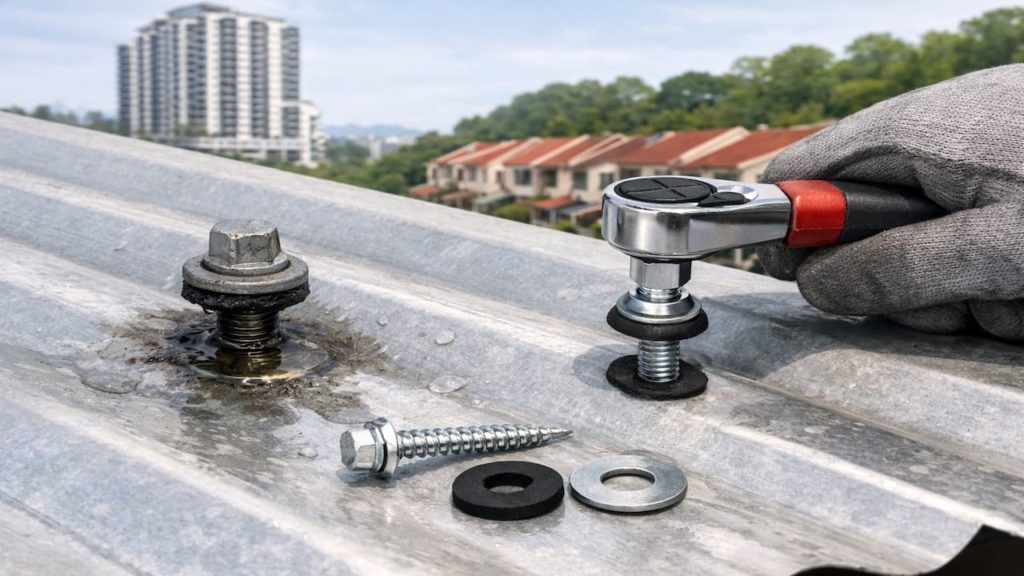
- Inspect threaded areas for swelling and flaking
- Look for rust under washers and bracket plates
- Check dissimilar metals causing galvanic corrosion
- Inspect anchor holes for widening and spalling
People blame only “cheap metal.” Material matters, but salty damp air and trapped water are the real accelerators. Improve drainage and spacing as well as upgrading metal grade.
3. Why brackets rust fast in Malaysia homes
Humidity keeps metal wet so corrosion never rests.
When wet time is high, even coated steel corrodes at scratches and edges. Rain splash, condensation, and poor ventilation on balconies and side passages keep brackets damp. Malaysia conditions shorten fastener life. Reality.
- Check bracket sits in constant splashback zone
- Inspect AC drip line wetting the mounting area
- Look for clogged drains causing standing water nearby
- Check paint blistering at bracket edge seams
- Observe rust worsens after long rainy weeks
Some think indoor brackets are safe. Condensation and humid air can still corrode fixings in kitchens and bathrooms. Moisture is the enemy, not the location label.
4. How to repair rusted brackets without repeat failures
Replace fasteners and upgrade bracket material then protect edges.
Start by making the setup dry and stable, then replace with corrosion resistant materials. In Malaysia, small bracket replacement with new anchors can be around RM80–RM300, heavier duty brackets and stainless fasteners may be RM200–RM800, and professional replacement for high access or heavy loads can be RM500–RM2,000 depending on risk and mounting surface. Guardrails. Safety first.
- Support load before removing any corroded fastener
- Replace anchors with stainless or hot dip galvanized
- Use stainless bracket or powder coated aluminum type
- Apply anti corrosion primer to cut edges
- Add spacer to improve airflow behind bracket plate
Some people keep the old anchors and change only the bracket. Old anchors can snap next, so replace the whole fastening system together. One job, not two.
5. FAQs
Q1. Is surface rust always a replacement case?
No, light surface rust can be cleaned and protected if the metal is still thick and holes are sound. Replace when pitting is deep or joints move.
Q2. What fasteners should I use in humid or salty air?
Stainless steel fasteners are usually more resistant, and hot dip galvanized can work for many outdoor uses. Match the fastener grade to the load and environment.
Q3. Why do screws seize and snap when I try to remove them?
Rust locks threads and reduces metal thickness, so removal torque breaks the head. Seized fasteners are already failing fasteners. Use proper tools and be ready to replace anchors.
Q4. Can dissimilar metals make rust worse?
Yes, galvanic corrosion can happen when different metals touch with moisture present. Use compatible materials or isolating washers to reduce the reaction.
Q5. When should I call a professional?
When the bracket supports heavy loads like AC outdoor units, awnings, or overhead items, or when access is high. A failed bracket can injure people and damage property.
Pro’s Tough Talk

Alright, I’ve been on site for 20+ years and handled hundreds of jobs, and rusted brackets in Malaysia are the silent “one day it drops” problem. Humidity keeps them wet, then salty air turns screws into brown sugar. Crunchy.
Three causes show up nonstop. One, salty damp air eats threads and washers first, so the bracket looks fine but the screws are dying. Two, trapped water behind the plate, no airflow, so rust grows hidden. Three, mixed metals reacting together, galvanic corrosion, faster decay. That’s the structure.
Do 3 steps, no drama. Step one, test movement and inspect fasteners, if they pit and round, they are done. Step two, support the load and replace bracket plus anchors together, not half measures. Step three, protect edges with primer, add a spacer for airflow, and keep splash and condensation away. Simple.
You didn’t fail and not every installer is a clown, but stop painting rust like makeup fixes a broken bone. Replace failing fasteners before the bracket drops. Anyone telling you “just tighten it” is selling you a funeral joke. That’s my jab.
Relatable moment one, you touch the screw and it turns to dust like a cookie. Relatable moment two, you hear a tiny squeak in the wind and pretend it is nothing. Replace it now, or enjoy the surprise drop at the worst possible time. Enjoy.
Summary
Rusted brackets become dangerous when fasteners and holes lose metal thickness, especially in Malaysia humidity and salty air where corrosion accelerates. Movement, pitting, and rust bleeding from holes are key signs.
If rust is light and the metal is thick, clean and protect it, but replace if fasteners seize, pits are deep, holes widen, or the mounted item moves. For heavy loads and high access, prioritize safe replacement with corrosion resistant materials and proper anchors.
Today, check movement, inspect screw heads and holes, support the load, and replace bracket and fasteners together with better materials and edge protection. New fasteners plus airflow beats rust every season. If you also have gutter overflow or exterior damp lines, read those guides next and reduce the moisture that feeds corrosion.