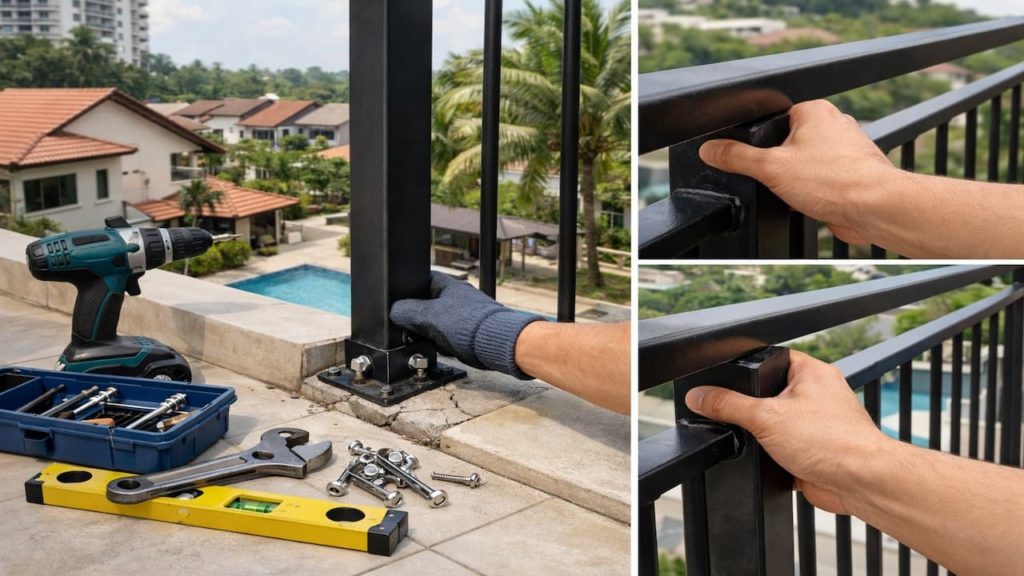
You searched “repair loose railing” because a handrail wobbles, bolts look rusty, or you feel movement when you lean on it on a porch, stair, or balcony.
In Malaysia, frequent rain, humid air, and wet-dry cycles can corrode anchors and crack surrounding concrete, so wobble can grow fast and become a fall risk.
In this guide, you’ll learn how to check anchors and concrete cracks before tightening anything so the railing becomes solid again and the fix does not rip out later.

Hi, I’m Ken. I write practical home guides for Malaysia—no fluff, just what works.
I hold a formal building design qualification and have spent about 20 years on job sites across hundreds of projects. My goal is simple: help you avoid costly mistakes with clear, safe steps—a quick way to decide what to do next.
1. Repair loose railing: 5 checks
Wobble means the anchor system is failing not the rail alone.
A loose rail is usually a loose base plate, corroded bolts, or cracked concrete around anchors. Malaysia moisture accelerates corrosion inside bolt holes where you cannot see it. Risk.
- Shake rail gently and note movement direction
- Inspect base plate for gaps and lifted corners
- Check anchor bolts for rust and loose washers
- Look for cracks radiating from bolt holes
- Listen for hollow sound in concrete near base
Some people keep tightening bolts until they feel strong. If the concrete is cracked or the anchor is spinning, tightening can make it worse. Diagnose first, then repair properly.
2. Anchors, cracks, and wobble risk
Cracks around anchors mean pullout risk is rising.
When concrete cracks at bolt holes, the anchor loses grip and the base plate rocks, which widens cracks further. In Malaysia, rainwater enters cracks and corrodes anchors, making the failure faster — hidden. Serious.
- Mark cracks with pencil and recheck weekly
- Probe crack width using thin card edge
- Check anchor spins when you loosen nut slightly
- Inspect for water pooling around base plate
- Check for rust stains bleeding from bolt holes
You might think wobble is only annoying. It is a safety issue because the load is dynamic when people grab the rail during slips. Fix it like a safety system, not furniture.
3. Why railings loosen in Malaysia homes
Moisture corrosion and movement stress anchors over time.
Balconies and porches stay damp, and people use rails daily, so small anchor looseness becomes rocking and concrete fatigue. Terrace house entries can also see splashback and ponding that keeps bases wet. Malaysia effect. Wear.
- Check gutter overflow splashing onto railing base area
- Inspect porch puddles keeping base plate wet
- Look for salty air corrosion near exterior edges
- Check grout gaps letting water reach anchor pockets
- Observe looseness worse after long rainy weeks
Some blame only installation. Install quality matters, but even good anchors can fail if water is allowed to sit at the base for months. Drainage and sealing are part of the system.
4. How to repair safely and keep costs realistic
Replace damaged anchors and patch cracked concrete before retightening.
Do the repair in order: stabilize the rail, remove failed anchors, repair the substrate, then install proper anchors and seal water paths. In Malaysia, simple retightening and minor sealing might be RM80–RM250, replacing anchors and patching base concrete can be RM250–RM900, and heavier repairs with new posts or welding can run RM800–RM3,000 depending on material, access, and safety setup. Guardrails.
- Support rail and block access during repair
- Remove rusted anchors and clean bolt holes
- Patch spalled concrete using repair mortar
- Install new anchors rated for the rail load
- Seal base plate edge to stop water entry
Some people inject glue into cracks and call it done. If the anchor is corroded or the concrete is spalled, glue alone will not restore strength. Replace the failing parts, then seal.
5. FAQs
Q1. Can I just tighten the bolts to stop wobble?
Only if anchors are sound and concrete is not cracked or spinning. If cracks exist or anchors rotate, tightening can strip threads or expand cracks.
Q2. How do I know an anchor is spinning?
Loosen the nut slightly and watch if the bolt turns with it, or if the whole anchor rotates. Spinning means the grip is gone and replacement is needed.
Q3. What is the biggest danger with a loose railing?
People grab it during a slip, and the dynamic load can pull it out suddenly. Wobble is a fall risk not a cosmetic issue. Treat it urgently.
Q4. Should I seal around the base plate?
Yes, but only after the anchor system is repaired and the base is dry. Sealing over movement will crack and trap water in the joint.
Q5. When should I call a professional?
If the railing is on a balcony edge, supports many users, or shows cracked concrete and heavy rust. Also call if welding or structural post replacement is needed.
Pro’s Tough Talk

Alright, I’ve been on site for 20+ years and handled hundreds of jobs, and a loose railing in Malaysia is not “meh, later.” Humidity and rain chew anchors quietly, then one day the wobble turns into a yank, and that’s how people get hurt. Real risk.
Three causes show up nonstop. One, anchors corrode inside the hole where you can’t see it, especially when water pools at the base. Two, concrete cracks radiate from bolt holes because the rail rocks daily. Three, people keep tightening and stripping, so the grip gets weaker every time. That’s the structure.
Do 3 steps, safe. Step one, block access and test wobble direction, then check for cracks and spinning anchors. Step two, remove failed anchors, patch the concrete, and install new rated anchors, not random screws. Step three, seal the base edge and fix ponding or splashback so water stops feeding the hole. Simple.
You didn’t fail and not every installer is a clown, but don’t “tighten until it feels strong” like you’re wrestling the rail. Replace failing anchors before someone falls. Anyone telling you “it’s fine, just wobble” is basically betting with your teeth. That’s my jab.
Relatable moment one, you grab the rail at night and it moves and your heart skips. Relatable moment two, you say “I’ll fix it weekend,” then rainy season arrives and you forget. Fix it now, or enjoy your railing doing the wiggle dance at the worst possible time. Enjoy.
Summary
Loose railings usually come from failing anchors and cracked concrete around bolt holes, and Malaysia humidity and rain accelerate corrosion hidden inside the mounting points. Wobble is a safety signal.
If anchors are tight and concrete is intact, minor retightening and sealing can help, but if you see cracks, rust bleeding, spinning bolts, or movement at the base plate, replace anchors and repair the concrete before sealing. On balconies and high risk areas, treat it as urgent work.
Today, test wobble, inspect anchor bolts and crack lines, block access, and plan anchor replacement plus base patching if any pullout signs appear. Solid anchors make the railing safe again. If you also have rusted brackets or porch puddles, read those guides next and reduce the moisture that drives failure.