You searched “repair noisy pipes” because you hear banging, rattling, or tapping sounds when a tap closes, a toilet refills, or the shower valve changes flow.
In Malaysia, high humidity and quick temperature changes from AC rooms to warm walls can stress fittings, and some homes have strong water pressure that makes noise worse.
In this guide, you’ll learn how to identify water hammer versus loose pipe clamps fast so you can quiet the system without tearing open walls blindly.

Hi, I’m Ken. I write practical home guides for Malaysia—no fluff, just what works.
I hold a formal building design qualification and have spent about 20 years on job sites across hundreds of projects. My goal is simple: help you avoid costly mistakes with clear, safe steps—a quick way to decide what to do next.
1. Repair noisy pipes: 5 checks
Noise happens when moving water hits something that can move.
Start by matching the sound to a trigger, because different noises point to different fixes. Malaysia condos and terrace homes often have hidden pipe runs, so symptoms matter more than guesses. Clues.
- Note which tap or toilet triggers the noise
- Check if noise happens on quick valve shut
- Listen if noise continues during long running flow
- Check visible pipes for movement when water stops
- Inspect nearby cabinets for loose panels vibrating
Some people assume all pipe noise is dangerous. Many noises are annoying but fixable, yet repeated hammer can loosen joints over time. Treat it early.
2. Water hammer and loose clamps
Hammer is a sudden bang while loose clamps rattle repeatedly.
Water hammer is a pressure spike when flow stops abruptly, making a single thud or a short series of bangs. Loose clamps or missing supports cause a rattling or tapping as the pipe vibrates against framing. Malaysia high pressure and fast-closing valves can amplify both — loud.
- Test slow closing the tap and compare noise level
- Check toilet fill valve shuts sharply and fast
- Locate pipe contact points by listening along wall
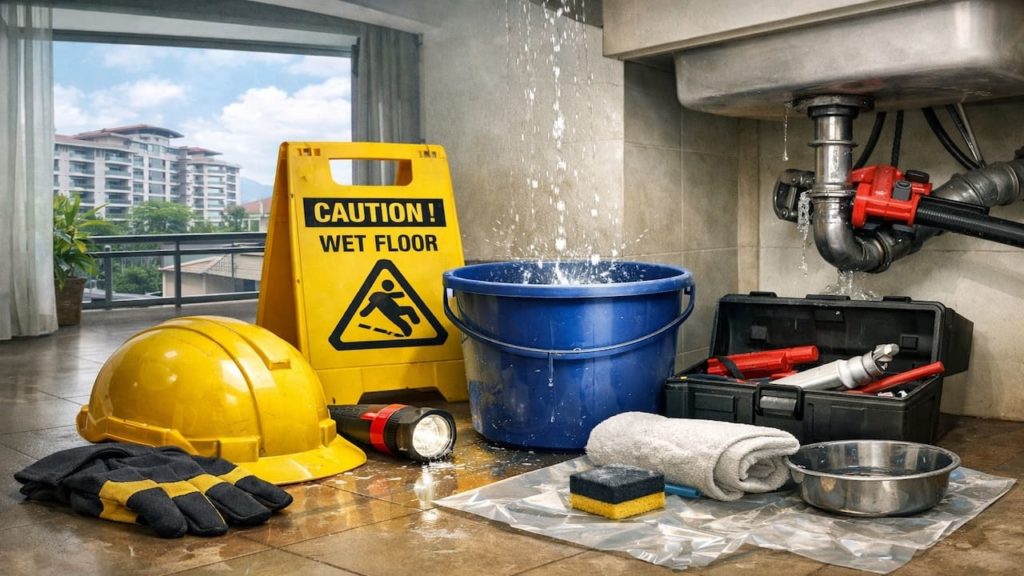
- Inspect under sink for missing clips and supports
- Add temporary foam wrap where pipe hits surfaces
People try to tighten every fitting first. That can waste time and may crack plastic parts. Identify hammer versus clamp issues, then fix the right mechanism.
3. Why noisy pipes are common in Malaysia homes
High pressure and hidden runs make small support gaps loud.
Some units have strong mains pressure or booster pumps, and long pipe runs in ceilings act like drums. Humid conditions also degrade cheap clips and cause wood swelling that changes contact points. Malaysia reality. Annoying.
- Check for booster pump or pressure regulator presence
- Inspect ceiling access panel near bathroom pipe runs
- Check AC condensate lines dripping onto pipe supports
- Look for damp cabinet base loosening clamp screws
- Observe noise worse during evening peak usage
Some think condo plumbing is immune. Shared risers and pressure changes can increase hammer events in condos too. Same physics, just more neighbors.
4. How to fix noise and what it may cost
Secure pipes first then control pressure spikes if needed.
Start with support and isolation, then address pressure and fast-closing valves. In Malaysia, simple clamp tightening and adding supports might be RM80–RM250, replacing a toilet fill valve or tap cartridge can be RM120–RM400, and installing a water hammer arrester or pressure regulator may run RM250–RM900 depending on access and fittings. Guardrails. Safety matters.
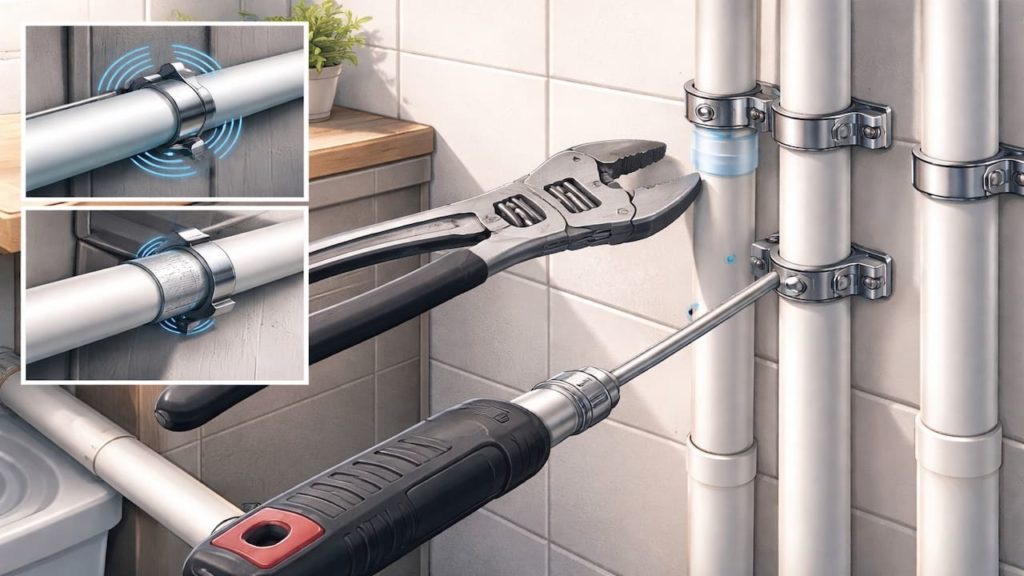
- Add pipe clips at accessible loose sections
- Insert rubber isolators where pipe contacts framing
- Replace fast closing toilet fill valve with quieter type
- Install water hammer arrester near problem valve
- Reduce pressure using regulator if pressure is high
Some people open walls immediately. Do the easy accessible fixes first and confirm improvement, then only open walls if the noise source is clearly inside. Smart order.
5. FAQs
Q1. Is water hammer damaging or just noisy?
It can be both. Occasional small knocks may be harmless, but repeated strong hammer can stress joints and valves over time, especially on older fittings.
Q2. Why does the noise happen mostly when the toilet refills?
Toilet fill valves can shut quickly and create a pressure spike, and the pipe run to the cistern is often lightly supported. That combination triggers hammer or rattle.
Q3. How can I tell if pressure is too high?
If multiple taps blast strongly, valves slam shut, and hammer happens across rooms, pressure may be high. High pressure makes hammer louder and more frequent. A pressure gauge test confirms it.
Q4. Can I DIY add foam or rubber to stop rattling?
Yes as a temporary isolation where pipes touch hard surfaces, but proper clips and spacing are the durable fix. Avoid blocking drainage or trapping moisture.
Q5. When should I call a plumber?
If hammer is severe, if you suspect hidden leaks, or if installing regulators or arresters requires cutting into concealed lines. Also call if you cannot access the noisy section safely.
Pro’s Tough Talk

Alright, I’ve been on site for 20+ years and handled hundreds of jobs, and noisy pipes in Malaysia are the classic “it only happens at night” complaint. You turn off the tap and the wall goes THUNK like someone knocked from inside. Creepy.
Three causes show up nonstop. One, water hammer, the flow stops fast and the pressure spike slams the pipe. Two, loose clamps or missing clips, the pipe vibrates and taps the frame like a drumstick. Three, high pressure or booster pumps, turning small issues into loud ones. That’s the structure.
Do 3 steps, simple. Step one, find the trigger, toilet, tap, or shower, and test slow closing to see if hammer changes. Step two, secure accessible pipes with proper clips and rubber isolation, stop the rattling contact. Step three, if hammer remains, add an arrester or regulator, because physics doesn’t care about your patience. Simple.
You didn’t fail and not every plumber is a magician, but don’t start smashing tiles because you’re annoyed. Secure the pipe then control pressure spikes. Anyone telling you “pipes always do that” is just lazy, that’s my jab.
Relatable moment one, you try to sleep and the toilet refill does a surprise bang like a horror movie. Relatable moment two, guests hear it and you pretend it is “normal building sound.” Fix it now, or enjoy your walls doing percussion practice every night. Enjoy.
Summary
Noisy pipes are usually caused by water hammer or loose clamps, and Malaysia humidity plus strong pressure can amplify both. Match the sound to the trigger to choose the right fix.
If noise is a single bang on fast shut, focus on hammer control with slower closing valves, arresters, or pressure regulation. If noise is rattling or tapping during flow changes, add proper clips and rubber isolation where pipes contact surfaces.
Today, identify the trigger, test slow closing, secure any loose accessible pipes, then add hammer control if bangs persist across rooms. Right diagnosis stops the noise without tearing walls. If you also have leaking taps or low pressure, read those guides next and fix the valve causes together.