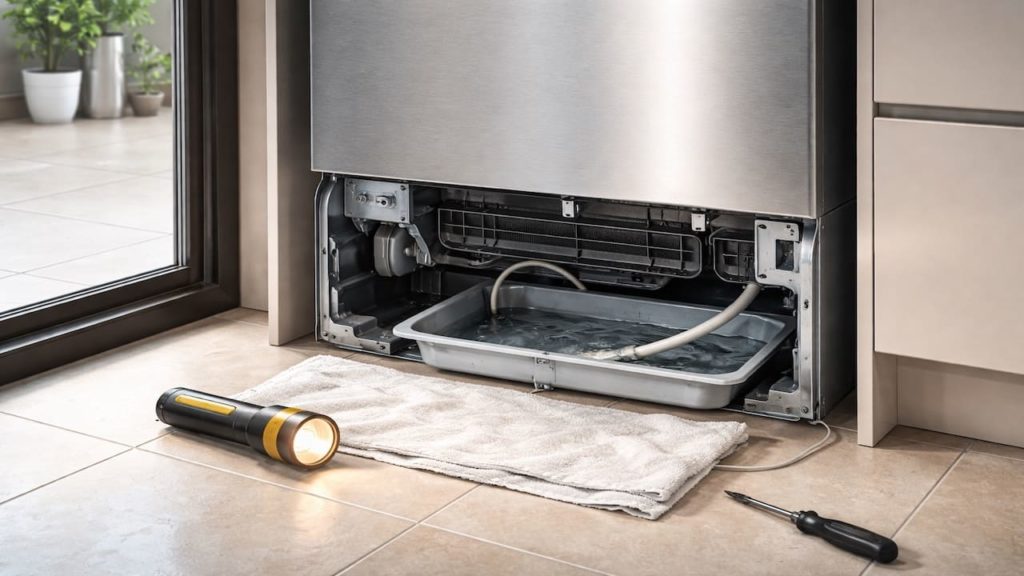
You searched “repair fridge water leak” because you found a puddle under the fridge, wet tiles near the kick panel, or drops inside the crisper that should not be there.
In Malaysia, humid air and warm kitchens make condensation and mold spread fast, but leaks also come from defrost drains and water lines that shift in tight condo spaces.
In this guide, you’ll learn how to trace the leak source before you wipe and forget so you stop the water at the right point and avoid repeat puddles and smells.

Hi, I’m Ken. I write practical home guides for Malaysia—no fluff, just what works.
I hold a formal building design qualification and have spent about 20 years on job sites across hundreds of projects. My goal is simple: help you avoid costly mistakes with clear, safe steps—a quick way to decide what to do next.
1. Repair fridge water leak: 5 checks
Identify whether the leak is inside the fridge or behind it.
Start with simple observation because many leaks look identical on the floor. A quick map saves time — and in Malaysia humidity a small drip can become a daily puddle. A fast diagnosis.
- Pull fridge forward and dry the floor area
- Check puddle position relative to front feet
- Inspect inside crisper for pooled water
- Look behind fridge for wet wall streaks
- Check ice maker tube for dripping water
Some people assume the fridge is dying and panic buy a new unit. Most leaks are routing or blockage problems, so confirm the leak path and then fix the exact source.
2. Drain pan and line routing issues
Misrouted tubes and a misseated drain pan cause hidden spills.
Defrost water should drip into a drain pan and evaporate, but the pan can shift when the fridge is moved or leveled badly. A water line can also rub and leak slowly — common after cleaning behind the unit in tight kitchens. Silent trouble.
- Remove toe grille and inspect drain pan alignment
- Reposition drain pan under the drain outlet
- Check tube ends point into pan correctly
- Secure loose water line with clip ties
- Inspect line for kinks and abrasion marks
Some say the pan is always the culprit because it is easy to see. If the pan is dry but the floor is wet, the line routing or a connection leak is more likely, so check both before blaming one part.
3. Why fridge leaks happen in Malaysia kitchens
Humidity plus warm coils create condensation and overflow patterns.
Moist air condenses on cold surfaces, and warm compressor heat can drive more moisture movement around the base. When drains are partly blocked, humid kitchens slow evaporation and water builds up until it spills. A moisture loop.
- Check door gasket for gaps and soft spots
- Check fridge leveling and door self closing action
- Inspect defrost drain hole for sludge buildup
- Check ventilation gap behind fridge for blockage
- Check nearby floor trap for humidity smell return
Some blame only the weather and give up. Humidity makes it worse, but a clean drain path and proper airflow still stop most leaks, so focus on controllable causes first.
4. How to fix the leak and prevent repeat puddles
Clear the drain route then repair the water line connection.
Do the fix in order so you do not chase symptoms — clear the defrost drain, reseat the pan, then confirm every connector stays dry under pressure. In Malaysia, a basic service visit is often around RM120–RM250, simple drain cleaning can be near RM0–RM80 if DIY, and parts like a water valve or tubing repair commonly land around RM150–RM450 depending on model and access. Cost guardrails.
- Unplug fridge and remove lower rear cover
- Flush defrost drain with warm water syringe
- Clean drain pan and reinstall it centered
- Tighten water line fittings and replace weak tubing
- Test for drips using tissue under connections
Some people seal around the base with silicone to stop the puddle. That hides the leak and traps damp, so mold and rust get a head start. Fix the drain and line first, then keep the base dry.
5. FAQs
Q1. Why is there water only inside the fridge under drawers?
This often points to a blocked defrost drain, so melt water has nowhere to go and spills into the bottom compartment. Clear the drain hole and flush the tube.
Q2. Why is the floor wet but the drain pan looks empty?
A water line connection, filter housing, or tube routing issue can drip behind the fridge and miss the pan entirely. Dry everything and use tissue to find the first drip point.
Q3. Can high humidity alone make a puddle under the fridge?
Humidity can increase condensation, but puddles usually need a drain overflow or airflow problem too. Condensation becomes puddles when drainage is weak so improve ventilation and confirm the drain path.
Q4. Is it safe to keep using the fridge while it leaks?
Small leaks can cause slippery floors and can wet nearby sockets or extension cords, which is risky. If water is near power points, unplug and fix first.
Q5. When should I call a technician?
Call if the leak returns within a day after drain cleaning, if you suspect the inlet valve or internal tubing, or if you cannot access the rear safely in a tight condo kitchen.
Pro’s Tough Talk

Alright, I’ve been on site for 20+ years and handled hundreds of jobs, and fridge leaks in Malaysia are never “just a little water.” Humidity makes every drip stick around, then the smell shows up like an uninvited guest. Reality.
Cause one is a clogged defrost drain, so melt water backs up and spills inside. Cause two is a shifted drain pan or tube, so water misses the pan and hits the floor. Cause three is a water line or fitting drip, slow like a ticking clock, and it wins because you ignore it. Structure.
Do 3 steps and stop guessing. Step one, dry everything and watch where the first drop appears, not where the puddle ends. Step two, flush the drain and clean the pan, because sludge is like wet toothpaste in a straw. Step three, tissue test every fitting and secure the line, because a loose tube flaps like a cheap belt in the wind. Simple.
You didn’t fail and not every tech is a saint or a scammer, but don’t do the clown move and seal the base like you’re hiding a crime scene. Fix the drain path and the line then the leak dies. That’s the jab, because I’ve seen “seal and pray” turn into mold and rust jackpots.
Relatable moment one, you wipe the floor and feel proud, then you step in water again at midnight. Relatable moment two, you blame the fridge brand, then realize the line got bumped when you cleaned behind it. Keep ignoring it and you’ll be hosting a puddle like it pays rent, then act shocked. Cute.
Summary
Fridge leaks usually come from a blocked defrost drain, a misseated drain pan, or a water line drip, and Malaysia humidity makes the mess spread and linger. The leak source matters more than the puddle size.
If water collects inside under drawers, clear and flush the defrost drain first. If the floor is wet behind the unit, reseat the pan, secure the tube routing, and tissue test every fitting under pressure before you push the fridge back.
Today, pull the fridge forward, dry the area, flush the drain, reseat the pan, and tissue test the line connections for 10 minutes after turning water on. One clean drain route and one tight line stop most fridge leaks. If you also have slow drains or damp wall lines, follow those guides next and cut the moisture chain in your kitchen.