Your lock is stiff, the key turns with effort, or the latch feels stubborn, and you are searching because you want to free it without breaking anything.
In Malaysia, humidity, salt air in some areas, and daily dust can gum up cylinders, while doors swell in heat and shift alignment. That makes a normal lock feel “stuck” even when it is not truly broken.
In this guide, you’ll learn how to free a stiff lock safely without damage using simple steps that fit Malaysian home conditions, so you avoid costly locksmith calls and stop the daily struggle.

Hi, I’m Ken. I write practical home guides for Malaysia—no fluff, just what works.
I hold a formal building design qualification and have spent about 20 years on job sites across hundreds of projects. My goal is simple: help you avoid costly mistakes with clear, safe steps—a quick way to decide what to do next.
1. Home Stuck lock guide: 5 steps
Start with alignment and gentle cleaning first.
Most stiff locks are caused by friction and dirt, not a dead cylinder. In warm humid weather, tiny misalignment turns into a jam. Slow down and do it safely.
- Test key in and out without forcing
- Lift or pull door to reduce latch pressure
- Check strike plate for rubbing marks
- Clean key and keyway with dry brush
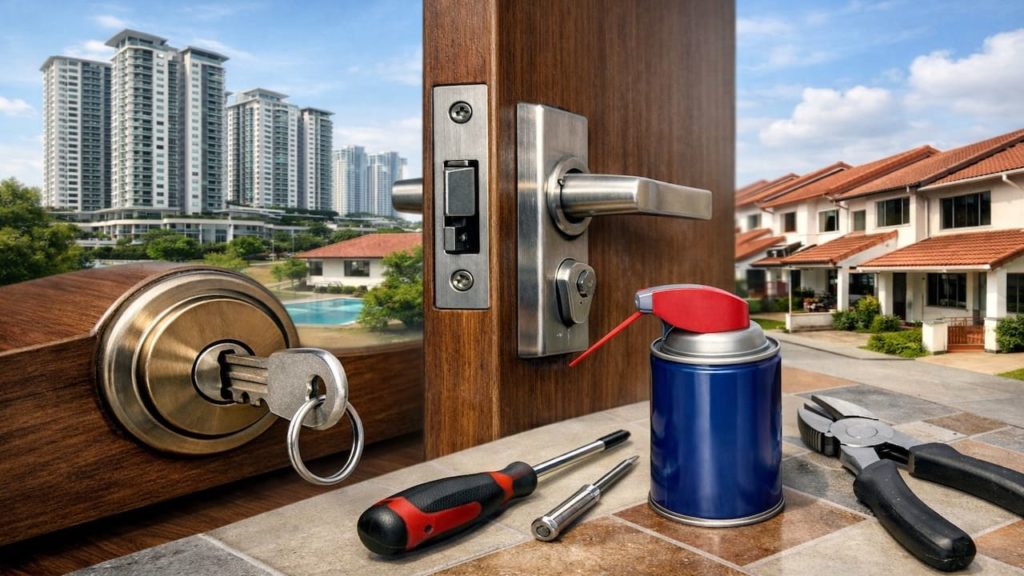
- Lubricate with proper lock lubricant only
You might want to force it and “get it done,” but forcing bends keys and damages pins. Fix the friction, not your mood.
2. Free stiff locks safely
Safety means no brute force and no wrong sprays.
Wrong lubricants attract dust and turn into sticky paste in Malaysia humidity. Also, if the door is pushing on the latch, the lock will feel hard no matter what you spray. Two problems, one symptom.
- Do not use cooking oil or thick grease
- Avoid WD type spray as long term fix
- Use graphite or lock specific dry lubricant
- Turn key gently and stop if it binds
- Recheck door alignment after each step
Some people fear “dry lube is weak,” but it is made for cylinders. Wet oil feels good for one day, then it becomes a dust magnet.
3. Why locks get stiff in Malaysian homes
Humidity and misalignment work together to jam locks.
Moist air encourages corrosion, and dust sticks to oily residue. At the same time, doors swell, hinges loosen, and the latch rubs the strike plate. The lock is blamed, but the door is often guilty. Common.
- Door swelling increases latch side pressure
- Loose hinges drop the door slightly over time
- Dust builds inside keyway and cylinder pins
- Rust forms on latch and strike plate edges
- Wrong lubricant turns into sticky grime paste
This is why the lock feels worse after rain or on hot afternoons. If you are not buying anything today, cost is mostly time/effort.
4. How to fix and prevent the problem long term
Fix the door fit then maintain the lock lightly.
Basic supplies can be RM10–50 for a dry lubricant, small brush, and screwdriver, and that can save you from replacing a lockset. The goal is smooth turning with minimal wear. Simple maintenance.
- Tighten hinge screws to reduce latch pressure
- File strike plate slightly if latch rubs
- Clean cylinder and apply dry lubricant sparingly
- Wipe moisture off lock after heavy rain exposure
- Replace key if it is bent or worn
You may think filing is risky, and it can be if you go too far. Do tiny adjustments and re-test, or call a locksmith if you are unsure.
5. FAQs
Q1. Can I use WD spray to free a stuck lock?
It may work short term, but it can attract dust and become sticky over time. Use a lock specific dry lubricant for longer lasting smooth action.
Q2. What if the key turns but the door will not open?
That usually means the latch is under pressure. Pull or lift the door while turning the key, then check hinge and strike plate alignment afterward.
Q3. Should I pour oil into the keyway?
No, because it traps dirt and can worsen sticking in Malaysia humidity. If you need lubrication, use a small amount of dry lube and keep it clean.
Q4. My lock is stiff only when it rains, why?
Moisture can cause slight swelling and rust friction, and water can enter exposed locks. Dry the area, reduce latch rubbing, and consider a lock cover if exposed outdoors.
Q5. When should I call a professional?
If the key is close to snapping, the cylinder spins freely, or the latch does not retract properly, call a locksmith. For condo fire doors, avoid modifications without building approval.
Pro’s Tough Talk

I’ve been on sites for 20+ years and I’ve handled hundreds of “my lock is stuck” calls. Half the time the lock is fine, the door is the bully pushing the latch sideways. In Malaysia humidity, everything swells and shifts, and the lock gets blamed like it started the fight.
It breaks into 3 causes. Dirt inside the cylinder pins, wrong lubricant turning into glue, and door misalignment loading the latch. You can spray forever, but if the latch is rubbing hard, the key will still feel like you are turning a bolt in concrete.
Immediate fix is 3 moves. Relieve pressure by lifting or pulling the door while turning the key. Clean the keyway and use a proper dry lubricant, not cooking oil. Then fix the strike plate and hinges so the latch sits centered again.
Here is the rule. Fix pressure before you spray anything. Common scene one: people force the key until it bends, then act surprised. Common scene two: they drown it in oil, and next month the lock feels like a sticky candy jar. Come on.
Keep forcing it and soon you will pay for a locksmith and a new key, just to prove your ego was stronger than metal.
Summary
Stiff locks are often caused by door pressure, dust, and humidity, so start by relieving latch pressure and cleaning before you lubricate.
If the lock keeps sticking, correct hinge and strike plate alignment, use a lock specific dry lubricant, and avoid oils that attract grime.
Free it safely today and you will protect your lock and keys, avoid unnecessary costs, and naturally move to the next Malaysia home maintenance guide.