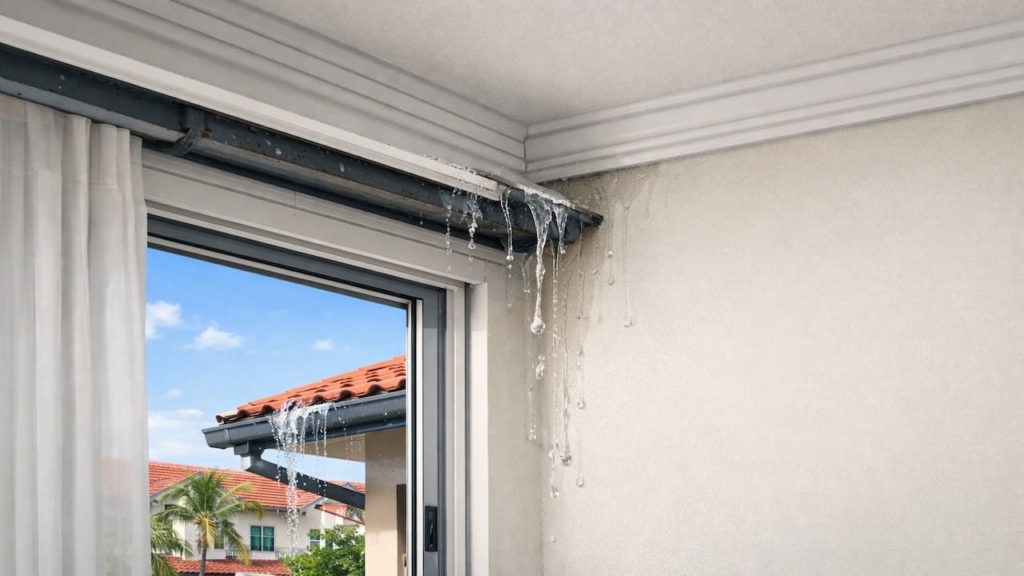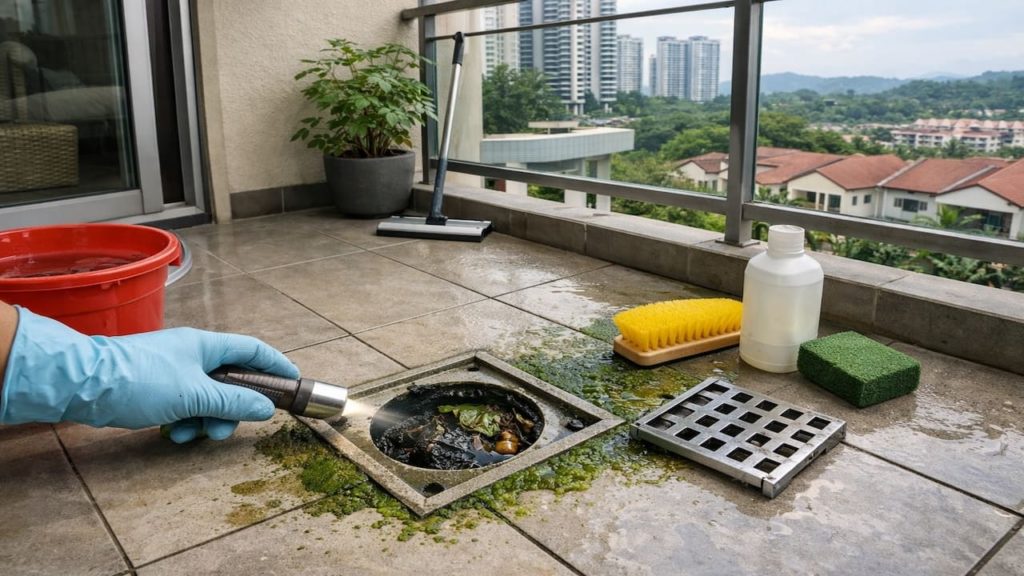
You searched “balcony drain” because rain leaves a puddle, the floor turns green and slippery, or you smell longkang stink near the sliding door.
In Malaysia, heavy rain, warm sun, and constant humidity make algae grow fast. A slow drain can also push water back toward the unit, which risks stains, damp edges, and complaints in condos.
In this guide, you’ll learn the 5 checks that stop balcony puddles and algae slick fast so water clears after rain and the surface stays safer longer.

Hi, I’m Ken. I write practical home guides for Malaysia—no fluff, just what works.
I hold a formal building design qualification and have spent about 20 years on job sites across hundreds of projects. My goal is simple: help you avoid costly mistakes with clear, safe steps—a quick way to decide what to do next.
1. Malaysia balcony drain guide: 5 checks
Most balcony puddles come from one simple blockage point — find it before algae wins.
Balcony drains in Malaysia collect leaf bits, dust, and roof grit, then the sun bakes it into slime. Condos also get windblown debris that settles in corners, so a small clog can create a wide slick. Slime.
- Check drain cover for trapped leaves and grit
- Pour one jug and time how fast it clears
- Look for standing water line around drain edge
- Inspect corners for algae film and slippery patches
- Test slope by watching water flow direction
You might think the green patch is just “dirty balcony”. But algae plus puddles is a slip hazard, and it keeps moisture trapped near doors and walls.
2. 【Stop algae slick and prevent puddles after rain】
Stopping slick algae is easier when you remove the food — slime needs dirt and standing water.
Start with cleaning and flow checks before you chase bigger fixes. cost is mostly time/effort, because you can do these steps with water, a brush, and steady routine. Traction.
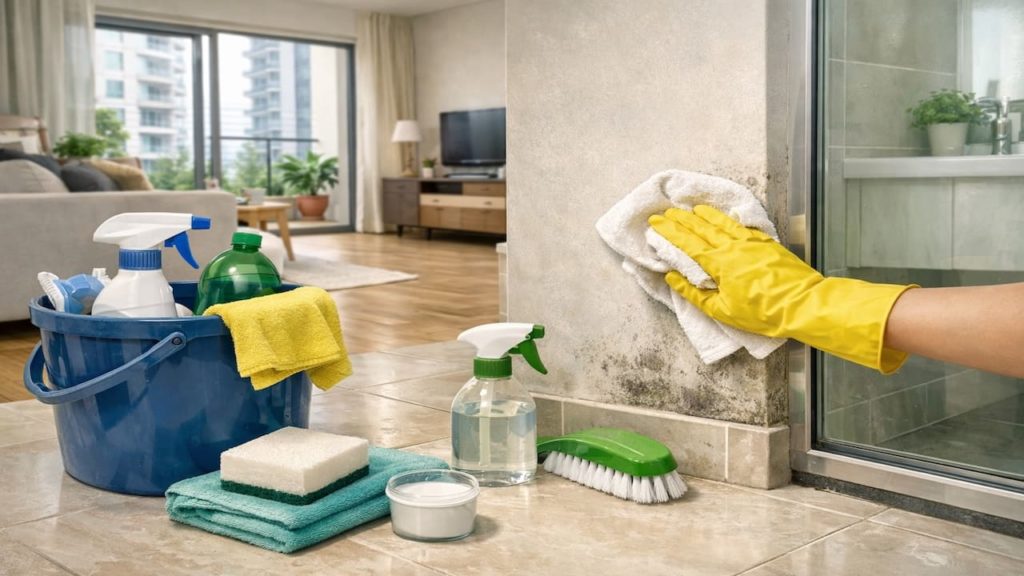
- Scrub algae film and rinse toward drain opening
- Lift drain cover and clear visible debris by hand
- Flush drain with water and repeat until clear
- Dry surface and recheck for slippery spots
- Keep balcony door track free from muddy runoff
You might want to splash strong chemicals and finish fast. But harsh cleaners can damage sealants and irritate lungs, so focus on removal, rinse, and dryness first.
3. Why balcony drains clog fast in Malaysia
Heat rain and humidity create perfect conditions for slime buildup — it is biology plus debris.
Warm rainwater carries dust and organic bits into the grate, then the sun accelerates algae growth. When airflow is poor, the wet film stays, and slime becomes a plug that slows drainage after every storm. Biology.
- Leaf fragments break down and form sticky sludge
- Roof grit settles and compacts inside drain throat
- Algae grows on wet tiles and feeds on dust
- Soap residue from balcony washing adds greasy film
- Low slope areas trap water and extend wet time
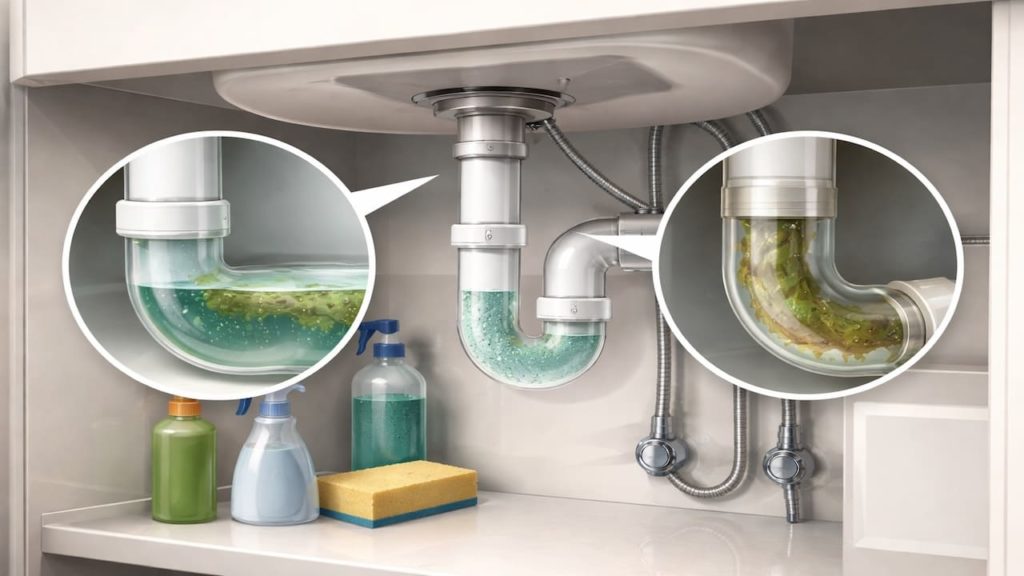
You may assume the drain pipe is the only issue. Often the real problem is the first 10 cm under the cover where slime creates a soft dam.
4. How to keep the drain clear and stop puddles
Fix flow at the drain throat then prevent new buildup — maintenance beats emergency cleaning.
Once you confirm the drain is slow, clean deeper and add simple prevention. A drain brush, small scoop, or basic drain cover insert can cost RM10–60, and it usually pays off after one rainy week. Control.
- Remove cover and scoop sludge from drain throat
- Brush inner ring and rinse until water spins down
- Check outlet by listening for smooth gurgle sound
- Clean tiles weekly to reduce dirt feeding algae
- Place mesh filter and empty it after rain
You might think a strong flush will solve everything. If the pipe is partially blocked, forcing water can backflow, so clear the throat first and test in small rounds.
5. FAQs
Q1. How do I know if the balcony drain is really clogged?
If water pools for more than 10 minutes after rain it is slow. A healthy drain clears steadily with no rising ring and no spreading puddle edge.
Q2. Is algae on tiles dangerous?
Yes, it can be very slippery when wet, especially on smooth balcony tiles. In Malaysia rain, one step on a slick patch can cause a bad fall.
Q3. The puddle forms away from the drain. Why?
That often means the balcony slope is uneven or a corner is lower. Water collects there first, then slowly crawls to the drain.
Q4. Can I use boiling water to clear the drain?
Be careful, because sudden heat can stress some plastic parts and sealants. Start with room-temperature flushing and brushing, then escalate if needed.
Q5. I live in a condo. Could this affect the unit below?
Yes, overflow can seep toward edges and joints, then travel into slabs or below. Early cleaning and documentation helps avoid disputes later.
Pro’s Tough Talk

Alright, I’ve been on site 20+ years, and I’ve done hundreds of jobs. A balcony drain in Malaysia is like a nasi lemak sambal pot left in the sun. It turns into biology real quick.
Cause is 3 parts. Debris builds a base, algae makes slime, and puddles keep it wet so it never dies. Contractors aren’t all villains, but the structure is cold: warm rain plus humidity punishes lazy maintenance.
Do this now. Lift the cover, scoop the sludge, brush the throat, then flush in small rounds until it spins down clean. After that, scrub tiles and rinse toward the drain. Done.
Clear the first choke point and you stop most puddles. Don’t go full drama and blame the building every time. Tsukkomi: you want a miracle drain that cleans itself ah?
Aruaru: you notice the slick only after you almost slip. Aruaru: you clean once and forget until the next storm. Keep ignoring it and one day you’ll do the balcony ice-skating championship lah.
Summary
Balcony puddles and algae slick usually come from a slow drain throat, trapped debris, and poor drying in Malaysia humidity.
Do quick checks after rain, clear the drain cover and throat, and scrub algae film so water can move and surfaces stay safer.
Clear the drain today and keep rainwater moving away fast then read the related guide on mold cleaning or ceiling stains if damp marks already started.