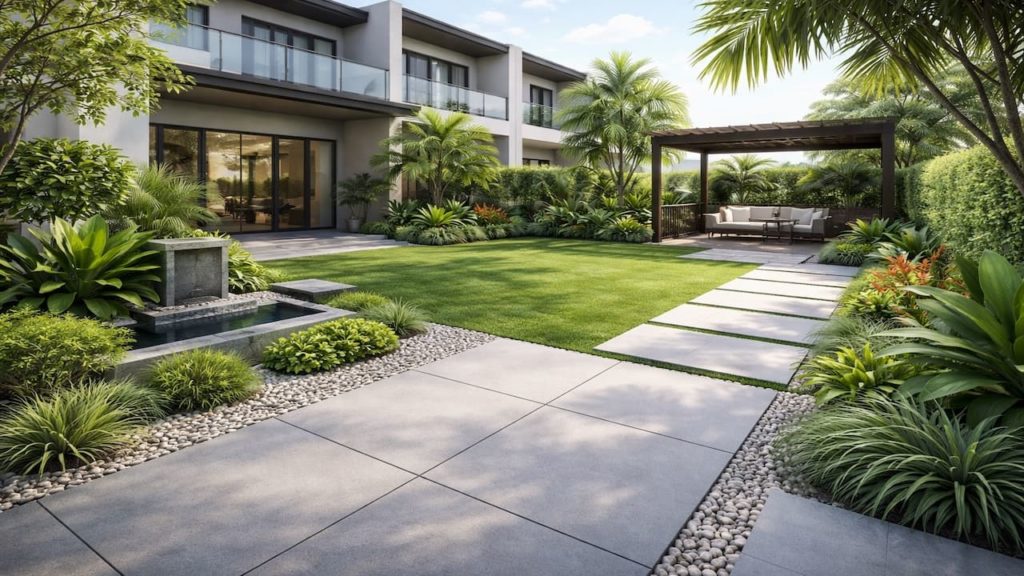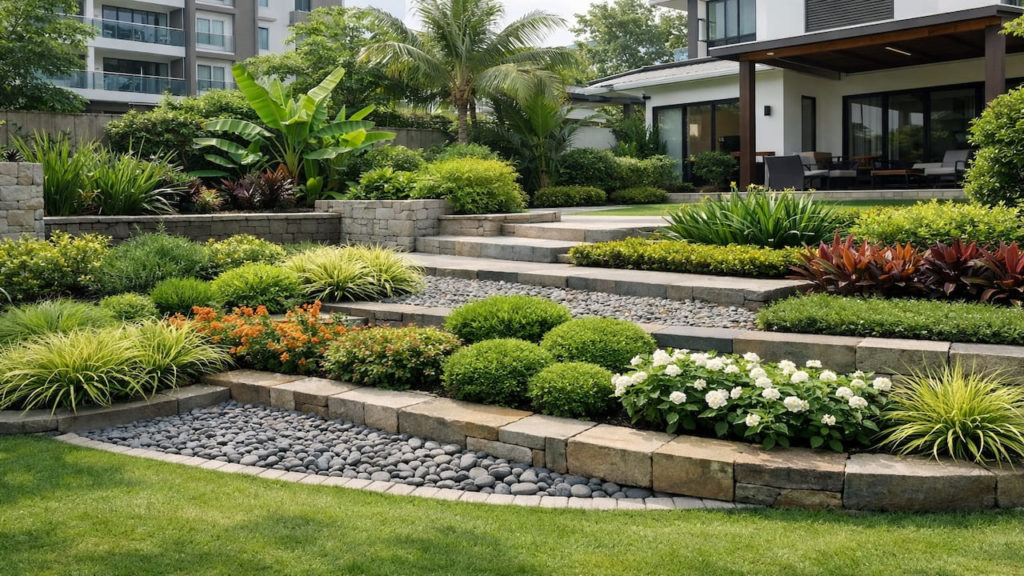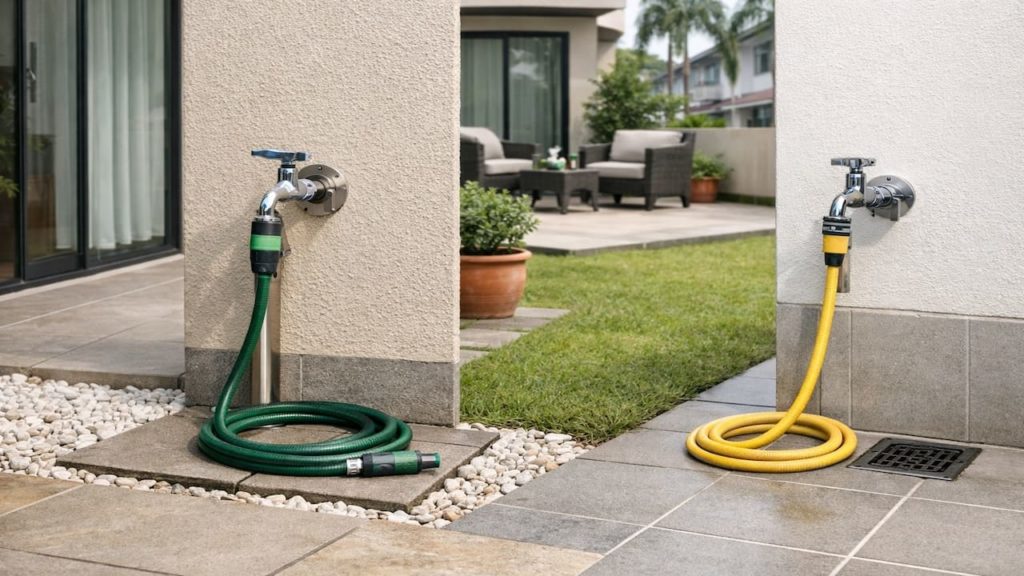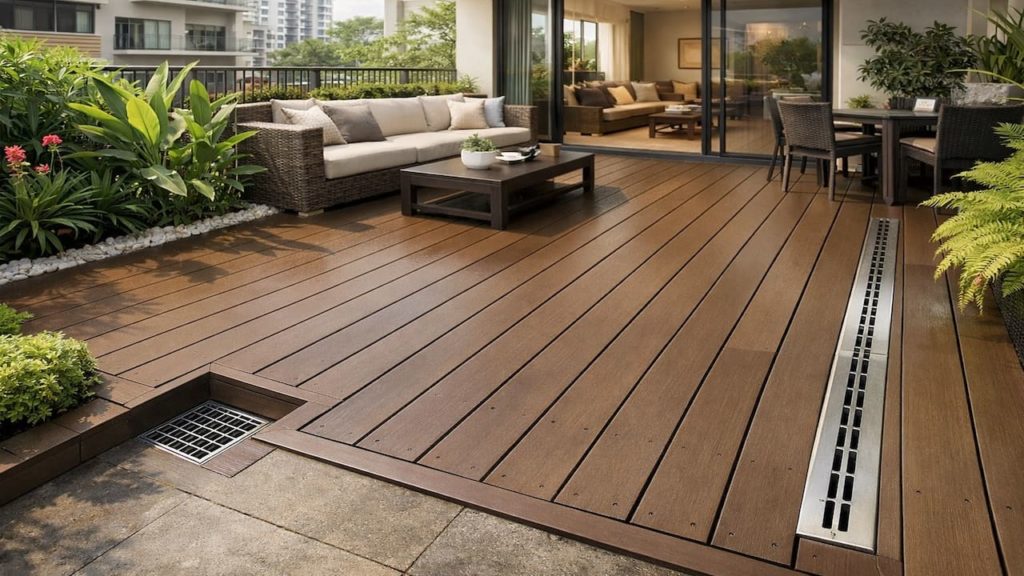
You see damp marks, green algae, or muddy splash lines near the house, and you know water is hanging around too long. In Malaysia, that “small wet patch” can turn into stains and smell quickly.
Heavy downpours, humid air, and short drying windows around terrace homes and condo ground floors make drainage problems show up fast. The tricky part is that water can travel under tiles or along walls before you notice.
In this guide, you’ll learn how to check drainage around the house and move water away before stains spread and repairs get annoying. You will also learn where runoff usually comes from, what to fix first, and how to keep costs under control.

Hi, I’m Ken. I write practical home guides for Malaysia—no fluff, just what works.
I hold a formal building design qualification and have spent about 20 years on job sites across hundreds of projects. My goal is simple: help you avoid costly mistakes with clear, safe steps—a quick way to decide what to do next.
1. Garden drainage around the house: 5 checks
Find where water lands and where it exits before you change anything.
In Malaysia, one hard rain can dump enough water to reveal the whole drainage story—if you know what to watch. First trace the flow from roof edges, downpipes, and paved areas to the nearest exit. Mapping. This prevents random “fixes” that do nothing and keeps you from spending money twice.
- Watch runoff during rain and mark flow paths
- Check downpipes for leaks at joints and elbows
- Look for puddles that remain after 30 minutes
- Inspect splash lines on walls and step risers
- Confirm the yard has a clear outlet direction
Some people start by buying drains, but if you do not know the flow path, you may place the drain in the wrong spot. Control. Do the checks first, then choose the simplest correction.
2. Move water away before stains spread
Redirect runoff in small steps so walls and tiles stay drier.
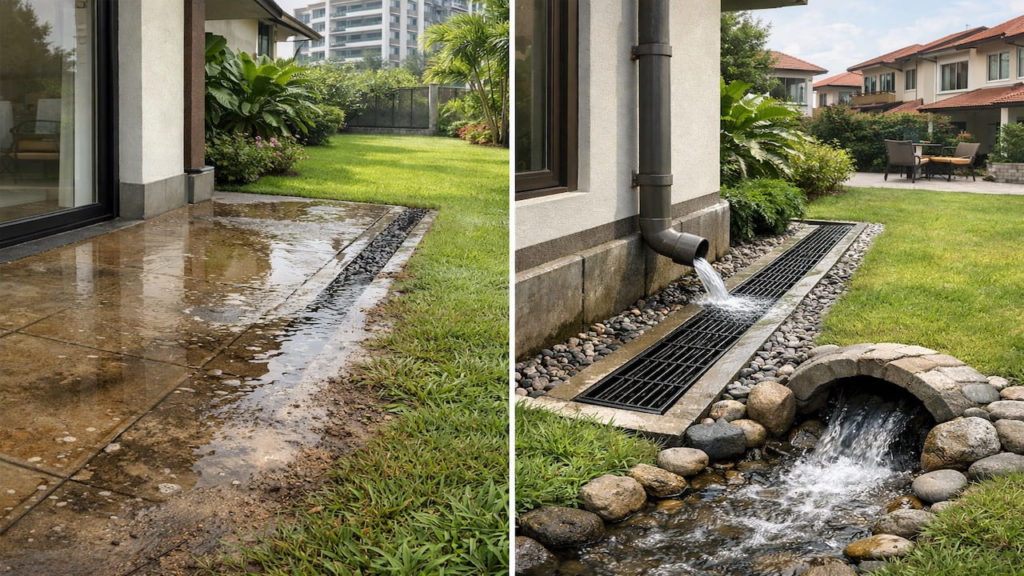
Stains spread when water keeps touching the same surfaces—walls, porch steps, and border edges get hit again and again. In Malaysia humidity, algae forms quickly on wet shade zones and makes surfaces slick. Prevention. Small redirections like splash blocks, extensions, or regrading often work better than one big drain install.
- Add a downpipe extension toward the nearest outlet
- Place splash blocks to stop wall base soaking
- Regrade soil to slope away from the house
- Clear leaf buildup blocking longkang entry points
- Move potted plants that trap wet corners
You might think stains are just cosmetic, but persistent wetting can lead to paint failure and musty smells inside. Warning sign. Move water away early and your cleanup workload drops fast.
3. Why stains and damp lines spread around houses in Malaysia
Water repeats the same route and humidity prevents full drying.
Downpours hit hard, then moisture lingers in shaded corners, under eaves, and along perimeter paths where air movement is weak. Malaysia’s wet-dry cycles also shift soil, opening tiny channels that guide runoff right back to your wall base. Hidden pathways. Once algae and dirt embed, every new rain refreshes the stain like a stamp.
- Check shaded corners where surfaces never fully dry
- Look for soil settling that creates new runoff grooves
- Inspect tile joints that funnel water toward walls
- Find roof drip edges missing gutters or drip lines
- Spot wet mulch piled against wall base areas
It is easy to blame “dirty walls,” but the real cause is repeating contact plus slow drying. Mechanism. Break the repeat route and the stain stops growing.
4. How to improve drainage safely without major renovation
Fix outlets and slopes first before adding new drainage hardware.
Start by clearing existing outlets like longkang openings, floor traps, and drain grates, because blocked exits make every other fix fail. Then adjust slopes so water moves away from the house, not toward it—small grade changes matter. A typical budget is RM10–80 for basic supplies like splash blocks, sealant, and simple extensions, unless you choose new channels. The goal is flow, not fancy parts.
- Flush drains and remove sludge at outlet points
- Seal gaps where water enters wall base joints
- Add gravel strip to reduce splashback at edges
- Lower high spots that dam water near porch
- Test with hose and confirm faster dry time
Some people jump straight to cutting concrete for a new channel, but many homes improve with cleaning and slope correction first. Practical. Prove the simple fixes, then upgrade only if water still pools.
5. FAQs
Q1. How long should puddles take to disappear after rain?
If puddles remain longer than 20–30 minutes on common paths, drainage is likely weak. In humid Malaysia, quick runoff matters because drying is slower in shade.
Q2. Do I need gutters to stop wall stains?
Gutters help when roof edges dump water near walls but they must discharge to a clear outlet. Without an exit path, gutters can move the problem to a new spot.
Q3. What is the easiest first fix for splashback stains?
Use a downpipe extension or splash block to move water away from the wall base. Then add a gravel strip so rain does not kick mud onto walls.
Q4. Can plants cause drainage problems near the house?
Yes, dense pots and shrubs can trap moisture and block airflow, especially along narrow side yards. Move them back slightly and keep the wall base clear.
Q5. How often should I check drains in rainy months?
Check weekly during heavy rain periods and after big storms, especially longkang entries and grates. Leaves and sludge build fast and silently.
Pro’s Tough Talk

Alright, I’ve been on site 20+ years, done hundreds of jobs, and drainage problems are the same movie every time. Malaysia rain is like a bucket dump, and humidity is the “rewind button” that keeps everything wet again.
Three causes. One, water lands too close because downpipes spit at the wall base or roof drip hits the same strip. Two, outlets are blocked, so water has nowhere to go and starts crawling sideways. Three, the ground or tiles slope the wrong way, so your house becomes the lowest point.
Do this in 3 steps. First, watch one real rain and trace the flow, then mark the worst puddle and stain line. Second, clear outlets and extend downpipes so water reaches the longkang. Third, fix slope and splashback with gravel and small grade changes.
Don’t blame yourself, and don’t say every contractor is useless either, but the structure is cold. The hidden slope work gets skipped when people chase “pretty tiles” and forget water physics. Water exit decides everything and no coating can argue with that.
Aruaru: you scrub the wall, then next rain redraws the same stain like it owns the place. Aruararu: the side yard that never dries and smells like a wet towel. Oi, you want clean walls, right? Move the water, or keep cleaning forever like it’s a hobby.
Summary
Drainage around the house improves when you trace runoff, clear outlets, and redirect water away before stains spread. In Malaysia humidity, repeating wet contact grows algae and marks fast.
If puddles remain and stain lines widen, fix downpipe discharge and slope direction first, then consider added channels only if needed. Repair the worst spot before it becomes a bigger patch job.
Do one rain-flow check today and fix one outlet then move on to a wall stain guide or a slippery tile guide to keep the whole area safer and cleaner. Small drainage wins protect the home long-term.