You have a garden tap, but daily use feels annoying because the hose is long, puddles form, and the corner becomes cluttered. In Malaysia, that wet corner turns slimy fast when humidity keeps surfaces damp.
Terrace homes and condo patios often have tight walkways, splash zones, and slow drying corners. If the tap is placed without thinking about hose length and drainage direction, you get leaks, algae film, and messy storage habits.
In this guide, you’ll learn how to place garden taps for short hoses and fewer puddles so daily watering and rinsing stay neat in wet months. You will also learn quick checks for flow paths, storage, and small fixes that reduce clutter.

Hi, I’m Ken. I write practical home guides for Malaysia—no fluff, just what works.
I hold a formal building design qualification and have spent about 20 years on job sites across hundreds of projects. My goal is simple: help you avoid costly mistakes with clear, safe steps—a quick way to decide what to do next.
1. Garden taps placed for daily use: 5 checks
Daily-use taps should reduce steps not create a wet obstacle course.
In Malaysia, you use the tap often, so tiny friction becomes daily mess—systems matter. Tap zone. Start by mapping where you water, where you rinse, and where water currently pools after use. A good tap position also makes hose storage easier and keeps walkways safer.
- Measure distance to main watering zones and entry path
- Check floor slope so water drains away from walls
- Look for splash marks showing frequent wetting spots
- Test reach for turning tap without blocking walkway
- Confirm storage space for hose and nozzle nearby
Some people put taps where plumbing is easiest, but easy plumbing can create daily inconvenience and puddles for years. Reality. Place for use, then solve plumbing smartly.
2. Short hose fewer puddles and less clutter
Place taps near work zones so hoses stay shorter and cleaner.
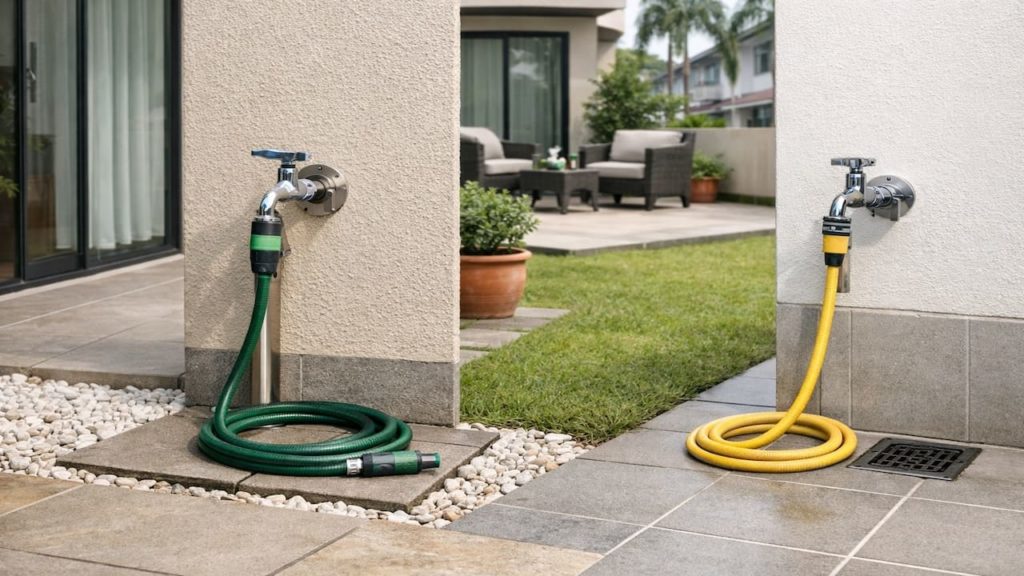
Short hoses tangle less, drag less dirt, and leave less water on the floor, especially after sudden Malaysia rain when everything is already wet. Clutter control. If the hose must cross the whole yard, it will live on the ground and become messy. Put the tap where you actually use it, then the hose can stay on a reel and off the floor.
- Put tap closer to the most-used watering area
- Keep tap near a drain path for quick floor drying
- Install a hose reel beside the tap to prevent tangles
- Add a quick connector to reduce dripping changes
- Use a short whip hose for flexible nozzle handling
You might think one tap is enough, but one badly placed tap creates long hoses, puddles, and clutter every day. Tradeoff. A better position beats constant cleanup.
3. Why tap areas get messy in Malaysia homes
Small drips become algae when the area never fully dries.
Humidity slows evaporation, so a little drip at the tap or hose joint can keep the same patch damp for hours. Malaysia rain also adds splashback, so dirt mixes with water and forms a slick film on tiles and grout. Tight corners with poor airflow stay wet longer, and hoses left on the floor trap moisture underneath. The mess repeats because the setup repeats.
- Check joint drips at tap and connector points
- Spot green film on grout lines near the tap base
- Notice puddles forming where hose rests on floor
- Find splash zones from downpipes near tap corner
- See clutter piles preventing airflow and quick drying
It is easy to blame “rainy season,” but the real cause is repeated wetting at the same spot plus poor drying. Mechanism. Reduce drips, improve drainage, and the corner stays cleaner.
4. How to improve tap placement and reduce puddles
Control the wet footprint with slope, storage, and drip management.
If you cannot move plumbing, you can still reduce puddles by changing how water lands and where it exits. Add a small splash area that is easy to wash, keep the hose elevated, and direct drips into a tray or gravel strip so the floor does not stay wet. For basic supplies like quick connectors, a hose reel, seal tape, and a drip tray, RM10–180 is common depending on what you already have. Keep the fix simple for daily use.
- Install quick connector to stop drips during swaps
- Wrap threads with tape and replace worn washers
- Add gravel strip under tap to break puddles
- Mount hose reel so hose stays off wet floor
- Squeegee water toward drain after heavy rinsing use
Some people try to mop after every use, but that is a losing game in Malaysia humidity when the root cause is layout and drip points. Priority. Fix drips and storage and puddles fade.
5. FAQs
Q1. Where is the best location for a daily-use garden tap?
Near the most-used watering and rinsing zone, with a clear drain path and airflow for drying. Avoid tight corners that stay shaded and damp.
Q2. Does a shorter hose really reduce mess?
Yes, shorter hoses drag less dirt and leave less water on floors because there is less length to hold water and drip. They also store neater and kink less.
Q3. How do I stop drips at the tap connection?
Replace the washer, tighten properly, and use thread tape where appropriate. Quick connectors also reduce dripping when you change nozzles.
Q4. What can I do if I cannot move the tap?
Improve the wet footprint by adding a gravel strip or drip tray, mounting a hose reel, and directing runoff to a drain. Then keep the area dry with a quick squeegee habit.
Q5. Why is the tap area always slimy?
Small drips plus humidity create a biofilm that grows on grout and tiles. Reduce standing water, clean lightly but often, and improve airflow so the area dries faster.
Pro’s Tough Talk

Alright, I’ve been on site 20+ years, done hundreds of jobs, and tap corners get messy for one simple reason. Malaysia humidity turns tiny drips into permanent damp, and people act surprised when algae shows up.
Three causes. One, the tap is far from where you actually work, so you use a long hose that lives on the floor like a lazy snake. Two, drips at washers and connectors keep the same patch wet all day. Three, storage is an afterthought, so clutter blocks airflow and the corner never dries.
Do this in 3 steps. First, set the tap near the main daily-use zone or at least create a cleanable wet footprint. Second, fix drips with new washers, tape, and quick connectors, then mount a reel so the hose stays off the floor. Third, direct runoff to a drain and squeegee after heavy use.
Don’t blame yourself, and don’t blame every contractor either, but the structure is cold. People install taps where plumbing is easy, then you pay the daily hassle for years. Short hose and dry base decide neatness and that is the truth.
Aruaru: you water once and the corner stays wet until night. Aruararu: the hose tangles, you yank it, and the connector drips like it’s crying. Oi, want a neat tap zone or a swamp corner? Fix the layout, or keep tiptoeing around puddles forever.
Summary
Garden taps feel easy daily when placed near the work zone, using shorter hoses, and keeping water draining away from walls and walkways. In Malaysia humidity, small drips create puddles and slime quickly.
If the area stays wet and cluttered, fix drips and hose storage first, then improve the wet footprint with gravel or trays and a clear drain path. Move the tap only if daily workflow stays painful.
Measure your hose run today and cut one drip point then move to a hose storage guide or an outdoor sink placement guide to keep the whole wet-work corner cleaner. Small system fixes beat daily frustration.