Your side yard is usually a narrow strip, and in Malaysia it can turn into a damp, dark corridor that feels like wasted space. That is common.
Heavy rain, humidity, and fast plant growth make narrow areas slippery and smelly fast, especially between terrace walls where airflow is limited. One bad drain ruins the whole strip.
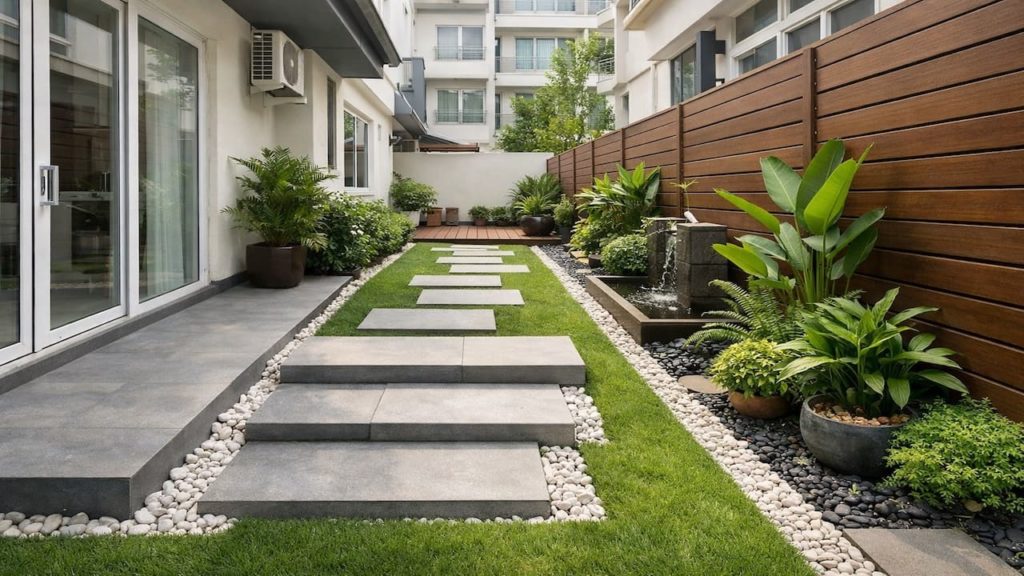
In this guide, you’ll learn how to turn a side yard into a clean useful path. You will set a simple route, protect drainage flow, and keep the strip easy to rinse in wet months.

Hi, I’m Ken. I write practical home guides for Malaysia—no fluff, just what works.
I hold a formal building design qualification and have spent about 20 years on job sites across hundreds of projects. My goal is simple: help you avoid costly mistakes with clear, safe steps—a quick way to decide what to do next.
1. Side-yard garden design: 5 steps
Make the path the only priority so the strip stays usable and clean in Malaysia wet weather.
Narrow strips fail when people treat them like storage—then you cannot walk, rinse, or even check pipes. Corridor logic. A clear path also improves safety because wet algae film is most dangerous in tight passages. Keep the route simple from front to back, and protect it from soil wash.
- Clear all items off the strip completely
- Mark one straight route from front to back
- Keep the route wide enough for safe passing
- Set the route on the highest ground line
- Leave one access spot for pipe inspections
You might think the strip is too small to matter, but it is a daily access lane for bins, meters, and maintenance. Malaysia rain will punish blocked access fast. Path first, everything else is optional.
2. Turn narrow strips into useful clean paths
Protect drainage and airflow along the walls so the side yard dries faster in Malaysia humidity.
Side yards stay damp because walls block wind and shade blocks sun, so water lingers and algae builds on surfaces. Drying speed. Your job is to reduce water sitting time and remove dirt traps, not to add more “features.” Keep items lifted and keep the wall base visible so you can spot damp marks early.
- Pull pots away from walls to open airflow
- Raise planters with feet to dry underneath
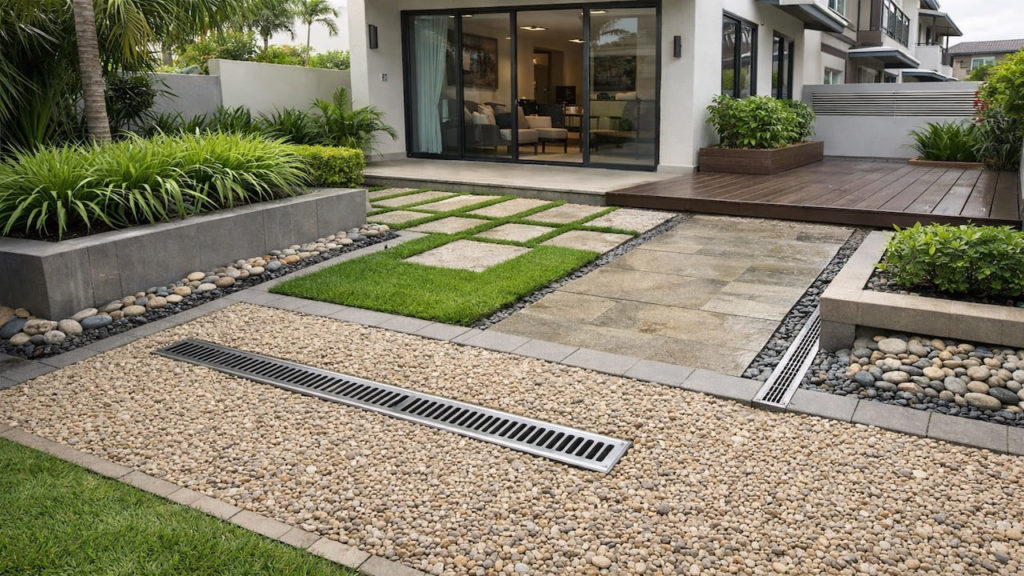
- Install drain screen to catch leaves early
- Use edging to stop soil washing onto path
- Keep one storage box at the driest end
You may want to line the strip with plants, but plants in a narrow corridor block wind and become leaf traps. Malaysia wet months make that worse. Keep greenery minimal and vertical if you want any at all.
3. Why side yards become slimy and unused in Malaysia
They become slimy because shade plus trapped water creates perfect conditions for algae film.
When water runs through soil or leaf piles onto the walkway, it leaves dirt that sticks to the wet film and darkens the whole strip. Wet loop. If drains clog, overflow creates stains along the wall base, and the area smells musty. In narrow spaces, you notice it immediately because you are close to the wall.
- Shaded walls slow drying after rainstorms
- Leaf piles block drains and cause overflow
- Soil splash adds dirt onto the walkway
- Clutter blocks hose access and cleaning loops
- Overgrown plants drop debris into corners
You might blame the surface, but the real issue is water staying too long and dirt staying too close. Malaysia humidity makes it repeat weekly. Fix flow and access, and the strip becomes easy again.
4. How to rebuild a side yard path in 60 minutes
In 60 minutes, reset the strip into a rinse loop so the path stays safe in Malaysia wet months.
Clear the corridor, rinse it, check the drain, then define one clean edge line so soil and debris stop creeping onto the route. Simple reset. Plan RM20–120 for a drain screen, basic edging, and pot risers if you need quick hardware that prevents repeat slime. Then keep one weekly 5-minute rinse habit after storms.
- Remove everything and sweep the strip clean
- Flush the drain and confirm water flows
- Tape a straight path line and keep it open
- Set one edging line to contain soil and leaves
- Store hose and tools in one closed box
You may want to redo materials, but most side yard problems are maintenance access problems, not material problems. Malaysia weather rewards simple systems. Build the rinse loop first, then upgrade only if needed.
5. FAQs
Q1. What is the best surface for a narrow side yard path?
A surface that rinses easily and stays grippy when wet is best. Fast rinsing matters more than looks in narrow Malaysia side yards.
Q2. How wide should the side yard path be?
Make it wide enough for safe walking and carrying bins, and keep the width consistent. Consistency keeps the corridor feeling less tight and more usable.
Q3. How do I stop algae making it slippery?
Improve airflow by reducing clutter near walls, and rinse regularly before film builds thick. Drain screens also help by preventing dirty overflow.
Q4. Can I still have plants in a narrow strip?
Yes, but keep them minimal, vertical, and off the floor line so the path stays clear. Avoid dense ground planting that traps leaves and moisture.
Q5. What weekly routine keeps it clean in wet season?
Sweep leaves, flush the drain, and rinse the path once a week. Small resets prevent the slimy film from building into a bigger scrub job.
Pro’s Tough Talk

Listen, I’ve been on site for 20+ years and I’ve done hundreds of jobs, and side yards are where bad habits go to hide. In Malaysia humidity, that narrow strip turns into a wet slime lane if you treat it like storage.
Three causes: you block the corridor with junk, you ignore drainage until it overflows, and you add plants that drop leaves into tight corners. That’s like stuffing a hallway with boxes and acting shocked when you trip. Contractors aren’t all evil, but rushed work often skips slope and drain access thinking.
Do three steps now: clear the strip, flush the drain, then mark a clean path and keep everything off it. Relatable moment: you take out the bins and your sandals skid. Relatable moment: you smell musty damp and pretend it’s “just weather.”
Here’s the cold system: a side yard is a service corridor, and if you block service, the house suffers, not just the garden. Seriously, why is the hose living in the only walking line?
Fix the path and drainage once, or keep maintaining a premium slime museum behind your house.
Summary
Turn a narrow side yard into a useful clean path by prioritizing one clear route, protecting drainage flow, and keeping airflow along walls in Malaysia humidity.
If it stays slimy, the cause is usually shade plus trapped water and dirt traps from clutter, leaf piles, and hidden drains during wet months. Fix flow first.
Today, clear the strip and flush the drain. Next, follow a slippery-surface guide and a drain-care guide to keep the corridor safe.