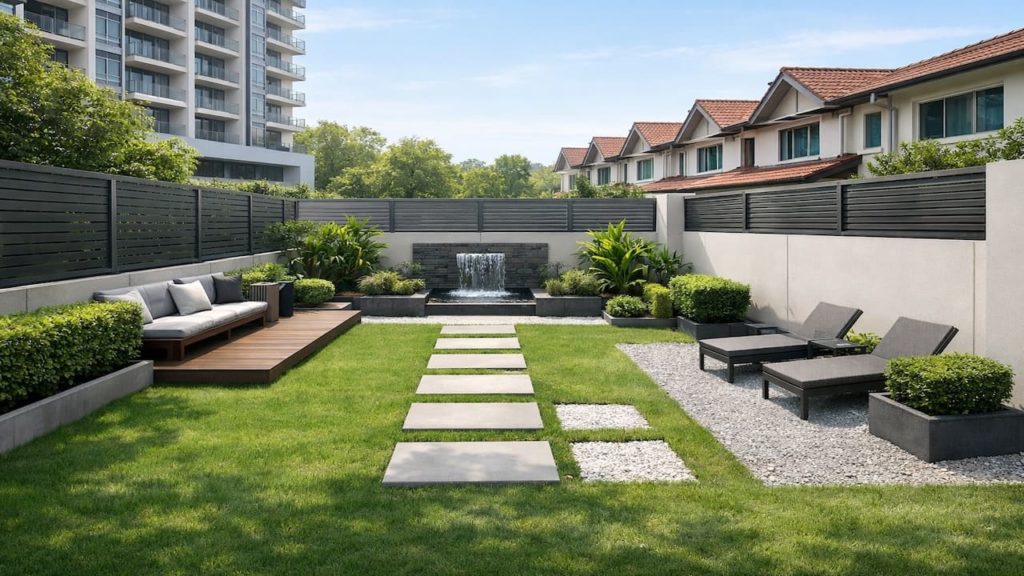
You want your fence line to look clean and finished, but it also needs to feel safe, easy to maintain, and not become a hidden strip of damp mess.
In Malaysia, fences trap shade and humidity, rain splashes dirt up, and tight side yards around terrace homes or condos create blind spots that invite pests and mildew.
In this guide, you’ll learn how to design fence boundaries that stay tidy and reduce blind spots while keeping airflow, drainage, and daily cleaning realistic in wet months.

Hi, I’m Ken. I write practical home guides for Malaysia—no fluff, just what works.
I hold a formal building design qualification and have spent about 20 years on job sites across hundreds of projects. My goal is simple: help you avoid costly mistakes with clear, safe steps—a quick way to decide what to do next.
1. Fence-friendly garden design: 5 checks
A clean fence boundary starts with access and visibility not just plants and décor.
Fence lines fail when you cannot see or reach them, so dirt and damp build up quietly until it smells or stains. In Malaysia humidity, that hidden strip becomes a perfect zone for algae, ants, and leaf sludge after heavy rain. Simple design choices keep the boundary sharp and reduce the “unknown corner” feeling. Control.
- Walk the fence line and note hidden corners
- Plan a narrow service strip for cleaning access
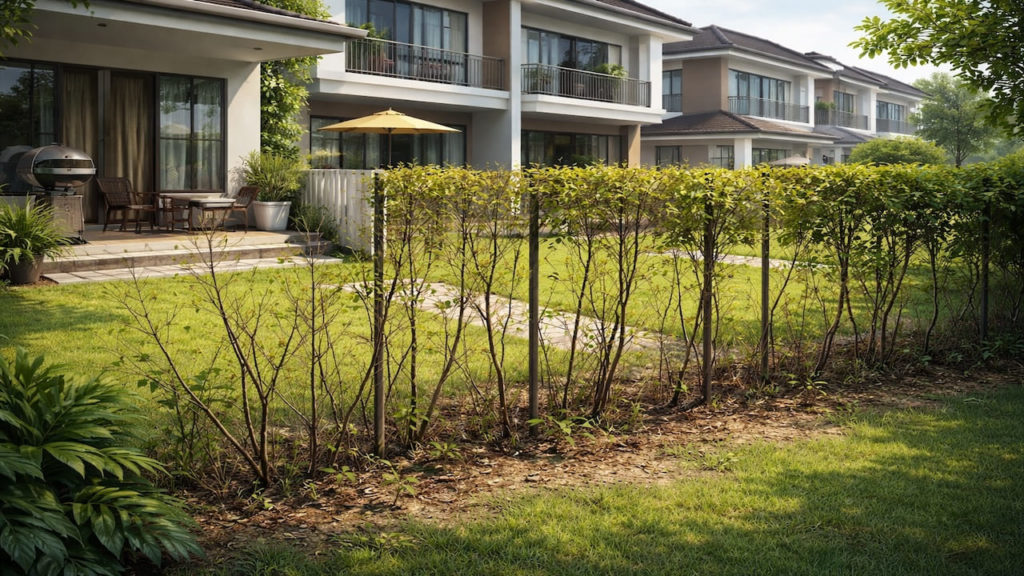
- Keep plants off the fence to improve airflow
- Direct runoff away from the fence base area
- Choose lighting points to reveal dark pockets
Some people pack plants tight to hide the fence, then lose access and create damp shade. That looks lush for a month — then maintenance becomes a weekly fight you start avoiding.
2. Clean boundaries with fewer blind spots
Reduce blind spots by keeping the fence line simple and readable at night and after rain.
Blind spots happen where tall plants block sightlines, where storage piles up, or where the fence line turns into a narrow maze you never walk into. In Malaysia wet season, those unseen areas stay damp longer and become the first place you notice smell and pests. If you add basic boundary lighting or a small sensor light, many setups are RM40–200 depending on the fixture and wiring. Visibility.
- Keep plant heights stepped down near corners
- Use low edging to define the service strip
- Avoid storing bins and tools in tight fence gaps
- Add sensor light aimed along the fence base
- Leave a clear path for quick hose rinsing
You might think blind spots are only a security problem, but they are also a maintenance problem. When you can see the fence base clearly, you clean sooner and issues stay small.
3. Why fence lines get dirty and risky in Malaysia gardens
Fence lines get worse when shade and splash keep them wet and dirt never dries out.
Rain bounces off hard surfaces and throws mud onto the fence base, then shade stops it from drying fast. Humidity keeps the boundary damp, so algae and mildew build up and create slippery patches on narrow side paths. Tight airflow also makes odors linger near fences, especially behind dense plants. Hidden strip.
- Check for splash marks after heavy rain
- Look for green film on paving near fences
- Inspect fence base for mold dots and staining
- Find where gutters dump water beside fences
- Notice ant trails and roach hiding gaps
It is easy to blame “Malaysia weather” and accept it, but the pattern is predictable. Give water an exit and give air a path, and the fence boundary stops acting like a damp storage closet.
4. How to design fence boundaries for easy cleaning and safety
Build a fence-edge system: buffer strip, drainage, and controlled planting together.
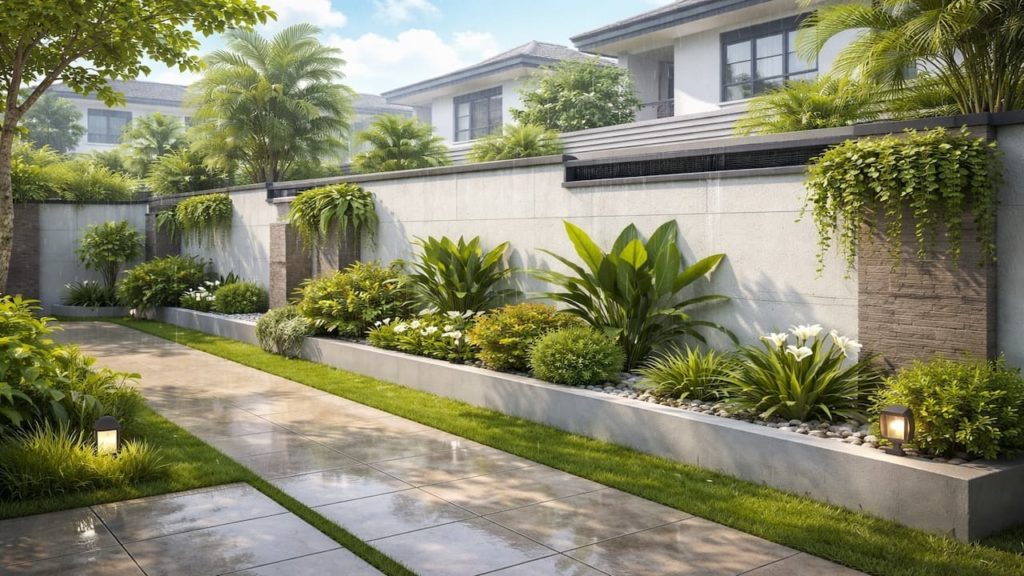
Create a narrow buffer strip using gravel or pavers so splash does not hit soil directly at the fence. Keep plants slightly off the fence to allow airflow, and leave access space for rinsing and checking. If you need gravel, edging, and fabric for a small buffer strip, a typical DIY spend is RM60–350 depending on length and materials. Clean edge.
- Add gravel buffer strip to reduce soil splash
- Set edging to stop gravel drifting into soil
- Raise pots on feet to prevent trapped dampness
- Trim plants to keep airflow along fence line
- Route water to drains before it reaches corners
Some worry a buffer strip will look too bare or “unfinished.” That is a styling issue, not a design flaw — keep the strip narrow, add a simple rhythm of pots, and the boundary looks intentional while staying easy to maintain.
5. FAQs
Q1. How wide should a fence service strip be?
Wide enough to walk and rinse comfortably, even if it is narrow. If you cannot step in without brushing plants, it is too tight and will become neglected.
Q2. Are climbing plants a good way to hide fences?
They can work, but they often trap damp and hide pests behind dense growth. Use them in controlled sections with space behind for airflow and inspection.
Q3. What is the easiest way to reduce blind spots at night?
Add lighting that washes along the fence line so corners and base areas are visible. Even small sensor lights change how safe and clean the space feels.
Q4. Why does my fence base smell musty after rain?
Water is sitting in shade with trapped dirt, so it never fully dries. Improve drainage, reduce splash, and open airflow by clearing plants off the fence.
Q5. How do I keep the fence line from becoming a pest corridor?
Remove clutter, seal gaps, and keep plants trimmed off the fence. A visible, dry boundary is less inviting than a dark, damp hidden strip.
Pro’s Tough Talk

Listen, I’ve been on site 20+ years and done hundreds of jobs, and fence lines are where people hide problems until the problems start walking around.
Cause one: you cram plants tight against the fence, and Malaysia humidity turns it into a damp tunnel. Cause two: you ignore splash and runoff, so the base stays dirty and goes green like it is proud of it. Cause three: you create blind spots with clutter, then pests and mold move in like they paid rent.
Do this now: first, clear the fence base and make a service strip you can actually step on. Second, stop water dumping there by adding a buffer strip and routing runoff to drains. Third, trim and space plants so air can move, and add a light so you can see what is happening at night.
Clean boundaries are not about effort they are about access and I am not blaming you for wanting greenery. Contractors are not always out to get you, but the structure is cold: if you cannot see it, you will not maintain it, and then it rots quietly.
You know that moment when you find one cockroach sprinting into the fence gap, and that moment when you rinse the side yard and the water just sits there staring back at you—oi, what is this, a garden edge or a secret swamp lane.
Summary
Fence-friendly gardens stay clean when you can see the boundary, reach it easily, and keep it dry with a buffer strip and better drainage.
If your fence line keeps getting dirty or creating blind spots, reduce clutter, open airflow, and manage runoff so damp corners do not become hidden problem zones.
Start by clearing one fence corner and adding a narrow service strip then guide readers to your edging and walkway drying articles to keep the whole garden sharp in wet months.