Your gate area is the first place you step on wet mornings, and it is also the first place that starts looking messy when mud, leaves, and puddles build up.
In Malaysia, heavy rain, fast algae growth, and tight terrace-home or condo entrances make gate zones slippery, cramped, and hard to keep tidy if water flow is wrong.
In this guide, you’ll learn how to design a gate area for safe access and a clean look even when storms hit and daily foot traffic never stops.

Hi, I’m Ken. I write practical home guides for Malaysia—no fluff, just what works.
I hold a formal building design qualification and have spent about 20 years on job sites across hundreds of projects. My goal is simple: help you avoid costly mistakes with clear, safe steps—a quick way to decide what to do next.
1. Garden design around gates: 5 checks
A good gate zone is a safety zone first because it handles wet shoes and rush moments.
Gate areas take the most abuse: delivery steps, trash runs, wet umbrellas, and quick exits during sudden downpours. In Malaysia humidity, the damp strip near the gate stays wet longer, so slime film appears faster than in open areas. Keep the layout simple and the surface grippy, and the daily routine becomes calmer. First impression.
- Map the daily path from car to door
- Check where rain splashes from road edge
- Keep the gate landing clear of clutter
- Plan lighting to reveal steps and puddles
- Choose surfaces that grip when sandals are wet
Some people treat the gate as a decoration spot and fill it with pots and stones. That looks cute until you carry groceries in the rain — leave the path clear and let the tidy look come from structure.
2. Safe access that still looks tidy daily
Tidy gate zones stay tidy when dirt has a place to land and water has a place to go.
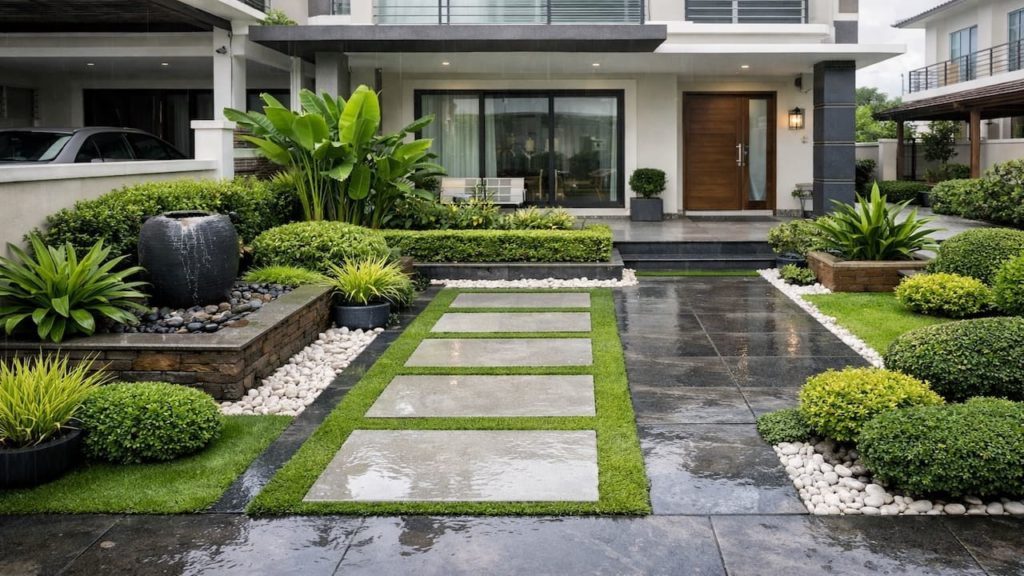
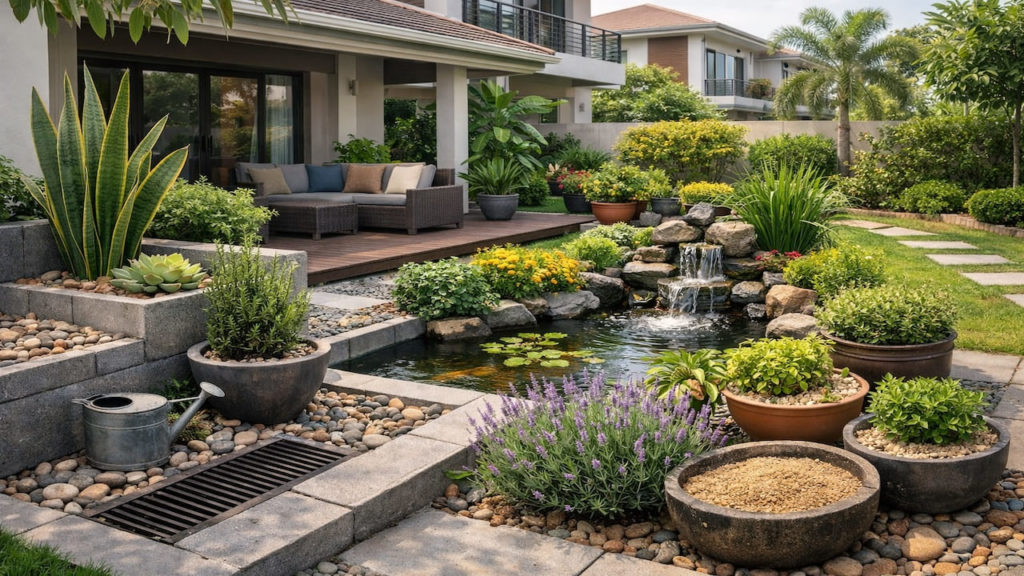
Mud and leaf bits gather where water slows down, especially right inside the gate where the slope is often flat. A small landing plus a simple buffer strip keeps the area readable and easy to rinse. If you add a basic drain grate, gravel strip, or anti-slip mat, costs are usually RM30–250 depending on what you choose. Clean routine.
- Add a small landing pad inside the gate
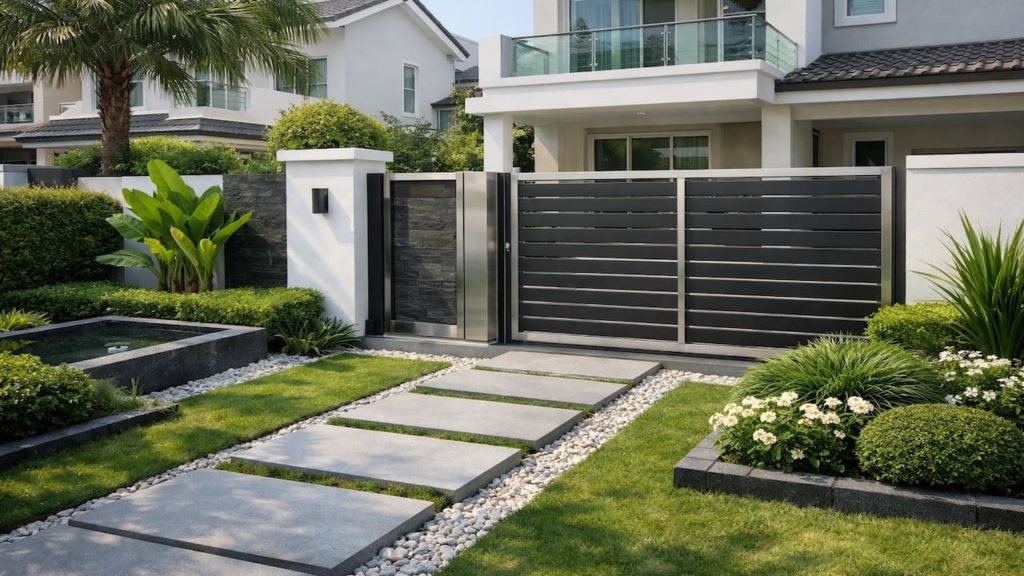
- Use gravel buffer strip to catch muddy splash
- Install textured pavers on the stepping line
- Keep planters off the walking edge zone
- Rinse to drain line not toward the door
You may think a gravel strip looks unfinished, but it is a functional filter that protects your clean surface. Keep it narrow, edge it well, and it reads like a designed detail, not a workaround.
3. Why gate areas get slippery and messy in Malaysia homes
Gate zones fail when they are flat and shaded so water and grime stay longer.
Rainwater brings dust from the street, then it sits and forms a slick film on smooth tiles. Side fences and walls reduce airflow, so the gate corner dries slowly and grows algae faster. Deliveries and daily foot traffic grind dirt into joints, making the surface look old before its time. Hot humidity.
- Check puddles after rain for where they sit
- Look for green film near corners and walls
- Inspect joints for dark sludge buildup
- Find gutter splash points near the entrance
- Notice where shoes track mud onto the landing
People often blame “dirty street water” and accept the mess as unavoidable. But if you give water a fast exit and reduce splash and shading, the same entrance stays cleaner with less effort.
4. How to design a gate area for fast drainage and clear walking lines
Make the gate zone a mini drainage system with clear steps and clean edges.
Set a gentle slope from the landing toward a drain point, then keep the walking line direct so you do not step into puddle zones. Add a buffer strip to catch grit before it reaches your nicer surfaces, and keep storage out of the entrance corner. If you need re-leveling, a small channel drain, or a landing rebuild by a handyman, RM250–1,500 is a common range depending on access and materials. Clear exit.
- Regrade landing to drain away from doorway
- Add channel drain at the lowest gate point
- Use edging to keep gravel strip contained
- Keep gate swing area free of pots and bins
- Place light to wash along the walking line
Some worry drains will look ugly or feel like a commercial driveway. Pick a simple grate and align it with your paving joints — the result looks intentional, and you stop fighting puddles every week.
5. FAQs
Q1. What surface is safest at the gate for wet sandals?
Textured pavers or a matte finish are usually safer than glossy tiles, especially in shaded corners. Always wet-test the area because “dry grip” can be misleading.
Q2. How do I stop mud tracking into the house from the gate?
Add a gravel or rough-texture buffer zone, then keep a direct stepping line over clean pavers. The goal is to trap grit at the entrance, not inside.
Q3. Should I add a drain right inside the gate?
Yes if water pools there after rain because that is where slime and slip risk start. A small channel drain is often cleaner than trying to slope everything perfectly.
Q4. Why does the gate corner smell musty after storms?
Water and dirt are sitting in shade with low airflow, so it never fully dries. Improve drainage and keep plants and clutter away from the fence base.
Q5. How can I keep the gate area looking tidy every day?
Limit loose items, keep the walking line clear, and rinse toward a drain point after storms. A simple edge and landing structure makes “tidy” automatic.
Pro’s Tough Talk

Look, I’ve been on site 20+ years and done hundreds of jobs, and gate areas are where people slip because they rush and the ground lies to them.
Cause one: flat landing, so water sits and turns into slime faster in Malaysia humidity. Cause two: smooth tiles, because somebody picked shine over grip, then wonders why it feels like soap. Cause three: clutter at the gate, so you step around pots and bins right into the wet corner.
Do this now: first, clear the gate zone and mark the puddle spots after the next storm. Second, give water an exit with slope or a small drain, and stop rinsing dirt toward the door. Third, put textured stepping surfaces on the walking line and keep gravel buffers edged tight.
This is not a cleaning problem it is a layout problem and I am not blaming you for wanting it to look nice. Contractors are not all evil, but the structure is cold: if the entrance stays wet, it will grow green and it will bite you when you hurry.
You know that moment when the delivery guy steps in and you suddenly shout “careful,” and that moment when you dash out to take the trash and do the tiny slip-dance—oi, are we entering a home or auditioning for a comedy stunt.
Summary
Gate areas stay safe and tidy when you control water, use grippy surfaces on the walking line, and keep the entrance clear of clutter and splash zones.
If your gate corner stays wet or slippery, fix low spots and add drainage before you spend money on more décor or more cleaning products.
Start by mapping one walking line and one drain exit today then guide readers to your walkway drying and edging articles to keep the whole entry zone sharp in wet months.