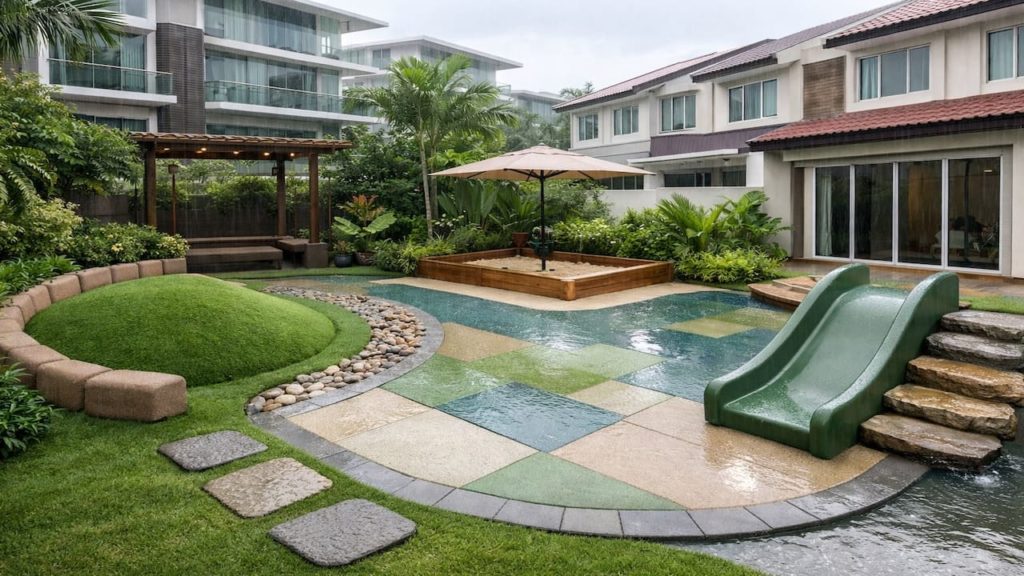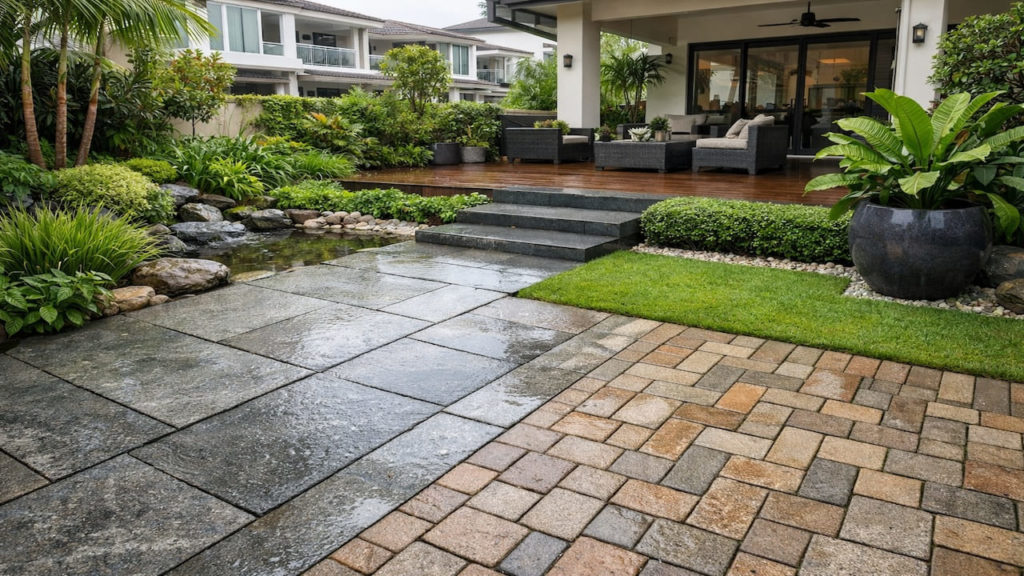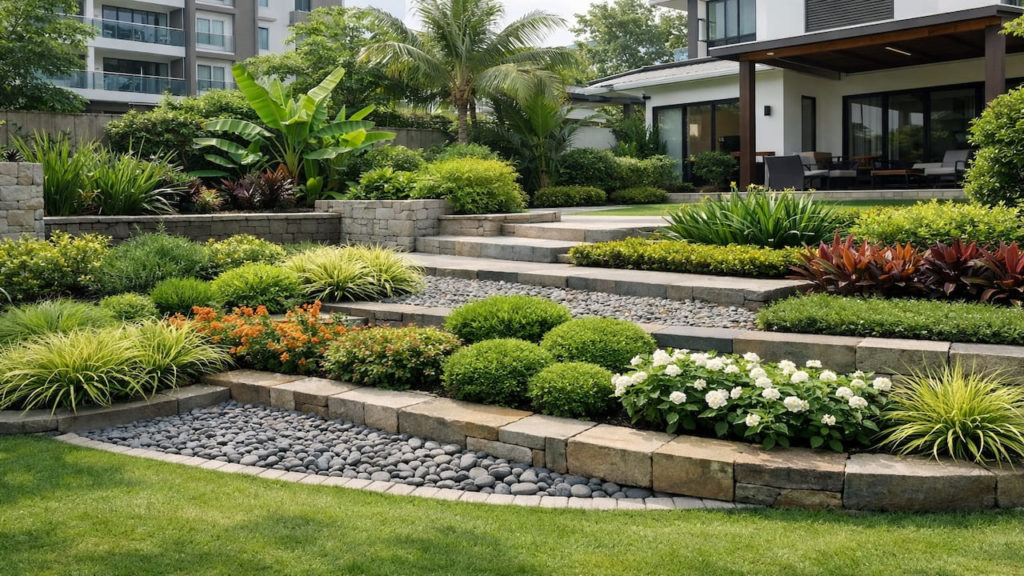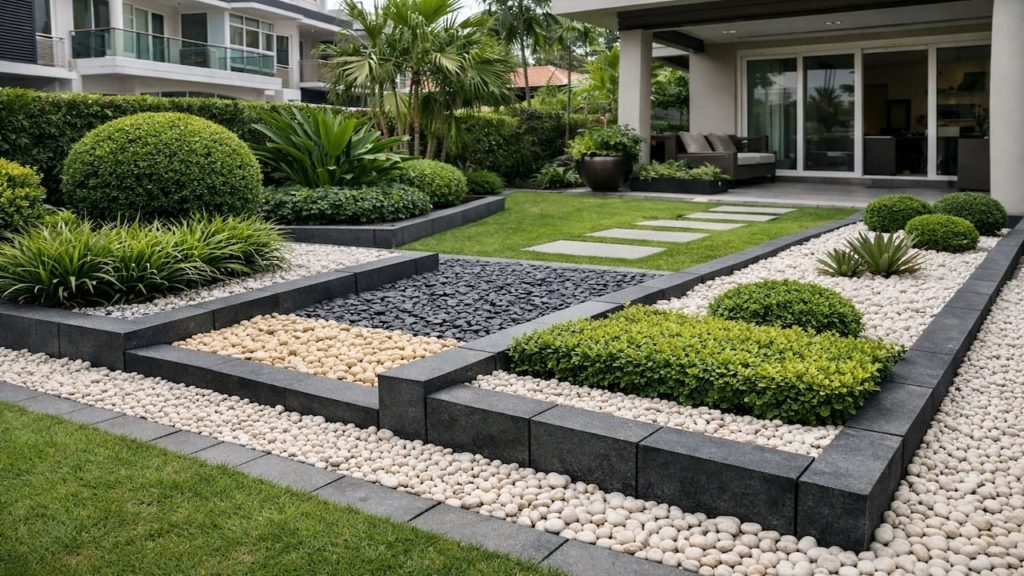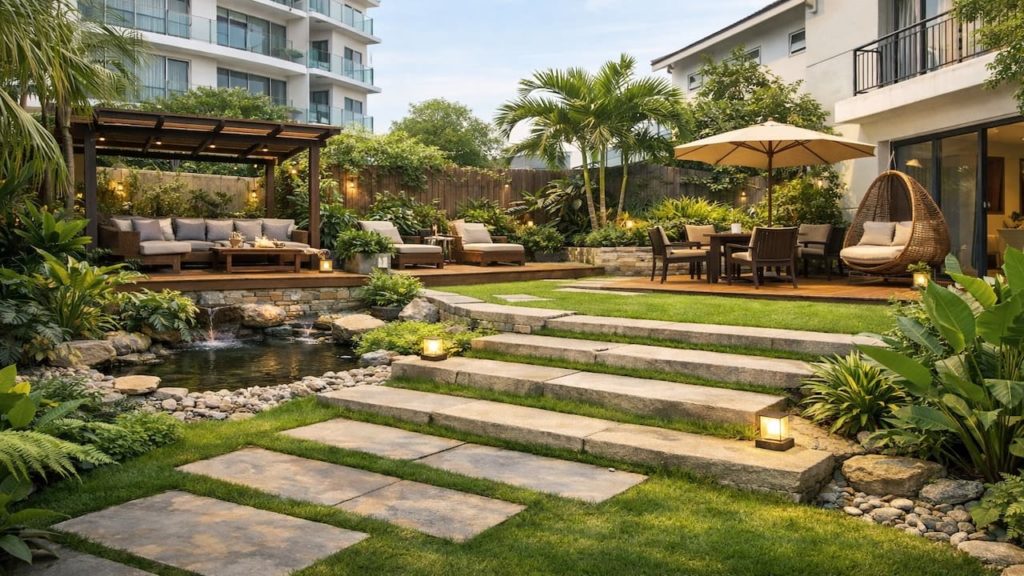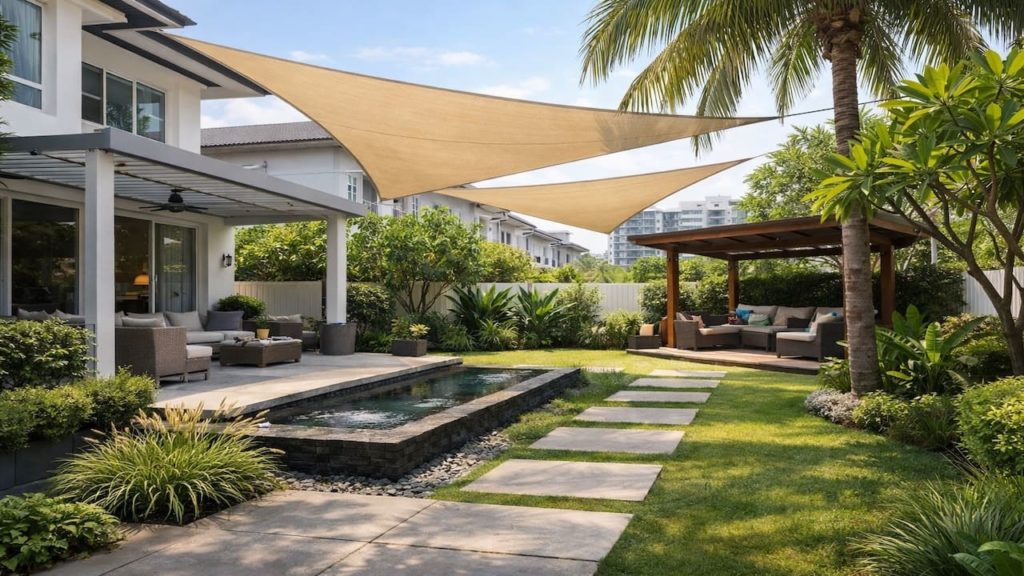
You want more shade because the yard feels hot, but you do not want the garden to turn dim, damp, and hard to use after rain.
In Malaysia, heat and humidity arrive together, and too much shade can trap moisture, slow drying, and create dark corners that feel messy and unsafe.
In this guide, you’ll learn how to cool the yard with shade that still keeps light and airflow so the garden stays comfortable without becoming a gloomy wet-season problem.

Hi, I’m Ken. I write practical home guides for Malaysia—no fluff, just what works.
I hold a formal building design qualification and have spent about 20 years on job sites across hundreds of projects. My goal is simple: help you avoid costly mistakes with clear, safe steps—a quick way to decide what to do next.
1. Shade-smart garden design: 5 tips
Smart shade cools the space while protecting airflow and brightness in daily living zones.
Shade is not only about blocking sun, it is about controlling heat without killing the breeze that dries surfaces in Malaysia wet months. If you over-shade, algae and mildew grow faster and the yard feels stale. A good plan targets the seating and walkway lines first, then leaves open “light windows” for the rest. Comfort.
- Identify the hottest time and direction of sun
- Shade seating zones before shading the whole yard
- Keep cross-breeze paths open along fences and walls
- Use layered shade instead of one solid cover
- Plan lighting so corners stay readable at night
Some people chase full coverage because it feels safer from heat, then regret the damp corners. Shade should feel like relief, not like closing a lid — leave room for wind and light, and the yard stays pleasant.
2. Cool the yard without creating dark corners
Use filtered shade that blocks glare but keeps daylight across the ground plane.
Filtered shade comes from slats, perforated panels, light canopies, and planting layers that break sunlight without sealing the sky. In Malaysia, this matters because heavy rain already reduces brightness, and extra darkness makes wet surfaces feel riskier and look dirtier. If you add shade cloth, clips, or a simple screen panel, RM30–250 often covers basic parts for a small zone. Soft light.
- Choose slatted pergola roof with controlled spacing
- Use light colored canopy to reflect heat upward
- Keep shade edge away from walls to allow breeze
- Place reflective gravel to brighten shaded ground
- Avoid blocking sightlines into corners near doors
You might think darker shade equals cooler comfort, but the opposite can happen when air stops moving. Filtered shade feels cooler because the breeze stays active and the ground dries faster after storms.
3. Why dark corners happen in Malaysia garden layouts
Dark corners form where shade overlaps with blocked airflow and drying time gets long.
Tall fences, side walls, and dense planting already reduce light in terrace-home side yards. Add a solid roof or thick screens, and the corner becomes a damp pocket that grows algae and smells musty after rain. Heat also lingers when air cannot escape, so the space feels sticky, not cool. Corner effect.
- Check corners that stay wet past midday
- Notice musty smell near shaded fence lines
- Look for green film on paving in low light
- Track mosquito activity in still air pockets
- Find spots where laundry dries unusually slowly
People often blame “Malaysia humidity” and give up, but layout decisions are the main driver. Let wind pass and let light reach the ground, and the corner stops acting like a damp storage space.
4. How to add shade that stays cool and easy to maintain
Design shade using three tools: height, gaps, and drain control as a system.
Raise shade elements to allow air under them, keep gaps at the sides, and make sure runoff does not dump into the same corner every storm. Choose shade coverage only where you sit, cook, or walk, then use lighter plant layers for the rest. If you hire help to install a small awning, slatted panel, or pergola element, RM400–2,500 is a common range depending on size and structure. Controlled cool.
- Set shade higher to keep airflow under cover
- Leave side gaps so wind can enter easily
- Redirect runoff to drains away from corners
- Use slim columns to avoid visual heaviness
- Add warm lighting to remove corner darkness
Some fear partial shade will not be enough, especially on hot afternoons. The trick is targeting the right zones and keeping the breeze alive — you will use the space more, and maintenance stays light even after rain.
5. FAQs
Q1. What kind of shade works best for small terrace-home yards?
Filtered shade like slats or light canopies usually works well because it cools without sealing airflow. Solid roofs can work, but only with strong ventilation planning.
Q2. Will more trees solve heat without creating dark corners?
Trees can help, but dense canopies can darken small yards and drop debris in wet months. Choose lighter canopy types and keep pruning regular for airflow.
Q3. How do I stop shaded paving from becoming slippery?
Improve drying with airflow and textured surfaces because shade slows evaporation in humid weather. Clean regularly, but fix drainage and low spots first.
Q4. Why does my shaded corner smell musty after rain?
Moisture is trapped with dirt and low airflow, so it never fully dries. Open ventilation gaps and keep plants off walls to speed drying.
Q5. Should I add lighting to shaded gardens?
Yes, because dark corners feel unsafe and look dirtier, especially on wet nights. Simple wall wash lighting helps you spot puddles and pests early.
Pro’s Tough Talk

Listen, I’ve been on site 20+ years and done hundreds of jobs, and the worst gardens are the ones that look “cool” on paper but feel like a damp cave in real life.
Cause one: you block the sun and also block the wind, so Malaysia humidity sits there like a wet blanket. Cause two: you build shade too low and too solid, then the ground never dries and goes green. Cause three: you create a dark corner near walls, then pests and smell move in quietly.
Do this now: first, shade the seat, not the whole yard, and keep the cover higher than you think. Second, leave gaps at the sides and behind screens so air can move and dry surfaces. Third, control runoff so you do not feed one corner with water every storm, then add a light so you can see what is happening.
Shade is not comfort if the corner stays wet and I’m not blaming you for wanting relief from heat. Contractors are not all villains, but the structure is cold: trap moisture and you buy algae, smell, and slippery paving.
You know when you step into that corner and the air feels heavy, and you notice the paving is always darker there, and you do that little “why is it always like this” face—oi, are we cooling a yard or breeding a swamp.
Summary
Shade-smart gardens in Malaysia cool the yard by filtering sun while keeping airflow and daylight, so wet-season drying still happens.
If shade creates dark corners, you likely blocked the cross-breeze or directed runoff into the same pocket, so raise the cover, add gaps, and fix drainage.
Shade one living zone with filtered cover today then lead readers to your walkway drying and boundary-wall stain guides for a cooler, cleaner wet-season setup.