You use the outdoor tap for rinsing, watering, and quick cleanups, but if it is in the wrong spot you waste steps, drag hoses across paths, and leave puddles where you walk.
In Malaysia, sudden rain, humidity, and tight terrace-home or condo outdoor layouts make tap placement decide whether the yard feels smooth or constantly annoying.
In this guide, you’ll learn how to place outdoor water points to save steps and reduce mess so daily routines stay faster, safer, and easier to keep tidy.

Hi, I’m Ken. I write practical home guides for Malaysia—no fluff, just what works.
I hold a formal building design qualification and have spent about 20 years on job sites across hundreds of projects. My goal is simple: help you avoid costly mistakes with clear, safe steps—a quick way to decide what to do next.
1. Outdoor-tap garden design: 5 checks
The best tap location is the one you will actually use daily without dragging hoses everywhere.
Most tap problems are not plumbing, they are workflow: you rinse near the gate, but the tap is near the back, so you cross the yard and drip water along the way. In Malaysia wet months, those drip lines become slippery film and wall stains faster than you expect. A good tap zone supports cleaning, bin runs, and laundry without clutter. Workflow.
- List your top three water tasks each week
- Mark where those tasks happen in the yard
- Keep tap close to a drain or gravel buffer
- Avoid placing tap on main walking line
- Plan hose storage right beside the tap point
Some people put taps where the pipe is easiest, not where life happens. That saves time once for installation, then costs you time every day for years.
2. Place water where it saves steps every day
Put taps near the highest-frequency tasks like rinsing, bins, and laundry zones.
The best spot is often near the gate-side service area, because that is where you rinse muddy shoes, clean bins, and wash small items fast. In terrace homes, a second tap can also help if the garden is long and narrow, but even one well-placed tap changes routines immediately. If you add a splitter, hose reel, and quick connectors, RM30–180 is a common range for practical upgrades without major plumbing. Daily savings.
- Place tap within reach of bin and rinse zone
- Add splitter to support hose and spray nozzle
- Install quick connectors to reduce drip mess
- Use drip pad under tap to contain puddles
- Keep clear standing pad for safe wet footing
You might think the cleanest look is hiding the tap behind plants, but hidden taps become ignored taps. Keep it accessible, then hide it lightly with a small screen or planter that does not block airflow.
3. Why bad tap placement creates mess in Malaysia gardens
Bad tap placement spreads water across the yard and creates stains and slip risk.
When the tap is far, you drag hoses across steps, and water drips along the route, especially after disconnecting in a hurry. Humidity slows drying, so wet patches linger and algae film forms on smooth paving, mainly in shaded corners. Tight layouts also mean hoses rub walls and leave dirty streaks. Drip trail.
- Check for wet tracks after rinsing sessions
- Look for green film where drips repeat
- Notice hose rubbing marks on boundary walls
- Inspect puddles near doors and step edges
- Track how many steps you take per rinse task
People assume the fix is “clean more often,” but that is backward. Design the tap zone so water stays contained, then cleaning becomes a quick rinse instead of a constant battle.
4. How to plan a tap zone that stays tidy and drains fast
Create a small tap station with drainage and storage so the wet zone stays controlled.
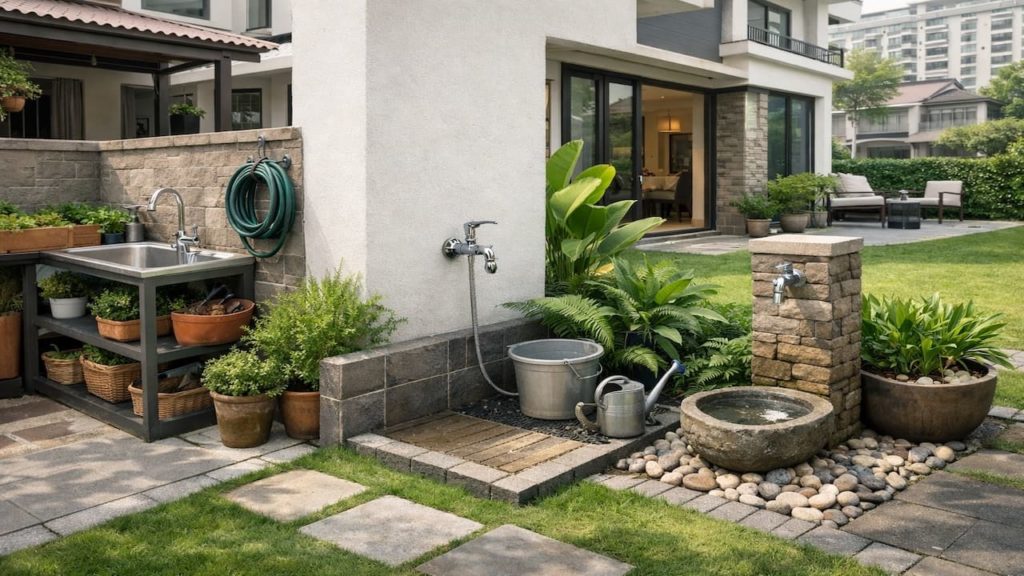
Build a hard standing pad under the tap, add a drip area using gravel or a textured mat, and slope water toward a drain exit. Keep hose storage directly beside the tap so you do not leave lines on the floor. If you add a new tap point or relocate plumbing with a handyman, RM300–1,800 is a common range depending on pipe access and wall work. Clean station — check it during a rainy week and adjust the low spots.
- Add hard pad under tap for stable footing
- Slope the pad toward drain or gravel strip
- Mount hose reel beside the tap for fast rewind
- Keep soap and brushes in one sealed bin
- Light the station to prevent night slip hazards
Some worry a tap station looks too “utility” and not like a garden. A neat station actually makes the whole yard look cleaner, because hoses and wet tools stop living everywhere else.
5. FAQs
Q1. Where should I place one tap if I only have one?
Near the tasks you do most often, usually close to the gate-side service zone or laundry area. A tap that is convenient gets used and kept tidy.
Q2. Should a tap be near the gate or near the plants?
Near the gate often saves more steps because rinsing, bins, and quick cleanups happen there. If plants need watering far away, use a hose reel and clear hose path.
Q3. How do I stop puddles under the tap?
Add a drip pad and a drain exit slope so water does not sit on smooth floor. Also use quick connectors to avoid messy disconnect drips.
Q4. Is it worth adding a second tap point?
It can be, if your yard is long and you use water at both ends. But first optimize one tap with a reel, storage, and drainage so the wet zone stays controlled.
Q5. What is the most common tap setup mistake?
Putting the tap where it is hidden or where hoses must cross the main walkway. That creates trip risk, drip trails, and messy storage that ruins the yard look.
Pro’s Tough Talk

Listen, I’ve been on site 20+ years and done hundreds of jobs, and a badly placed outdoor tap will waste your time forever, one small annoyance at a time.
Cause one: the tap is far from where you actually rinse, so you drag hoses and drip water across the yard. Cause two: there is no drain exit, so puddles live under the tap and Malaysia humidity turns it green. Cause three: there is no storage beside it, so the hose and brushes end up scattered like you gave up.
Do this now: first, pick the highest-frequency task zone and put the tap station there, even if it means changing the plan. Second, build a hard pad and slope it to a drain or gravel strip so water exits fast. Third, mount a reel and keep tools in one bin so returning everything is easy.
This is daily steps not plumbing theory and I’m not blaming you for being busy. Contractors are not all villains, but the structure is cold: if the station is inconvenient, you will leave hoses out, puddles will spread, and the yard will look messy.
You know when you go out to rinse one thing and end up stepping over the hose three times, and when you see the same wet patch again—oi, are we saving time or doing a daily obstacle course.
Summary
Outdoor taps work best when placed near high-frequency tasks and built as a small station with storage and fast drainage for Malaysia wet months.
If your tap area is always messy, it is usually too far from daily use zones, too flat to drain, and missing a reel and drip pad to control water.
Mark your top three water tasks today then guide readers to your hose setup and laundry-area guides to connect water placement with tidy routines.