Your ground-floor garden can look fine from far away, yet the wall base keeps getting splash marks, green algae, or a damp line that never fully dries in Malaysia.
Hot humidity, sudden rain, and hard surfaces around condos and terrace homes make water bounce, collect, and stain faster than you expect.
In this guide, you’ll learn how to keep wall edges dry and clean by spotting splash zones, building a buffer strip, and choosing surfaces that behave well in Malaysia weather.

Hi, I’m Ken. I write practical home guides for Malaysia—no fluff, just what works.
I hold a formal building design qualification and have spent about 20 years on job sites across hundreds of projects. My goal is simple: help you avoid costly mistakes with clear, safe steps—a quick way to decide what to do next.
1. Ground-floor garden design: 5 checks
Start by finding the exact splash path to your wall so you fix the cause instead of scrubbing forever.
In Malaysia downpours, splash travels farther than most people think—especially off tiles and compacted soil near the wall base. Ground-floor reality. If you do not map where water lands, you will treat symptoms and the stain returns after the next storm. This also avoids repaint and patch costs later.
- Mark dripline points under eaves and downpipes
- Check wall base for algae rings and stains
- Spot low areas where puddles touch wall edges
- Test splash by pouring water from hose height
- Confirm airflow gaps behind planters and screens
You might think the wall paint is the problem, but most stains start on the ground and jump upward. In Malaysia humidity, even a small damp strip becomes a stain factory fast. Fix the landing zone first, then cleaning becomes light and rare. Less frustration.
2. Prevent splash marks and damp wall edges
The cleanest solution is a dry buffer strip along the wall base that blocks soil splash and speeds drying.
When soil or mulch sits right against a wall, every rain hit flings dirty water onto paint and traps moisture at the base—then algae takes over. Wall-edge discipline. In many Malaysia condos, walls stay shaded for hours, so drying speed matters more than “pretty” groundcover. A buffer strip also keeps pests from nesting tight to the wall.
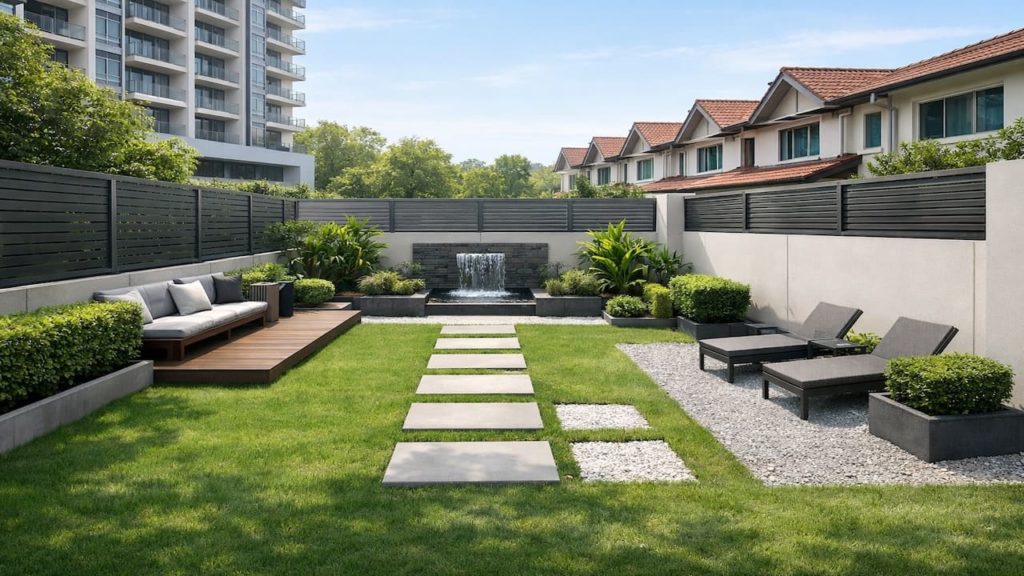
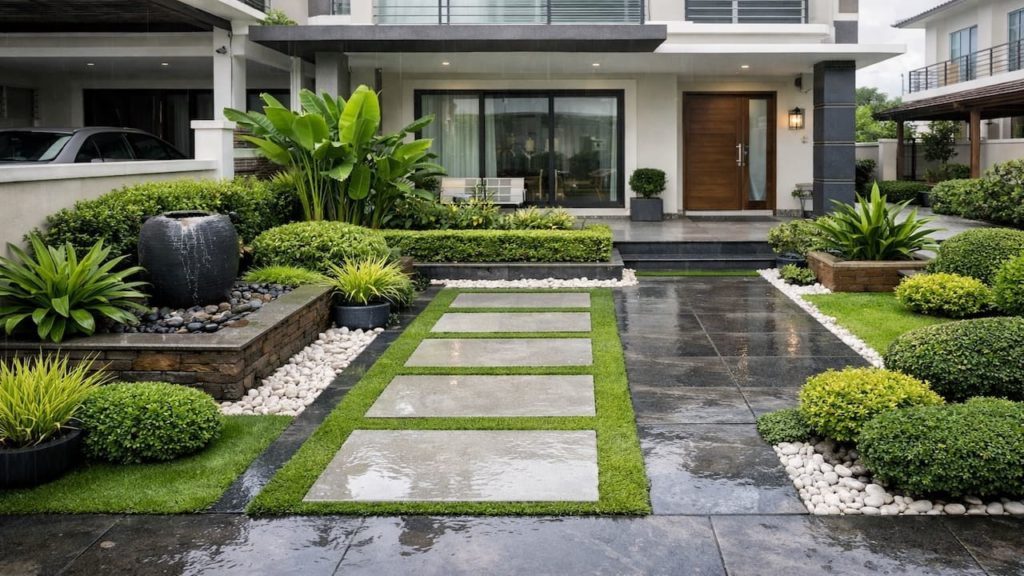
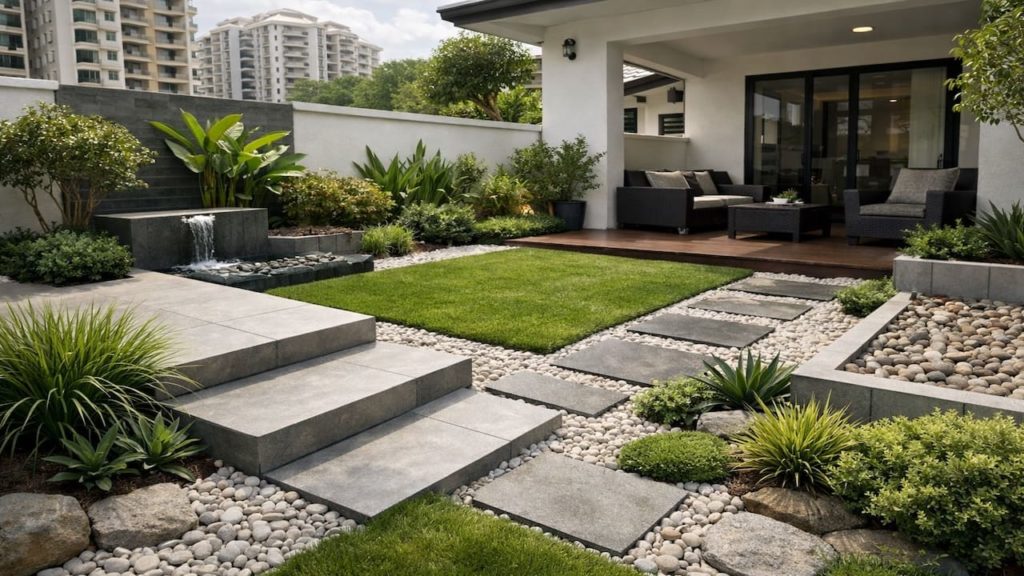
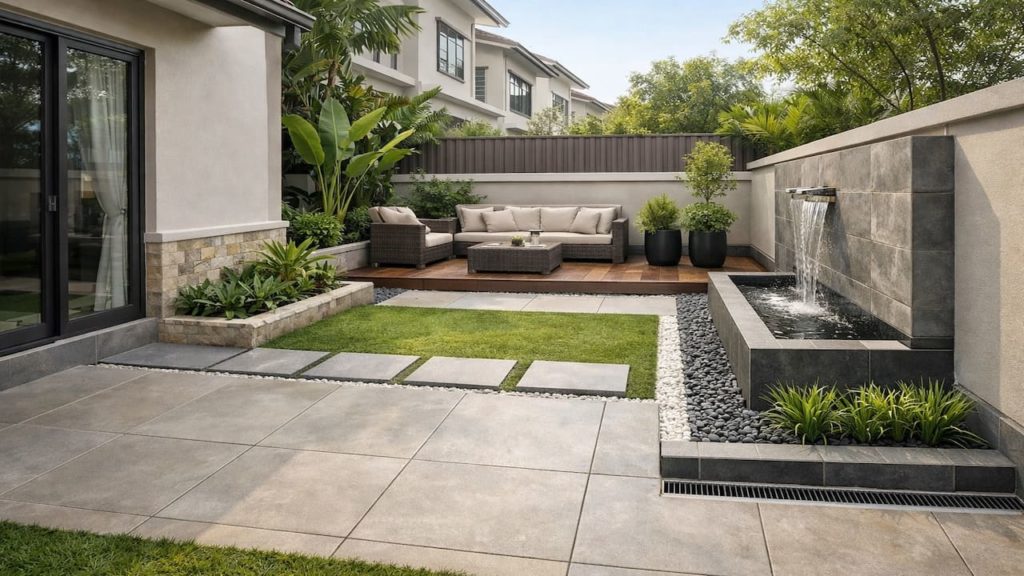
- Create a gravel strip between wall and soil
- Install edging to keep soil off surfaces
- Keep plants set back from the wall line
- Use mulch only where splash cannot reach
- Leave a rinse lane for quick weekly cleaning
Some people worry gravel looks harsh, but a narrow strip looks intentional when edged cleanly. If you hate gravel, use a hard strip that drains well and stays reachable for wiping. The goal is dryness, not decoration. Clean walls.
3. Why splash marks and damp wall edges happen
These problems happen when water hits hard surfaces then rebounds upward while the wall base stays shaded and slow to dry.
In Malaysia, rain intensity plus warm air means surfaces stay wet longer, and damp corners feed algae like a buffet. Wet physics. Downpipes can dump water at one point, compacting soil and creating a splash cannon at the wall edge—then the stain line forms at the same height again. Pipes and slab joints can also hold moisture near the base.
- Downpipes discharge water too close to wall base
- Flat slabs push water sideways into wall edges
- Compacted soil rebounds dirty splash onto paint
- Dense planting blocks airflow and traps dampness
- Low spots hold puddles against the wall line
You might blame “bad drainage” in general, but the pattern is usually one or two specific hotspots. Fix those hotspots and the whole wall looks cleaner without touching every corner. Malaysia rain will still come, but the wall edge will stop losing. Simple structure.
4. How to stop splash marks and damp edges fast
Stop the repeat stains by redirecting water and hardening the splash zone so the wall base stays dry after storms.
Do the basics in the right order—redirect downpipe flow, add a buffer strip, then tidy the surface slope away from the wall for faster drying in Malaysia humidity. Practical fix. Typical materials can be RM30–250 for gravel, edging, a short downpipe extension, and basic sealant depending on length. This is cheaper than repainting and patching damp corners again.
- Add downpipe extensions to discharge away from walls
- Regrade the edge to slope away gently
- Lay gravel strip with geotextile underlayer
- Seal wall base cracks to block moisture entry
- Raise planters on feet to improve airflow
You may think sealing alone will solve it, but sealing without fixing splash just traps dirt on the surface. Start with water direction, then build the buffer, then finish with sealing and cleanup. After that, maintenance becomes a quick rinse instead of a full scrub. Faster weekends.
5. FAQs
Q1. How wide should a wall buffer strip be?
For small Malaysia gardens, even a narrow strip helps if it stays continuous and cleanable. Wider is better if splash is heavy near downpipes.
Q2. Is mulch bad near walls in humid weather?
Mulch is fine when kept away from the wall base and not piled high. In damp shaded corners, mulch can hold moisture and feed algae growth.
Q3. What surface looks cleanest after rain?
Gravel with a firm edge line hides splash marks better than bare soil and dries faster than thick organic mulch. It also makes rinsing simple.
Q4. How do I know if damp is from splash or a leak?
If the stain line appears after rain and sits at a consistent height, it is often splash and slow drying. If it grows even during dry days, check plumbing and wall cracks.
Q5. Can plants help reduce splash marks?
Yes, low plants can absorb splash if they are not pressed against the wall and airflow stays open. Use them as a front layer, not as a wall hug.
Pro’s Tough Talk

Listen, I’ve been on site for 20+ years and done hundreds of jobs, and that damp wall edge in Malaysia is not “bad luck,” it’s a predictable setup.
Cause is 3 things: water dumps too close, the ground rebounds splash, and airflow gets blocked by pots and dense planting. A wet sponge taped to your wall. That vibe.
Do 3 steps now: extend the downpipe away, build a gravel buffer strip, and open a rinse lane you can actually reach. You wipe the wall clean, then the next storm redraws the same dirty line. You step out barefoot and feel that slimy edge by the wall.
Don’t blame yourself, and don’t blame the contractor alone, the structure decides the outcome. Fix where water lands and the wall stays clean and the problem stops looping.
And if you keep piling soil right on the wall base, oi, what did you expect, a magic wall that hates water.
Summary
Clean ground-floor walls come from controlling splash zones, keeping a dry buffer strip, and maintaining airflow so Malaysia humidity does not trap damp at the base. Wall-edge reality.
If stains keep returning, treat water direction first, then surface and access, and only then worry about paint or cosmetics. That is the decision order.
Redirect the downpipe and build one buffer strip today so the wall edge dries faster, looks cleaner after rain, and stays easy to maintain week to week.