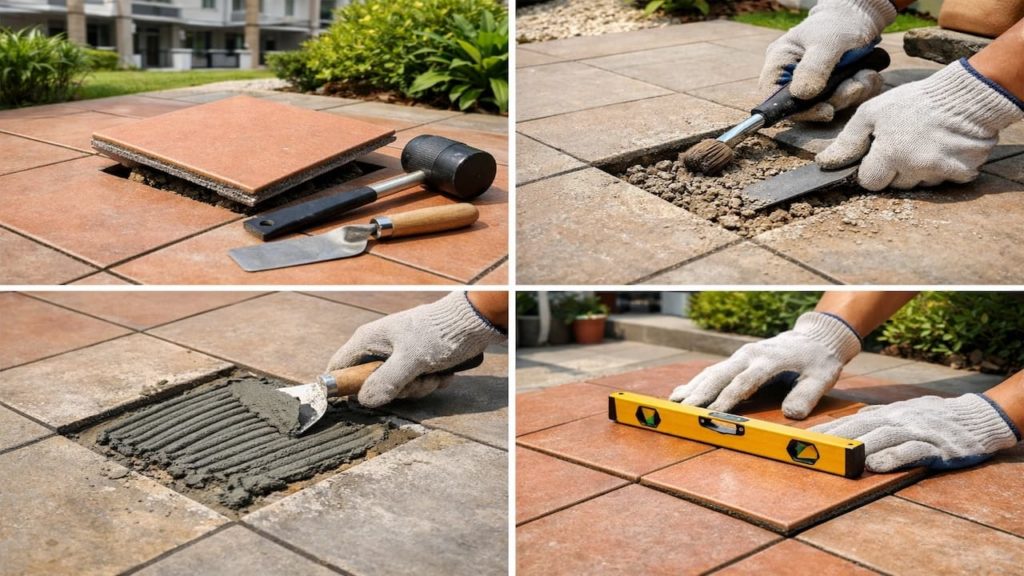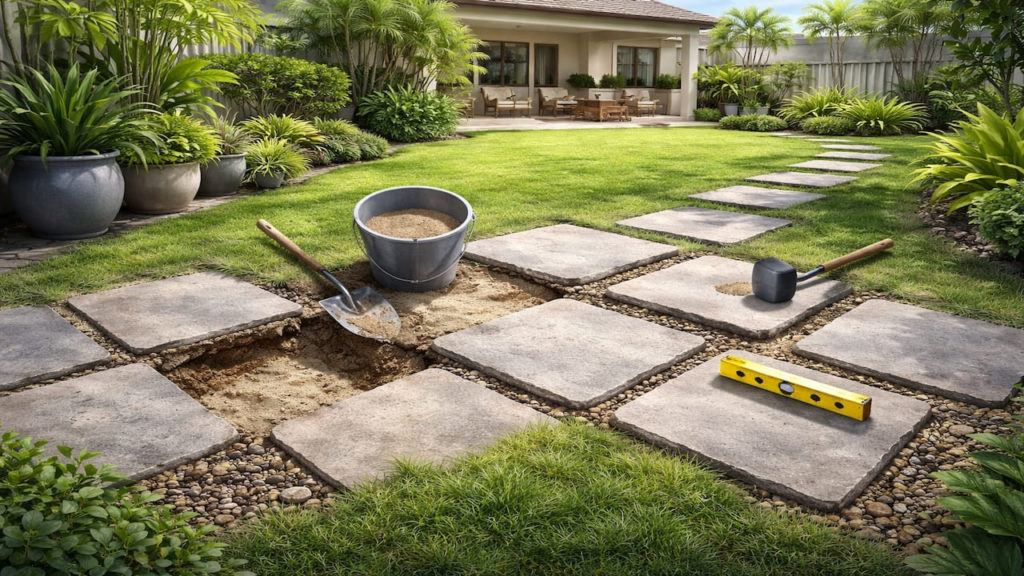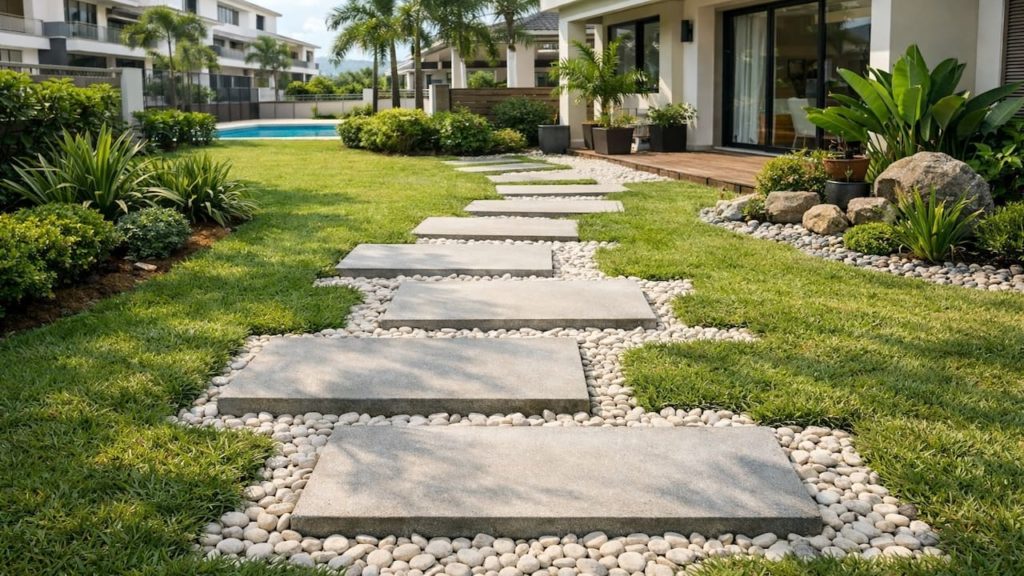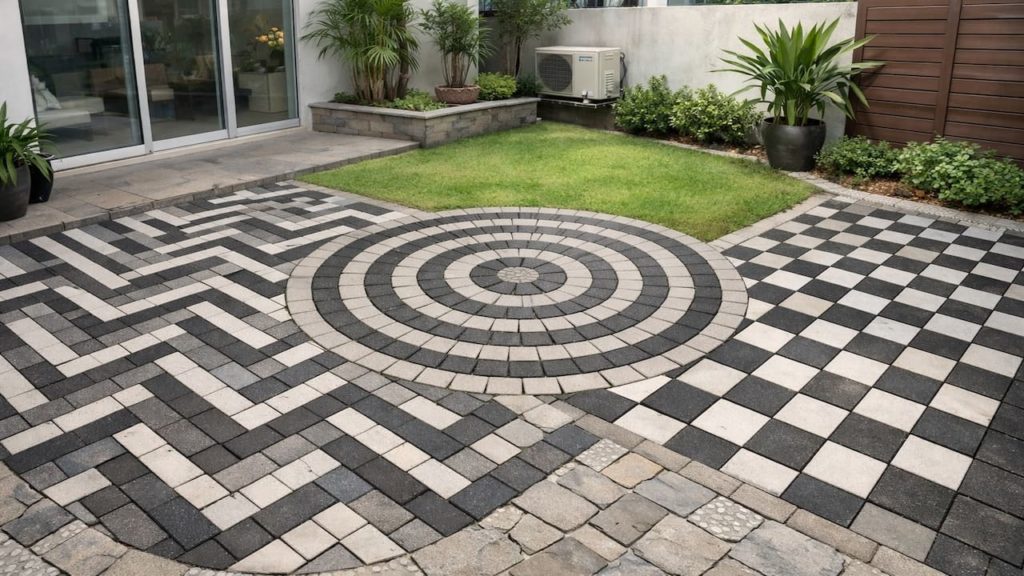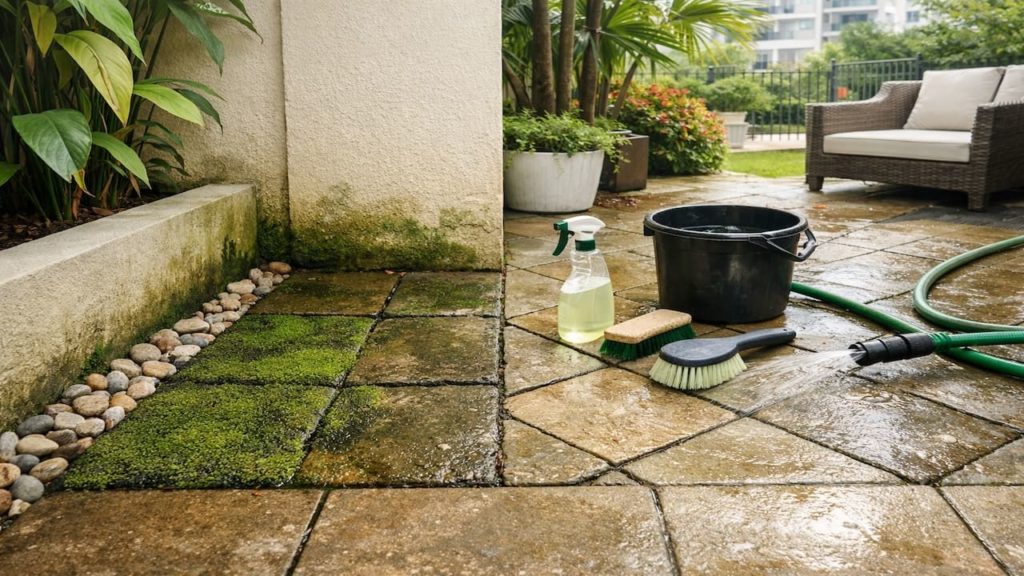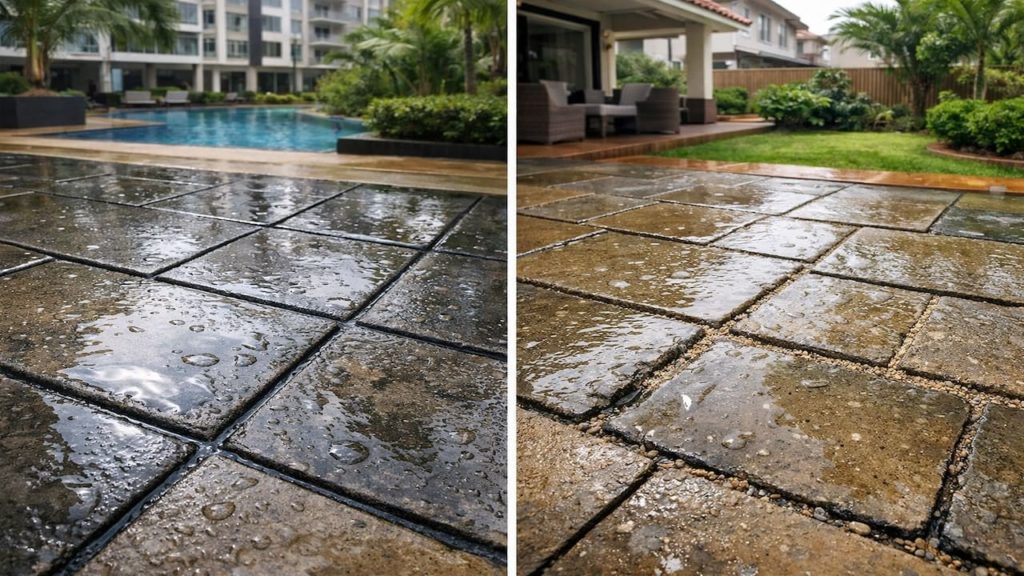
If your garden paving looks neat but keeps wobbling, growing weeds, or staying wet, the joint choice is usually the hidden reason.
In Malaysia, hard rain brings silt, humidity slows drying, and terrace-house side yards stay shaded, so joints get tested harder than you expect.
In this guide, you’ll learn how to choose grout or sand joints by checking movement, drainage, cleaning effort, and what actually lasts in Malaysia rain.

Hi, I’m Ken. I write practical home guides for Malaysia—no fluff, just what works.
I hold a formal building design qualification and have spent about 20 years on job sites across hundreds of projects. My goal is simple: help you avoid costly mistakes with clear, safe steps—a quick way to decide what to do next.
1. Grout vs sand joints in paving: 5 checks
Joint choice controls stability and drying speed.
Grout looks crisp, but it can crack if the base settles, while sand can move if edges are weak and runoff is uncontrolled—both problems show up fast in Malaysia storms. Spending money on the wrong joint system often means paying twice later. Quiet joints. Safer steps. Fewer weekend fixes.
- Check joint width consistency along the full run
- Probe joint depth using a thin screwdriver tip
- Press paver corners to detect rocking movement
- Rinse joints lightly and watch water pooling
- Look for sand loss after storms and hosing
Some people assume grout is always “better” because it looks premium—then they get hairline cracks and water trapping in shaded garden corners. Others assume sand is always “cheap” and accept constant weeds. Both views miss the system. Match the joint to movement and drainage, and it lasts longer.
2. Pick what lasts in rain and humidity
Choose joints based on movement and maintenance.
Malaysia gardens deal with shifting soil, splashback, and damp shade, so the best choice is the one that keeps water moving and stays easy to refresh. Grout can look cleaner day to day, but repairs can be annoying when cracks spread. Sand joints are forgiving, but they demand joint top ups and border control. Practical wins beat showroom wins.
- Choose sand joints for flexible settling areas
- Choose grout joints for clean lines on patios
- Match joint type to expected water flow
- Avoid hard grout on weak compacted bases
- Confirm maintenance plan for weeds and algae
You might hear “just grout it and forget it”—that only works when the base is strong and water exits fast. You might also hear “sand always washes out,” which happens when edges are loose and runoff carries silt into gaps. The joint is not magic. It is a tool, and the site conditions decide how it behaves.
3. Why joint choice matters in Malaysia gardens
Wet season exposes joint weaknesses quickly.
Humidity keeps joints damp, so algae starts early, and rain pushes fine silt into gaps that later turns into a sticky paste. In terrace-house corridors, shade reduces drying, so water stays in the joint line longer and stains build up. Repairs are rarely expensive at first, but delays make them bigger. Early action. Cleaner look.
- Humidity keeps joints damp and feeds algae growth
- Silt packs gaps and blocks drainage after rain
- Thermal movement opens hairline cracks in grout
- Loose edges let pavers drift and widen gaps
- Pressure washing strips sand and exposes voids
It is easy to blame the material, but the real chain is water plus dirt plus movement—Malaysia simply supplies all three. Contractors are not always wrong; many installs are “standard,” not tuned for heavy rain and shaded yards. If you change drainage and edge restraint, both joint types perform better. That is the lever.
4. How to decide and keep joints healthy
Fix base and water exit before choosing joints.
Start with the base, edging, and runoff route, then choose the joint system that fits your garden traffic and cleaning habits in Malaysia humidity. For joint materials, brushes, and small edge restraints, a typical refresh can be RM50–300 depending on area size and what you already have. Then keep joints clean with light rinsing and gentle brushing so silt does not turn into joint sludge. Simple routine. Long life.
- Map shaded zones where joints stay wet longest
- Fix base and edging before choosing joint type
- Use polymeric sand when weeds keep returning
- Seal grout only after full cure and drying
- Test drainage with bucket pour after every change
Some owners want a single “best” answer—there is no universal winner without knowing movement and water flow. If the area settles or gets tree roots nearby, sand based joints often survive better. If the base is solid and you want crisp lines, grout can work with proper drainage. Pick based on your site, not your wish.
5. FAQs
Q1. Is grout always stronger than sand joints?
Grout can feel stronger, but it can crack when the base moves or water is trapped below. Strength without drainage is not durability in Malaysia wet months.
Q2. Which joint type is easier to maintain?
Sand joints are easier to refresh because you can top up and recompact without cutting and patching. Grout looks cleaner at first, but repairs can be more work.
Q3. Will sand joints always grow weeds?
Weeds love dirt and dampness, not sand itself. If you prevent soil wash-in and keep joints topped up, weeds slow down a lot.
Q4. Can I pressure wash joints safely?
Be careful, because pressure washing can strip joint fill and widen gaps. Use controlled rinsing and brushing, then refill after the surface dries.
Q5. What should I pick for a shaded side yard?
Prioritize drainage and low water trapping, because shade keeps joints damp in Malaysia humidity. A flexible sand system with strong edges often performs well there.
Pro’s Tough Talk

Listen, I have been on site for over 20 years and I have done hundreds of jobs, and joint problems are the same movie every wet season.
It breaks into 3 causes: the base moves, dirt packs the joint, and water has no exit. Malaysia rain and humidity just hit fast forward on that chain.
Do 3 steps now: pour a bucket to find pooling, scrape the black joint sludge out, then top up and compact the joint fill. That slippery barefoot dash to open the gate, you know it.
Do not blame yourself and do not call every contractor useless, but accept the structure: joints fail when water and dirt stay inside. Come on, if the gap is a dirt gutter, what did you expect.
Ignore it if you want, but you will be back next storm doing the same scrub-and-swear routine like a looped video. Fix the system once and move on.
Summary
Grout and sand joints both work when the base is stable and water can exit quickly, but Malaysia wet months punish trapped moisture and dirty gaps.
If you see weeds, wobble, or pooling, fix edges and drainage first, then choose the joint type that matches how the area moves and dries.
Do one bucket test today and continue to the related guides on paving joint maintenance and fast drying garden walkways for safer wet season steps.