If your garden paving keeps staining or turning green, sealing can sound like the perfect shortcut, especially after a few Malaysia downpours.
But in Malaysia humidity, sealers can also trap moisture, turn patchy, and even make surfaces slick, especially in shaded terrace-house walkways.
In this guide, you’ll learn when sealing helps and when it backfires so you can protect paving without creating worse stains or a slip risk.

Hi, I’m Ken. I write practical home guides for Malaysia—no fluff, just what works.
I hold a formal building design qualification and have spent about 20 years on job sites across hundreds of projects. My goal is simple: help you avoid costly mistakes with clear, safe steps—a quick way to decide what to do next.
1. Should you seal garden paving: 5 checks
Seal only when the surface and drainage are ready.
Sealer is not a magic coat, it is a moisture control decision, and Malaysia rain will expose mistakes fast—especially on paths near gates and side walls. Budget RM60–250 for a basic penetrating sealer plus cleaning tools, depending on area size. Test first, then commit. Wet-season reality.
- Do a water drop test for fast soak
- Check for powdery dust that signals weakness
- Inspect slope so water exits the paved zone
- Confirm tiles are not already film coated
- Test a hidden corner for color change
Some people seal because they hate cleaning, then they trap dirt under a shiny layer and call it “stubborn stains.” In Malaysia humidity, that trapped grime darkens and spreads. Sealing can help, but only after you solve runoff and deep cleaning. Otherwise you seal the problem in place.
2. When sealers help or make stains worse
Penetrating sealers usually help more than glossy films.
In Malaysia gardens, the best case is reducing water absorption so stains do not sink deep, while still letting the surface breathe. Budget RM80–300 for a quality penetrating sealer and a proper scrub, since prep matters more than the bottle label. The worst case is a film that traps moisture and turns cloudy in shade. Calm protection.
- Use penetrating sealer on porous concrete pavers
- Avoid glossy film on wet shaded walkways
- Seal only after algae and silt are removed
- Expect darker tone on some stones and tiles
- Reapply lightly instead of thick heavy coats
People assume shine equals premium, then get patchy sheen where water sits and dirt sticks. In Malaysia rain, a film can become a dirt magnet and highlight every footprint. If you want a modern look, focus on drainage and gentle cleaning routines first. Sealer should support the system, not replace it.
3. Why sealers fail on garden paving in humid climates
Sealers fail when moisture cannot escape.
Malaysia weather brings cycles of wet, humid, and shaded drying, so trapped water can push up into a sealed layer and create white haze or peeling. Budget RM50–180 for cleaning and spot removal supplies if you need to strip a failed patch early. Failure often starts at edges near walls and planting beds. Early warning.
- Water trapped below creates cloudy white haze
- Flat areas pool and force stains into films
- Dirty joints feed algae that seals in green
- Wrong cleaner leaves residue under the sealer
- Sun and shade cause uneven cure and sheen
It is easy to blame the product, but the chain is predictable: dirt stays, water pools, then the coating locks it down. Contractors are not always careless, they often seal to satisfy a “finish” request quickly. If the base, joints, and runoff are not fixed, the sealer becomes a lid on a damp pot.
4. How to seal paving without creating slick patches
Do a small test patch and control cure time.
Malaysia rain timing matters, because sealing needs a dry window, and humidity slows curing even when the sun looks strong. Budget RM90–350 for cleaner, brush, and a breathable sealer if you are doing it properly on a typical small garden path. Do not rush coats. One clean plan.
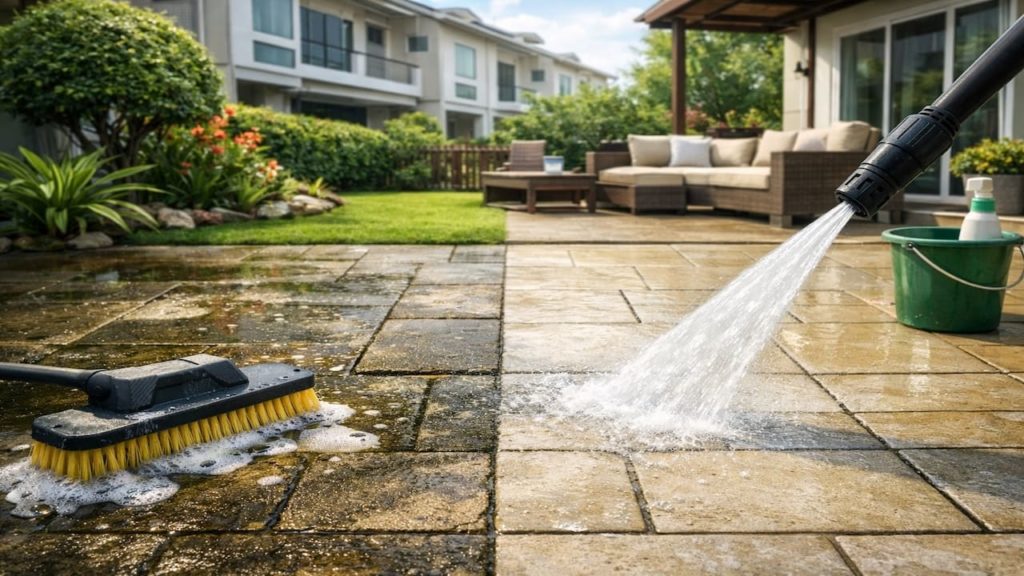
- Scrub stains and rinse until water runs clear
- Let paving dry fully before any application
- Apply thin coats and avoid puddled sealer
- Use anti slip additive on high traffic areas
- Keep pets and kids off during full cure
You might think “more sealer equals more protection,” but thick layers stay tacky and grab dirt, then look worse after the first storm. Aim for breathable protection and even coverage, especially on terrace-house side paths that stay shaded. If the surface feels slick in the test patch, stop and switch approach. Your feet will thank you.
5. FAQs
Q1. Should I seal all outdoor paving in a garden?
No, seal only where stains are a real problem and the surface can dry properly. In Malaysia, shaded corners and low spots need drainage fixes before sealing.
Q2. How do I know if my paving is porous enough to benefit?
Do a water drop test and watch whether it soaks in quickly or beads on top. Fast soaking usually means sealing can help reduce deep staining.
Q3. Can sealing make my paving more slippery?
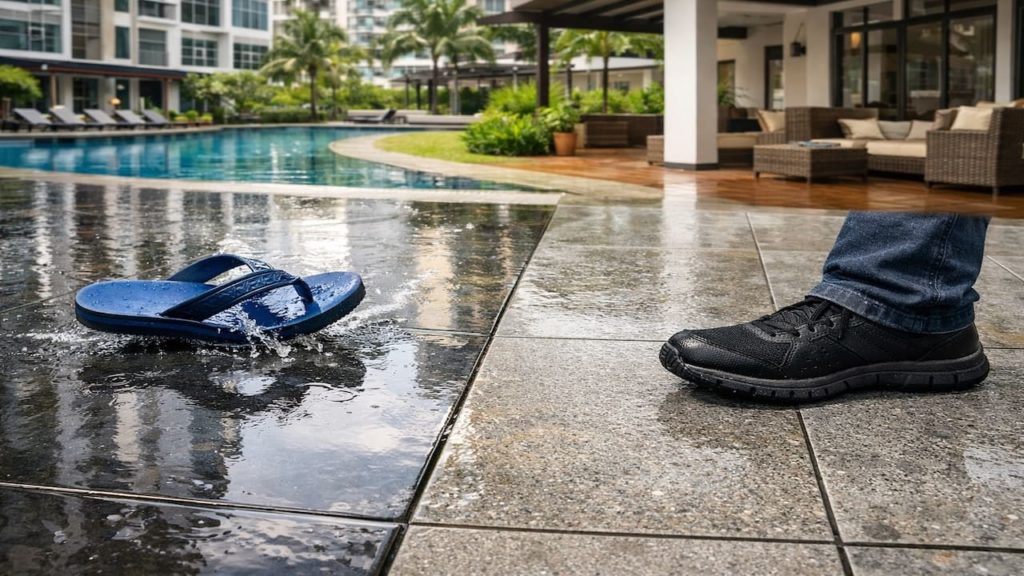
Yes glossy films can increase slip risk when wet, especially on smooth tiles near doors and gates. Choose breathable products and keep coats thin, then test grip after curing.
Q4. What causes the white haze after sealing?
White haze often comes from trapped moisture or uneven curing, which is common in Malaysia humidity. It can also happen when the surface was not fully cleaned before sealing.
Q5. How often should I reseal outdoor paving?
It depends on traffic, sun exposure, and product type, so use performance as the guide. When water stops beading and stains sink faster, it is time to refresh after cleaning.
Pro’s Tough Talk

Listen, I have been on site for over 20 years and handled hundreds of jobs, and sealing mistakes are the same story every wet season.
It breaks into 3 causes: people seal over dirt, they seal over damp, and they seal a surface that pools water. Malaysia humidity is brutal for shortcuts.
Do 3 steps now: scrub until rinse water stays clean, wait until the paving is truly dry, then test a small patch first. That barefoot dash to the gate after rain, and that “why is it sticky again” moment, you know it.
Do not blame yourself and do not blame every contractor, but accept the structure: sealer locks in whatever is under it. Seriously, what did you expect.
Sealing a damp dirty path is like wrapping wet bread in plastic, and it is like painting over mold and calling it renovation. If you want pretty, do the boring prep or enjoy the stains you sealed forever.
Summary
Sealing can protect garden paving, but only after you confirm porosity, remove stains, and fix pooling so Malaysia rain does not trap moisture under a coating.
If your path stays shaded and slow to dry, treat sealing as a risk decision—improve drainage and joint cleanliness first, then test a small patch.
Do a water drop test today and continue to the guides on paving joints and fast drying walkways so your garden stays safer and cleaner all year.