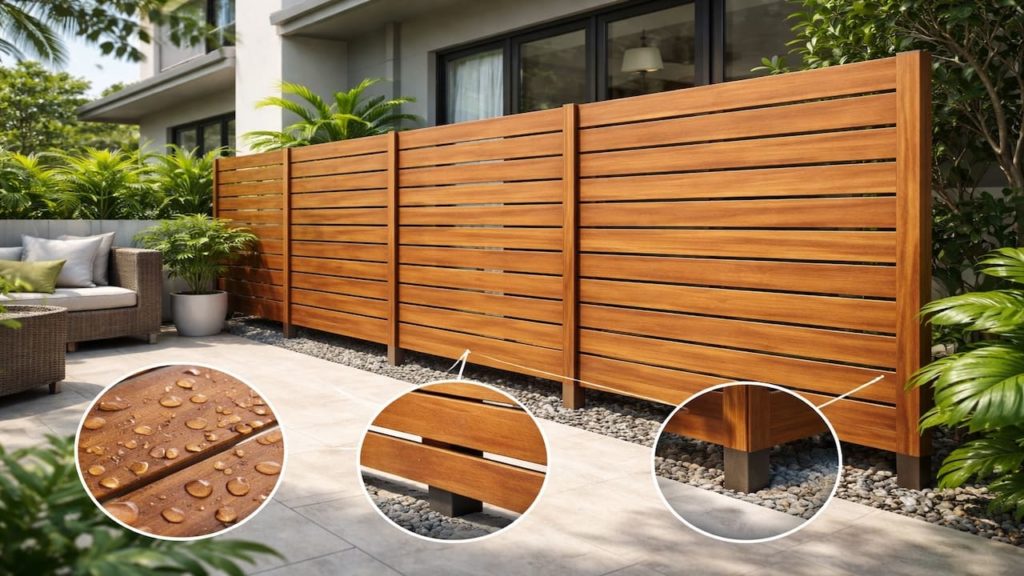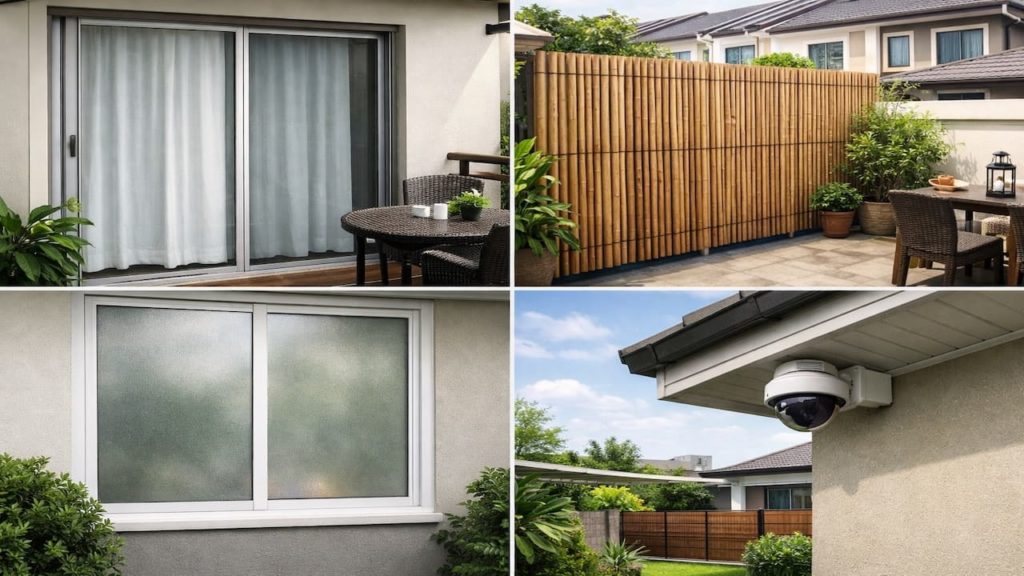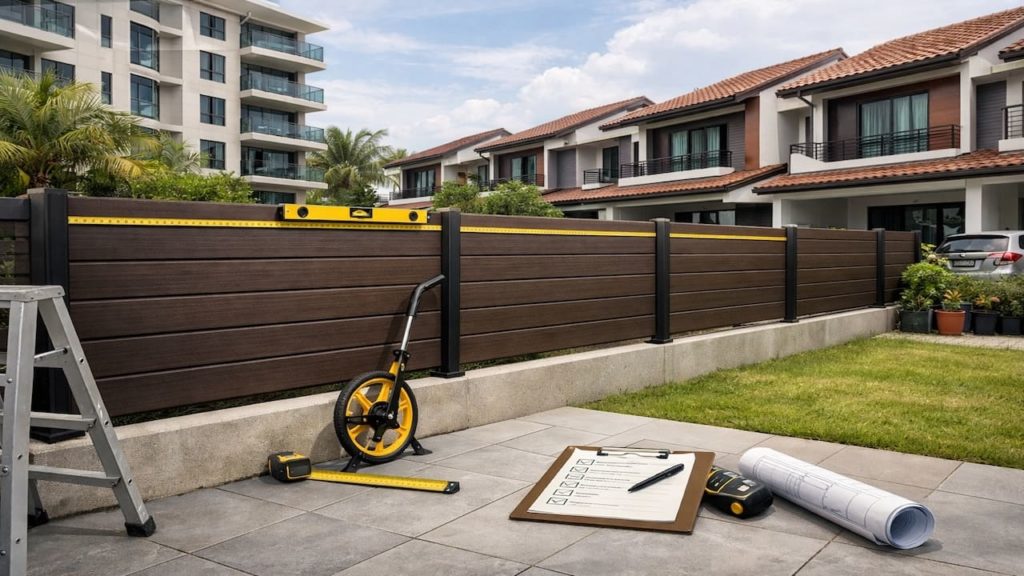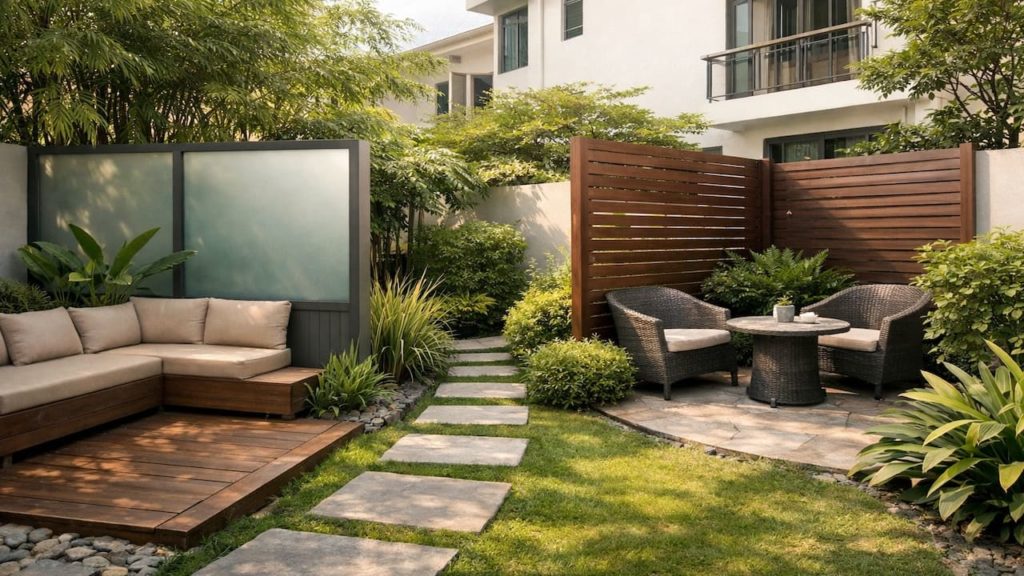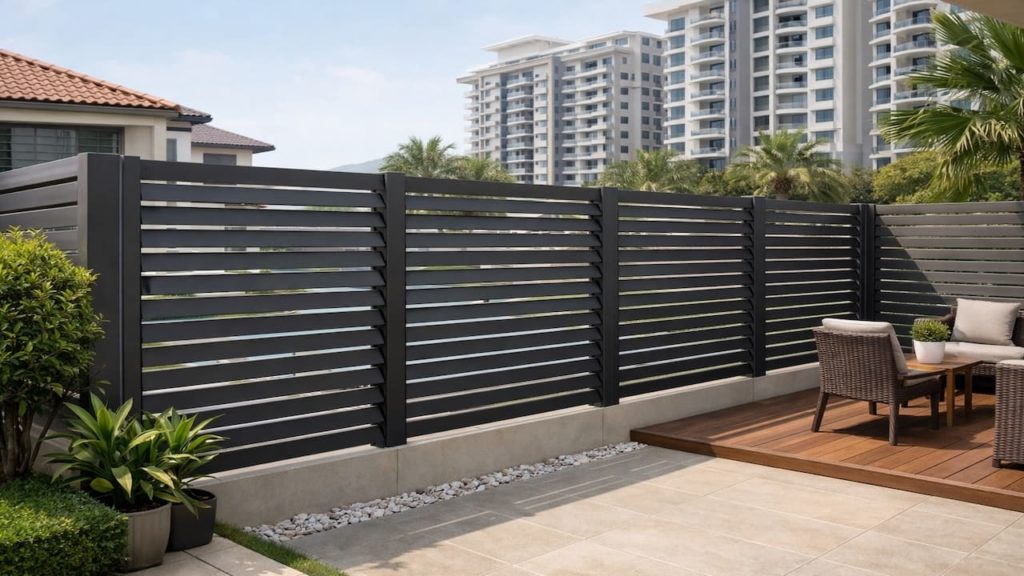
You are here because your slat fence still feels see through, or it blocks breeze and turns your patio into a warm box.
In Malaysia terrace houses and condo balconies, privacy is about angles, light, and airflow in humid months, not just taller panels.
In this guide, you’ll learn how to choose slat angles that block views while keeping airflow so your space stays private and comfortable in Malaysia weather.

Hi, I’m Ken. I write practical home guides for Malaysia—no fluff, just what works.
I hold a formal building design qualification and have spent about 20 years on job sites across hundreds of projects. My goal is simple: help you avoid costly mistakes with clear, safe steps—a quick way to decide what to do next.
1. Slat privacy fences: 5 tips
Use slat angles to block sightlines and keep breeze moving—that balance matters more than height in Malaysia humidity.
Slat fences work because they hide the direct view, yet they can still let air pass through. Airflow comfort. If you copy a flat screen style, your yard feels hotter and damper after rain. A smart angle also protects your budget, because you avoid rebuilding panels that feel wrong.
- Check street view line from front gate
- Test angles using cardboard slats and tape
- Set consistent spacing with spacer blocks each row
- Choose powder coated aluminum for wet months
- Cap exposed ends to stop water entry
You may think tighter spacing always means better privacy, so you keep closing the gaps until it looks solid. That often kills airflow and makes mildew and damp smell show up faster in Malaysia wet seasons. Angle and placement can block eyes without sealing the air, so the space stays livable. Calm design.
2. Choose angles that stop views, not airflow
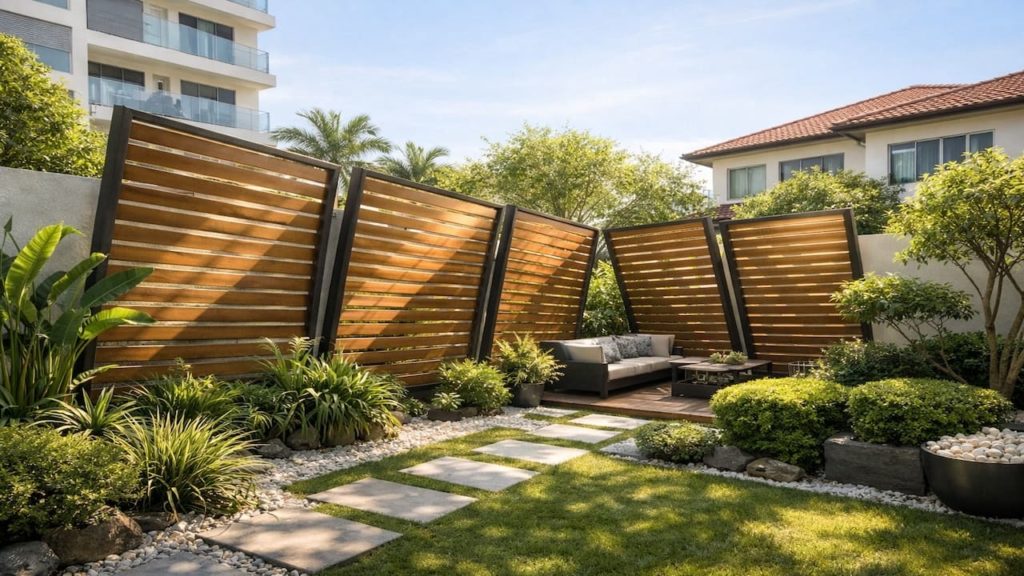
Angle slats to hide faces while still letting air pass—this is the cleanest way to get privacy without a heavy wall.
When slats are angled, the view gets cut off from common exposure points like stairs, upstairs windows, and street level. Sightline control. In Malaysia sun, strong backlight can show silhouettes through gaps, so angle matters more than you expect. Done right, you spend less on extra layers like curtains or second screens.
- Stand at neighbor eye height and observe
- Rotate one slat until face view disappears
- Keep the same angle across the whole run
- Leave top gap for hot air escape
- Block corner peeks with short return panels
Some people worry angled slats will look strange or feel like a fence that never finishes. That is usually a spacing problem, not an angle problem, especially on narrow terrace side yards. Keep lines straight, keep spacing consistent, and the angle reads modern and intentional. Simple geometry wins.
3. Why slat fence privacy fails in humid climates
Slat privacy fails when angles ignore real sightlines and rain—Malaysia humidity then turns small mistakes into daily annoyance.
Most failures start with guessing where the view comes from, then building for the wrong direction. Hidden exposure. Rain splash and damp air also make dirty streaks and algae, which make fences look tired fast. When it looks bad, people spend again on coatings, but the real fix was layout and drainage first.
- Facing slats flat toward the main exposure point
- Leaving uneven spacing that creates bright peek lines
- Mounting frames too low into splashback zone
- Using mixed metals that rust around fasteners
- Skipping airflow space that traps damp behind
You might blame the material, like saying wood always rots or metal always rusts in Malaysia. Materials matter, but water paths and air paths matter more for daily comfort. If you aim the angle for the true view and let air move, the fence stays cleaner and feels better. Root cause.
4. How to set slat angles for privacy and breeze
Set the angle using a real sightline test then lock it—do this once and your fence stays private without choking airflow.
Start by choosing the main exposure point, then tune one test panel until it blocks a face view while still allowing daylight and breeze. Budget clarity. If you are buying supplies, RM60–350 is a common range for basic slats, brackets, fasteners, and touch up protection depending on length and finish. Spend on anchors and rust safe fasteners before fancy surfaces, because Malaysia wet months punish weak details.
- Mark the exposure point and draw a sightline
- Install one test bay and rotate slats slowly
- Lock angle using jigs and repeat spacing
- Raise bottom clearance to reduce rain splash
- Seal ends and seams to slow moisture damage
You may be tempted to pick an angle from photos online and copy it without testing. That often misses your real neighbor height, your gate line, and your lighting at night in terrace housing. Test first, then standardize, and the build becomes fast and clean. One smart setup beats rework.
5. FAQs
Q1. What is the easiest way to find the true sightline?
Use your phone camera at the height of the viewer and check from the street and upstairs points—light makes leaks obvious. Do it in daylight and once at night.
Q2. Do angled slats reduce airflow a lot?
Not if spacing is consistent and you keep a small top relief gap. In Malaysia humidity, airflow is what keeps the space from feeling sticky.
Q3. What angle blocks views best without looking heavy?
Angle slats to hide direct face view lines and keep the same angle across the run. Consistency is what makes it look modern and premium.
Q4. Wood or metal slats for Malaysia weather?
Both can work if the edges are sealed and fasteners are correct. Metal needs rust safe hardware, and wood needs proper sealing and bottom clearance.
Q5. Why can I still see through the fence at night?
Indoor lights create silhouettes, so small gaps become visible from outside. Adjust angle, add a return panel at corners, or fix lighting placement to stop backlighting.
Pro’s Tough Talk

Listen, I’ve got 20+ years on site, done hundreds of jobs, and slat fences in Malaysia humidity only look smart when you respect angles and air.
Cause is 3 things. You guess the sightline and block the wrong direction. You close gaps until airflow dies. You ignore splashback, then the bottom turns into a dirty stripe factory.
Do 3 steps now. Pick the real viewer point and test one panel angle. Keep spacing consistent like a machine. Lift the bottom and seal ends so water cannot camp there.
This is like wearing a jacket in a sauna, like taping a leaky bucket and calling it fixed Block views with angles and keep airflow alive. Tsukkomi: you want breeze, but you keep building a wall.
The sweaty porch sit after rain and the late night trash run under bright lights are when you feel exposed, so tune the angle today or keep suffering by choice.
Summary
Slat privacy works when you block the true sightline, keep spacing consistent, and protect the bottom from splashback in Malaysia wet months.
If you still feel watched, you likely missed a corner peek or a night backlight issue, so adjust the angle and add small returns.
Test one slat angle today and lock the pattern—then follow the related guides on modern spacing and rain splash control to finish a calm private space.