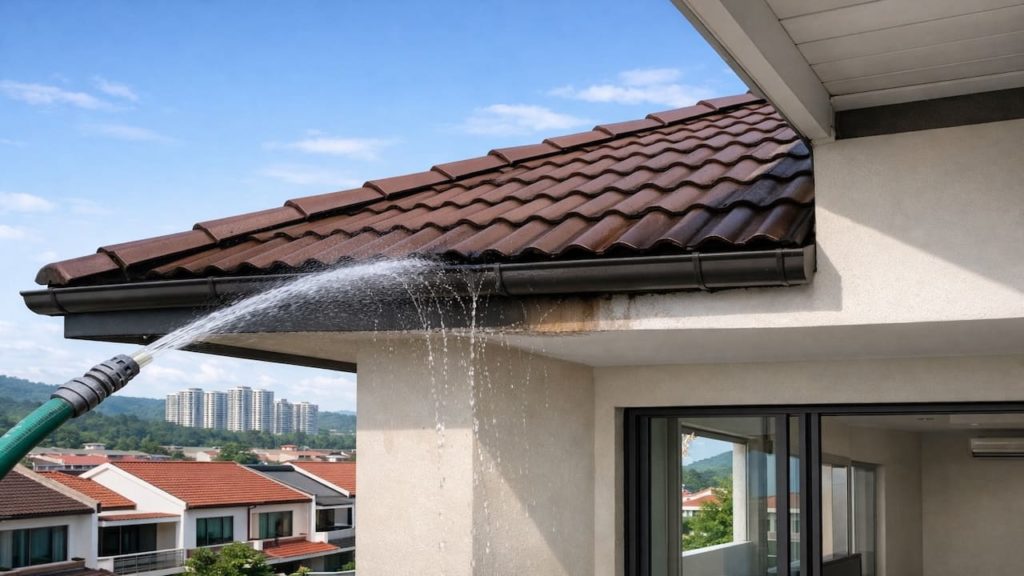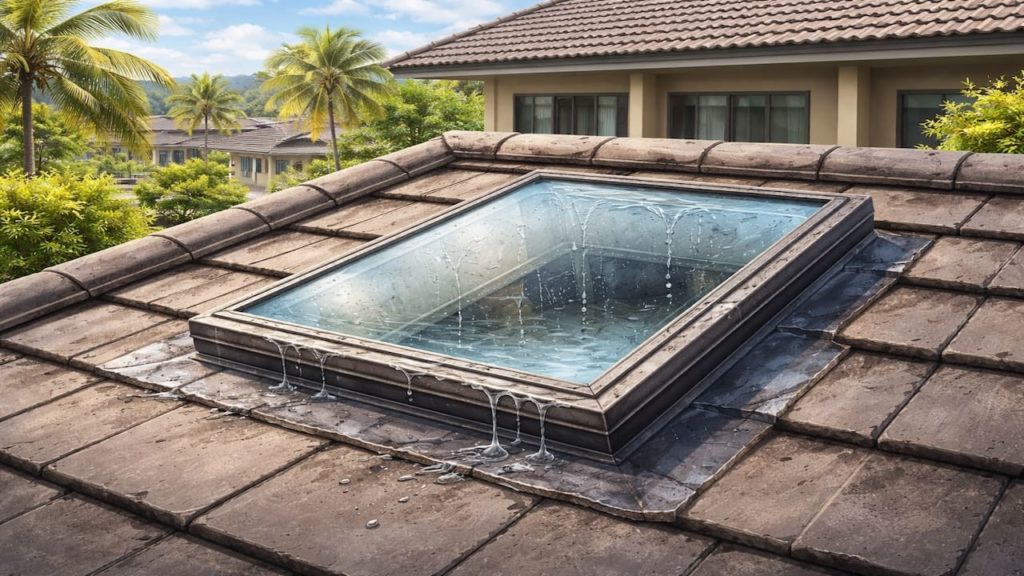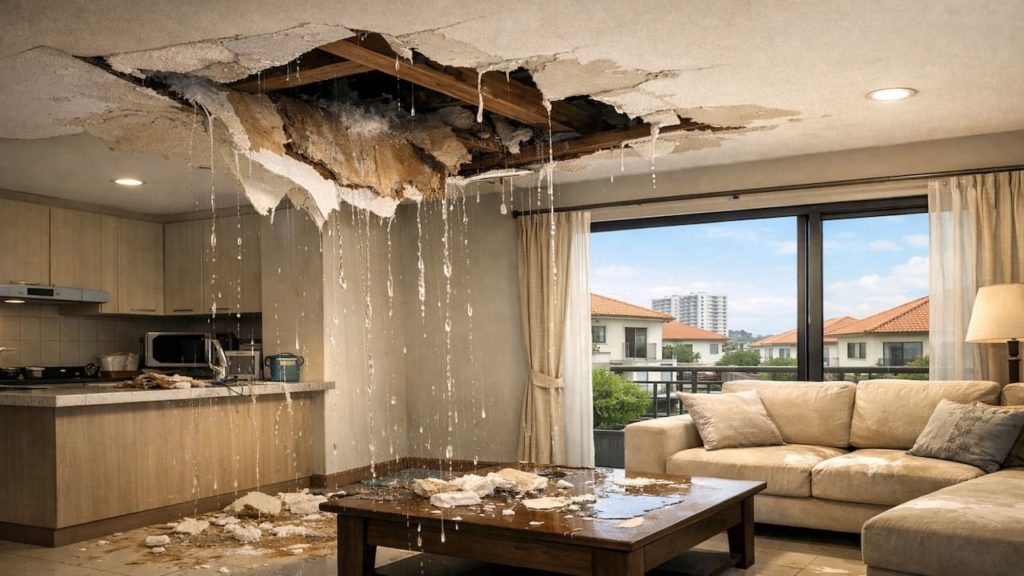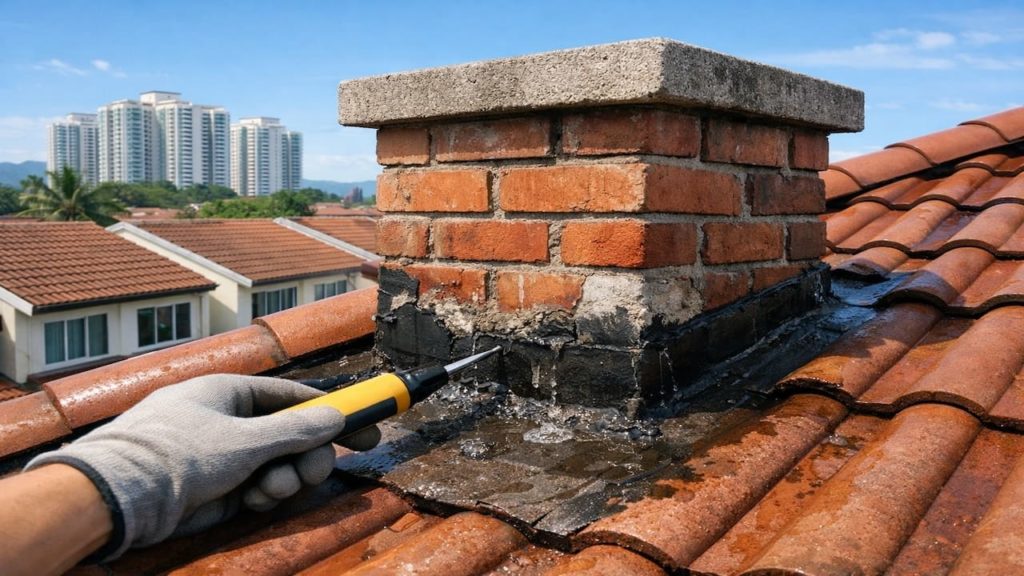
A roof leak after renovation in Malaysia feels extra cruel, because the house looks new while the ceiling stain looks old. Humid nights make small gaps show fast.
Renovation often adds pipes, awnings, aircond lines, and wiring routes, and each new penetration can bypass waterproofing. In wet season storms, water finds the shortcut.
In this guide, you’ll learn how to spot renovation mistakes before the leak spreads using simple checks that work for terrace houses and condo top floors in tropical rain.

Hi, I’m Ken. I write practical home guides for Malaysia—no fluff, just what works.
I hold a formal building design qualification and have spent about 20 years on job sites across hundreds of projects. My goal is simple: help you avoid costly mistakes with clear, safe steps—a quick way to decide what to do next.
1. Roof leak after renovation: 5 mistakes
Most post renovation leaks come from new openings.
Malaysia heat and rain punish fresh sealant fast—new holes for pipes and screws can create a hidden path behind ceilings. Quiet damage. Real.
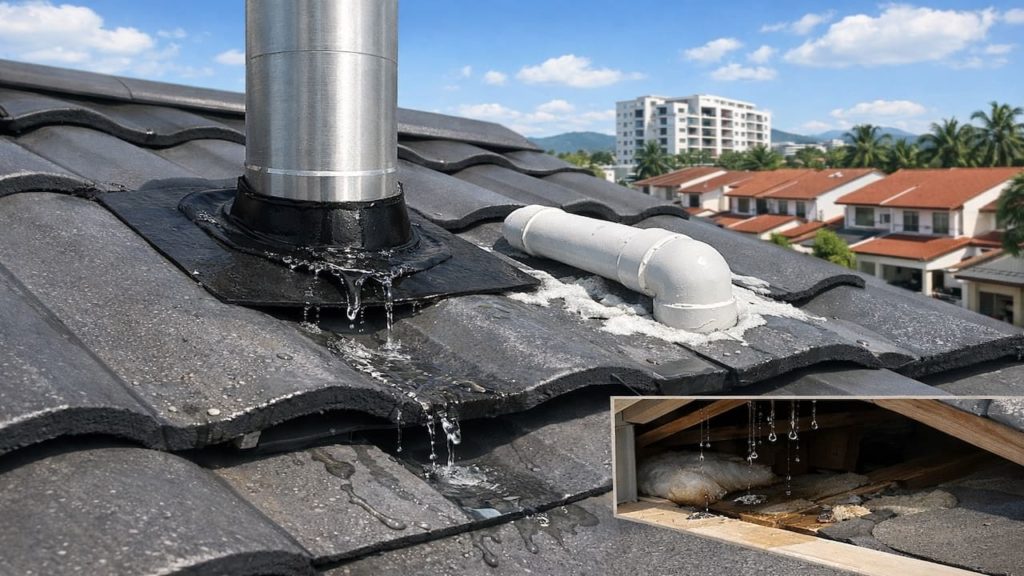
- Inspect new pipe holes for loose flashing collars
- Check new awning screws for crushed washers
- Look for silicone beads on dusty wet surfaces
- Check roof coating edges for missed overlap zones
- Inspect new cable routes for unsealed entry points
Some say the renovation is unrelated because the leak shows far away. In ceiling voids, water travels and exits late, so new penetrations still matter—start there and trace back.
2. New penetrations create hidden gaps
Small penetrations become big leaks in storms.
When contractors drill through tiles or slabs, the hole edge often stays rough, and sealant cannot bond well in Malaysia humidity—water creeps along the gap under pressure. Predictable.
- Check pipe boot lip for lifted edge gaps
- Inspect screw lines for rust halos and seep
- Look under flashing for missing butyl tape
- Check parapet cap joints near added brackets
- Inspect ceiling void for shiny trail above wall
People say more silicone fixes everything, because it looks sealed from outside. If the surface is wet or dusty, the bead peels and the leak returns, so rebuild the detail, not the shine—proper bonding wins.
3. Why + Renovation details fail under Malaysia wet season pressure
Water enters where waterproof layers got interrupted.
Renovation can cut membranes, shift drainage falls, or trap ponding water, and Malaysia downpours add volume and wind that drive rain sideways—tiny defects become active paths. System issue.
- Check roof fall for ponding water marks
- Inspect drain collar for cracked grout ring
- Look for membrane cuts near new curb
- Check gutter mouth for debris after works
- Inspect flashing corners for split seal lines
Some blame “old roof age” and ignore the new work. Age matters, but new penetrations often trigger the first real leak after years of calm, so treat the renovation detail as the prime suspect—then confirm with tests.
4. How + Trace the path and seal the real entry point
Confirm one entry point before you repair anything.
In Malaysia, random patching traps moisture and feeds mold—so you must map timing, inspect the ceiling void, and isolate one roof zone test. Control beats guessing.
- Circle stain edge and record rain start
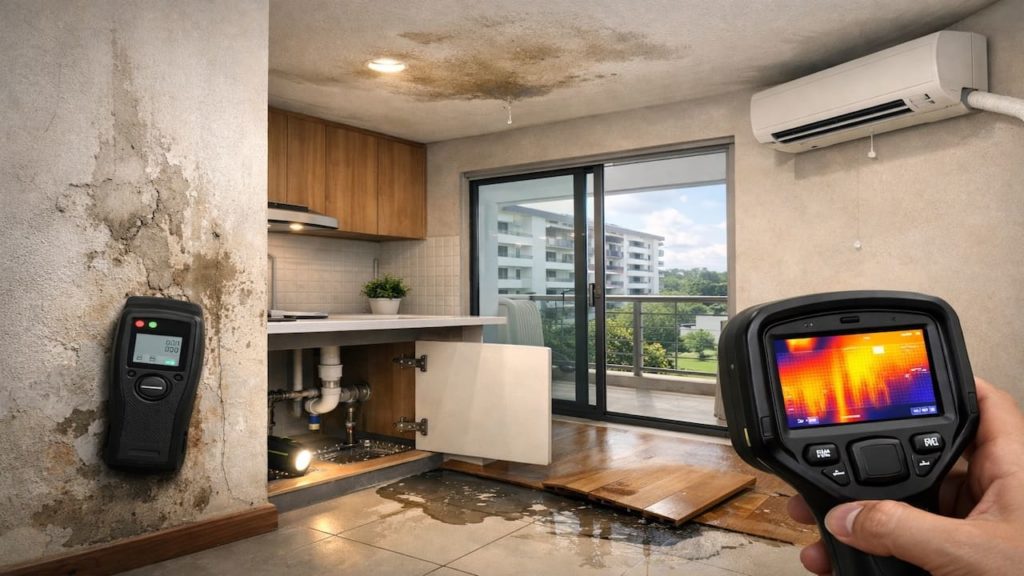
- Open access panel and find shiny drip trails
- Spray test one penetration zone for ten minutes
- Dry and clean surfaces before applying compound
- Replace failed washers and reseat loose screws
Some want to coat the whole roof to feel safe. That can hide the real gap and waste money, especially when the entry is a collar or bracket joint, so reproduce the leak, seal one confirmed detail, and stop the spread—clean finish.
5. FAQs
Q1. Why did it start leaking right after renovation?
New penetrations and disturbed waterproof layers can create fresh paths for rainwater. Malaysia storms then expose those tiny gaps quickly.
Q2. Can a leak show far from the new work area?
Yes, water can travel along rafters, underlay, and wiring routes before it drops. Track the highest wet sign, not the darkest stain.
Q3. Is silicone enough for new pipe holes?
Not always, because silicone can peel on wet dusty surfaces in humid weather. Proper boots, collars, and roof grade compounds last longer.
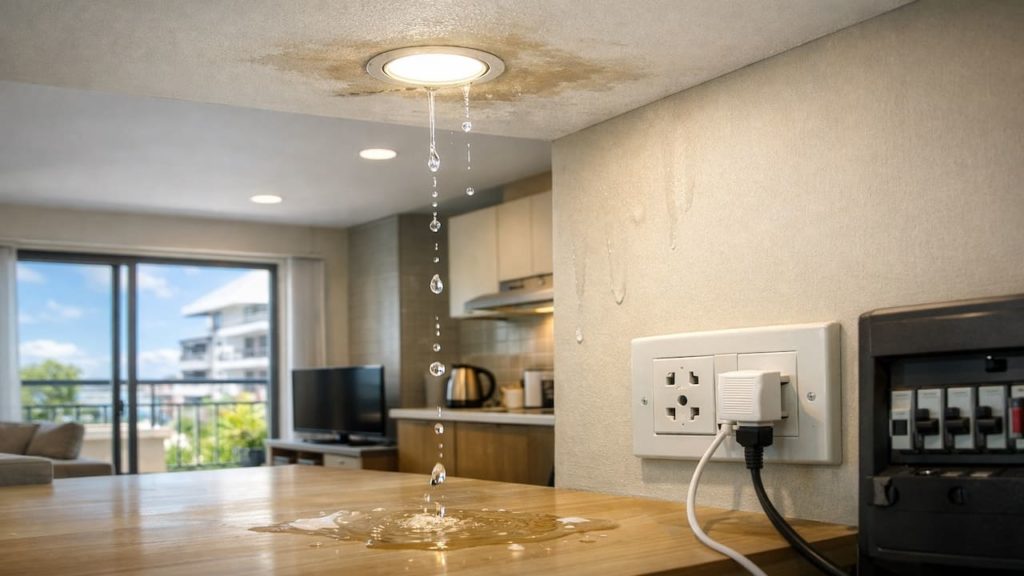
Q4. What if the stain is near lights or sockets?
Cut power to that circuit and avoid using the area until checked. Water near wiring is dangerous in a humid home and risk rises fast.
Q5. When should I call a professional?
If the ceiling is soft, bulging, or dripping heavily, call help quickly. If roof access is unsafe after rain, do not climb.
Pro’s Tough Talk

I’ve been on site for 20+ years and handled hundreds of roof and ceiling jobs, and leaks after renovation are the funniest and saddest combo. You paid for “improvement” and got a bucket. Classic.
Cause is usually 3 things in Malaysia. New holes get drilled and sealed on wet dusty surfaces. Screws and washers get over tightened and crush the seal. Drainage falls change and water starts ponding where it never sat before.
Two relatable moments. You repaint the ceiling and the stain comes back like a boomerang. You seal one spot and the drip moves like a sneaky snake sliding along the timber.
Make the leak repeat under your control with 3 steps. Log rain time and first drip time. Check the ceiling void for shiny trails and wet nails. Spray test one new penetration zone only and watch.
Do not blame yourself, and do not call every contractor evil, but the structure is cold: small shortcuts create big leaks. The silicone cowboy who says “just add more” deserves a side eye. Ignore it and enjoy your midnight drip soundtrack.
Summary
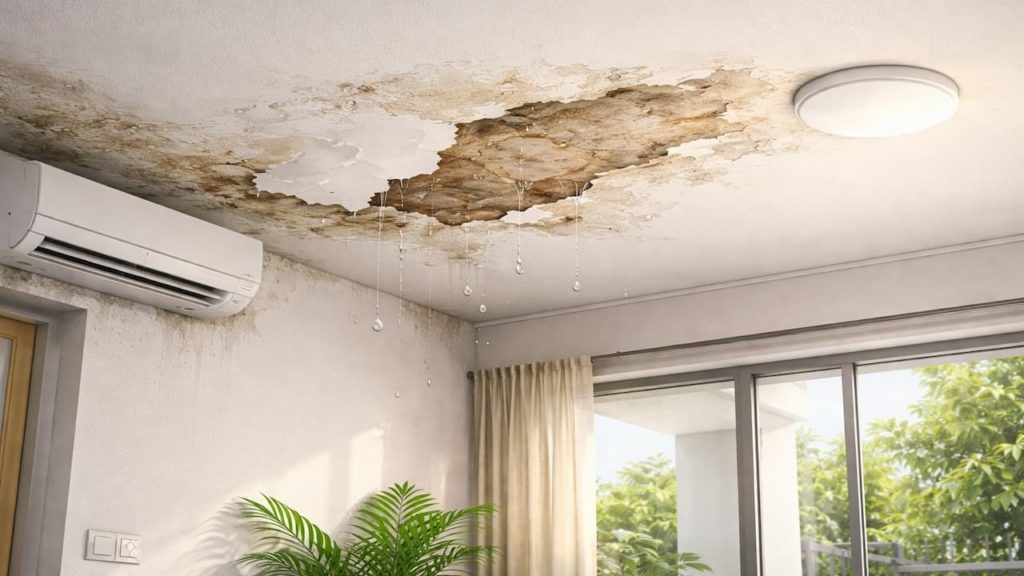
Roof leaks after renovation in Malaysia often come from new penetrations, crushed washers, cut membranes, and changed drainage that creates ponding water. The stain is the exit.
If mapping and one zone spray tests cannot reproduce the leak, focus next on drain collars, parapet joints, and gutter overflow marks after storms. Treat safety risks seriously.
Record the next storm then test one new penetration zone and continue with our guides on ponding water, metal roof fastener failures, and ceiling mold control for wet season homes.