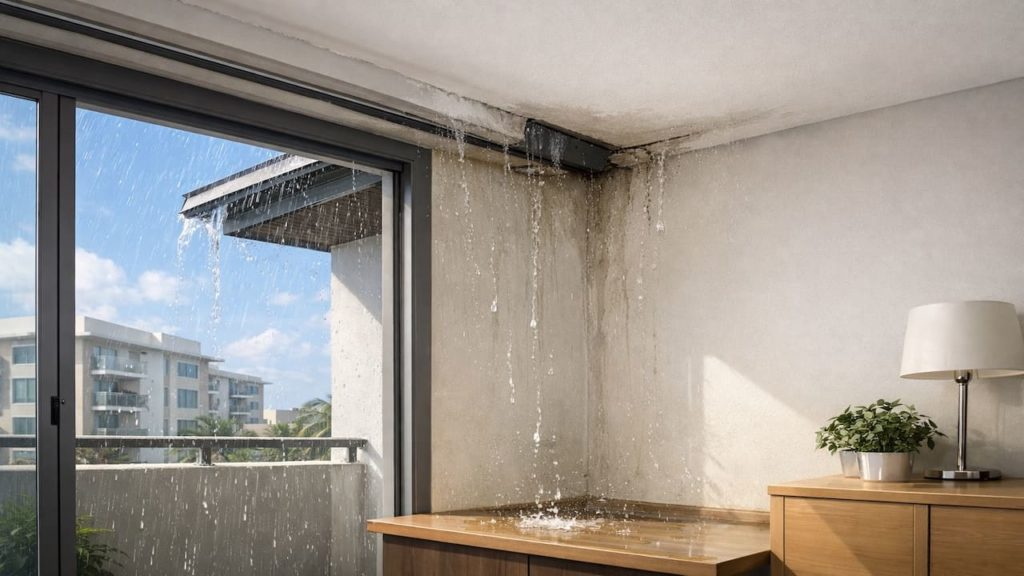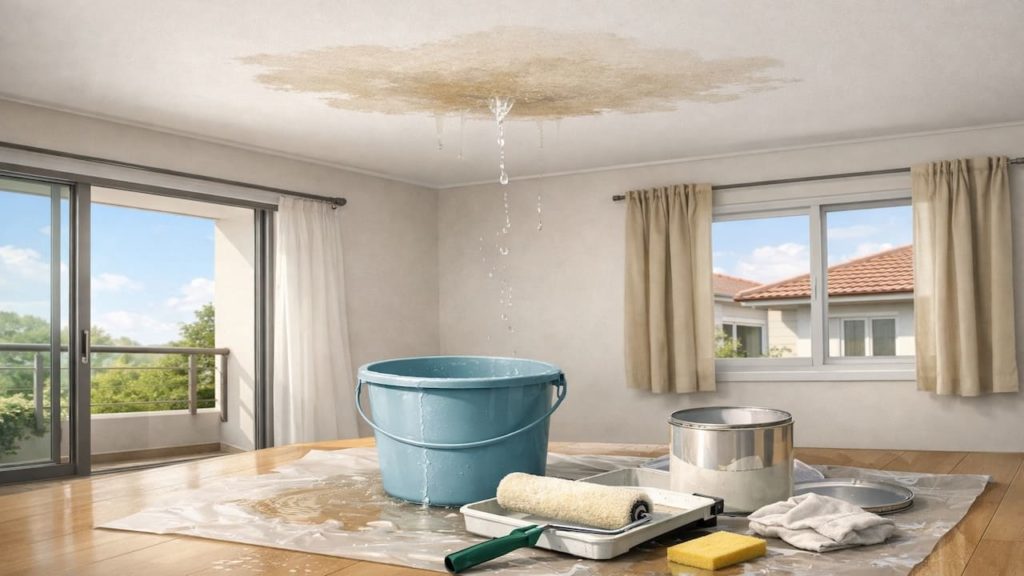
Wet ceiling paint and bubbling blisters in Malaysia often show up before a clear drip, because humid air traps moisture in gypsum and paint film. Early warning.
The source can be a slow roof seep, gutter overflow, pipe boot gaps, or slab ponding water, and the paint blisters form where moisture gets stuck and cannot dry. Misleading map.
In this guide, you’ll learn how to use paint blisters to trace roof moisture safely so you fix the entry point before the ceiling turns soft and moldy.

Hi, I’m Ken. I write practical home guides for Malaysia—no fluff, just what works.
I hold a formal building design qualification and have spent about 20 years on job sites across hundreds of projects. My goal is simple: help you avoid costly mistakes with clear, safe steps—a quick way to decide what to do next.
1. Roof leak wet ceiling paint: 5 checks
Blisters mean moisture is active above the paint layer.
In Malaysia humidity, a ceiling can stay damp for days, so paint lifts in bubbles and flakes even when the leak is small—especially near exterior walls and cornice lines. Warning sign.
- Press blister gently and feel for soft gypsum
- Check blister edge for yellow brown shadowing
- Look for damp line near ceiling wall junction
- Inspect cornice for tiny bead drips after rain
- Open access panel and check wet nails above
Some people think blisters are only bad paint quality. If blister growth matches storms or humid nights, it is trapped moisture from above, so treat it like a leak clue. Clear.
2. Blisters point to trapped moisture
Trapped moisture lifts paint even without visible dripping.
Moisture can travel underlay or slab joints and spread thinly across gypsum—Malaysia warm air keeps it slow-drying, so the paint film lifts like a skin separating. Quiet spread.
- Check for blister clusters rather than one spot
- Look for peeling along roller paint lap lines
- Inspect ceiling screw heads for rust pin dots
- Check wardrobe ceiling for stale damp smell
- Scan wall top corners for faint mold specks
You might think you need a drip to confirm a leak. Paint blisters often come first, so use them to map the damp zone, then search the roof entry points above that zone. Do it.
3. Why + Moisture gets trapped in Malaysia ceilings
Humidity slows drying and turns small leaks into blisters.
Wet season storms, warm roof voids, and nightly cooling cycles feed moisture into ceilings—then indoor humidity keeps gypsum damp, so paint fails before you see water. Cycle problem.
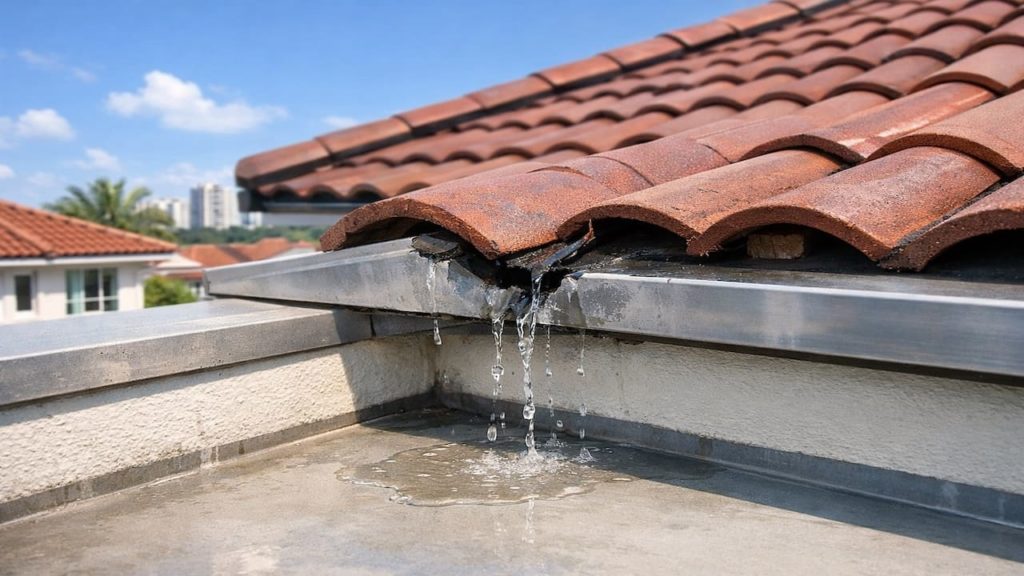
- Inspect gutter edge for behind gutter overflow
- Check valley for leaf mud and standing water
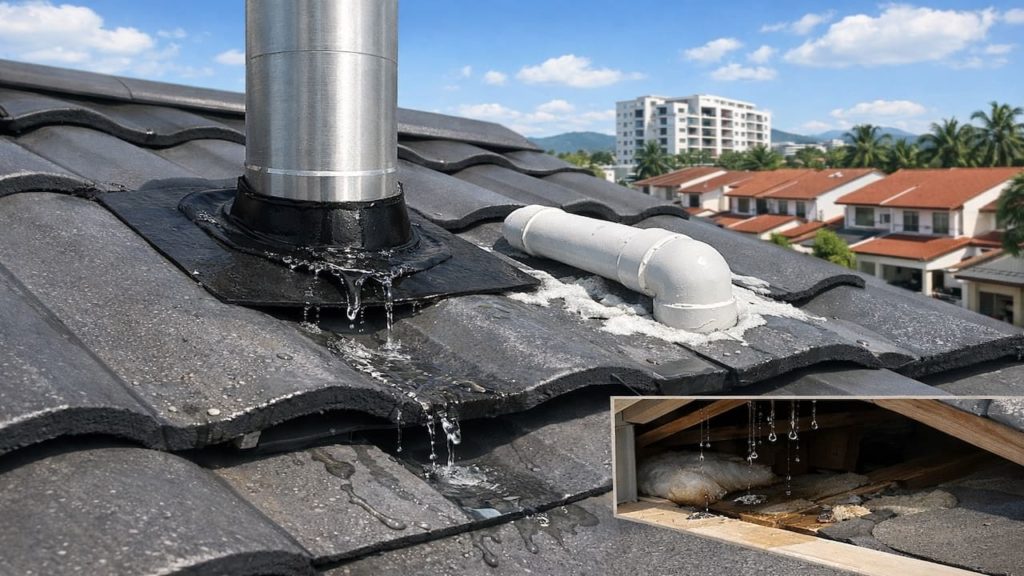
- Inspect vent pipe boot for cracks and lifted lip
- Check ridge and edge laps for uplift gaps
- Inspect slab roof for ponding near drains
Some blame indoor cooking steam and stop there. Steam matters, but storm timing and ceiling edge blisters point to roof entry more often than lifestyle, so follow evidence. Fact.
4. How + Confirm the source before repainting
Dry the area and reproduce the leak in one zone.
Repainting too early fails in Malaysia humidity—moisture stays inside gypsum, blisters return, and mold can bloom under paint, so confirm and dry first. Discipline.
- Mark blister edge and note rain time
- Cut power if wet area is near lights
- Open access panel and find shiny drip trails
- Spray test one roof junction zone in daylight
- Dry ceiling fully then patch and repaint
Some want to scrape all paint and start over immediately. If the entry point is still active, new paint fails again, so fix the roof source first, then dry, then repaint once. Done.
5. FAQs
Q1. Can paint blisters happen without a roof leak?
Yes, high indoor humidity can contribute, but blister growth after storms often indicates trapped moisture from above. Use timing and location to decide.
Q2. Why are blisters worse near the wall line?
Ceiling edges are cooler and moisture can travel along wall plates and junctions. Water often exits at the edge, not the entry point, especially in terrace houses.
Q3. Should I pop the blisters to dry it faster?
Popping can release moisture but it does not remove the source, and it can spread stains and mold. Dry the ceiling void and fix the entry point first.
Q4. What if the blistered area is near a light fitting?
Cut power to that circuit and avoid the area until checked. Water near wiring is dangerous and humidity raises the risk.
Q5. When should I call a professional?
If the ceiling feels soft, bulges, or spreads quickly, call help. If you cannot safely access the roof void or roof surface, do not force it.
Pro’s Tough Talk

I’ve been on site for 20+ years and handled hundreds of roof and ceiling jobs, and bubbling ceiling paint in Malaysia is the leak warning people ignore. They wait for a drip like it is a fireworks show.
It is usually 3 causes. Slow seepage dampens gypsum and paint lifts. Humidity blocks drying and traps moisture like a wet towel in a plastic bag. Water travels sideways and exits at a cooler edge line. Predictable.
Two relatable moments. You repaint and it blisters again like a boomerang. You poke one bubble and it flakes wider like peeling a sticker you regret starting. Ceiling drama.
Use the blisters as a map not a cosmetic problem with 3 steps. Mark the blister edge and track storm timing. Check the ceiling void for wet nails and shiny trails. Spray test one junction zone and confirm the entry.
Do not blame yourself, and do not call every contractor evil, but the structure is cold: paint tells the truth before your eyes do. The “just repaint” hero gets my jab. Ignore it and enjoy your free ceiling bubble collection.
Summary
Wet ceiling paint and blisters in Malaysia usually mean trapped moisture above the paint film from a slow leak or overflow path. Blisters are an early warning.
Mark blister edges, match changes to storms, inspect the ceiling void for wet trails, and isolate the roof entry point before repainting. If electrical fixtures are nearby, treat it as urgent.
Mark the blisters today then inspect the ceiling void tonight and continue with our guides on gutter overflow, vent pipe boot leaks, and ceiling mold control for wet season homes.