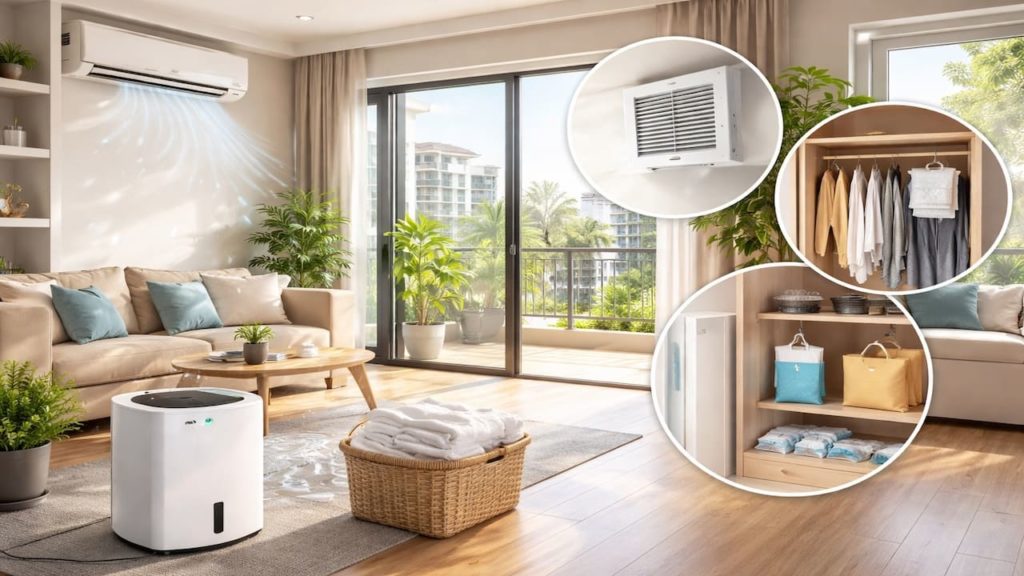
Your rooms feel warm and sticky, towels dry slowly, and the air gets that closed smell at night, so you are searching for a simple airflow fix.
In Malaysia, humidity stays high year round, and many condos and terrace homes have limited cross breeze, especially in shaded rooms and tight corridors.
In this guide, you’ll learn how to set up airflow that cools rooms and cuts damp with realistic habits that fit Malaysian layouts, so you spend less on electricity and avoid mold repairs.

Hi, I’m Ken. I write practical home guides for Malaysia—no fluff, just what works.
I hold a formal building design qualification and have spent about 20 years on job sites across hundreds of projects. My goal is simple: help you avoid costly mistakes with clear, safe steps—a quick way to decide what to do next.
1. Malaysia home airflow guide: 5 tips
Airflow first makes everything else easier.
When air moves, sweat evaporates faster and surfaces dry instead of staying clammy—your body feels cooler even at the same temperature. Malaysia heat is not the only problem, trapped moisture is. Small rooms suffer the most. Dead corners.
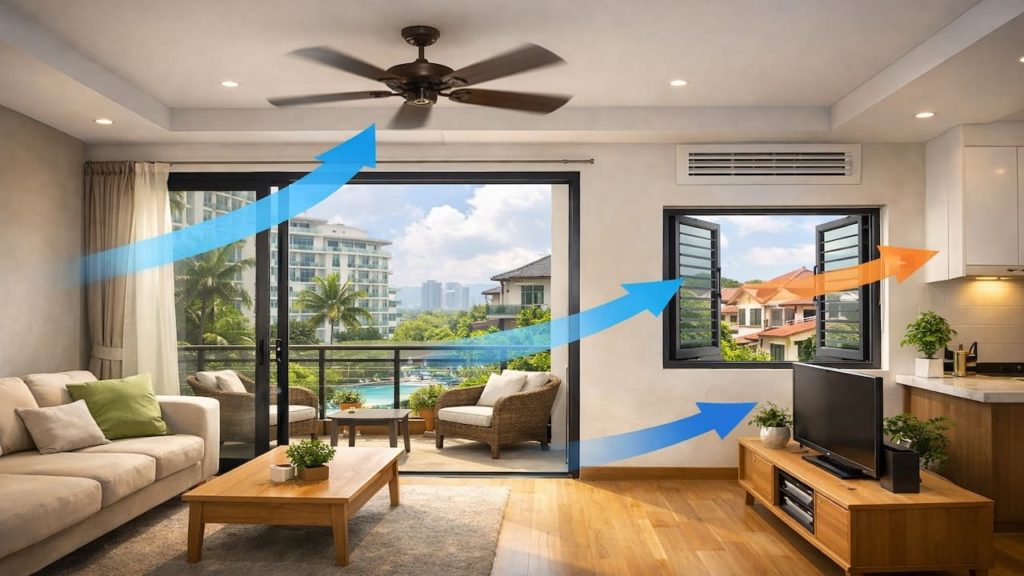
- Open two windows and keep a door cracked
- Point a fan across the room toward exit
- After showers run exhaust and close bathroom door
- After cooking vent longer and wipe damp surfaces
- Move furniture away from walls to breathe
You might think this is too basic to matter, but it is the base layer—without it, aircond works harder and still leaves damp pockets behind. Do the airflow first, then cool the room.
2. Cool rooms less damp
Cool rooms happen when stale air gets replaced.
Stale humid air clings to fabric, cushions, and wood, and it makes a room feel hotter than it is—like wearing a damp shirt. In Malaysia, this shows up as musty wardrobes and sticky floors after mopping. Annoying stuff. Fixable.
- Use curtains that block sun but allow airflow
- Align interior doors to form a clear path
- Keep ceiling fan low for steady circulation
- Dry laundry near window gap not near wardrobe
- Let air move before you switch on aircond
Some people worry ventilation brings heat in, and yes it can, but trapped humidity feels worse and lasts longer. Flush the room, then seal it and cool. That sequence wins.
3. Why Malaysian homes get stuffy and damp
Damp builds when moisture enters and cannot leave.
Malaysia air carries water, so any gap, wet activity, or closed room increases indoor humidity fast. Condos often have one window rooms, and terrace homes sometimes have airflow blocked by partitions and storage. Same result. Slow drying—slow damage.
- Closed windows during haze trap moisture indoors
- Single window rooms often lack an exit route
- Wardrobes pushed tight to walls create damp pockets
- Bathroom steam leaks when door stays open
- Short aircond cycles often leave humidity behind
You might think damp means a leak, but many homes are simply not ventilated right. Fix the airflow path first, then decide if you need devices. If you buy nothing today, cost is mostly time/effort.
4. How to build an airflow routine that actually works
Create a repeatable airflow path and stick to it.
Make one intake and one exit, then move air across the room, not into a wall—this is how you dry surfaces and cool people at the same time. A basic fan or door sweep can be RM20–200, and that small spend often reduces bigger monthly aircond use. Simple system.
- Pick one intake point and one clear exit
- Run fan twenty minutes after cooking and showers
- Keep bathroom door shut until floor is dry
- Wipe condensation fast then open room to vent
- Shift beds and sofas off walls for airflow
You might say “I do not have time for routines,” but you already spend time dealing with musty smells and slow drying. A short routine beats random effort. Do it daily, then your home stays calmer.
5. FAQs
Q1. Should I open windows if the outside air feels humid?
Yes, if you can create a path that pushes air through and out. Even humid air can reduce indoor dead pockets when it is moving and not trapped.
Q2. What humidity level should I aim for indoors?
Target 50 to 60 percent humidity for comfort and fewer musty smells. If you see mold spots, go lower and keep the room closed while you dry it out.
Q3. My bedroom has only one window, what can I do?
Use a fan to push air toward the door—your door becomes the exit route. Keep the door slightly open during ventilation, then close it when you switch to cooling.
Q4. Will ventilation increase my electricity bill?
Not if you ventilate first and cool second. Flushing humid air can reduce how long aircond needs to run to feel comfortable.
Q5. How do I know airflow is improving?
You should notice less window condensation, faster towel drying, and fewer musty wardrobe smells. If corners still feel damp, check for blocked paths and furniture pressed against walls.
Pro’s Tough Talk

I’ve been on sites for 20+ years and I’ve handled hundreds of damp home headaches. When air does not move, your place turns into a closed cooler full of wet air. Malaysia humidity loves that.
It breaks into 3 causes. No exit path, so moisture just loops around. Wet sources like bathrooms and cooking feeding the air. And bad furniture placement trapping pockets behind wardrobes. Classic scene.
Immediate fix is 3 moves. Make an intake and an exit. Push air across the room with a fan. Dry wet zones fast after showers and mopping. Humidity is a sponge, it soaks everything.
Here is the rule. Move air then cool with control. Common scene one: laundry rack in the living room during rain, then everyone wonders why the sofa smells. Common scene two: wardrobe glued to the wall, then black dots appear. Come on.
Ignore airflow and you will keep buying “solutions” while your house keeps sweating like it owns a gym membership.
Summary
Airflow is the cheapest way to cool rooms and reduce damp in Malaysia, because moving air helps moisture leave instead of settling into walls and fabric.
If your home stays sticky, build one clear intake to exit path, protect wet zones, and stop blocking air with furniture and closed doors.
Fix airflow first then cool smarter and you will cut musty smells, dry towels faster, and naturally move to the next Malaysia humidity guide with less trial and error.