You searched “fire safety” because the kitchen feels like the highest risk zone, and you want simple habits that lower danger without turning your home into a bunker.
In Malaysia, cooking with high heat, oily frying, gas cylinders in some homes, and crowded condo kitchens can raise fire risk. Humid weather also makes people leave appliances plugged in and ignore grease buildup.
In this guide, you’ll learn the 5 checks that reduce kitchen fire risk with simple daily habits so your home stays safer and you act fast if something starts.

Hi, I’m Ken. I write practical home guides for Malaysia—no fluff, just what works.
I hold a formal building design qualification and have spent about 20 years on job sites across hundreds of projects. My goal is simple: help you avoid costly mistakes with clear, safe steps—a quick way to decide what to do next.
1. Malaysia fire safety guide: 5 checks
Most home fires start small and fast in the kitchen — prevention is mostly setup and habit.
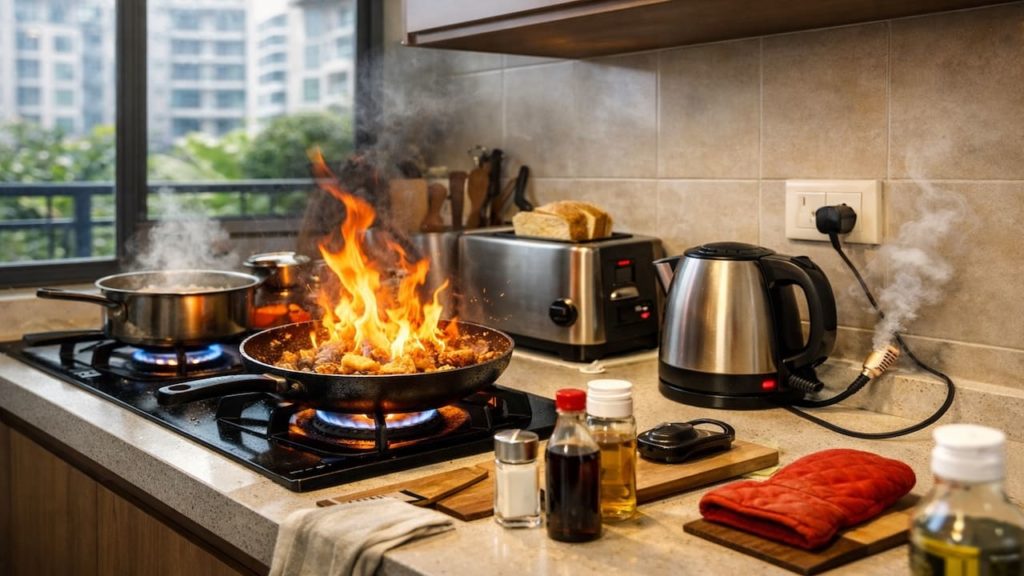
In Malaysia homes, cooking is frequent and high-heat, and many kitchens have limited counter space. When oil, clutter, and loose cords combine, small flare-ups become panic quickly. Kitchen.
- Clear clutter around hob and keep towel away
- Check stove knobs return fully to off position
- Inspect gas hose for cracks and loose clamps
- Look for greasy buildup on hood and tiles
- Test smoke alarm and replace weak batteries
You might think “I’m careful, nothing happens”. But accidents happen on busy days, and fire safety is about removing easy ignition points before that day arrives.
2. 【Kitchen risks first plus simple habits that help】
Small habits cut risk more than expensive equipment — focus on heat control and clean surfaces.
You may buy a basic fire blanket or small extinguisher, which is often RM40–150 in Malaysia depending on size and type. Even without purchases, habits still matter every single day. Habits.
- Stay in kitchen while frying and keep lid ready
- Turn pot handles inward to avoid accidental knocks
- Unplug high-heat appliances after use and cool down
- Keep a dry cloth away from flames and hot oil
- Clean grease weekly to reduce sudden flare risk
You might feel silly “watching oil” the whole time. But stepping away for one minute is how oil overheats, flashes, and turns into a fire you cannot control with water.
3. Why kitchen fires happen in Malaysia homes
Fire risk rises when heat fuel and oxygen meet quickly — kitchens provide all three.
High heat from stoves, fuel from cooking oil and grease, and airflow from fans or open windows create a perfect triangle. In small condo kitchens, items sit close to burners, so ignition spreads faster. Triangle.
- Overheated oil ignites when left unattended briefly
- Grease on hood and tiles becomes hidden fuel
- Loose electrical plugs overheat under high load
- Gas leaks ignite from sparks or open flame
- Cloth and paper near hob catch fire easily
You might assume only “big flames” matter. Smoke and heat damage start earlier, and many kitchen incidents are small but still dangerous without the right reaction.
4. How to act fast if something catches fire
Use the right first move to stop fire without making it worse — water is not always your friend.
If you do not own safety tools, cost is mostly time/effort, because you can still plan the steps, clear the area, and know where to cut power or gas. If you buy a fire blanket or extinguisher, RM40–150 is typical. Action.
- Turn off heat source if safe and reachable
- Cover pan fire with lid and switch off stove
- Never throw water on burning cooking oil
- Cut gas at cylinder or valve if you smell leak
- Evacuate and call emergency services when spreading
You might think you must fight every fire. If flames climb cabinets or smoke fills the room, leave and call for help, because your lungs and exit path matter most.
5. FAQs
Q1. Do I really need a smoke alarm in Malaysia condos?
Yes because alarms buy you time when smoke starts. Kitchen smoke can build fast, and early warning helps you act before visibility drops.
Q2. What is the safest way to handle a small oil fire?
Switch off the stove if safe, then cover the pan with a lid to cut oxygen. Do not move the pan, because hot oil spills are worse than flames.
Q3. How can I tell if a gas hose is unsafe?
Look for cracks, stiffness, or loose clamps, and replace if it feels aged. If you smell gas, ventilate, do not spark switches, and close the valve.
Q4. Are air fryers and rice cookers a fire risk?
They can be if cords are damaged or outlets are overloaded. Keep plugs tight, avoid multi-adapters for high-load appliances, and unplug after use.
Q5. How often should I clean the hood and grease filters?
Monthly is a good baseline, more often if you fry often. Less grease means less fuel if a flare-up happens.
Pro’s Tough Talk

Alright. I’ve been on site 20+ years, and I’ve done hundreds of jobs. Kitchen fires don’t start like a movie. They start like “just one minute” and then you’re sweating in slippers.
Cause is 3 pieces. Unattended heat, fuel from oil and grease, and clutter too close to flame. Contractors aren’t all bad, but the structure is cold: small kitchens plus daily cooking means one mistake has no buffer.
Do this now. Clear the hob area, keep a lid within reach, and check gas hose and clamps. Unplug high-load appliances after use. If oil flares, cover it, don’t splash water. Easy.
Watch the heat and remove easy fuel around the hob. Tsukkomi: you think the fire will wait politely while you find a towel ah? Aruaru: people fry, scroll phone, and the oil starts smoking. Aruaru: they panic and throw water, then the flame says thank you.
Keep treating “one minute” like it’s free, and one day your kitchen will teach you a lesson with interest lah.
Summary
Kitchen risk is highest because heat, oil, and clutter meet in a small space, especially in Malaysia homes where cooking is frequent.
Do simple checks on gas hoses, plugs, grease buildup, and keep the hob area clear, plus learn the right first move for small fires.
Make one kitchen habit change today and reduce your biggest home risk then read a related guide on breaker tripping or emergency kits for storm nights.