If you searched “garden awnings that last longer” you’re probably tired of sagging fabric, moldy smells, or a frame that loosens after a few storms.
In Malaysia, humidity stays high, rain hits suddenly, and sun is strong, so awnings age faster than you expect on terrace porches and condo balconies. Wet season. Dry season. Both are harsh.
In this guide, you’ll learn how to choose fabric and frame that survive Malaysia humidity so your awning stays taut, clean, and safe for daily shade.

Hi, I’m Ken. I write practical home guides for Malaysia—no fluff, just what works.
I hold a formal building design qualification and have spent about 20 years on job sites across hundreds of projects. My goal is simple: help you avoid costly mistakes with clear, safe steps—a quick way to decide what to do next.
1. Garden awnings that last longer: 5 checks
Long-lasting awnings depend on fabric grade and frame stiffness — not just the brand name.
Malaysia weather exposes weak awnings quickly: damp fabric grows mildew, and thin frames wobble in gusts, then screws loosen and the whole thing sags. Short lifespan. Preventable.
- Check fabric rating for UV and mildew resistance
- Inspect seam stitching and edge binding quality
- Test frame wobble by shaking corner joints firmly
- Confirm drainage path so water never pools
- Choose hardware that will not rust in humidity
You might think thicker fabric alone solves it. If the frame flexes and water pools, even premium fabric fails early, so check the system as one unit.
2. Pick fabric and frame that resist humidity
Choose breathable fabric and corrosion-resistant frames for wet season.
Humidity is the silent killer—if air cannot pass and fabric stays damp, mildew forms, smells stick, and stains become permanent. In Malaysia, you want materials that dry fast and don’t corrode. Comfort matters.
- Select solution-dyed acrylic or coated polyester fabric
- Avoid fabrics that trap water and stay heavy
- Pick powder-coated aluminum or galvanized steel frames
- Use stainless fasteners where rain can reach
- Prefer designs with tension arms to reduce sag
You may be tempted to choose the cheapest set online. Cheap hardware rusts first, then loosens, then tears fabric at the seams, so spend on frame and fasteners before extras.
3. Why awnings fail faster in Malaysia homes
Awnings fail when moisture stays trapped and joints keep moving.
Malaysia rain plus humid air means fabric rarely dries fully in shaded areas, and repeated wet-dry cycles stress seams and coatings. Add wind vibration and everything loosens. Wear cycle.
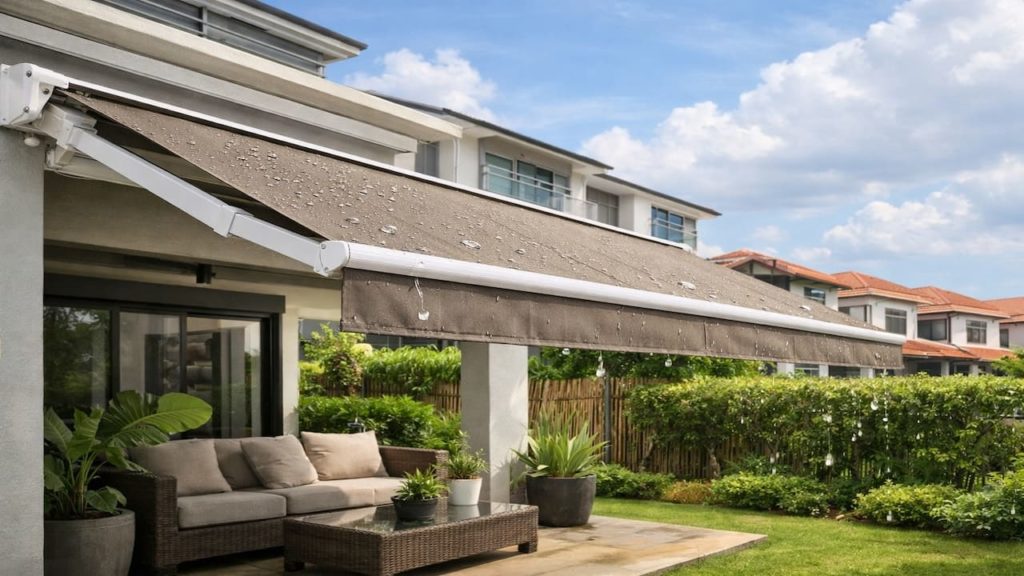
- Pooled water stretches fabric and causes permanent sag
- Mildew forms when airflow is blocked near walls
- Rust expands and cracks paint on frame joints
- Loose brackets vibrate and enlarge screw holes
- Saltier air near coasts accelerates corrosion quickly
Some people blame “bad luck” after one rainy month. It’s usually predictable: poor pitch, trapped damp, and weak joints, so fix airflow and stiffness and the awning lasts longer.
4. How to install and maintain an awning for longer life
Give it slope airflow and regular tightening checks — small habits stop big failures.
Plan for humid maintenance from day one; RM120–600 for better brackets, stainless screws, and basic sealant is often enough to upgrade durability without replacing everything. Smart money.
- Install with a clear pitch so rain runs off
- Keep a small gap from walls to allow airflow
- Rinse dirt and pollen before it becomes mildew food
- Tighten bolts after first storm and monthly checks
- Retract or secure awning before strong wind events
You might think maintenance is annoying. It’s faster than replacing fabric every year, and it keeps the area safer because loose frames can drop or scratch walls.
5. FAQs
Q1. What fabric lasts best in humidity and sun?
Solution-dyed acrylic usually lasts best in humidity because color is deeper and mildew resistance is stronger. Still, airflow and drainage decide the real lifespan.
Q2. Is a fixed awning better than a retractable one?
Fixed awnings can be sturdier, but they must have proper pitch and drainage. Retractable awnings can last longer if you retract them during storms and keep joints tight.
Q3. How do I stop mildew smell on the fabric?
Increase airflow and keep the fabric dry between rains. Clean early before stains set, because Malaysia humidity makes mildew return if you wait too long.
Q4. What frame material is safest for Malaysia weather?
Powder-coated aluminum resists corrosion well and stays lighter on brackets. Galvanized steel can work too, but watch for scratches that expose raw metal.
Q5. How often should I re-tighten bolts and brackets?
Check after installation, then after the first storm, then every few months. Heat and wind vibration slowly loosen joints, especially on balcony installs.
Pro’s Tough Talk

Listen, I’ve been on site for 20+ years and done hundreds of jobs, and “awning didn’t last” is not a mystery in Malaysia. Humidity is like a slow leak in time, it ruins everything quietly.
Three causes. First, people choose fabric like it’s a shirt, not outdoor roofing, then it grows mildew like a sponge. Second, the frame is thin and wobbly, so every gust shakes it like a cheap selfie stick. Third, brackets and screws rust, loosen, and the fabric tears at the seams.
Here’s what you do. Step 1: make sure there is slope so water never pools. Step 2: choose corrosion-resistant frame and stainless fasteners. Step 3: rinse and dry, then tighten bolts after storms.
Rule is simple stop water stop wobble stop rust. Aruaru #1: you buy a cheap awning, then it smells like a damp towel. Aruaru #2: you ignore a loose bracket, then one day it bangs in the wind all night. What is this, a wind chime?
I’m not blaming you and I’m not saying every contractor is trash, but the structure is cold: if you pay for cheap parts, you pay again later. Pick right, or enjoy replacing it every wet season, boss.
Summary
Awnings last longer when fabric resists mildew, frames resist corrosion, and the install prevents pooled water and constant vibration.
If your awning already sags or smells, focus next on drainage pitch, airflow gaps, and tightening joints before you spend on a full replacement.
Do the 5 checks today and choose materials that dry fast and stay stiff in humidity then jump to a rainy-season maintenance guide to keep the porch comfortable.