You set garden borders to keep beds neat, then a downpour hits and soil spills onto the walkway. In Malaysia, that mess can show up in one wet afternoon.
Heavy rain, humid air, and fast runoff around terrace houses and condo patios push soil sideways and wash it out from below. The border might look solid, but the ground behind it may already be hollow.
In this guide, you’ll learn how to keep garden borders holding soil through wet months and how to spot failure points before a collapse. You will also learn quick fixes, smart materials, and simple drainage habits that cut repeat repairs.

Hi, I’m Ken. I write practical home guides for Malaysia—no fluff, just what works.
I hold a formal building design qualification and have spent about 20 years on job sites across hundreds of projects. My goal is simple: help you avoid costly mistakes with clear, safe steps—a quick way to decide what to do next.
1. Garden borders that hold soil: 5 checks
Strong borders start with simple stability checks before you add more soil.
In Malaysia, downpours hit hard—borders that flex fail fast when saturated soil gets heavy. Soil control. Check the edge right after rain, not on a sunny day. Look for movement, gaps, and wash marks that show where water is escaping.
- Push a screwdriver near edge to feel voids
- Check border height after rain for slumping soil
- Look for wash lines where water exits beds
- Test corner joints for wobble and open gaps
- Confirm edging stakes are firm and not rusted
You may think “it is just garden soil,” but wet soil weighs a lot and it will win against weak anchoring. Reality. Do the checks, mark the worst spot, and fix that first.
2. Keep beds from collapsing after downpours
Stop the first small slide and you prevent the big collapse.
Most collapses start as a minor slump, then the next storm cuts a channel and undercuts the border—suddenly the bed caves. Quick response. Malaysia rain often comes in bursts, so you can act between storms. Focus on corners, low points, and anywhere runoff concentrates.
- Pack backfill tightly behind border after each storm
- Add a small berm to redirect surface runoff
- Clear leaf litter blocking bed edge drains
- Trim plants that trap wet soil against boards
- Recheck low corners where puddles collect first
Some people wait for “one more rain” to confirm, but that is when the bed usually gives way. Timing. Fix the early slump, and the rest of the border stays calm.
3. Why borders fail in Malaysia heavy rain
Water undermines the base long before the border looks broken.
Runoff finds the easiest path, and it often goes along the border line where soil is loose—then it erodes the toe from below. Hidden washout. Clay soil swells and shrinks, so borders loosen over repeated wet-dry cycles. On patios and tight side yards, water has fewer exits, so pressure builds faster.
- Trace water flow with a hose during light rain
- Check for soft spots under the border toe
- Spot soil cracking that opens channels for runoff
- Inspect termite activity where wood stays damp
- Notice splashback zones from roof drip edges
You might blame the border material, but the real enemy is unmanaged water plus loose backfill. Mechanism. Control flow and compaction, and even modest edging holds up better.
4. How to reinforce borders so soil stays put
Rebuild the base and drainage path instead of stacking more soil.
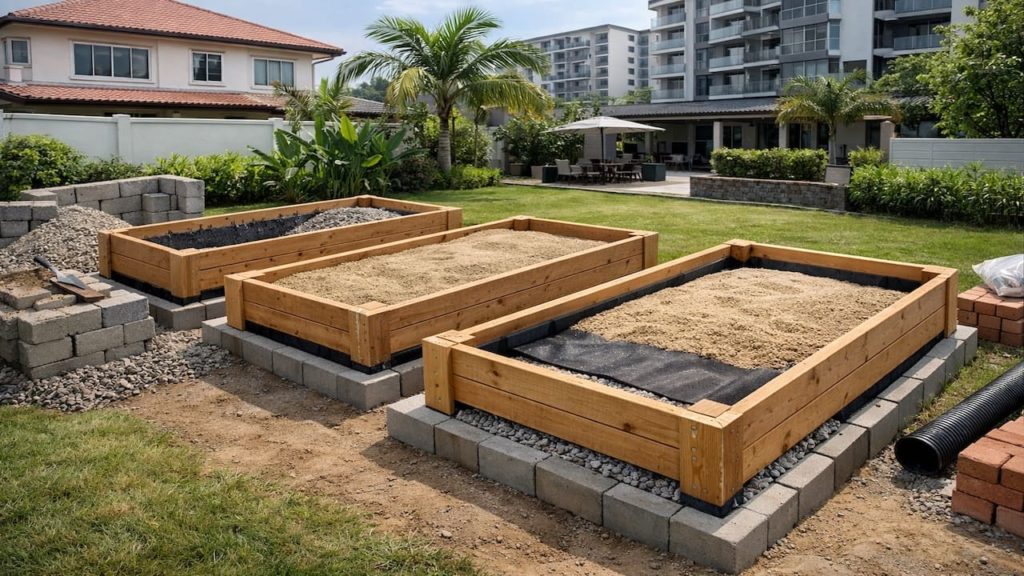
Start by digging out the failed section, then compact the base and add a firm toe. Structure. This blocks undercutting—fast. RM20–200 covers gravel toe, fabric filter, stakes, and basic fasteners.
- Excavate a trench and compact base firmly
- Add gravel toe to resist undercutting flow
- Install geotextile to separate soil and gravel
- Drive stakes deeper and tie border panels tight
- Grade soil to shed water away from edge
It can feel like “overwork” for a garden edge, but the repeat cleanups cost more time than one proper rebuild. Tradeoff. Reinforce the base once, then maintain with quick checks after storms.
5. FAQs
Q1. Are concrete borders always better than timber?
Not always, because both fail if water undermines the base. Concrete can crack and shift, while timber can rot, so drainage and compaction still matter most.
Q2. What is the quickest upgrade that makes a big difference?
Add a compacted gravel toe so runoff cannot wash out the bottom edge. It is small work, but it changes how the border resists erosion.
Q3. How do I know if the bed is undermined?
Probe near the border with a stick after rain and feel for hollow space. If the soil caves in easily, water is already cutting underneath.
Q4. Can plants help hold the soil in place?
Yes, deep roots help, but plants cannot compensate for bad runoff flow. Use plants as support after you fix drainage and compaction first.
Q5. How often should I check borders in rainy months?
Do a quick walk after big storms and after weeks of daily rain. Pay extra attention to corners, low points, and shaded edges that stay damp.
Pro’s Tough Talk

Alright, I’ve been on site 20+ years, and I’ve done hundreds of jobs, and soil washouts are always the same story. Malaysia rain turns loose soil into soup, and your border becomes a sad little dam.
Three causes. One, no compacted base, so the edge sits on mush. Two, water has no exit, so it sneaks under and eats the toe like termites on snacks. Three, people keep topping up soil, like rebuilding a sandcastle in the tide.
Do this in 3 steps. First, expose the failed spot and dig until the base is firm. Second, add gravel toe and a filter layer so water moves but soil stays. Third, stake it deep and grade the bed so runoff leaves.
Don’t blame yourself, and don’t say every contractor is useless either, but the structure is brutal. The hidden base work gets skipped when the quote gets squeezed, because nobody sees it. Water path decides the result and that part is non-negotiable.
Aruaru: you clean the walkway, then the next storm redraws the same mud line. Aruaru: the corner that always sinks, no matter how “strong” the border looks. Oi, you want it to stop, right? Fix the base, or keep sweeping like it’s cardio.
Summary
Borders hold soil when the base is compacted, water has an exit path, and the edge resists undercutting after downpours. In Malaysia, quick checks after rain are the difference.
If you see slumps, hollow spots, or wash lines, act before the next storm expands the channel. Rebuild only the failing section, but rebuild it properly with toe support.
Check one weak corner today and reinforce it then read a drainage flow guide and a wet-season cleaning guide. Small structural fixes beat endless top-ups, and your garden stays calmer.