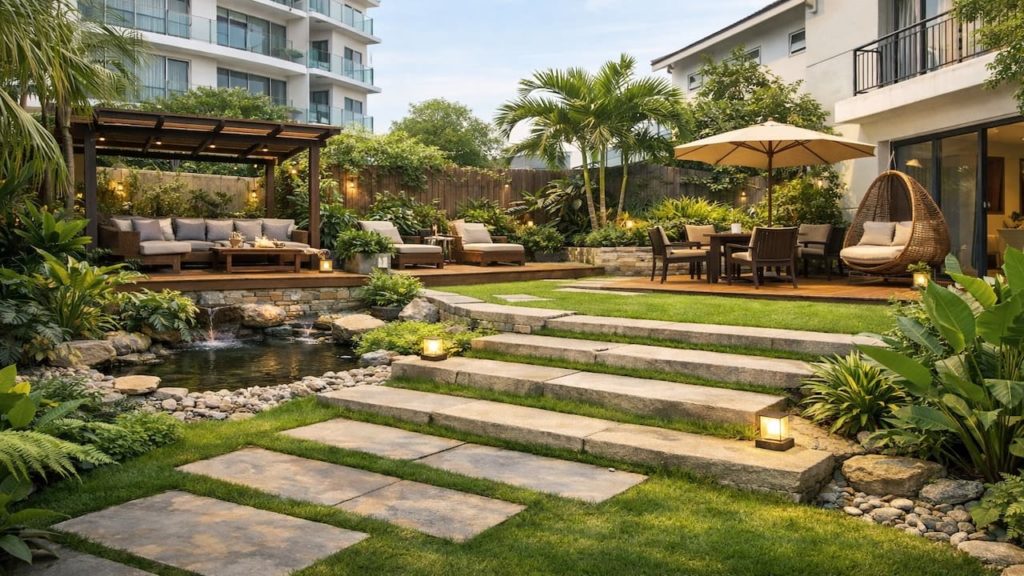
Your backyard should feel like an extra room, but in Malaysia it can turn into a hot, damp storage zone that nobody uses. That is the common frustration.
Humidity, sudden rain, and fast plant growth punish poor flow and blocked airflow, especially in terrace back lanes and small lots. Comfort needs structure.
In this guide, you’ll learn how to build comfort zones that you actually use daily. You will set a clear path, place seating for breeze, and keep the space easy to rinse in wet months.

Hi, I’m Ken. I write practical home guides for Malaysia—no fluff, just what works.
I hold a formal building design qualification and have spent about 20 years on job sites across hundreds of projects. My goal is simple: help you avoid costly mistakes with clear, safe steps—a quick way to decide what to do next.
1. Backyard garden design: 5 steps
Divide the backyard into clear comfort zones so daily outdoor living feels easy in Malaysia weather.
A backyard feels usable when every activity has a home: sit, eat, rinse, and store—without stepping over clutter. Zone clarity. In humid months, defined zones also help surfaces dry faster because airflow lanes stay open. Start by deciding the main use you want every day.
- Pick one main daily use for the backyard
- Set a clear route connecting all zones
- Keep storage out of the main sightline
- Place seating where breeze still reaches you
- Leave one open strip for quick rinsing
You might try to make one area do everything, but that creates clutter and constant moving around. Malaysia rain will scatter that chaos fast. Separate zones, and the space feels larger and calmer.
2. Make comfort zones for daily outdoor living
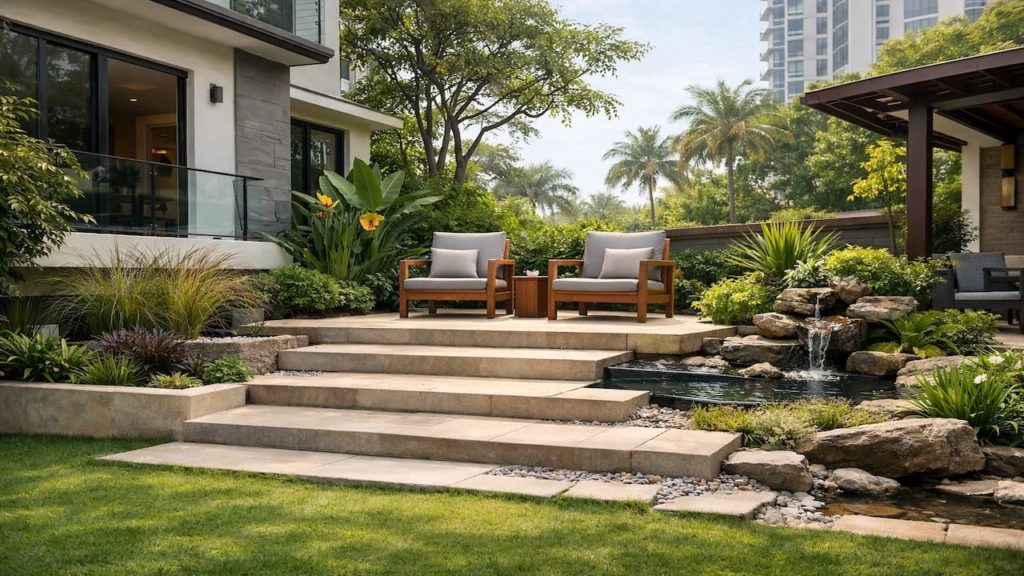
Build the seating zone first because comfort is the reason you will use the backyard at all.
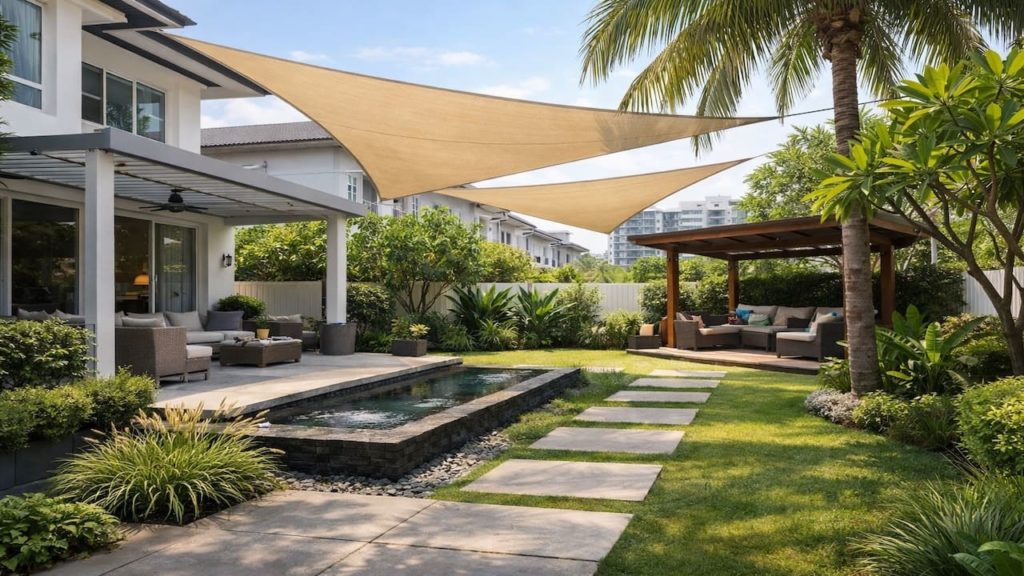
In Malaysia, comfort depends on airflow more than decoration—seat placement in dead air feels sticky and hot. Breeze matters. Choose a spot that gets wind, has shade without becoming damp, and stays reachable from the door. Keep the floor clear so you can clean and reset quickly after rain.
- Test breeze by standing still at three spots
- Place seating on the driest highest surface
- Add shade that filters light not blocks wind
- Keep a small side table for daily items
- Use lighting that shows edges without glare
You may want to push seating into a corner for privacy, but corners often trap humidity in Malaysia homes. Put privacy behind you, not around you. Comfort first, then you can layer plants for mood.
3. Why backyards feel unused in Malaysia homes
They feel unused because the space is not frictionless and Malaysia humidity punishes slow drying.
If you must move pots to walk, dodge wet patches, or hunt for the hose, you will stop going out there. Daily friction. Shaded floors stay damp, algae grows, and the backyard feels dirty even when it is “fine.” Fast growth also creates constant trimming, so you avoid it and it gets worse.
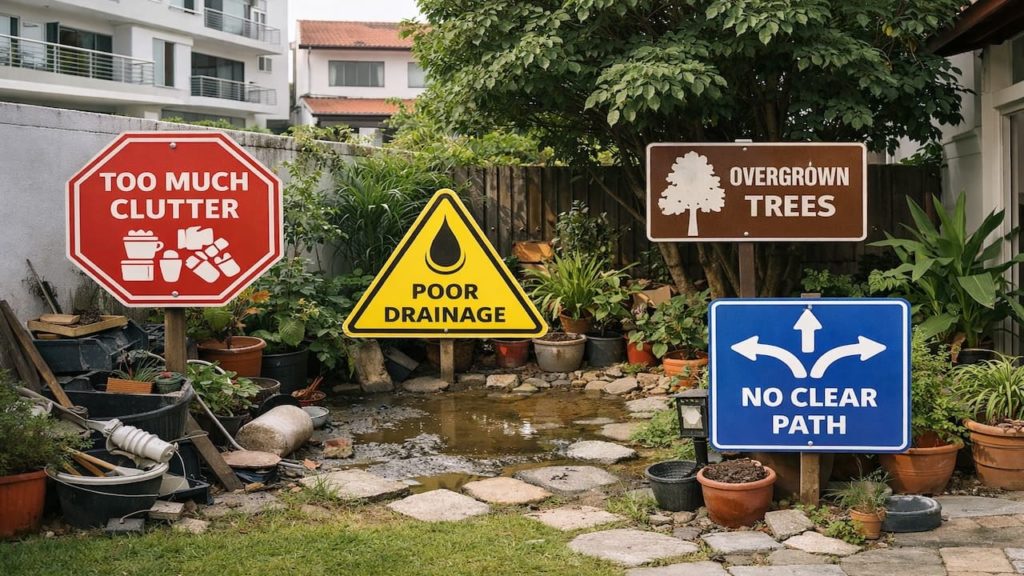
- Blocked routes make every visit feel annoying
- Shaded floors stay damp and turn slick
- Hidden drains overflow and stain surfaces
- Scattered storage collects grime and leaves
- Overgrown plants erase clear boundaries quickly
You might assume you need better furniture, but furniture cannot fix bad flow and poor drying. Malaysia weather repeats the test weekly. Fix the system, then comfort becomes real.
4. How to set up a backyard for daily use in 2 hours
In 2 hours, reset the backyard into three main zones so it stays usable through Malaysia wet months.
Clear the floor, tape a path, place seating where breeze hits, then assign one utility zone near the tap and drain for rinsing and tools. Simple loop. Plan RM80–350 for basic lights, a slim storage box, and hooks if you need upgrades that protect daily comfort. This prevents clutter from returning.
- Empty loose items and keep only daily essentials
- Tape a clear path line from door outward
- Place seating where wind still reaches you
- Set utility zone near tap and drain access
- Group plants along edges in three height layers
You may want to decorate first, but decoration without zones becomes clutter fast in Malaysia humidity. Make the loop easy, then add one nice detail at a time. Daily use is the real goal.
5. FAQs
Q1. What zones should a small backyard have?
A path zone, a seating zone, and a utility zone cover most daily needs. Three zones keep the space simple and usable in small Malaysia backyards.
Q2. How do I keep the seating area comfortable in hot afternoons?
Choose filtered shade and keep airflow lanes open by avoiding solid screens around the seat. Place seating where breezes pass through, not where air dies.
Q3. What is the best way to reduce mosquito problems?
Remove standing water, keep drains clear, and reduce damp clutter where pests hide. Faster drying and fewer dark pockets reduce bites over time.
Q4. How can I keep upkeep low during wet season?
Keep the path clear, rinse after heavy rain, and store tools in one closed box. Small weekly loops beat rare deep cleans in humid months.
Q5. Where should I place plants so the backyard feels bigger?
Push planting to the edges and keep the center open to show depth. Use one tall focal plant at the far end to pull the eye outward.
Pro’s Tough Talk

Alright, I’ve been on site for 20+ years and I’ve done hundreds of jobs, and backyards get ignored because they are annoying, not because they are small. In Malaysia humidity, annoyance grows faster than plants.
Three causes: no clear route, seating placed in dead air, and tools scattered like you’re running a workshop. That’s like putting your sofa in the hallway and calling it a living room. Contractors aren’t always bad, but rushed layouts skip airflow and access because nobody thinks about daily use.
Do three steps now: clear the floor, mark the path, then place seating where wind hits and keep a utility zone near the tap. Relatable moment: you step outside after rain and the tile feels slick. Relatable moment: you go to rinse something and the hose is tangled again.
Here’s the cold system: comfort is a layout decision, and if the layout fights you, you will abandon the backyard and blame “time.” Seriously, why is the storage living in the walkway?
Fix the zones once, or keep owning a backyard that exists only as a wet storage museum.
Summary
Backyard comfort comes from clear zones: a path for movement, a seating area placed for breeze, and a utility zone for rinsing and storage in Malaysia weather.
If the backyard feels unused, the cause is usually daily friction from blocked routes, damp corners, and scattered tools that make every visit feel like work. Fix flow.
Today, tape a clear path and set your seating zone. Next, follow a low-upkeep layout guide and a drainage flow guide to keep it easy.