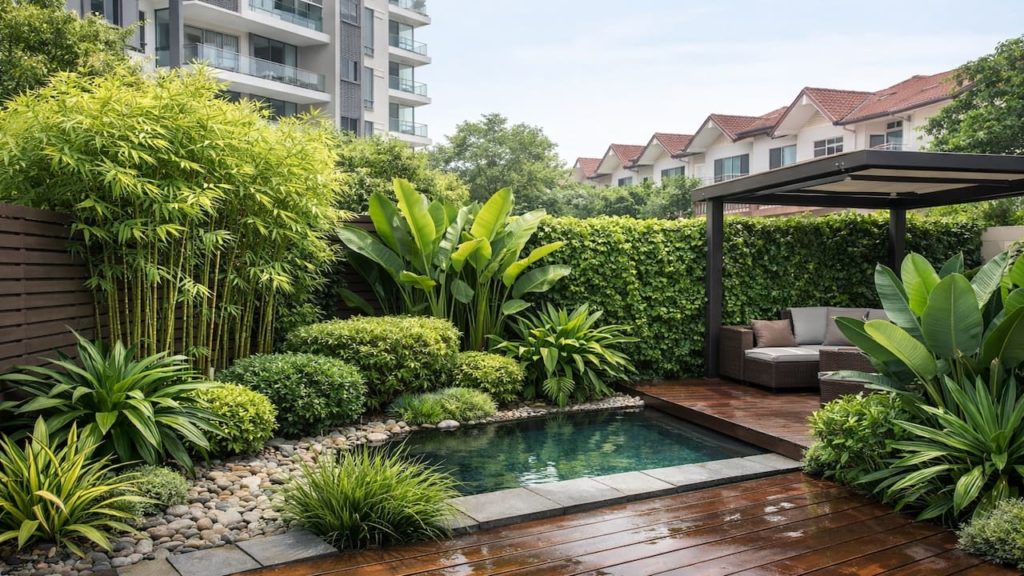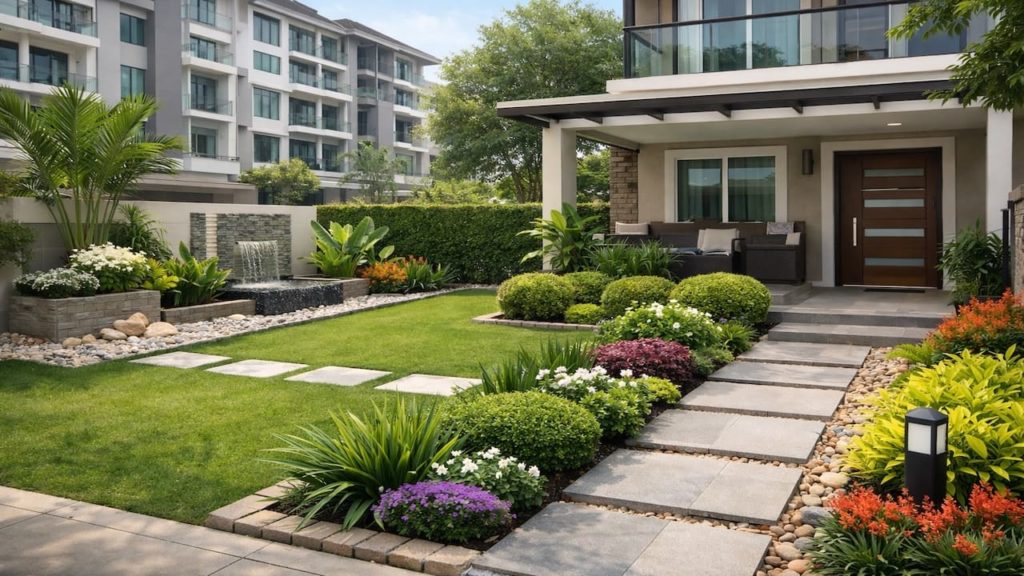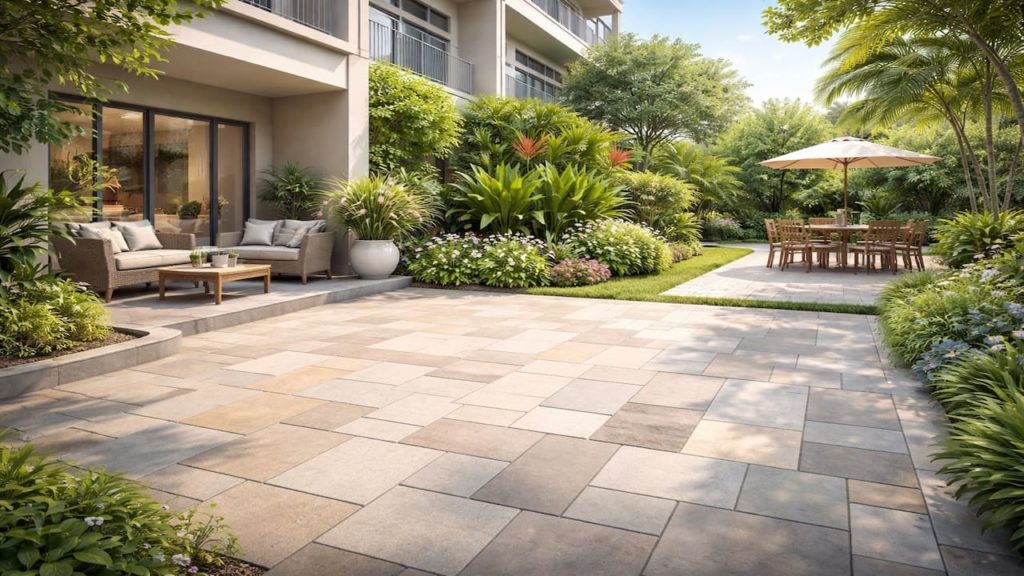
If you searched “garden design that feels bigger” you’re probably staring at a small porch, balcony, or side yard that feels tight.
In Malaysia, heat, sudden rain, and fast-growing plants can make a space feel messy quickly. Small yards. Tight corners. But most “small” problems are really layout problems.
In this guide, you’ll learn how to plan a bigger feeling garden with simple zones first so you avoid expensive buys, reduce clutter, and keep it easy to maintain in humid weather.

Hi, I’m Ken. I write practical home guides for Malaysia—no fluff, just what works.
I hold a formal building design qualification and have spent about 20 years on job sites across hundreds of projects. My goal is simple: help you avoid costly mistakes with clear, safe steps—a quick way to decide what to do next.
1. Garden design that feels bigger: 5 checks
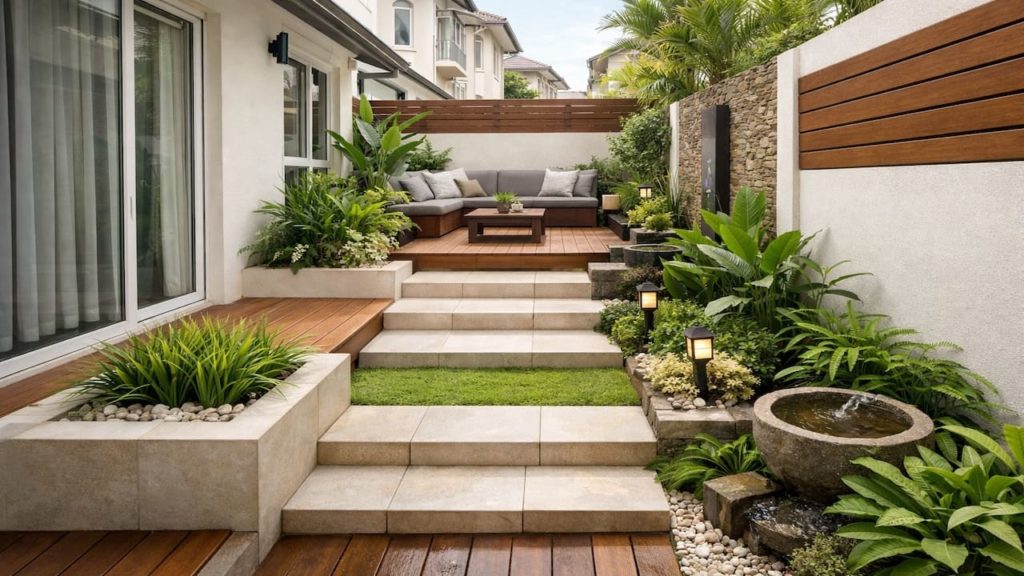
A bigger feeling comes from clear paths and simple boundaries even in Malaysia terrace homes where outdoor space is narrow.
Space illusion. When everything is everywhere, your eyes stop moving and the garden feels smaller—Malaysia sun dries one corner while rain splashes another, so mess shows fast.
- Mark walking paths with tape and string
- Group pots by height to create depth
- Leave one clear sightline from door to fence
- Use one material for edging across zones
- Limit feature pieces to one focal corner
Maybe you think “I just need more plants.” More plants without structure turns into a jungle wall that eats your floor space and your budget, so do the checks first and buy less.
2. Plan zones before buy anything expensive
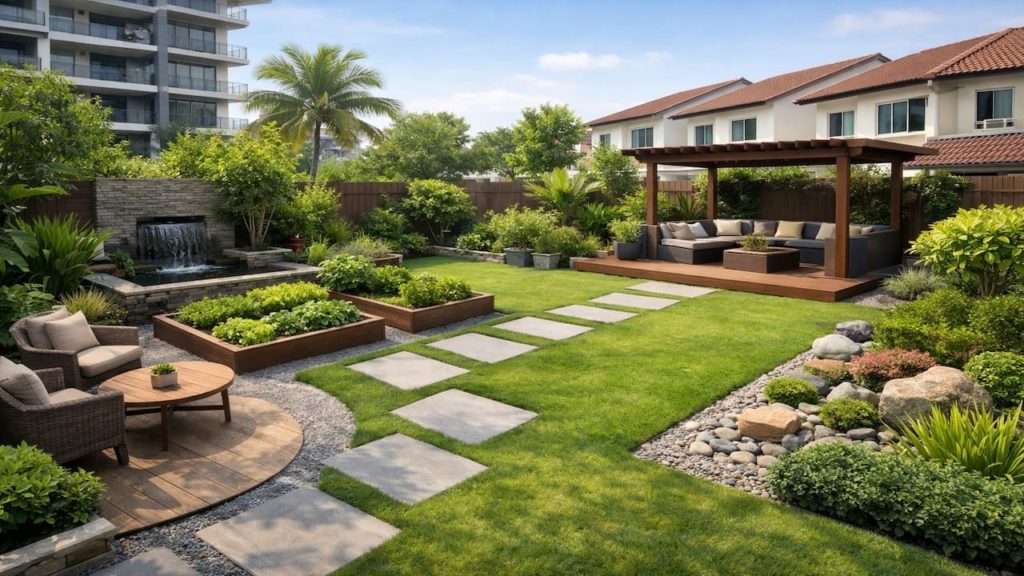
Start by dividing the space into 3 small zones so every item has a job and nothing fights for attention.
One zone can be “walk and access,” one can be “sit and relax,” and one can be “green and grow”—Malaysia humidity rewards simple layouts because maintenance stays predictable.
- Measure usable floor area after doors fully swing
- Choose one seating spot that faces open space
- Assign plants to edges not the middle
- Keep utilities reachable without moving pots
- Sketch zones on paper before shopping online
You might say zoning feels slow and boring. It’s faster than buying the wrong bench, then squeezing around it daily, then paying again to “fix” the layout you never planned.
3. Why small gardens feel cramped in humid weather
Humidity makes clutter feel heavier because everything stays damp longer so visual noise builds up fast.
Sticky air keeps moss, algae, and leaf litter around, and Malaysia rain splashes soil onto tiles so the floor looks busy even when the garden is “clean”—that’s why cramped happens.
- Wet surfaces highlight stains and scattered debris
- Fast growth blurs edges and hides walkways
- Random pots block airflow and trap moisture
- Dark corners collect moldy smells and bugs
- Mixed materials create messy lines and glare
Some people blame the house size. The real cause is unmanaged edges and blocked airflow, so fix sightlines and clearing first and your small space stops feeling like a storage cage.
4. How to zone a garden to look bigger fast
Use one main walkway and keep the center mostly open so the space reads as a room instead of a pile.
Do it in one afternoon. The cost is mostly time/effort, and in Malaysia that matters because a clean open center dries faster after rain and is easier to sweep.
- Pick one straight route from entry to exit
- Move tall items to the back corners
- Cluster small pots into two tight groups
- Add one focal piece near the far edge
- Store tools out of sight under a bench
You may think an open center wastes planting space. It actually makes plants look fuller at the edges, keeps puddles visible, and saves money because you stop buying random “fillers.”
5. FAQs
Q1. How many zones should a small Malaysia porch garden have?
Start with one clear walkway and one focal corner. Then add a small plant edge zone if you still have room without blocking airflow.
Q2. What if my garden is only a balcony?
Use the same zoning idea, just smaller. Keep the middle clear so you can mop after rain blow-in and avoid pot water staining tiles.
Q3. Do I need a big feature like a pergola to feel bigger?
No, and it often backfires in tight spaces. A single clean sightline plus consistent pot style usually looks bigger than a bulky structure.
Q4. How do I stop it looking messy after heavy rain?
Put plants on the edges and keep one sweeping lane—then debris stays in predictable places. Choose fewer containers so you can lift and clean quickly.
Q5. How do I keep costs under control when I get excited?
Set a rule that you only buy after the zone sketch is done. If an item has no zone job, it doesn’t enter the garden.
Pro’s Tough Talk

Listen. I’ve been on site for 20+ years and done hundreds of jobs, and the “small garden feels small” problem is usually self-inflicted. Not your fault, but it’s real. It starts innocent, then turns into a swampy maze when Malaysia humidity keeps everything wet.
Three causes. First, you block the floor with pots like you’re building a brick wall out of plastic. Second, you mix too many materials so the eye can’t rest, like wearing five loud shirts at once. Third, you ignore drainage and airflow, and the garden turns into a damp sponge that never dries.
Do this now. Step 1: clear the center and make one walking line. Step 2: push tall stuff to the back and group the small pots into two clusters. Step 3: pick one focal corner and stop shopping for “cute extras” until it looks calm.
This is the whole game zones first then plants last. Aruaru number one: you buy ten small pots because they’re “cheap,” then you can’t even sweep. Aruaru number two: you get one fancy chair, then it becomes a laundry stand. What is this, a showroom?
Don’t blame yourself and don’t blame every contractor either, but the structure is cold: clutter always wins if you don’t assign jobs to space. Now go move those pots before your “garden” becomes a storage unit with leaves.
Summary
To make a garden feel bigger, you checked sightlines, cleared a main path, and stopped the center from becoming storage.
If it still feels cramped, your next move is to simplify zones and remove one category of clutter until the space breathes—especially in humid rainy months.
Do one quick reset today and keep the layout calm before you spend money then jump to another garden guide on lighting or drainage to lock the result in.