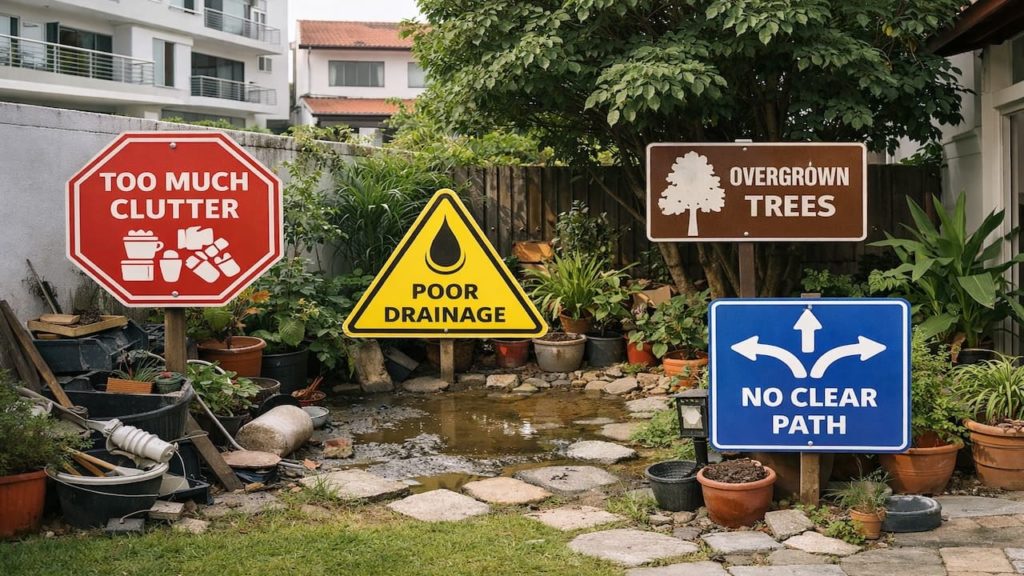
You look at the boundary wall after rain and see streaks, drip marks, and dirty lines that make the whole garden feel neglected.
In Malaysia, heavy showers hit hard, humidity keeps surfaces damp, and terrace homes and condos often have tight side spaces that trap splash and grime.
In this guide, you’ll learn how to design around boundary walls so rain stains stop repeating while keeping the area easy to rinse and tidy daily.

Hi, I’m Ken. I write practical home guides for Malaysia—no fluff, just what works.
I hold a formal building design qualification and have spent about 20 years on job sites across hundreds of projects. My goal is simple: help you avoid costly mistakes with clear, safe steps—a quick way to decide what to do next.
1. Boundary wall garden design: 5 tips
Design the wall edge like a water zone because rain will always find the easiest path.
Boundary walls catch runoff, splash, and windblown dirt, so small details decide whether they stay clean or look streaky all season — especially in Malaysia wet months. A tidy wall line also makes plants look sharper and reduces the “dark damp strip” vibe. Control. Keep your layout simple so you can see problems early.
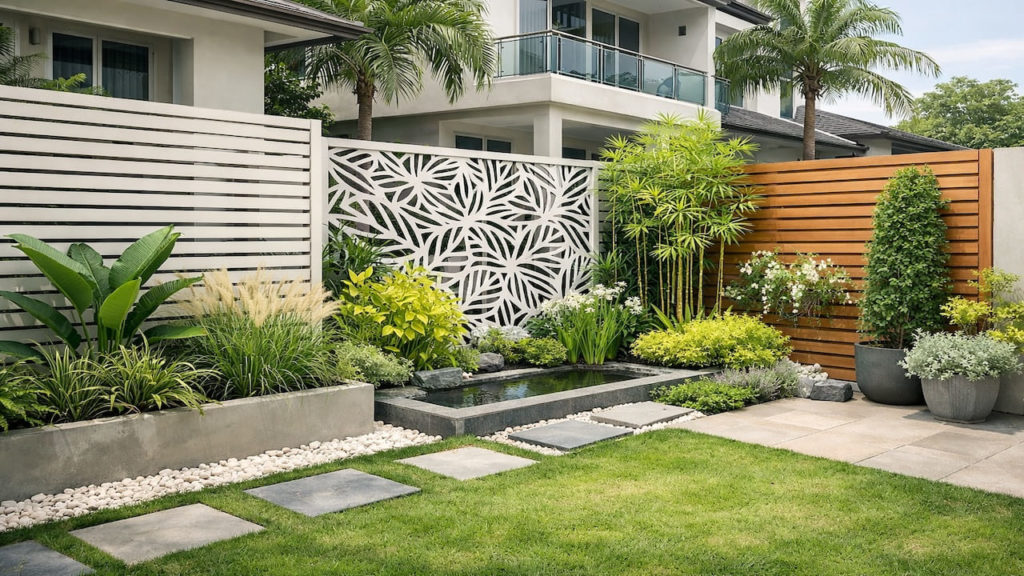
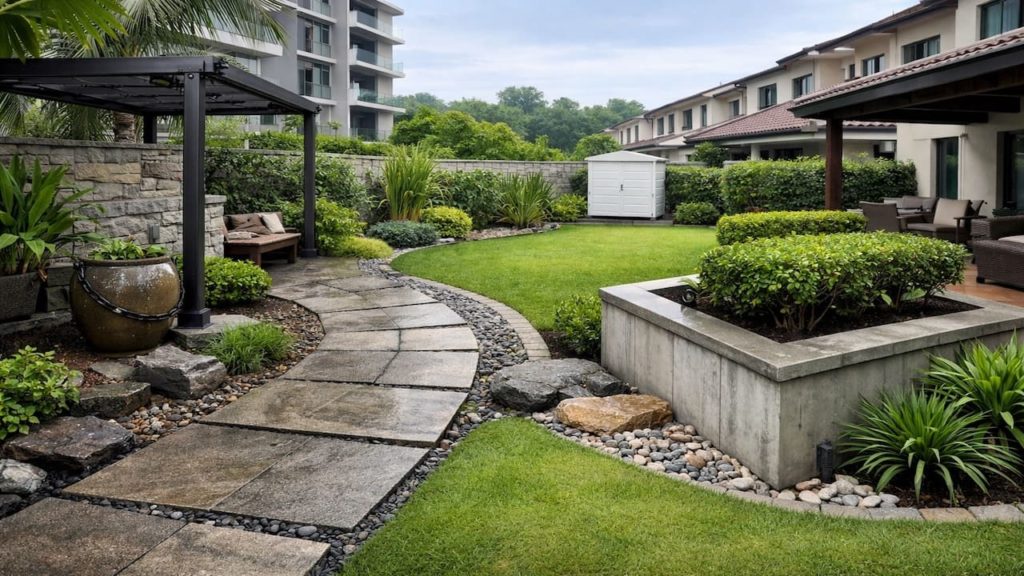
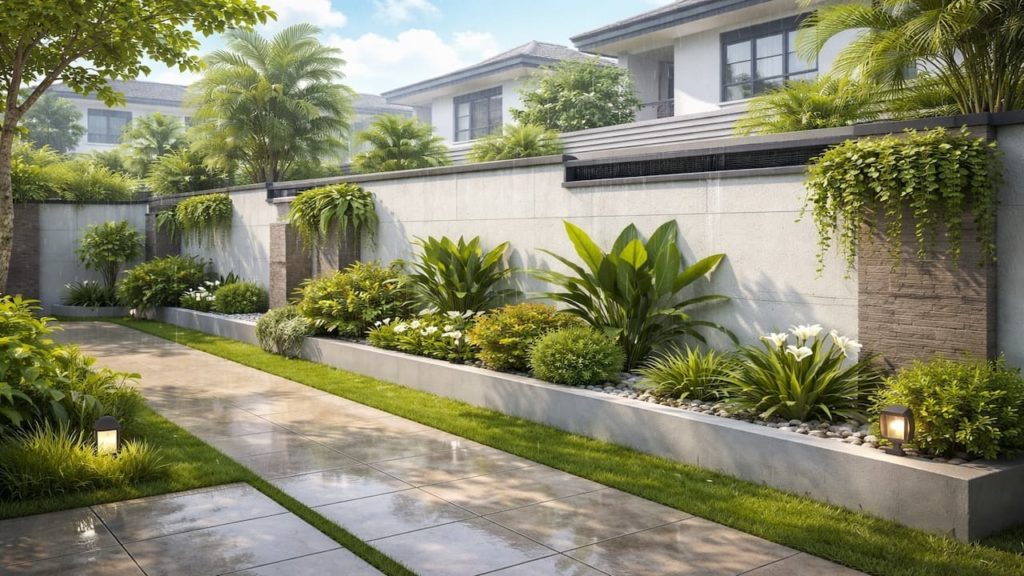
- Create a gravel buffer strip along the wall
- Keep soil and mulch off the wall base
- Direct roof runoff away from wall surfaces
- Leave airflow gap behind dense planting lines
- Use light colors only where drying is fast
Some people hide the wall with thick plants and hope the stains disappear, but the moisture still sits and the smell starts. Cover can help, yet only when airflow and drainage are planned, then the wall stays clean longer.
2. Reduce streaks and stains on rainy days
Stop vertical streaks by breaking the drip line before water touches the wall face.
Most stains come from roof edges, coping tops, and downpipes that dump water onto the same spots every storm — then dirt dries into lines. In Malaysia, algae film forms fast on damp streak zones, so marks get darker week by week. Quick wins. Control where water falls, and give splash somewhere else to land.
- Add drip edge under coping or top cap
- Extend downpipe outlet away from the wall
- Use splash stones where water drops hard
- Angle nearby paving to drain away quickly
- Trim vines that hold wet leaves on walls
You might think repainting solves it, but rain will draw the same lines again if the drip path stays. Fix the drip path first, then any cleaning or repaint lasts far longer and feels worth doing.
3. Why boundary walls stain faster in Malaysia wet months
Walls stain when water carries dirt and stays wet too long on the same surface zones.
Rain hits the top, runs down, and drags dust, roof grit, and plant debris into streaks, then humidity slows drying so the marks “set.” Narrow side yards reduce sun and breeze, so damp film lingers and algae builds on shaded sections. Reality. Even clean water can leave mineral traces if runoff repeats in one line.
- Check where roof runoff hits the wall first
- Look for splash marks near the wall base
- Find shaded areas that stay damp overnight
- Inspect coping joints for water seep paths
- Notice AC drip or hose rinse patterns
Some blame cheap paint or “bad wall plaster,” and sometimes that is part of it. But most homes see the same stains because the water route is unchanged — change the route and the staining pattern usually breaks.
4. How to reduce wall stains with drainage and buffers
Use buffers and drainage to keep dirty water off the wall then cleaning becomes easier.
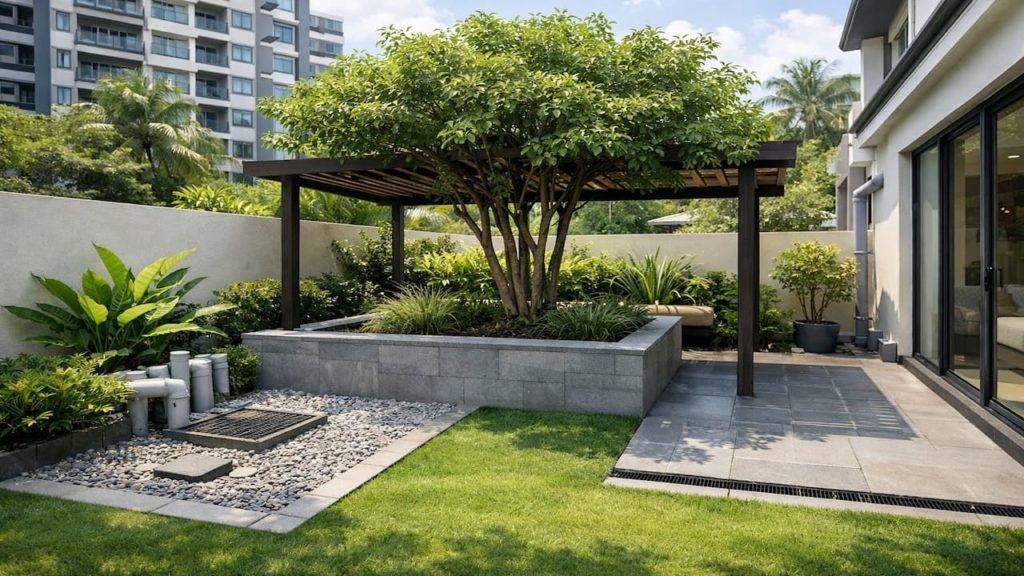
Start with a gravel buffer at the base, add a clear drain exit, and redirect downpipe outlets so water drops onto stone instead of plaster. For basic supplies like gravel, edging, a downpipe elbow, and a soft brush, RM40–250 is a common range for a small wall section. Simple system — do the wet test after the next storm and adjust the low spots.
- Install edging to contain gravel at the base
- Lay geotextile to stop soil mixing into stone
- Regrade low spots so water exits fast
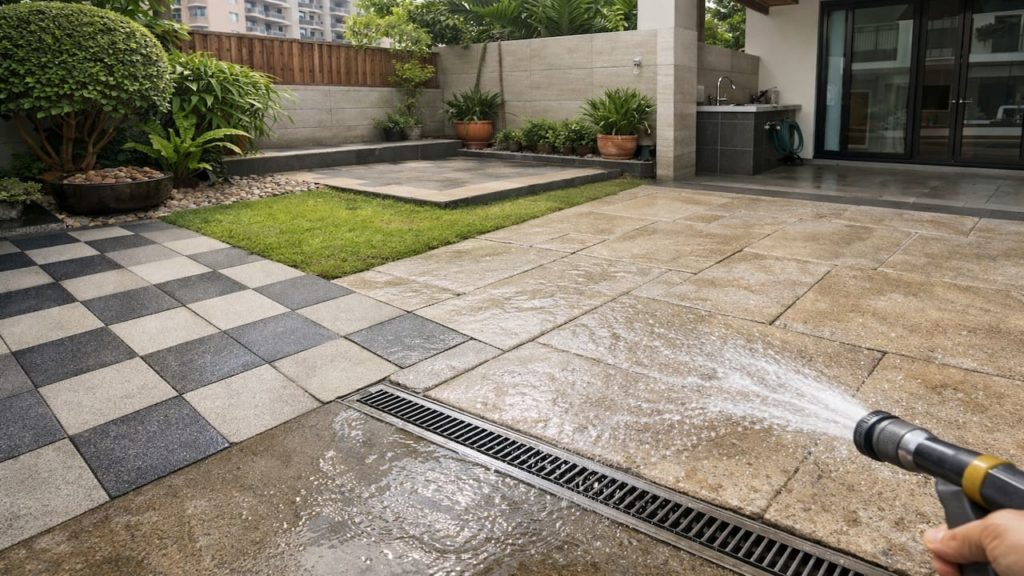
- Add a small channel drain at wall corners
- Rinse walls downward then flush to the drain
It sounds like extra work for a “cosmetic” issue, but stains are a signal that water is lingering where it should not. Build one clean water exit, and the wall stays brighter with less effort even after heavy rain.
5. FAQs
Q1. Is it normal for boundary walls to streak after rain?
Some marks are normal, but heavy repeating streaks mean water is running in the same lines every storm. Quick check. Redirect the drip points and the pattern usually fades.
Q2. Should I pressure wash the wall to remove stains?
It can work, but it may roughen the surface and make it stain faster next time — test a small area first and keep water away from joints.
Q3. Do plants help hide wall stains without causing damp problems?
Yes when plants are spaced for airflow and the base stays dry with gravel or paving. Dense vines that trap wet leaves often make the wall smell and stain worse.
Q4. What should I do about green algae on the wall base?
Improve drying by reducing splash and opening airflow, then scrub lightly and rinse to a drain outlet. If the area stays wet, algae will return no matter what cleaner you use.
Q5. When is repainting worth it?
Repaint after you fix drip paths and splash zones, otherwise the same streaks will come back fast. A clean water route makes paint last longer in humid weather.
Pro’s Tough Talk

I’ve been on site 20+ years and done hundreds of jobs, and wall streaks are not “dirty people,” they are water doing what you allow.
Cause one: runoff hits the same spot and draws a dirty waterfall down your wall. Cause two: no buffer at the base, so splash throws mud like a kid kicking puddles. Cause three: tight planting traps wet air, and Malaysia humidity turns the strip into a damp closet.
Do this now: first, find the drip point and move it, even with a simple outlet extension. Second, add a gravel buffer and edging so splash lands on stone, not plaster. Third, open a breathing gap and give rinse water a drain exit.
If you only scrub you lose forever because the stains will repaint themselves after every storm. I’m not saying contractors are all useless, but the structure is cold: if water repeats a line, the wall repeats a stain.
You know when you come home and see fresh streaks like coffee drips on a white mug, and you know when guests arrive and you suddenly stare at that one black line—oi, who asked rain to do interior design.
Summary
Boundary wall stains reduce when you control drip points, add a base buffer, and keep airflow so wet film does not linger in Malaysia humidity.
If streaks keep returning, the water route is still the same, so adjust downpipes, slopes, and splash zones before spending on paint and cleaners.
Fix one drip line and one base buffer today then move on to your walkway drying and edging guides so the whole garden stays sharp in rainy months.