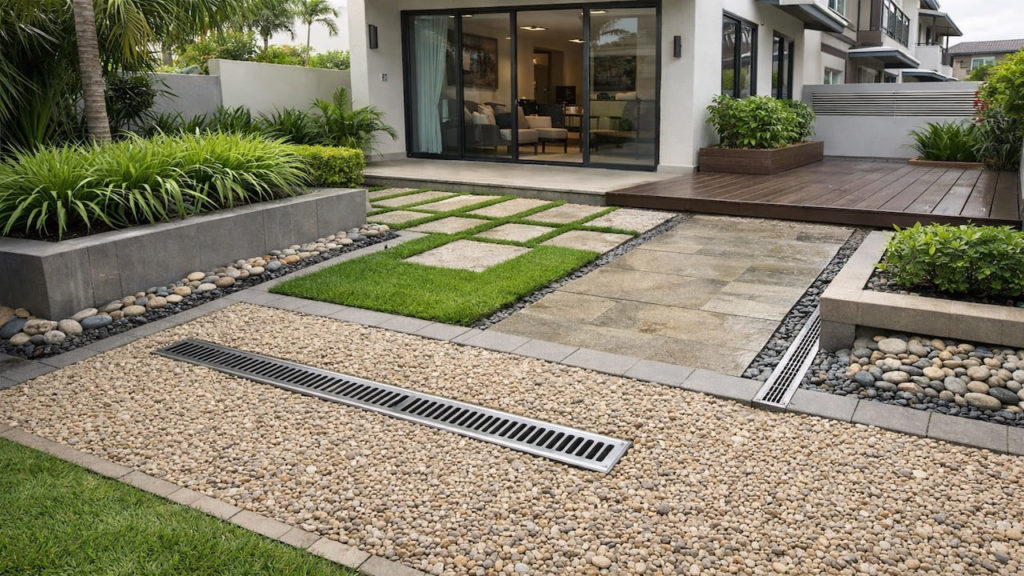
Your garden can look fine in dry days, then Malaysia rain hits and you get stains, damp edges, and little washouts that keep spreading.
Humidity slows drying, drains clog fast with leaves, and small slope issues show up hard around terrace walls and condo patios where airflow is limited. Water always finds the weak point.
In this guide, you’ll learn how to plan a garden by drainage first. You will check flow, protect edges, and prevent stains and washouts without turning it into a big renovation.

Hi, I’m Ken. I write practical home guides for Malaysia—no fluff, just what works.
I hold a formal building design qualification and have spent about 20 years on job sites across hundreds of projects. My goal is simple: help you avoid costly mistakes with clear, safe steps—a quick way to decide what to do next.
1. Drainage-first garden design: 5 checks
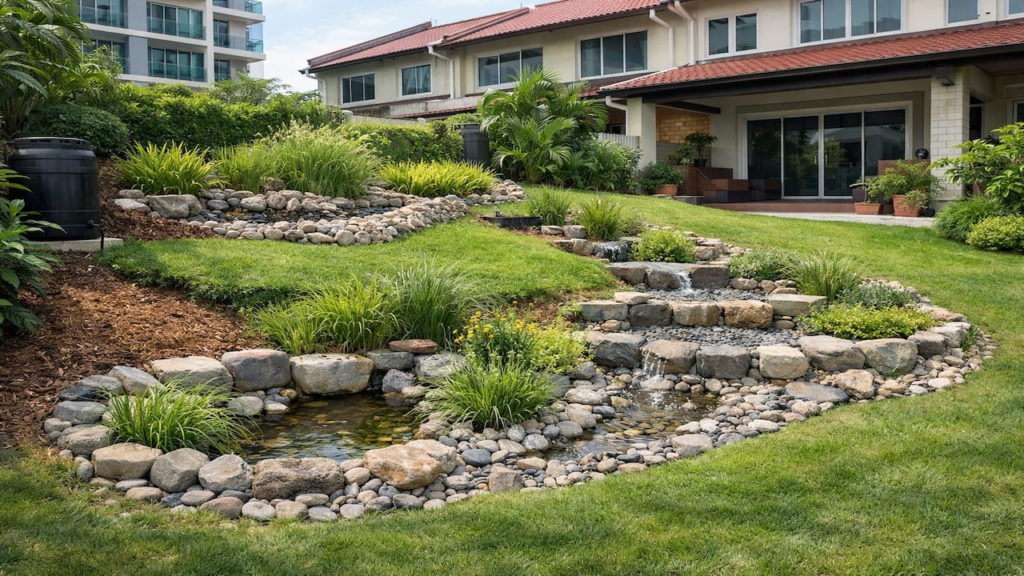
Drainage-first design starts by mapping where water goes so Malaysia downpours do not damage your paths and edges.
If you do not know the flow route, you will keep “fixing” symptoms like algae and stains while runoff keeps repeating the same pattern. Flow map. In Malaysia wet months, repeated water paths darken surfaces, leave wall splash marks, and loosen soil at borders. A few checks reveal what needs protecting first.
- Pour water and trace the fastest runoff route
- Mark puddle edges after rain with tape
- Check drain inlets for leaf and grit buildup
- Inspect wall base for splash stains and damp
- Look for soil wash lines near planting edges
You might think drainage is only about drains, but it is also about clear routes and clean edges that do not trap dirt. Malaysia rain repeats the test weekly. Fix the route once, then maintain it lightly.
2. Prevent stains, damp edges, and washouts
Protect the edges where water carries dirt so stains and washouts stop spreading in Malaysia rain.
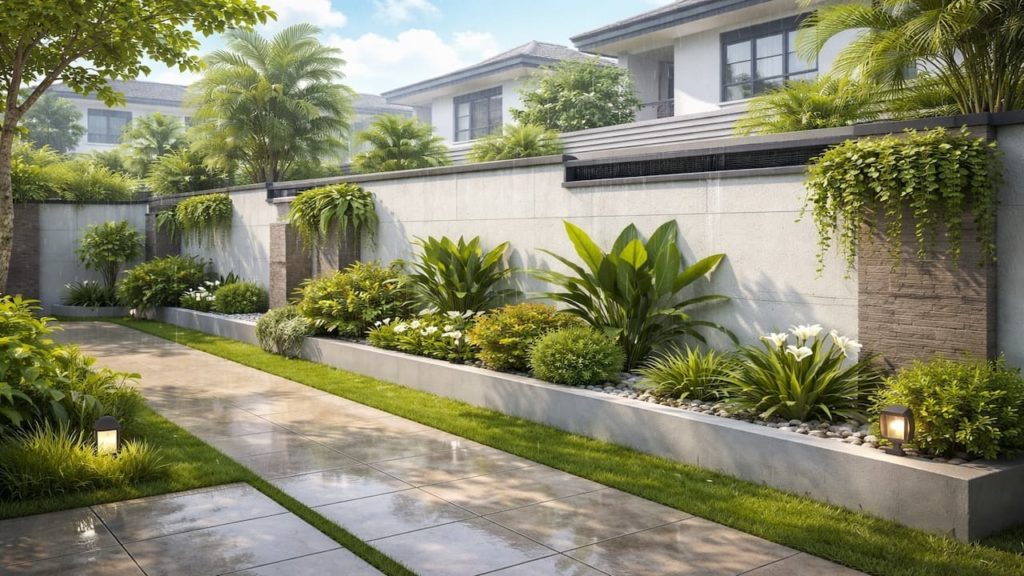
Most staining comes from dirty runoff, not “bad tiles,” and most washouts come from exposed soil with no barrier at the border. Edge defense. If you keep soil lower than paths and keep one clean separation line, water runs cleaner and faster. The cost is mostly time/effort.
- Keep soil level lower than the path surface
- Add a clean border line between soil and tiles
- Group plants to reduce scattered splash zones
- Leave airflow gaps along wall bases for drying
- Rinse paths early after storms to stop film
You may want to hide edges with plants, but hidden edges trap moisture and make staining worse. Malaysia humidity loves hidden seams. Show the edge, keep it simple, and you get a cleaner look and less repair work.
3. Why drainage problems create stains and washouts fast
They happen because runoff concentrates at seams and Malaysia wet months keep those seams wet and dirty.
Water spreads thin at first, then collects at the lowest line near walls, steps, and border joints, carrying soil and grit with it. Dirty loop. When drying is slow, algae film forms, dirt sticks, and stains look permanent even when they are not. On soil edges, repeated runoff cuts small channels that become larger washouts over time.
- Low seams collect water and become stain lines
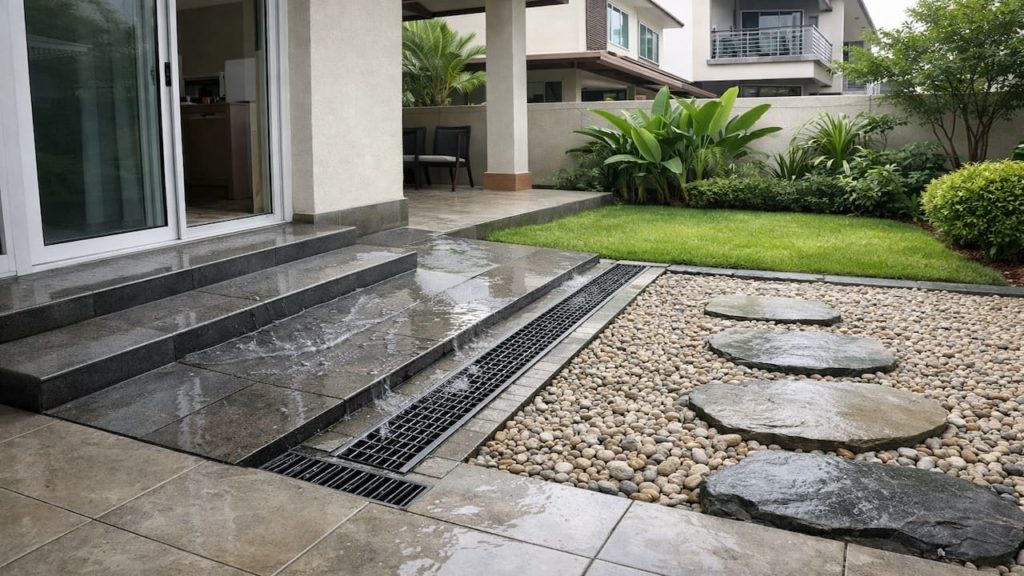
- Blocked drains force overflow across the path
- Exposed soil erodes into small channels quickly
- Shade slows drying and grows algae film faster
- Clutter blocks runoff and makes puddles spread
You might blame the storm, but storms only reveal what your layout already allows. Malaysia rain is consistent. Fix the seam routes and the damage stops compounding.
4. How to set a drainage-first layout in one afternoon
Set it by creating one clear runoff lane that stays open, visible, and easy to rinse.
Clear the floor, test flow with a water pour, then keep drains reachable and keep soil away from the main runoff lane so water stays cleaner. Simple system. Plan RM20–120 for a drain screen, basic edging, and pot risers if you need small hardware to support airflow and access. This prevents repeat stains and reduces erosion.
- Clear obstacles and expose the full runoff route
- Flush drains and confirm fast exit direction
- Move pots away from wall bases for airflow
- Define one border line to contain soil washout
- Test again after rain and adjust the lane
You may want a perfect slope everywhere, but one reliable runoff lane solves most daily problems. Malaysia homes win by repeatable habits. Keep the lane clear and the edges protected, and the yard stays stable.
5. FAQs
Q1. What is the first thing to check for drainage-first design?
Where water flows in the first 10 seconds after a pour or a storm is the first check. That path is what you must keep open and clean.
Q2. Why do I get stains even when I rinse often?
If runoff carries soil and grit onto tiles, stains will keep forming. Reduce soil splash and protect seams, then rinsing becomes effective again.
Q3. How do I stop soil washouts at planting edges?
Keep soil slightly lower than the path and create a clear border line so water does not cut into exposed soil. Group plants to reduce scattered splash points.
Q4. Should I hide damp edges with more plants?
No, hiding damp edges traps moisture and slows drying. Expose edges so airflow can dry them and you can spot problems early.
Q5. How often should I maintain drains during wet season?
Check weekly and after big storms, clearing leaves and grit before overflow happens. Fast drain flow prevents stains and keeps paths safer.
Pro’s Tough Talk

Listen, I’ve been on site for 20+ years and I’ve done hundreds of jobs, and “drainage issues” are just your yard running the same bad script every storm. In Malaysia humidity, that script gets replayed nonstop.
Three causes: you don’t know the flow lane, you let soil sit higher than the path so it bleeds dirt, and you treat drains like they are someone else’s job. That’s like leaving a sink clogged and being shocked the counter gets wet. Contractors aren’t all villains, but rushed work skips boring drainage thinking.
Do three steps now: pour water and trace the route, flush the drains until they run clean, then protect the soil edge with a clear border line. Relatable moment: you see a stain line and pretend it will disappear. Relatable moment: you notice a washout hole and ignore it until it grows.
Here’s the cold system: water damage is maintenance debt, and if you don’t pay weekly, Malaysia rain will collect interest fast. (Seriously?) Stop decorating the symptoms and fix the route and edges first.
Keep ignoring drainage and your “garden design” becomes a mud-and-stain subscription you never asked for.
Summary
Drainage-first garden design starts with mapping flow, checking drains, and protecting seams and soil edges so Malaysia rain does not create stains or washouts.
If problems repeat, the causes are usually dirty runoff, slow drying in shade, blocked drains, and exposed soil that erodes, so keep one clear runoff lane and visible edges.
Today, trace the runoff route and clear the drains, then continue with a wet-ground door-zone guide and a rainy-season safety guide for safer paths.