You set a clean garden border, then a few wet weeks later the line blurs, soil creeps into stone, and the whole area starts looking “unfinished.”
In Malaysia, heavy rain splash, soft ground, ants tunneling, and constant rinsing around terrace homes and condos make edging fail when it is shallow or flexible.
In this guide, you’ll learn how to edge soil and stone so the border stays crisp longer with steps that fit humid weather, fast growth, and real daily use.

Hi, I’m Ken. I write practical home guides for Malaysia—no fluff, just what works.
I hold a formal building design qualification and have spent about 20 years on job sites across hundreds of projects. My goal is simple: help you avoid costly mistakes with clear, safe steps—a quick way to decide what to do next.
1. Garden design with edging: 5 steps
Edging is a structure job first and a style choice second.
Nice borders make small gardens feel intentional, but Malaysia rain will push soil, mulch, and gravel across any weak edge. Humidity keeps ground soft, so shallow edging tilts and gaps open up. A strong edge also makes cleaning quicker after storms. Control.
- Mark borders based on walking and cleaning routes
- Choose one edging type for visual consistency
- Set edging deeper than the loose top soil
- Plan drain flow so water avoids the border
- Leave service gaps for hose and sweeping access
Some people treat edging like decoration and buy the thinnest strip they can find. That works in dry climates, but here — edging needs to resist water, soil pressure, and daily footsteps.
2. Separate soil and stone to keep lines crisp
Separation works when the edge stops mixing underground not just on the surface.
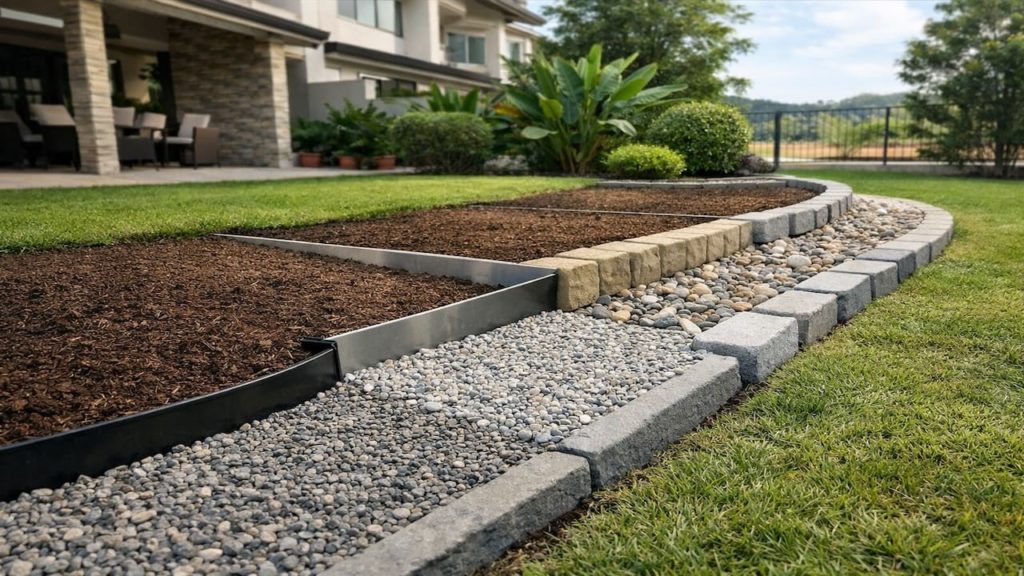
Soil and stone mix when water carries fines through gaps and when stones press into soft soil at the border. Proper edging creates a vertical barrier that blocks that slow creep, even during heavy rain. If you need to buy basic edging, spikes, and a small roll of fabric, RM40–200 is a common DIY range for a small zone. Neat lines.
- Install geotextile strip under the stone edge
- Compact soil along the border before setting edging
- Set edging top slightly above stone level
- Lock corners with stakes to prevent spreading
- Fill tiny gaps using sand or fine gravel
You might think raking fixes mixing, but raking only hides it for a day. Stop the underground migration and the surface stays clean with a quick rinse, not constant rework.
3. Why edging lines blur in Malaysia home gardens
Lines blur when water and foot pressure push materials sideways over time.
Rain splash moves soil like a slow wave, especially next to downpipes, taps, and low eaves. In humid months, soil stays loose and ants can undermine edges, creating voids that let stone fall in. Once that starts, every sweep makes the border worse. Reality.
- Check for soil splash marks on nearby paving
- Look for ants and tunnels along the border
- Find low spots where water crosses the edge
- Notice stones sinking at corners and curves
- Inspect edging tilt after two heavy storms
People often blame the material, but the pattern is usually water flow plus weak anchoring. Fix those two, and even simple edging holds its shape far longer in wet season conditions.
4. How to install edging that stays straight in wet months
Strong edging needs depth, anchoring, and a stable base as one system.
Dig a shallow trench, compact the base, set the edging in a straight line, and stake it so it cannot flex. Then add separation fabric where stone meets soil, and backfill firmly to remove voids that later collapse. If you hire a handyman for a small reinstall or to add proper stakes and re-level, RM200–900 is a typical range depending on access and materials. Straight border.
- Dig trench to match edging depth and curve
- Compact base using a hand tamper firmly
- Stake edging every short interval for rigidity
- Backfill and pack soil to remove air gaps
- Recheck line using string before final fill
Some worry deeper edging will block drainage or trap water. It will not if the surface is sloped and water has an outlet — edging controls mixing, while drainage controls pooling, and you need both.
5. FAQs
Q1. What edging material lasts best in humid weather?
Metal and concrete borders usually hold shape better than thin plastic in heat and rain. Choose based on whether you need straight lines or gentle curves.
Q2. Should edging be higher than the gravel or soil level?
Slightly higher than the stone helps keep it contained, but not so high that it becomes a trip edge. A small visible lip is usually enough.
Q3. Do I really need geotextile with edging?
Fabric helps stop fine soil migration especially where stone meets soil in Malaysia rain. It is not magic, but it reduces mixing and makes maintenance easier.
Q4. Why do my edging corners always open up?
Corners take sideways pressure and often lack stakes, so they flex first. Add corner locks or extra stakes, and compact the base more carefully there.
Q5. How can I keep edging clean without constant scrubbing?
Reduce splash by adding mulch, plants, or a small stone buffer, and direct runoff away. Quick rinses after storms work better than deep cleaning later.
Pro’s Tough Talk

I’ve been on site 20+ years and done hundreds of jobs, and blurry borders are not “normal aging,” they are cheap edging and bad setup getting exposed by humid weather.
Cause one is shallow edging that floats when the soil turns soft in rain. Cause two is no separation layer, so fine soil migrates under stones like a slow leak. Cause three is weak anchoring, so every sweep and footstep nudges the line out of place.
Here’s the fix: dig a proper trench and compact the base so the edge sits on something solid. Add stakes like you mean it, especially at corners and curves. Then put a fabric strip at the stone edge so the mix stops underground.
Stop blaming yourself for not raking enough because this is not a “lazy homeowner” problem. Contractors are not always villains, but the structure is ruthless: if the edge can flex, it will flex, and then your clean line dies slowly.
You know that moment when you finish cleaning and the border looks sharp for exactly five minutes, and that other moment when you spot one stone in the soil and suddenly there are twenty—oi, what is this, a border or a slow-motion landslide.
Summary
Crisp garden lines come from separation: edging depth, firm anchoring, and stopping soil from migrating into stone in wet months.
If your border keeps blurring, focus on water splash, corner stability, and underground mixing, not just surface raking and cosmetic fixes.
Rebuild one short edge with proper stakes today then lead readers into your gravel layering and drainage guides to keep the whole yard consistent.