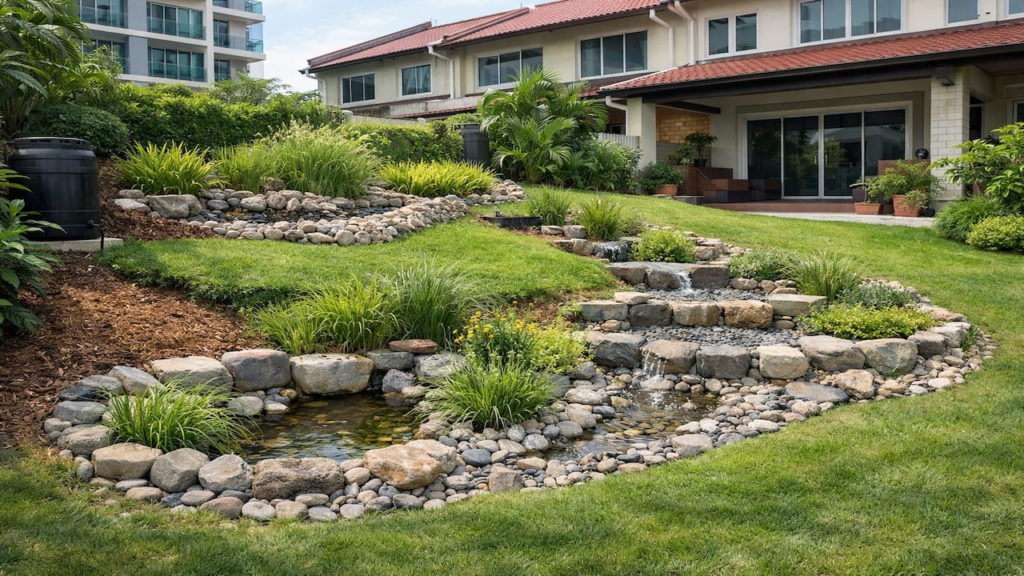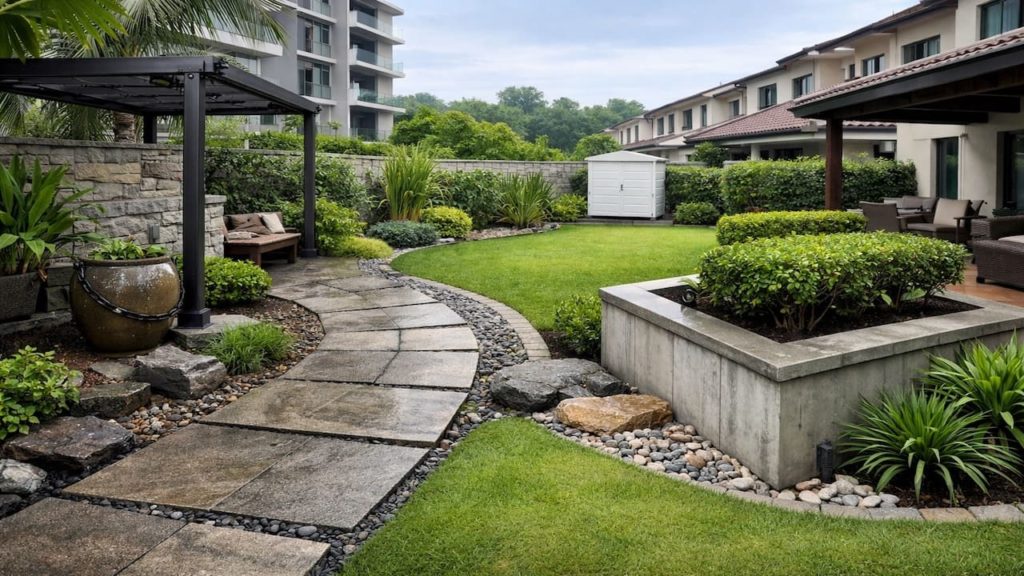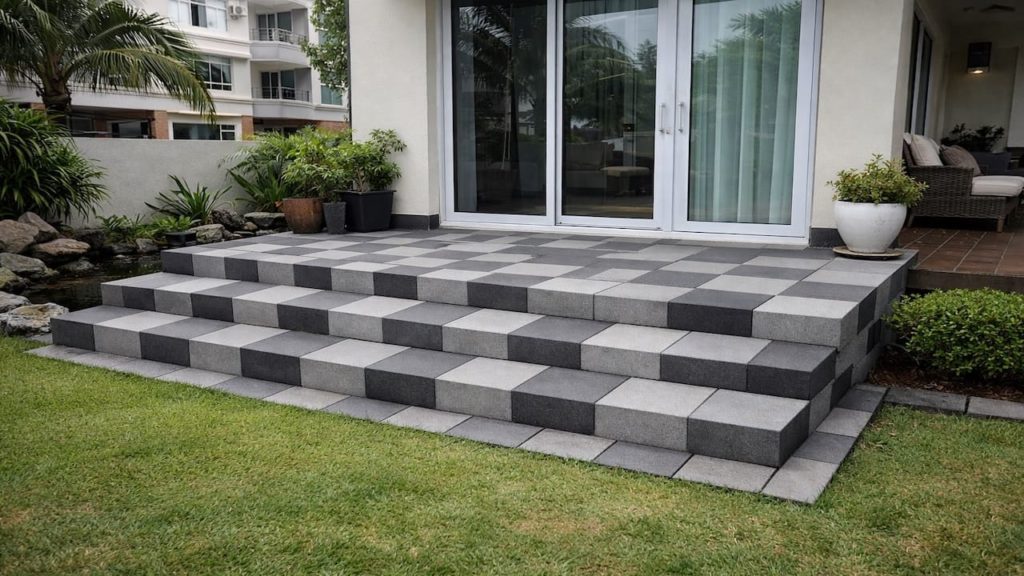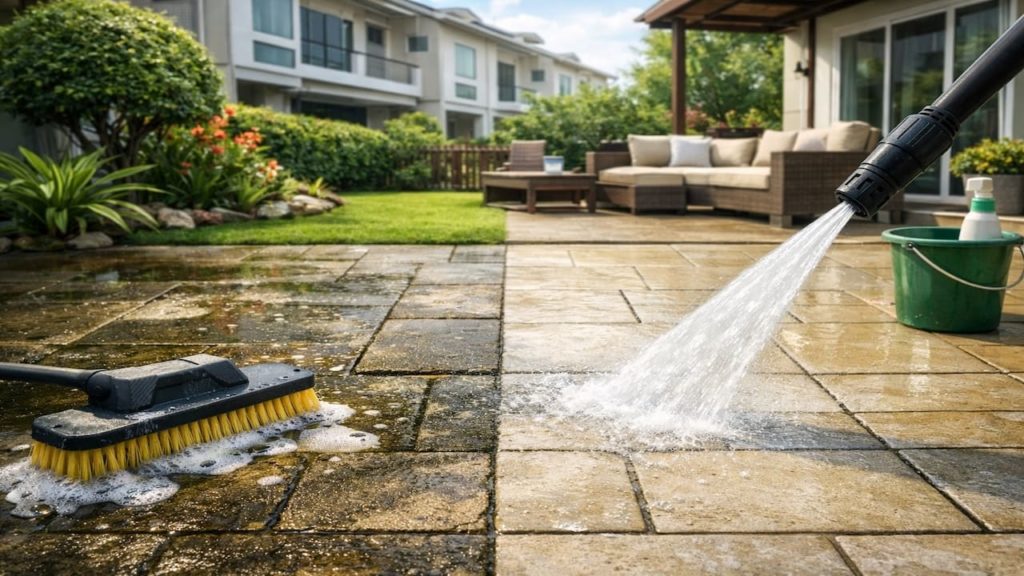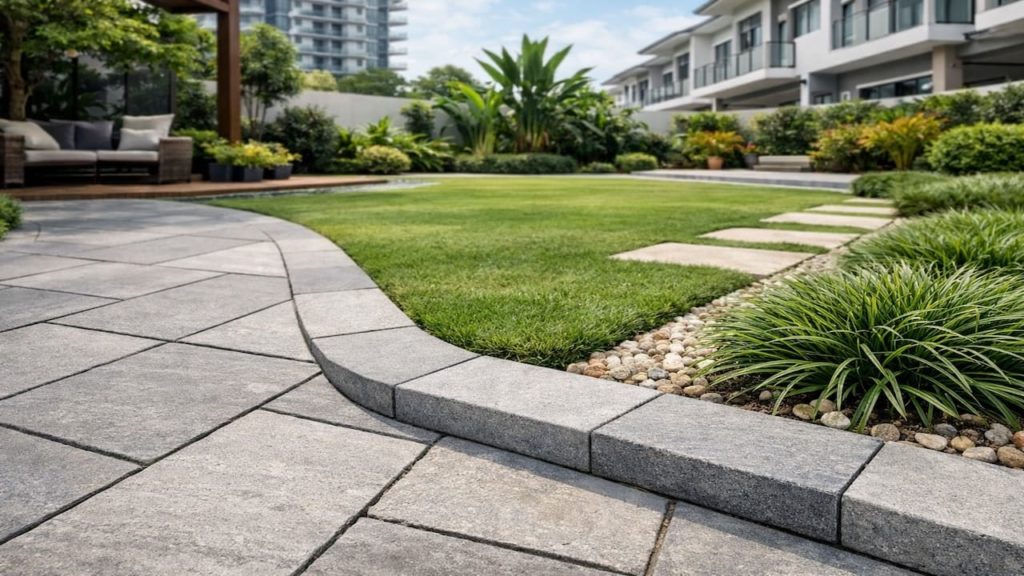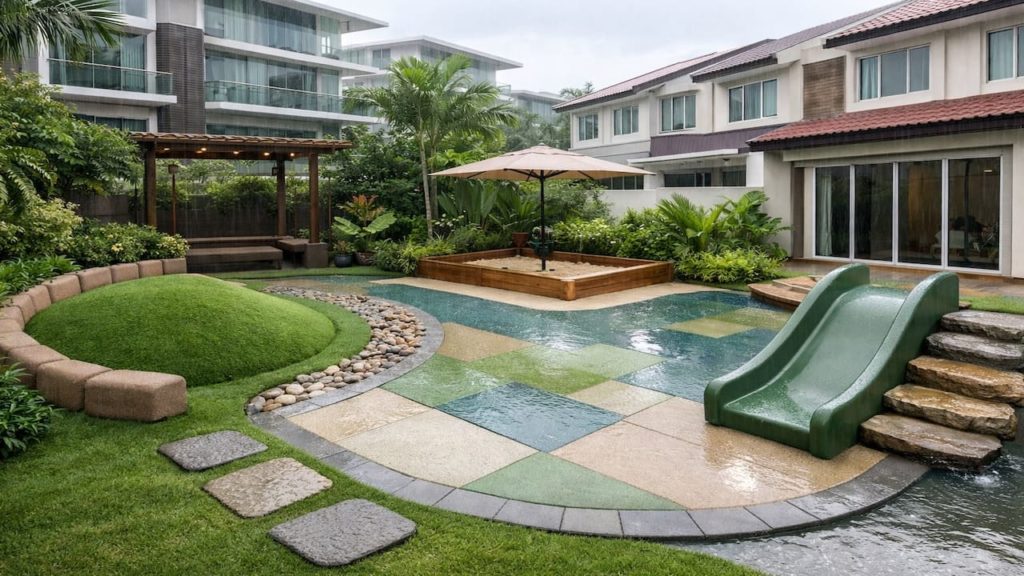
You want a garden where kids can move freely, but you also want fewer slips, fewer sharp bumps, and fewer “stop running!” moments during rainy weeks.
In Malaysia, sudden downpours, humid drying delays, and slippery film on hard surfaces make kid safety depend on layout, edges, and where wet feet land.
In this guide, you’ll learn how to plan soft edges and slip-resistant zones for wet season play so the yard stays fun, calm, and safer without looking like a playground.

Hi, I’m Ken. I write practical home guides for Malaysia—no fluff, just what works.
I hold a formal building design qualification and have spent about 20 years on job sites across hundreds of projects. My goal is simple: help you avoid costly mistakes with clear, safe steps—a quick way to decide what to do next.
1. Kid-safe garden design: 5 checks
Kid safety improves most when you control falls and collisions on the routes they actually use.
Kids do not walk like adults, they sprint, pivot, and cut corners, so sharp edges and wet paving become the real hazards. In Malaysia rain, surfaces stay slick longer, especially in shade near walls and fences. A safe garden still looks tidy, but it is designed for movement, not just photos. Reality.
- Map where kids run between door and yard
- Remove sharp corners on low walls and steps
- Create clear play zone away from hard edges
- Keep wet routes short from gate to seating
- Plan lighting to reveal puddles at night
Some families try to fix safety with rules alone, but kids forget rules when they are excited. Design is the silent helper — it prevents the big accidents without constant shouting.
2. Soft edges and slip-resistant zones in rain
Put slip resistance where wet feet land first and soften the edges kids hit most.
The highest risk spots are doors, steps, outdoor sinks, and any path kids use when they come in from rain. In Malaysia humidity, algae film forms quickly on smooth surfaces, so grip must be planned, not hoped for. If you add anti-slip strips, corner guards, and a textured mat, RM20–150 can cover basic supplies for quick upgrades. Simple safety.
- Add textured mats at sliding door exits
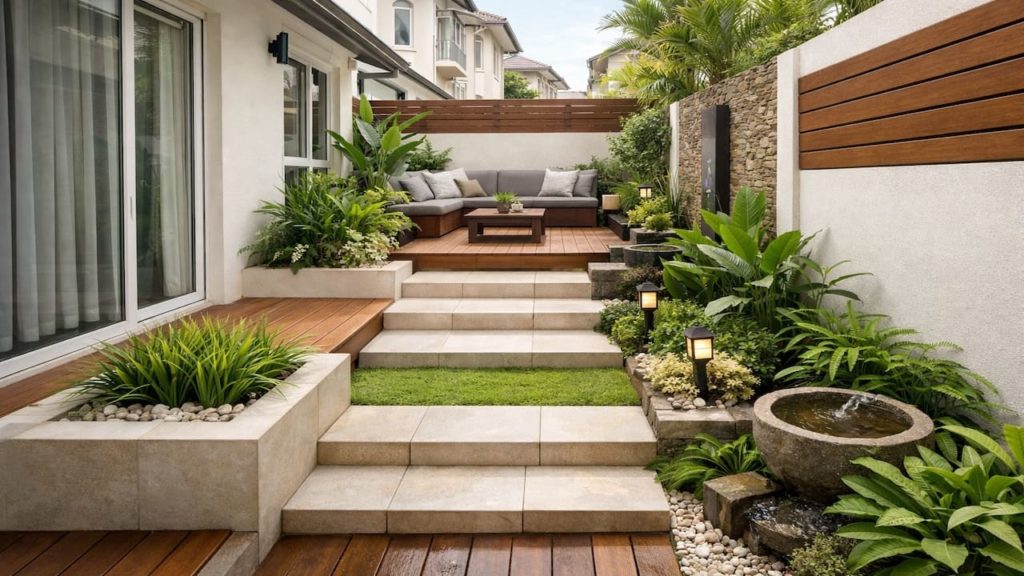
- Choose matte pavers for main walking lines
- Round off planter corners using edge protectors
- Use rubber corner guards on low hard edges
- Keep play zone surfaces dry with drainage slope
You might think the whole yard needs a new surface, but you often only need safer “landing zones.” Fix the first step out of the door and the main run line, and the daily risk drops fast.
3. Why kids slip and get hurt more during Malaysia wet months
Wet season increases risk because surfaces stay slick longer and kids move faster than conditions allow.
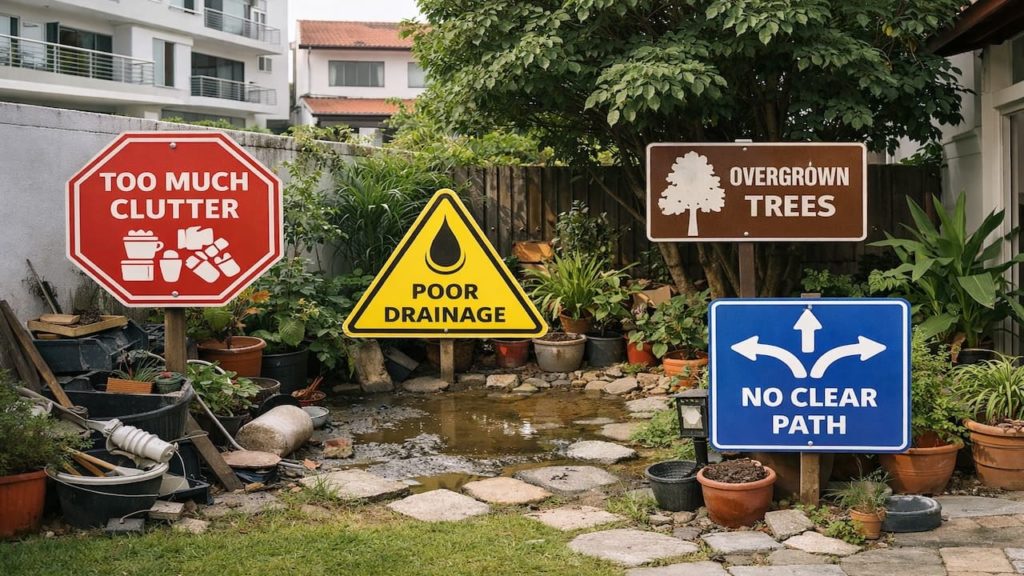
Rain leaves a thin water film, and humidity slows drying so even “after rain” still means wet footing. Shaded corners and narrow side yards stay damp, so algae growth adds another slippery layer. Add toys, hoses, and sandals left on the ground, and a small garden becomes a hazard course. Truth.
- Check shaded areas that stay wet past midday
- Look for green film on smooth tile surfaces
- Notice puddles near doors and downpipes
- Inspect step edges for worn slippery nosings
- Remove clutter that becomes trip hazards in rain
People often blame “kids being kids,” but layout creates predictable danger points. When water always pools in the same spot, the same slip happens again — change the water path and the incident rate drops.
4. How to design kid-safe routes and play zones for rain
Separate the play zone from the wet service zone and make the route predictable.
Give kids one clear run-and-play area with softer edges, then place wet activities like rinsing, bins, and outdoor sinks on the other side. In many homes, cost is mostly time/effort, because it is about moving items, re-zoning, and improving drainage with small slope adjustments rather than buying new features. Clear zones. Add slip-resistant surfaces on the route to the door so the “back inside” path stays safe even in a hurry.
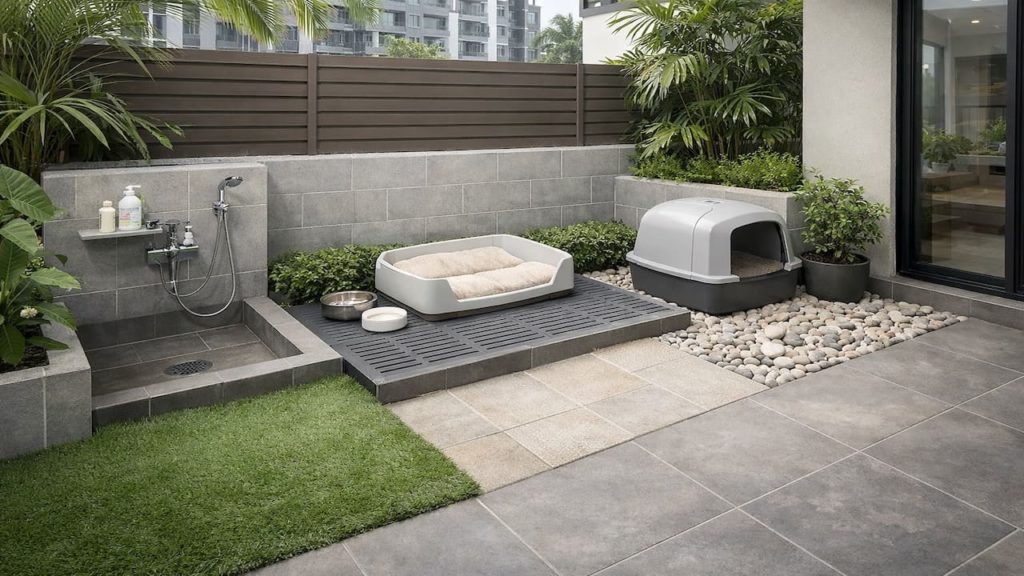
- Keep outdoor sink and hose away from play zone
- Create one clear running loop with fewer corners
- Use textured stepping surfaces near door exits
- Edge planters with rounded caps or guard strips
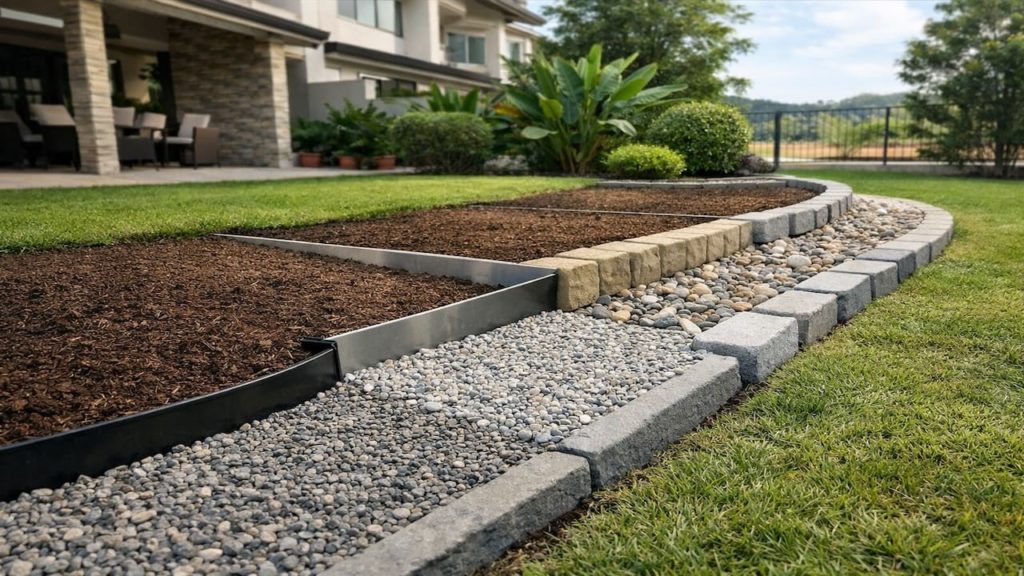
- Direct runoff to drains away from play routes
Some worry zoning will make the yard feel strict, like rules built into the ground. Done well, it feels natural — kids gravitate to the open safe zone, and adults stop stressing every time clouds roll in.
5. FAQs
Q1. What are the most dangerous spots for kids in wet season?
Door exits, steps, and narrow paths near walls are the top risks, especially when wet feet hit smooth surfaces. Fix these first before thinking about decorations.
Q2. Are rubber mats better than changing the whole paving?
Mats are a quick win for landing zones and can cut slips fast. For long-term improvement, combine mats with better drainage and textured surfaces on main routes.
Q3. How do I soften hard edges without rebuilding everything?
Use corner guards and rounded edging caps on low walls, planters, and steps where kids collide. Also increase planting setback so running lines do not brush hard corners.
Q4. How can I reduce slippery algae on patio surfaces?
Improve drying with airflow and drainage, then clean lightly but often. Algae returns when water sits, so make sure puddles have an exit path.
Q5. What is one simple habit that helps daily safety?
Keep the wet route clear of toys, hoses, and sandals before rain starts. A clear path plus a grippy landing zone reduces most quick accidents.
Pro’s Tough Talk

Listen, I’ve been on site 20+ years and done hundreds of jobs, and kids get hurt in gardens because adults design for looks and then act shocked when rain shows up.
Cause one: hard sharp edges right at kid height, like planters and steps waiting to bite. Cause two: smooth wet surfaces near doors, because someone chose shine over grip. Cause three: mixed zones, you rinse stuff where kids run, so the floor stays wet and chaos wins.
Do this now: first, make the door exit and step zone grippy, because that is where wet feet land. Second, soften the corners with guards and rounded caps, and move obstacles off the running line. Third, separate the wet service zone from the play zone, and give water a drain exit so it stops feeding slick film.
Safety is layout not shouting and I’m not blaming you for wanting a nice garden. Contractors are not always the enemy, but the structure is cold: if you keep wet smooth surfaces on the main route, slips will happen no matter how many times you say “careful.”
You know that moment when you hear the little “thud” and your heart jumps, and that other moment when you turn around and they are sprinting with wet feet again—oi, are we raising kids or running a slip test lab.
Summary
Kid-safe gardens in Malaysia focus on grippy landing zones, softened edges, and clear separation between wet service areas and play areas.
If slips keep happening, the same puddle spots and smooth routes are repeating the risk, so fix drainage and textures before buying more toys or décor.
Upgrade one door landing zone today then guide readers to your walkway drying and lighting guides to keep safety consistent in wet season nights.