```html
Your laundry corner looks fine until rainy weeks, when clothes take longer to dry and the nearby wall gets splash marks, damp patches, and that stale smell.
In Malaysia, humidity slows evaporation, sudden showers bounce water off hard floors, and tight terrace-home or condo service yards trap damp air near walls.

Hi, I’m Ken. I write practical home guides for Malaysia—no fluff, just what works.
I hold a formal building design qualification and have spent about 20 years on job sites across hundreds of projects. My goal is simple: help you avoid costly mistakes with clear, safe steps—a quick way to decide what to do next.
In this guide, you’ll learn how to set a laundry zone that dries faster and keeps walls cleaner using simple checks that work in wet months.
1. Laundry-area garden design: 5 checks
Laundry areas work best when airflow and splash control are planned not left to luck.
Drying speed depends on moving air, not just sun, and Malaysia humidity punishes enclosed corners. Wet walls. Splashback from floors and drains makes paint peel and stains spread, especially near hoses and outdoor sinks. A good layout also keeps walking lines clear so the area stays tidy daily.
- Check cross breeze from gate to back corner
- Keep drying line away from boundary wall surfaces
- Plan rinse direction toward a drain exit point
- Use surfaces that drain fast and rinse clean
- Leave space to carry baskets without scraping items
Some people cram the rack into the deepest corner to hide it. That usually kills airflow, and clothes dry slower with more smell — put function first and the space feels cleaner.
2. Dry faster with less splashback on walls
Reduce splash by keeping wet activity off the wall line and by adding a buffer strip.
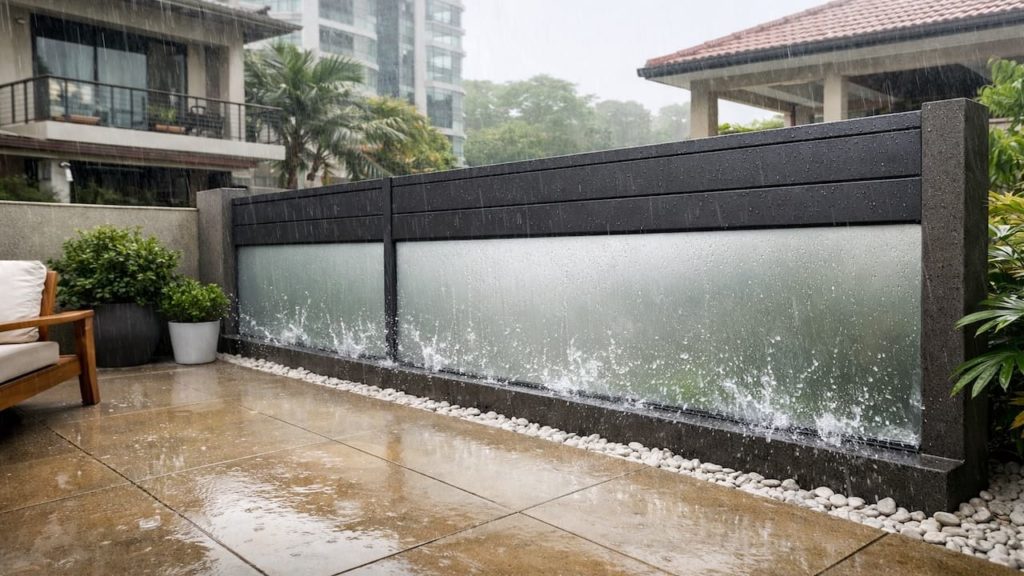
Splashback happens when water hits a hard surface and rebounds onto the wall base, then humidity keeps it damp long enough to stain. In Malaysia rain, even a quick rinse can turn into wall streaks if the floor is flat. If you add a gravel buffer, edging, and a simple squeegee, RM30–200 is a common DIY range for small upgrades. Cleaner walls.
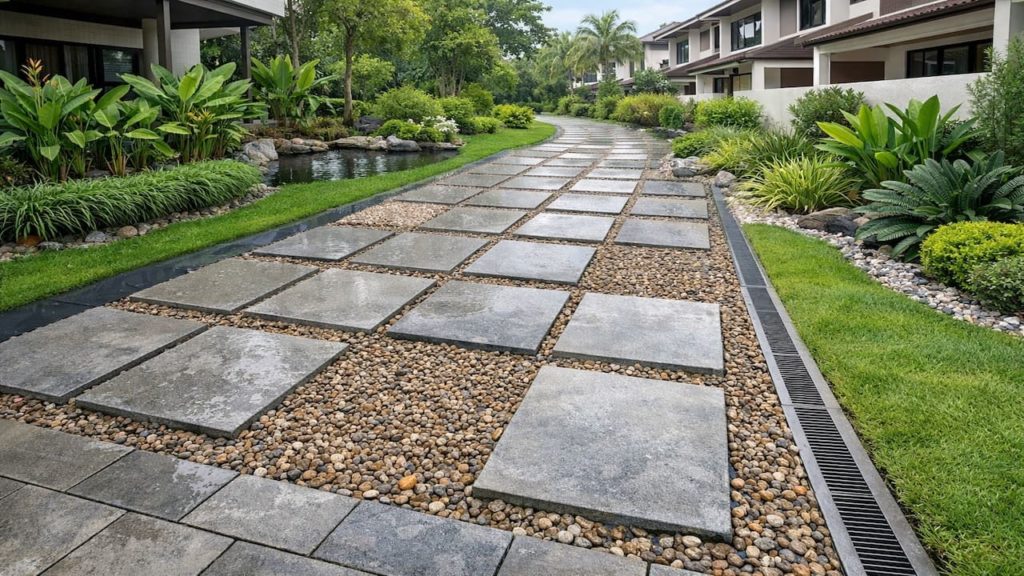
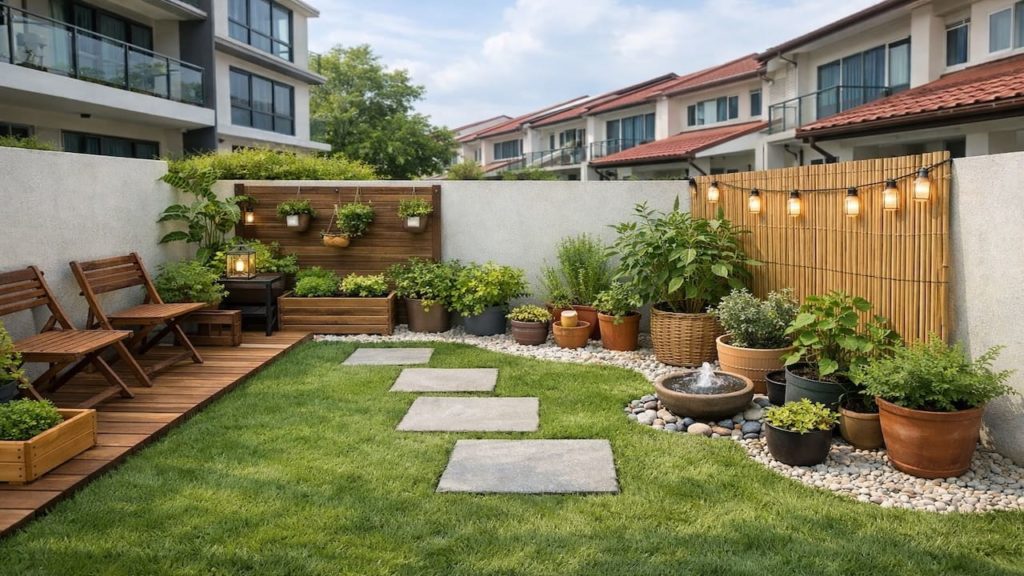
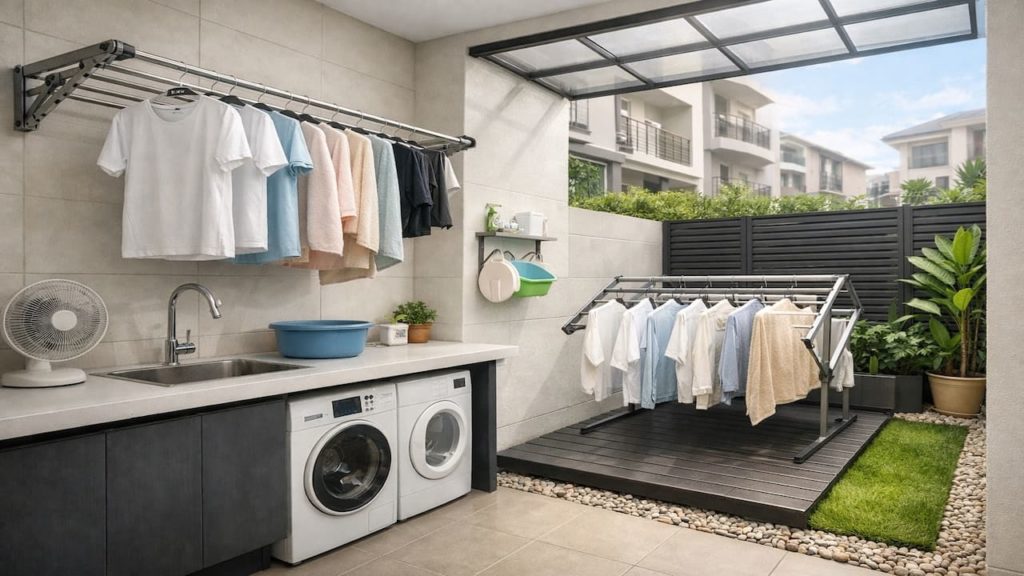
- Add gravel buffer strip along the wall base
- Angle the floor slope away from the wall
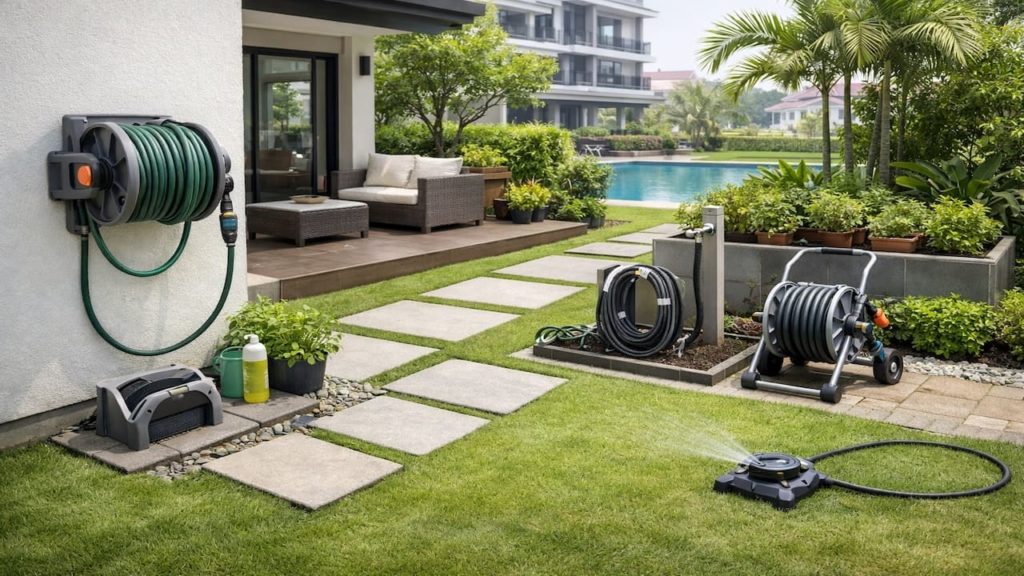
- Keep hose spray direction away from wall surfaces
- Use matte non glossy floor to reduce rebound
- Wipe puddles into drain after each laundry session
You might think the answer is stronger wall paint, but paint still loses when water keeps hitting the same strip. Change the water path first, then any finish lasts longer and looks better.
3. Why laundry corners stay damp in Malaysia homes
Damp builds when airflow is blocked and water has no exit so drying never catches up.
Side yards often have high walls and narrow widths, which reduces breeze and sun. Add roof cover and dense plants, and the area becomes a wet pocket where clothes dry slowly and walls grow mildew dots. Constant drips from hoses or taps feed the damp line, and algae film starts on the floor too. Reality.
- Check corners that stay wet past midday
- Look for black dots on wall base areas
- Inspect floor joints for green slime film
- Find drip sources from taps and hose fittings
- Notice where clothes feel musty after drying
People blame the weather and accept slow drying, but the layout is often the real driver. Create a breeze lane and a drain exit, and the same corner feels much drier.
4. How to design a laundry zone for airflow and clean walls
Keep the laundry zone on the breeze lane and build a dryable floor with clear drainage.
Place the drying rack where air moves, not where it stops, and keep it slightly off the wall so moisture does not sit on the paint. Use a hard floor that slopes to a drain, and add a buffer strip to catch splash and dirt. If you hire a handyman to regrade a small floor area or add a drain channel, RM250–1,500 is a common range depending on access and scope. Drying lane.
- Move drying rack into cross breeze path line
- Leave air gap between clothes and wall surface
- Add channel drain at the lowest point area
- Use edging to keep buffer strips contained
- Add lighting to spot puddles and damp stains
Some worry a breezy placement makes laundry visible and less private. Use light screening that filters views without blocking wind — that gives privacy and faster drying, instead of choosing one and losing the other.
5. FAQs
Q1. What dries laundry faster, sun or wind?
Wind usually matters more in humid weather because it removes moisture from fabric surfaces. Sun helps, but without airflow, clothes can still stay damp and smell.
Q2. Why does my wall keep getting splash marks?
Water is rebounding off the floor or pooling and then being disturbed by footsteps and rinsing. Reduce splash with a buffer strip and slope water away from the wall.
Q3. Should I put the laundry rack right next to the wall?
No because it traps moisture against paint and slows drying in Malaysia humidity. Leave a gap so air can move and walls stay cleaner.
Q4. How can I prevent musty smell in dried clothes?
Shorten drying time by improving airflow, and avoid drying in a damp corner that never fully dries. Clean the floor slime film too, because that odor can transfer to fabric.
Q5. Is a covered laundry area always better in rainy months?
A cover helps against sudden showers, but it can reduce airflow and light. Use a cover with side gaps and keep drainage strong so it stays breathable.
Pro’s Tough Talk

Listen, I’ve been on site 20+ years and done hundreds of jobs, and the “laundry never dries” corner is always the same trap in Malaysia.
Cause one: you hide the rack in a dead corner, so the air is still and the fabric just stays wet. Cause two: the floor is flat, so rinse water hangs around and splashes onto the wall like it is aiming for it. Cause three: you keep dripping taps and hoses, so the corner stays damp even when you think you finished.
Do this now: first, put the rack on the breeze lane and keep clothes off the wall. Second, slope and drain the floor so puddles cannot live there, then wipe water into the drain after each session. Third, add a buffer strip along the wall base so splash hits stone, not paint.
This is airflow and drainage not detergent and I’m not blaming you for wet season stress. Contractors are not always villains, but the structure is cold: if the corner stays damp, walls stain and clothes smell, no matter what softener you buy.
You know when you grab a shirt and it feels “almost dry” but not really, and when you see that same dirty wall line again after you just cleaned it—oi, are we doing laundry or running a humidity experiment.
Summary
Laundry areas work better in Malaysia when you place drying in moving air, keep water off walls, and build a floor that drains fast after rinsing.
If clothes dry slowly and walls stain, the corner is too still, too flat, and too wet, so fix airflow and drainage before buying new racks and sprays.
Move the rack into the breeze lane today then guide readers to your boundary wall stain and walkway drying guides for a cleaner wet-season routine.