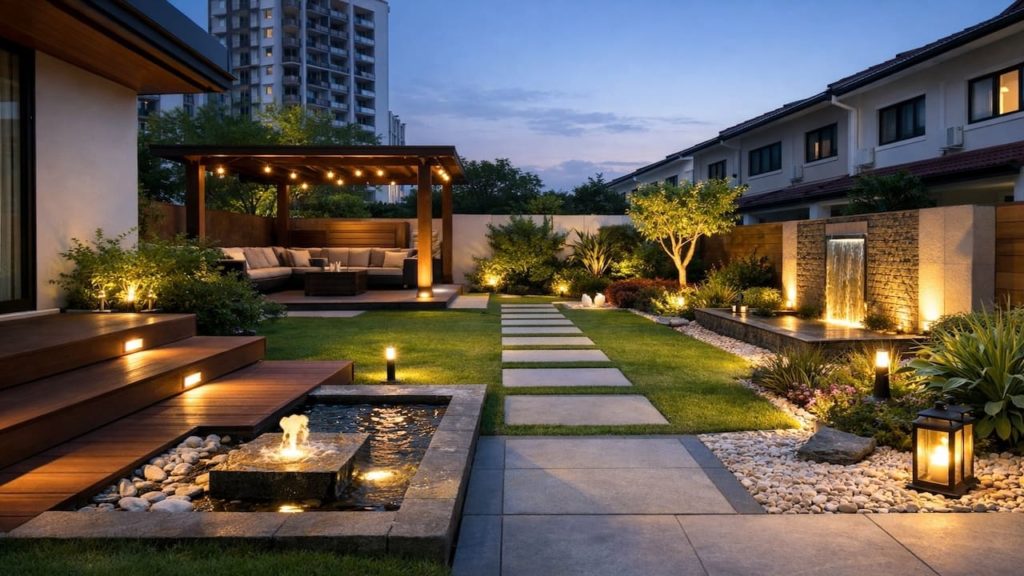
You want garden lighting that makes walking feel safe at night, but you do not want bright glare, ugly shadows, or fixtures that look messy in daylight.
In Malaysia, wet nights, reflective wet paving, and humid conditions make lighting mistakes feel worse, especially around steps, gates, and narrow side paths.
In this guide, you’ll learn how to place outdoor lights to guide steps cleanly while keeping the garden calm, tidy, and practical during rainy months.

Hi, I’m Ken. I write practical home guides for Malaysia—no fluff, just what works.
I hold a formal building design qualification and have spent about 20 years on job sites across hundreds of projects. My goal is simple: help you avoid costly mistakes with clear, safe steps—a quick way to decide what to do next.
1. Lighting-ready garden design: 5 tips
Good garden lighting is about guidance not brightness so you see hazards early.
Most night accidents happen because your eyes cannot read edges and level changes, not because the yard is “too dark.” In Malaysia wet season, shiny wet surfaces can reflect light back into your eyes and increase slip risk. A calm plan uses multiple small points instead of one harsh source. Safety.
- Map walking routes from gate to door first
- Highlight steps edges and level changes clearly
- Use low level lights to reduce direct glare
- Keep fixtures aligned with clean border lines
- Plan maintenance access for cleaning insects and grime
Some people buy the brightest lights and aim them outward, then hate the glare every night. Bright does not mean safe — controlled light aimed at the ground is what stops stumbles.
2. Guide steps without glare or harsh shadows
Use soft low angle light to reveal step edges without blinding anyone.
Steps need contrast, so you want light that washes across the tread, not a beam aimed at your face. In Malaysia, wet tiles reflect like a mirror, so a high bright light creates glare and hides texture. Small step lights, bollards, or wall wash fixtures placed low and offset work best. If you buy simple solar lights or basic wired fixtures for a small route, RM30–300 is a typical range depending on quality and quantity. Clarity.
- Place lights offset from steps to avoid glare
- Aim beams down to wash tread surfaces gently
- Use two-sided lighting to reduce deep shadows
- Keep spacing consistent along the walking line
- Avoid lighting directly across shiny wet tiles
You might think one big floodlight will cover everything, but it usually creates harsh shadows behind pots and railings. Multiple small lights make the path readable and feel more premium.
3. Why glare and harsh shadows happen in wet-season gardens
Glare happens when light hits your eyes before it hits the ground especially on wet surfaces.
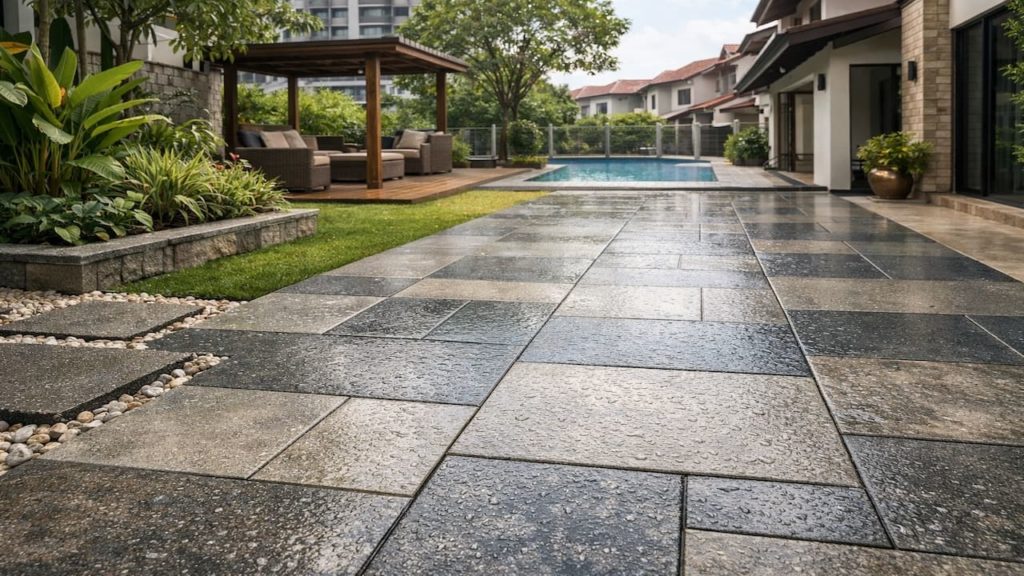
Wet paving reflects and doubles the brightness, so even “normal” lights can feel blinding after rain. Tall fixtures can also cast long shadows that hide steps and drain covers, which is dangerous in narrow side yards. Humidity attracts insects to bright points, so glare plus bug clusters become a daily annoyance. Night comfort.
- Check reflection hotspots on wet paving at night
- Look for shadow bands hiding step edges
- Notice bugs clustering around bright white lights
- Inspect dark pockets behind planters and screens
- Track where you slow down and hesitate walking
People often blame the light brand, but placement is usually the real issue. Change the aiming and height, and the same fixture can become calm, useful guidance instead of a spotlight problem.
4. How to plan lighting zones for safe walking and tidy daytime look
Plan lighting as a layout layer: route lights, feature lights, and security lights separately.
Start with route lights that guide steps, then add small accents only if the walking line is already safe. Use warm, low glare aiming, keep cables hidden, and avoid blocking drainage or cleaning access around fixtures. If you hire a handyman to add a few wired points and tidy cable routing, RM250–1,500 is a common range depending on distance and installation method. Clean lines.
- Use path lights to mark edges and turns
- Add step lights for level changes near doors
- Keep security lights separate from walkway lighting
- Hide cables along borders to avoid trip hazards
- Place fixtures where you can wipe them easily
Some worry lighting will clutter the garden in daylight, like random spikes everywhere. Keep fixtures aligned with edging and planting lines — that is how lighting looks designed, not scattered.
5. FAQs
Q1. How many lights do I need for a small walkway?
Enough to make edges readable, not to make it bright like a car park. Start with key turns and steps, then add points only where shadows still hide hazards.
Q2. Are solar lights good enough for rainy months?
They can work if they are weather sealed and get enough sun to charge. In shaded side yards, solar can be weak, so test one before buying many.
Q3. What color temperature feels best for garden lighting?
Warm light usually feels calmer and reduces glare compared to harsh cool white. It also makes wet surfaces look less shiny and more readable.
Q4. How do I reduce insects gathering around lights?
Use lower brightness, avoid very cool white beams, and aim light downward. Keep lights away from dense plants where bugs already sit in humid nights.
Q5. What should I light first if I only do one upgrade?
Light the steps and the route from gate to door, because that is where slips happen. Decorative lighting comes after safety is solved.
Pro’s Tough Talk

Alright, I’ve been on site 20+ years and done hundreds of jobs, and the number one lighting mistake is thinking brighter means safer.
Cause one: you aim lights at eye level, so you get glare and you cannot see the ground. Cause two: you use one strong light, which throws harsh shadows that hide step edges like a cheap magic trick. Cause three: you ignore wet reflection, and Malaysia rain turns your paving into a mirror.
Do this now: first, light the route and the steps, not the fence tops and trees. Second, keep fixtures low and aim them down so the tread gets washed softly. Third, use multiple small points with consistent spacing, then check it on a wet night and adjust the angles.
Lighting is aiming not shopping and I’m not blaming you for wanting it to look nice. Contractors are not always wrong, but the structure is cold: glare steals vision, shadows hide hazards, and wet ground makes both worse.
You know when you step out and the light hits your face so you squint, and when you still miss the last step anyway—oi, are we guiding steps or filming an interrogation scene.
Summary
Lighting-ready garden design means guiding routes and step edges with soft low angle light that stays readable even on wet reflective surfaces.
If you see glare or harsh shadows, lower the aiming, spread the lights into smaller points, and treat wet reflections as part of the design in Malaysia nights.
Light one step edge and one turn tonight then guide readers to your gate and walkway drying articles to connect night safety with wet-season design.