Your garden should relax you, not give you weekend chores in Malaysia heat and rain. If you dread rinsing moss and sweeping leaves, the layout is the problem.
Humidity keeps surfaces damp, fast growth drops debris, and tight terrace yards or condo patios trap airflow. The wrong corners stay wet, then the cleaning never ends.
In this guide, you’ll learn how to design a garden that stays tidy with less effort. You will set a smarter layout, reduce dirt traps, and keep upkeep simple in wet months.

Hi, I’m Ken. I write practical home guides for Malaysia—no fluff, just what works.
I hold a formal building design qualification and have spent about 20 years on job sites across hundreds of projects. My goal is simple: help you avoid costly mistakes with clear, safe steps—a quick way to decide what to do next.
1. Low-upkeep garden design: 5 steps
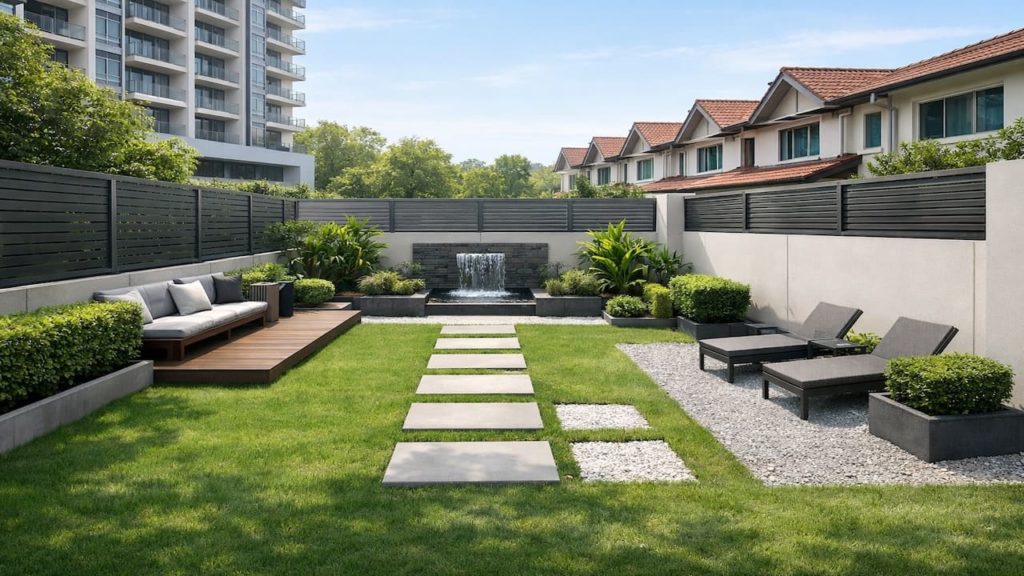
Design the walking route first so dirt and water do not spread across the whole Malaysia yard.
A clear route keeps traffic off planting zones, which means less soil splash and fewer muddy footprints after storms. Path logic—keep it boring. It also lets you rinse one strip instead of the entire floor when algae appears. Small yards feel cleaner when the main line stays open.
- Set one straight path from door to drain
- Keep pots off the path at all times
- Use one surface type for the main route
- Angle the route toward a reachable drain point
- Leave a dry parking spot for cleaning tools
You might think more plants will hide mess, but crowded edges trap damp air and slow drying. In Malaysia, slower drying means more algae and more smell. Build for access, then add greenery around it.
2. Less cleaning by smarter layout choices
Low upkeep happens when you remove dirt traps from corners and keep every surface easy to rinse.
Most cleaning time comes from tiny traps: narrow gaps behind pots, soil lines at tile edges, and shaded pockets that never dry. Corner discipline—nothing hidden. If you can see the floor, you can rinse it fast, and pests have fewer hiding spots. A calm layout also stops “where do I put this” clutter.
- Pull planters 10 cm away from walls
- Use raised feet under pots for airflow
- Group items into one zone not scattered spots
- Choose smooth surfaces that rinse without scrubbing
- Keep one empty strip along the fence line
Some people worry empty space looks wasted, but empty space is what makes cleaning quick. A packed floor forces you to lift and wipe everything. Keep the floor simple, and the garden stays presentable with minimal effort.
3. Why low-upkeep gardens fail in Malaysia humidity
They fail because water stays longer than you think and damp turns small mess into big work.
When shade blocks sun and airflow, surfaces stay wet, and algae grows as a thin film that spreads across tiles and steps. Damp corner—slow drying is the villain. Leaves and soil then stick to that film, so you scrub harder for the same result. Fast growth also drops debris daily, so “once a month” plans collapse.
- Open airflow lanes to dry floors after rainfall
- Expose dark corners to reduce algae film
- Add splash barrier to protect walls and edges
- Trim fast growers to protect walking areas
- Clear drains weekly to prevent dirty overflow
You may blame the material, but the real issue is drying speed and access. Improve slope, open airflow, and reduce shaded traps. Once drying is faster, cleaning becomes lighter and less frequent.
4. How to cut garden cleaning time every week
Cut time by building a rinse routine into the layout so cleaning is one quick loop, not a fight.
Make a “wet work” zone near the tap and drain, then keep the main path clear so you can hose and sweep in minutes. Weekly loop—small resets beat big cleans. Plan RM40–250 for basic edging, drain screens, and a slim storage box, because small structure beats endless scrubbing. After heavy rain, a 5-minute rinse helps stop film from settling.
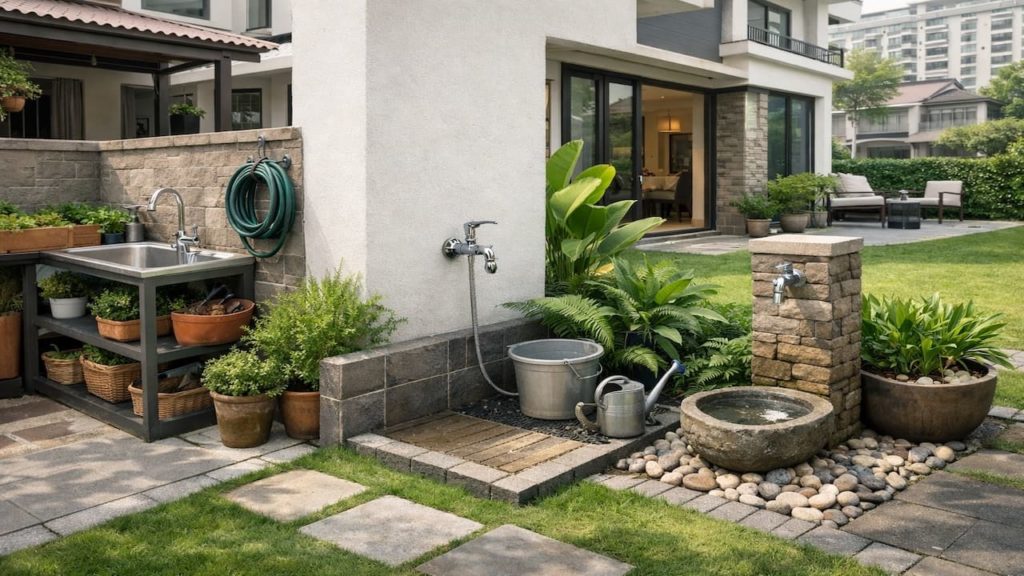
- Place a cleaning zone near tap and drain
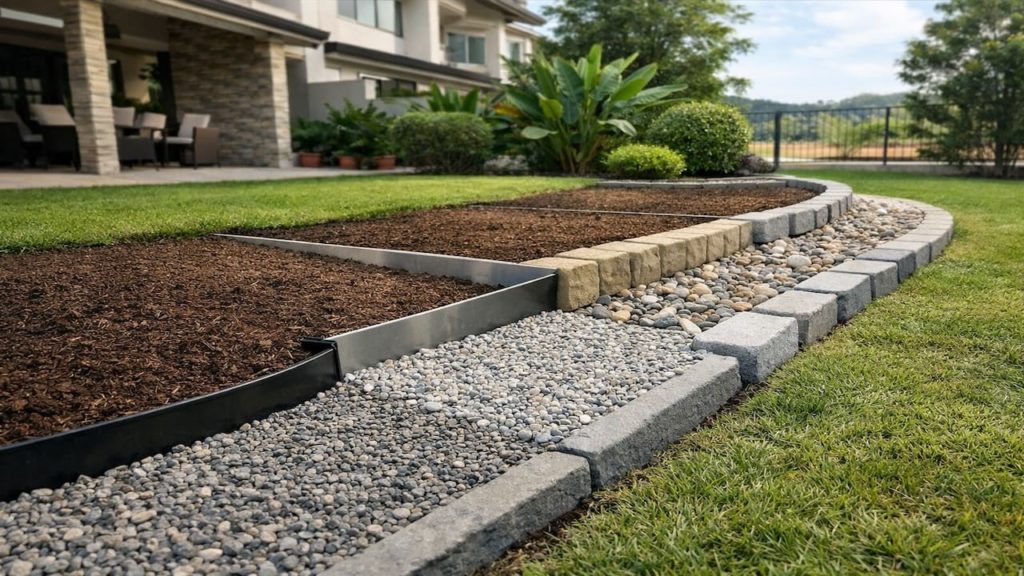
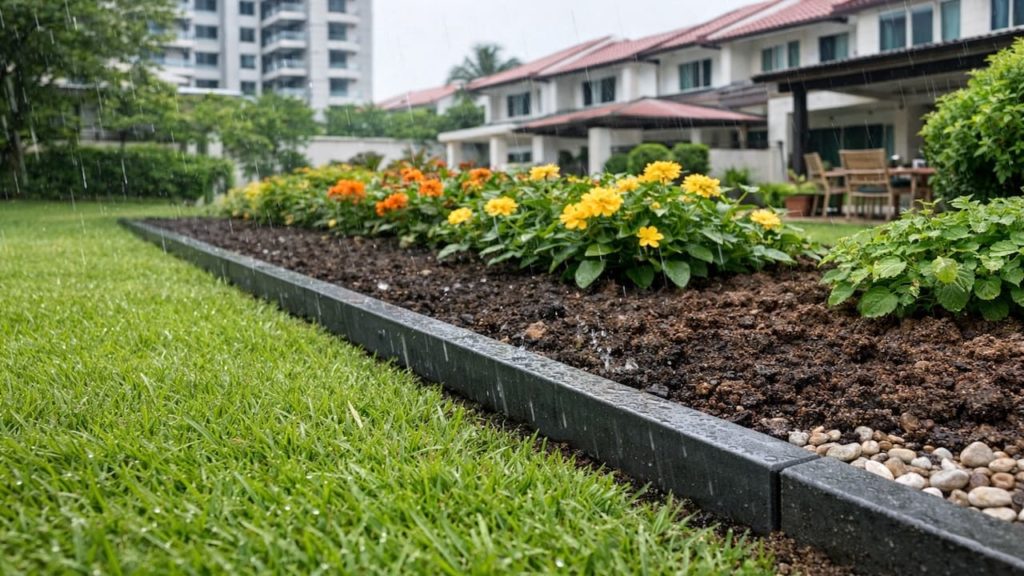
- Add edging to stop soil washing onto tiles
- Install a drain screen to catch leaves
- Store hose and broom in one closed box
- Trim plants to a fixed boundary line monthly
You might want a deep clean day, but Malaysia weather will undo it fast. Make the layout support small resets instead. When the loop is easy, you actually do it, and the yard stays clean.
5. FAQs
Q1. What is the easiest layout change for less cleaning?
Clear one main path and keep it empty, because it limits where dirt and water travel. Once the path stays open, rinsing becomes faster and more consistent.
Q2. Should I use gravel to reduce maintenance?
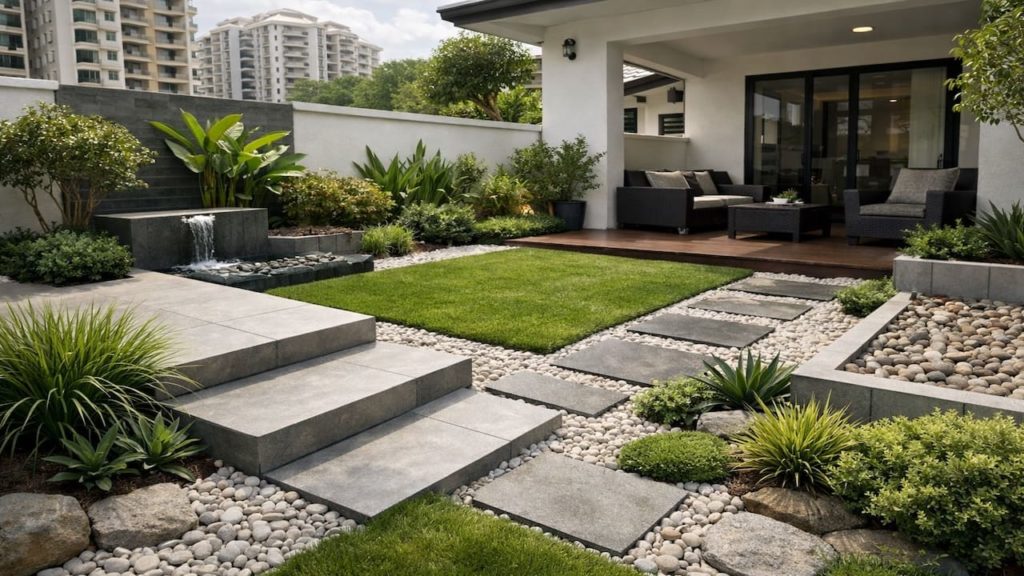
Gravel can reduce mud, but it needs edging or it will scatter and trap leaves. In rainy months—leaf buildup becomes the real work if you skip the edge.
Q3. How do I stop algae on outdoor tiles?
Increase airflow and sunlight where possible, and rinse after storms before film builds up. Regular light cleaning is easier than rare heavy scrubbing.
Q4. How many plants are “too many” in a small yard?
If you cannot see the floor in key zones, you have too many items for low upkeep. Fewer, bigger plants usually stay tidier than many small pots.
Q5. What weekly routine keeps the yard looking decent?
Do a quick sweep, rinse the path, and clear the drain screen once a week. In Malaysia wet season, small resets stop smells and stains from compounding.
Pro’s Tough Talk

I’ve been on site for 20+ years and I’ve done hundreds of jobs, and low-upkeep gardens are not “lazy,” they are smart. In Malaysia humidity, the yard is either designed to dry or designed to rot. Pick one.
Three causes make people suffer: they block the path with stuff, they create tiny gaps that catch grime, and they ignore drains like magic will handle it. That’s like wearing white sneakers in a muddy site and acting shocked later. Contractors are not all bad, but rushed work often skips slope and access.
Do three steps now: clear the floor, open airflow lanes, and put cleaning tools in one spot. Relatable moment: you lift a pot and find a green slimy patch underneath. Relatable moment: you promise “tomorrow” and then it rains again.
Here’s the truth: maintenance is a layout feature, not a personality test. If the loop is hard, you will skip it, and then the garden owns you. And yeah, why did you hide the drain under a jungle, genius?
Stop buying more plants to “fix” it and start fixing the floor, or enjoy your new side job as the algae manager.
Summary
Low-upkeep design starts with a clear path, fewer dirt traps, and zones that dry fast in Malaysia rain and humidity. Simple structure.
If cleaning keeps returning, check airflow, shaded corners, and hidden drains, then reduce floor clutter so rinsing is quick and repeatable. Quick drying—your real standard.
Today, clear the main path and set a cleaning zone. Then move on to a slippery-surface guide and a drain-care guide for wet months.