You want paving that looks clean but does not turn into a skating rink when rain hits, and Malaysia’s wet months make that problem show up fast.
Slip risk comes from glossy surfaces, algae film, bad slope, and paving layouts that trap water near doors, drains, and busy walking lines around terrace homes and condos.
In this guide, you’ll learn how to choose safer paving textures and plan a garden layout that stays grippy when wet without ruining the look or creating a cleaning nightmare in humid weather.

Hi, I’m Ken. I write practical home guides for Malaysia—no fluff, just what works.
I hold a formal building design qualification and have spent about 20 years on job sites across hundreds of projects. My goal is simple: help you avoid costly mistakes with clear, safe steps—a quick way to decide what to do next.
1. Garden design with paving: 5 tips
Design for wet grip before you design for style because you walk on it every day.
Malaysia rain is not gentle, and puddles plus humidity create a thin slick film that makes “pretty” paving feel risky under bare feet. Clean visuals still matter, but safety keeps the space usable after sudden showers. Better grip also reduces panic cleaning when guests arrive. Simple win.
- Map daily routes from door to gate
- Choose textured surfaces for main walking lines
- Set gentle slopes toward drains and gardens
- Keep joints consistent to avoid toe catches
- Limit smooth feature strips to low traffic zones
You might think any paving is fine if you mop often—then the first wet evening proves otherwise. Cleaning helps, but design beats cleaning because water returns tomorrow — plan like rain is a daily visitor, not a rare event.
2. Choose textures that stay safer when wet
Micro texture beats glossy shine for wet safety even when the paving is brand new.
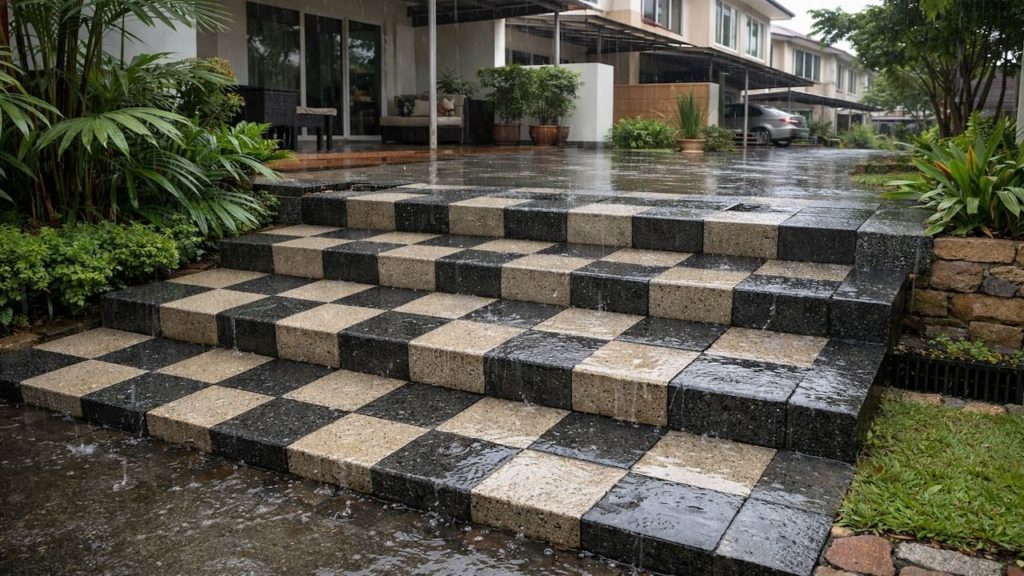
Wet surfaces get slippery when water creates a smooth layer between foot and tile, and algae makes it worse in warm humid air. Textured finishes break that layer and add tiny edges for grip, especially near entrances and outdoor sinks. This matters for barefoot walking in small garden patios. Grip.
- Pick textured pavers for barefoot entry paths
- Avoid glossy tiles near drains and steps
- Test grip using wet foot and rubber sandal
- Use smaller pavers to increase joint friction
- Choose matte stone look over polished porcelain
Some people say texture is harder to clean, so smooth must be better. True, deep grooves trap dirt, but good micro texture rinses clean with water and a soft brush — you want grip without deep channels, not a sandpaper floor.
3. Why wet-season paving turns slippery in Malaysia gardens
Slippery paving is usually a water flow problem not just a “dirty tile” problem.
In Malaysia, rain plus heat grows algae fast, and a thin biofilm can form even on surfaces that look clean at a glance. If the slope is flat or the drain is slow, water sits longer and the film becomes slick. Shaded corners stay damp, so they become the first danger spots. Reality check.
- Check slope direction using a small water pour
- Find shaded corners that stay damp longest
- Inspect drain covers for slime and blockage
- Notice where sandals splash water onto paving
- Track puddles after rain for two days
You may hear “just scrub it every weekend” and that can reduce slime for a while. But if water keeps pooling, you will scrub forever and still slip — fix the flow first, then cleaning becomes a quick rinse instead of a battle.
4. How to plan paving layout for grip and drainage
Layout decides where water sits and where you step so treat it like a safety plan.
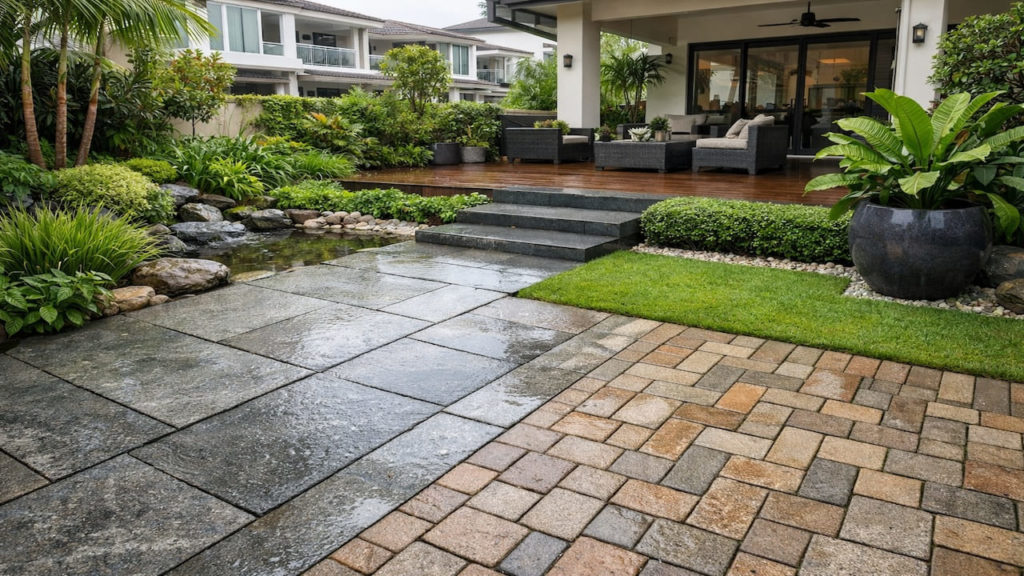
Start by drawing your walking lines, then place grippy paving on those lines and push water away from doors and walls with gentle slope control. If you need a contractor to re-slope, add a drain, or swap a small area of tiles, a typical touch-up can run RM300–1,500 depending on access and materials. Spend once, stop repeating the same slippery problem. Control.
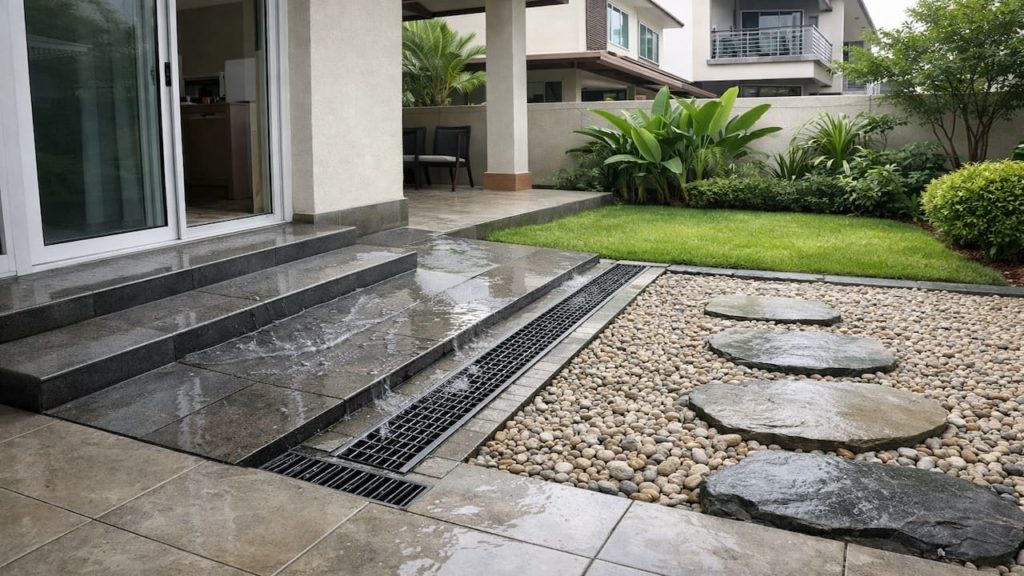
- Angle paving away from doors and wall edges
- Add drain points at low spots near gates
- Break long runs using texture change bands
- Place stepping pads where water crosses routes
- Keep service zones beside drains for rinsing
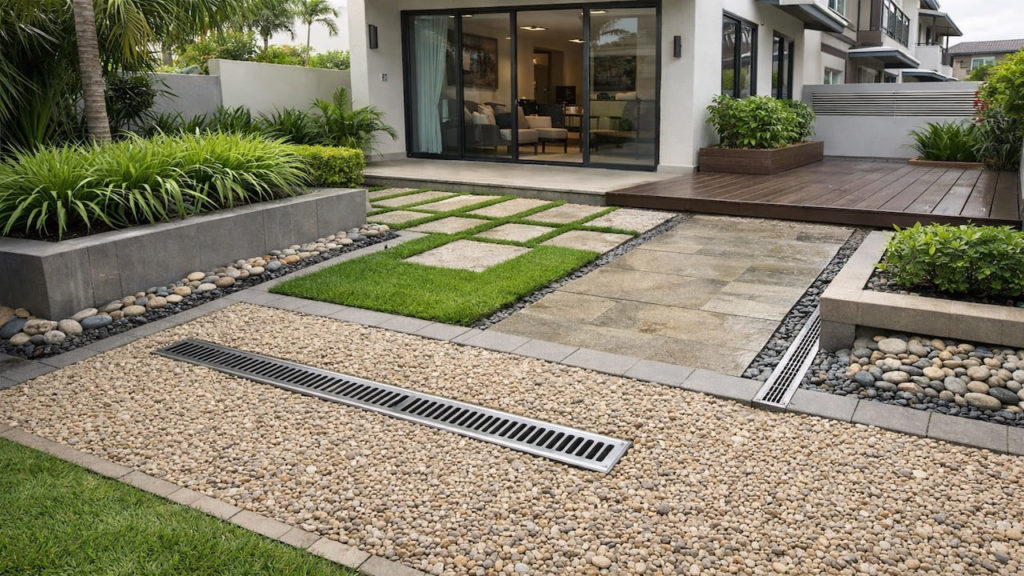
People worry a “functional” layout will look ugly, like a patchwork of random materials. That only happens when you mix without a plan — use one main texture, one accent strip, and consistent joint lines, and you get a clean look with safer footing.
5. FAQs
Q1. Is textured paving always safer than smooth paving?
Usually yes, but only if the texture is fine enough to rinse clean and the layout drains well. Deep grooves can trap dirt, so combine micro texture with good slope.
Q2. What is the fastest way to test if a tile is slippery?
Wet a small area and try it with a rubber sandal and a bare foot, slowly. If you feel sudden slide at low pressure, avoid that finish for main routes.
Q3. Do I need anti-slip coating on outdoor paving?
Coatings help only when drainage and cleaning habits exist because film and algae can still make coated surfaces slick. Use coating as a bonus layer — not as the main fix.
Q4. Why does my paving get slippery again after I clean it?
Because water keeps sitting in the same low spots and shade keeps the surface damp, so biofilm grows back quickly. Fix pooling points and improve airflow where possible.
Q5. Which areas should be the highest priority for safer texture?
Start at doors, steps, outdoor sinks, and any path you use when carrying things. Those are the places where one slip becomes a real injury risk.
Pro’s Tough Talk

Listen, I’ve been on site 20+ years and done hundreds of jobs, and I’ve seen the same “pretty tile, scary slip” story repeat in humid Malaysia homes.
Cause is simple: shiny surfaces plus flat slope plus algae film, and your paving becomes an ice rink with a tropical haircut. The second cause is layout stupidity, like putting the smoothest tile right where wet feet land. Third cause is lazy cleaning plans that depend on willpower.
Do this in order: first, find the exact puddle spots after rain and mark them. Second, change the walking line surface to a grippier texture and stop worshipping shine. Third, fix the flow with slope or drains so water leaves fast.
Stop treating slips like bad luck because it’s design math, not destiny. And yeah, some contractors will install what you ask for without warning you, but you also have to ask the right question, not just pick the nicest sample.
You know that moment when you step out to grab laundry and your sandal squeaks like it’s begging for mercy, or when kids run in with wet feet and you go “eh wait!”—that’s your warning sign, so fix it before your patio turns into a green soap bar comedy show.
Summary
Choose paving like Malaysia rain is guaranteed, because it is, and put grippy textures on the routes you actually walk. Safety.
If cleaning keeps “working” for a week then failing again, your issue is pooling water, shade dampness, or a smooth finish in the wrong zone — change the flow and the surface.
Start with one wet test and one route upgrade today then use the next guide on drainage and slippery surfaces to lock the result in for the whole wet season.