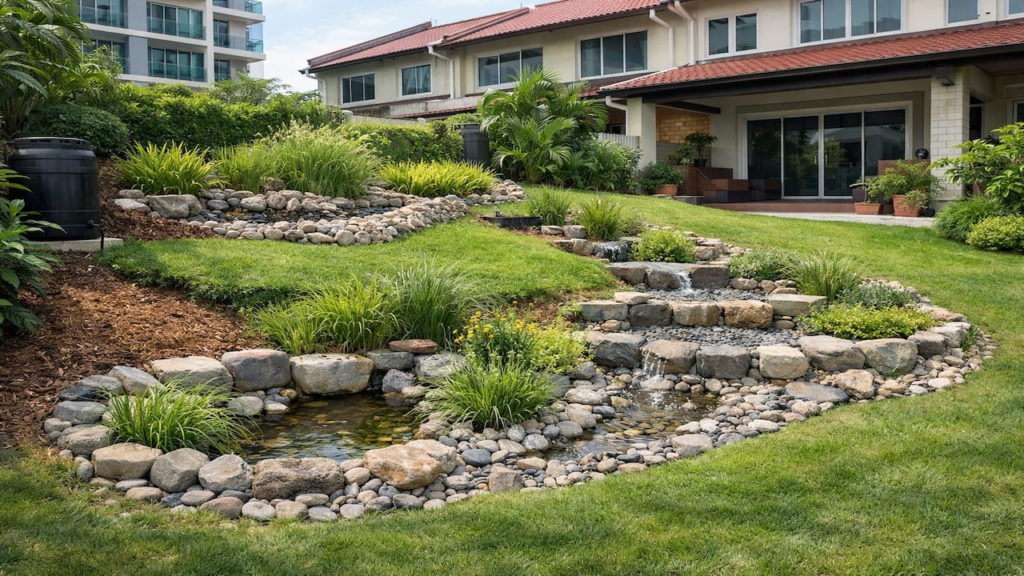
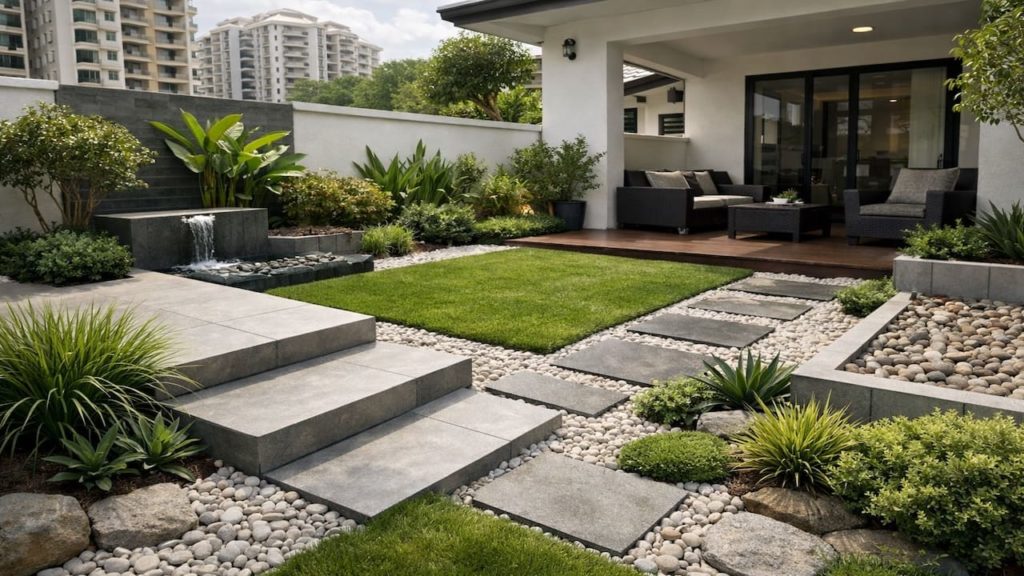
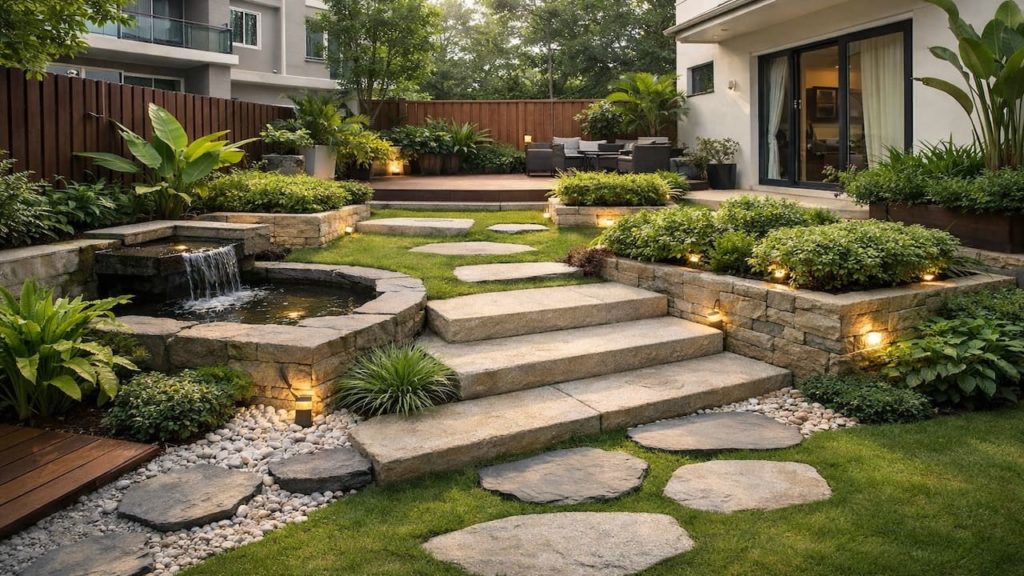
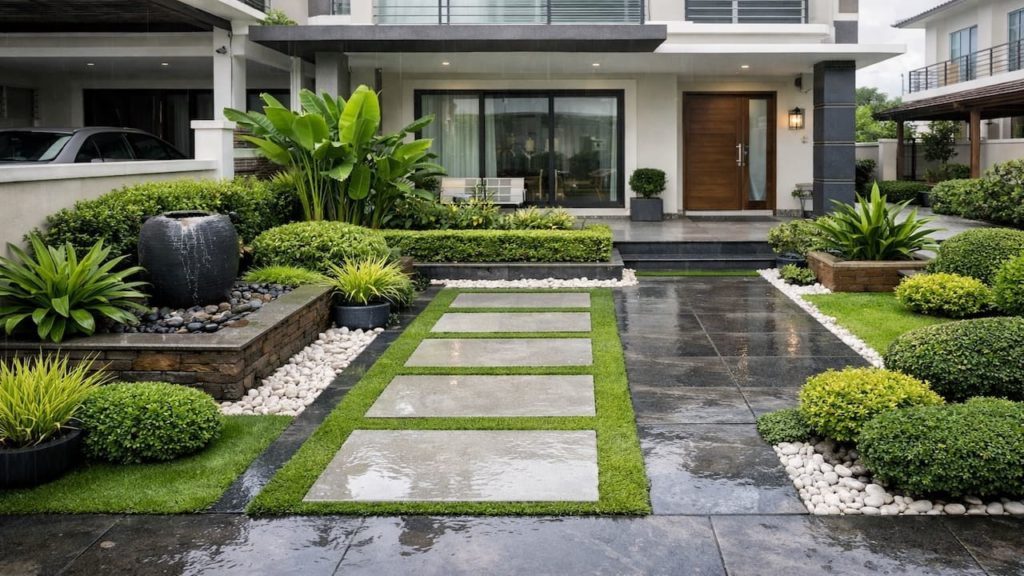
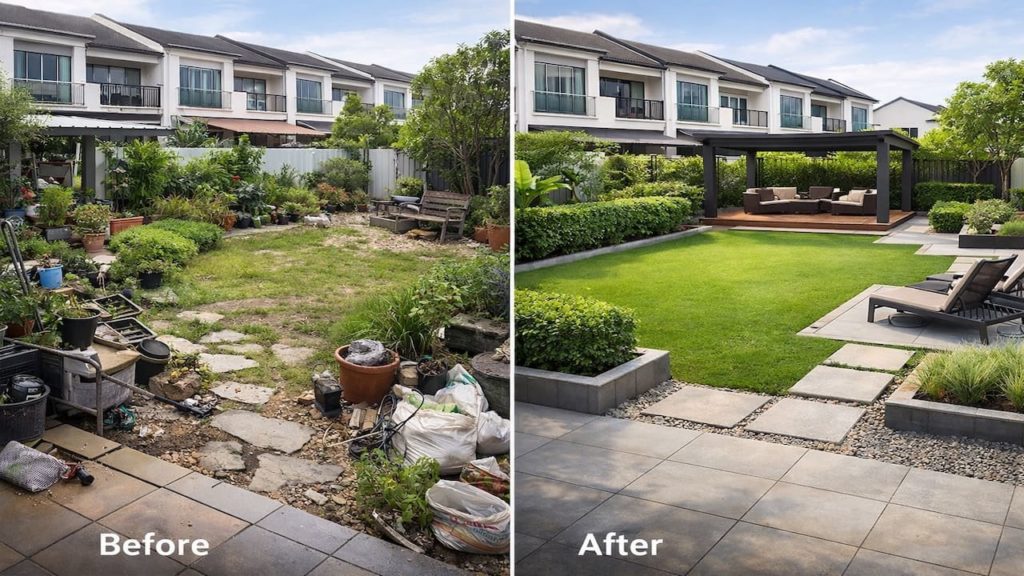
Rainy season can make a normal yard feel risky, because wet tiles and shaded corners turn into slip zones fast in Malaysia.
Humidity, sudden downpours, and quick algae growth hit terrace homes and condo patios hard, especially where airflow is weak and drains clog easily.
In this guide, you’ll learn how to keep outdoor ground drier and safer in wet months. You will spot slippery patterns early, fix flow, and set a layout that stays easy to rinse.

Hi, I’m Ken. I write practical home guides for Malaysia—no fluff, just what works.
I hold a formal building design qualification and have spent about 20 years on job sites across hundreds of projects. My goal is simple: help you avoid costly mistakes with clear, safe steps—a quick way to decide what to do next.
1. Rainy-season garden design: 5 checks
Start rainy-season design by checking water flow first so Malaysia rain does not turn paths into slick traps.
When ground stays wet, algae film forms and dirt sticks, so “clean” becomes “slippery” within days. Flow control. In Malaysia terrace side lanes, shade and walls slow drying, while condo balconies trap humidity near tiles. Check drainage, slope, shade, and surface texture before you buy anything.
- Test slope with water pour after heavy rain
- Flush drains and confirm fast runoff direction
- Check shaded corners that stay wet longer
- Feel tile texture for grip when soaked
- Map walking lines where barefoot steps happen
You might think slipping is random, but the same spots repeat because layout stays the same—fix the flow and the risk drops. Malaysia wet months are predictable about this. Do the checks once, then keep the path clear and easy to rinse.
2. Keep ground drier and reduce slippery spots
Keep your main path dry by reducing shade traps so the Malaysia yard feels safer every rainy week.
Drying speed is the real safety feature, not “fancy” materials. Drying speed. Move clutter off the floor, open airflow lanes along walls, and keep soil from splashing onto tiles. In Malaysia homes, a narrow entry path and side strip often become the worst slip zones because water sits and light is low.
- Pull pots away from walls to open airflow
- Raise planters with feet to dry underneath
- Separate soil from tiles with clean edging
- Keep one straight path free of obstacles
- Rinse the path early before algae thickens
You may want to hide wet areas with more plants, but dense greenery blocks wind and keeps the floor damp—then slipping gets worse. Malaysia humidity rewards open floor and clear edges. Make the path a drying lane, and the whole garden feels calmer.
3. Why rainy-season slip spots happen in Malaysia yards
Slip spots appear because algae film grows where water stays and light is low in Malaysia wet season.
It starts as a thin biofilm on shaded tile or concrete, then dirt sticks to it and the surface turns slick. Wet loop. Poor slope creates puddles, and blocked drains force overflow that spreads grime across the walking line. In terrace homes, walls trap humidity, while condo patios often have limited sun exposure, so the same slick patches return.
- Shaded tiles stay wet and grow algae film
- Poor slope leaves puddles on walking lines
- Clogged drains overflow and spread dirty water
- Soil splash leaves grit on smooth surfaces
- Clutter blocks airflow and slows drying time
You might blame the tile brand, but even good surfaces become risky when water lingers—layout and cleaning timing matter more. Malaysia rain repeats the test weekly. Fix slope, airflow, and drain access, and the “mystery” slip spots fade.
4. How to make wet-month paths safer fast
To fix safety quickly, reset the path into a simple rinse loop that dries faster in Malaysia rain.
Clear the floor, mark one main route, then protect the edges so soil and leaves stop washing onto the path. Simple loop. Plan RM40–250 for a drain screen, a stiff brush, and basic anti-slip strips if needed. In Malaysia wet months, doing small resets right after storms prevents film from thickening and saves you from heavy scrubbing later.
- Remove floor clutter to expose the full path
- Scrub algae film from tiles with stiff brush
- Install drain screen to catch leaves early
- Add edging strip to block soil washout
- Test grip by walking slowly in wet shoes
You may think you need a full renovation, but most slip risk drops fast when the route is clear and the drain works—focus on system, not drama. Malaysia humidity never stops, so your layout must be repeatable. Build the rinse loop and keep the path obvious.
5. FAQs
Q1. What is the fastest way to reduce slippery outdoor tiles?
Scrub early before algae film thickens and rinse after storms so dirt does not bond to the surface. Keeping the main walking line clear helps the ground dry sooner.
Q2. How often should I clean during rainy months in Malaysia?
Do a light rinse weekly and a deeper scrub monthly on the main path. Small resets prevent slick patches from building into a hard scrub job.
Q3. Which areas usually stay wet the longest?
Shaded corners near walls, narrow side strips, and low points on the path stay damp the longest. These spots need better airflow and clear drain access.
Q4. Should I add more plants to hide wet patches?
No, dense planting often blocks wind and keeps surfaces wet longer. Use plants to frame the path edges, not to cover the floor.
Q5. What simple habit keeps paths safer all season?
Clear leaves after storms and check drain flow before water backs up. If runoff is fast, drying starts sooner and slippery film is less likely.
Pro’s Tough Talk

Alright, I’ve been on site for 20+ years and I’ve done hundreds of jobs, and rainy season doesn’t “cause” slips by magic. In Malaysia humidity, your yard is basically a sponge with a shiny floor if you ignore flow. Reality.
Three causes, same every time: water sits because slope is lazy, drains clog because leaves win, and you block airflow with clutter like it’s a storage hallway. It’s like putting a carpet in a shower and calling it comfort. Contractors aren’t all demons, but rushed work skips the boring checks.
Do three steps now: clear the walking line, flush the drain until it runs clean, then scrub the slick patch before it turns into a skating rink. Relatable moment: you step out in slippers and your foot slides. Relatable moment: you swear “tomorrow” and then another storm hits.
Here’s the cold system: safety is a repeatable layout, not a one-time cleaning mood. If the path is blocked, you won’t rinse, and the algae will farm itself. And yeah, why is the hose living across the only route, genius?
Fix the flow once, or keep paying “wet season tax” with your knees and your weekends.
Summary
Rainy-season garden safety starts with flow checks: slope, drains, shade, surface grip, and clear walking lines in Malaysia homes.
If slippery spots keep returning, the real causes are slow drying, clogged drains, and soil or leaves washing onto smooth paths during wet months. System problem.
Today, clear the path and flush the drain. Next, jump to a low-upkeep layout guide and a slippery-surface cleaning guide for wet season control.