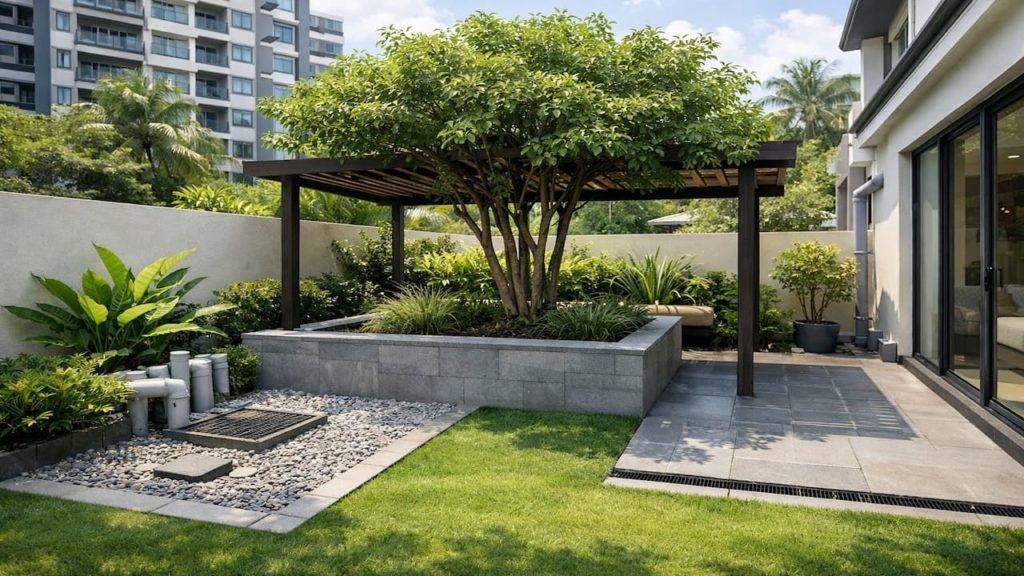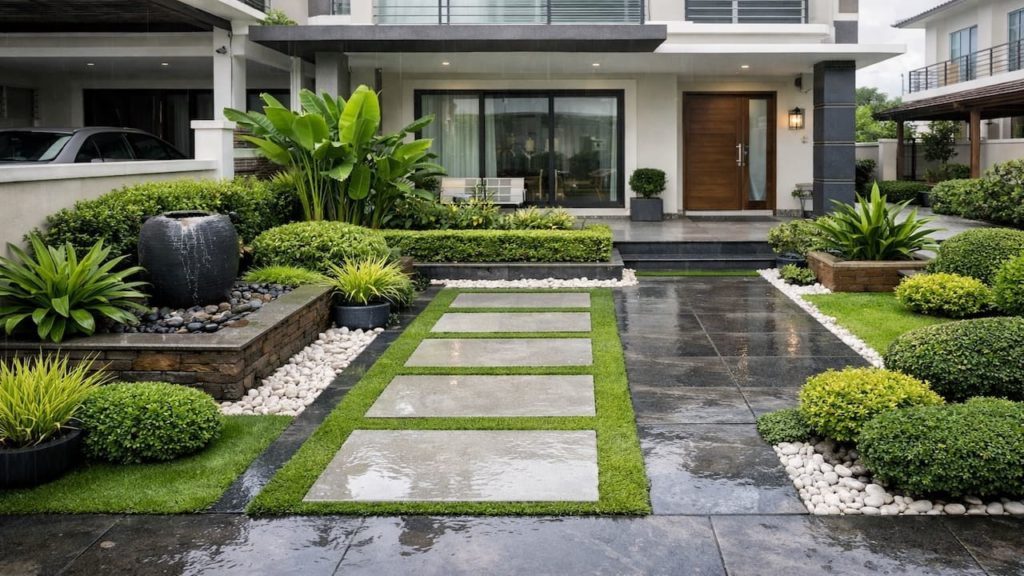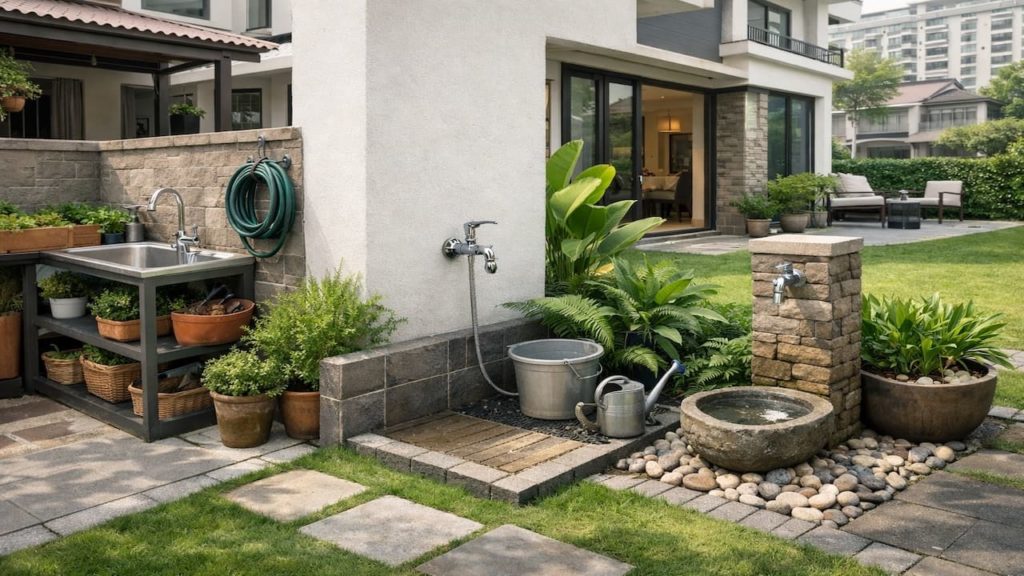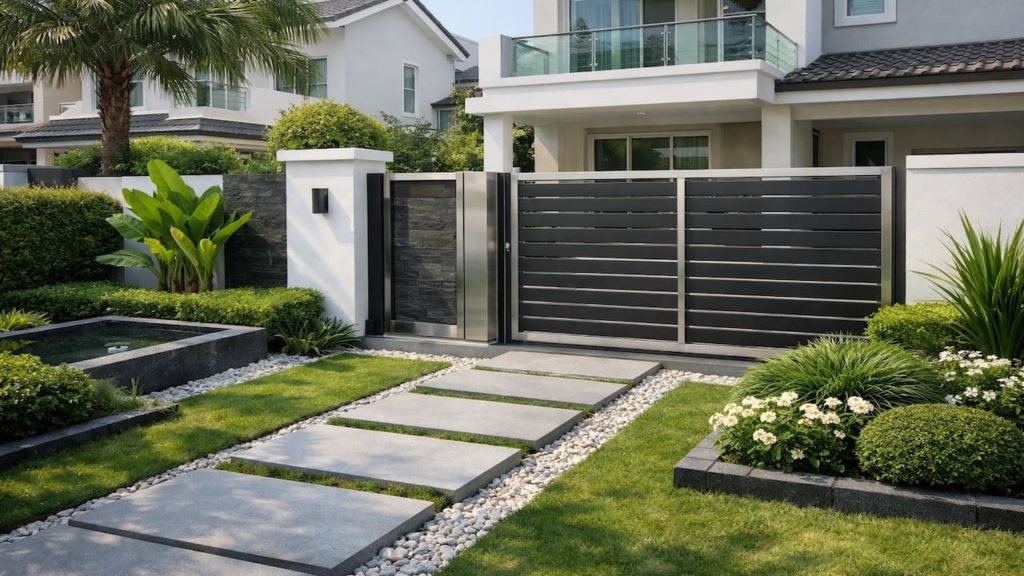
You want screening that gives privacy and calm, but you do not want the garden to feel smaller, darker, or harder to clean after rain.
In Malaysia, tight side yards, high humidity, and fast-growing greenery can turn “more screen” into trapped damp air, mildew smell, and a heavy look.
In this guide, you’ll learn how to screen views with light-looking panels and the right plant layers so the space stays breezy, bright, and realistic to maintain.

Hi, I’m Ken. I write practical home guides for Malaysia—no fluff, just what works.
I hold a formal building design qualification and have spent about 20 years on job sites across hundreds of projects. My goal is simple: help you avoid costly mistakes with clear, safe steps—a quick way to decide what to do next.
1. Garden design for screening: 5 tips
Good screening hides angles while keeping the garden feeling open in daily use zones.
Most homes do not need a full wall, they need targeted coverage where eyes land from gates, side lanes, and upper windows. In Malaysia wet months, you notice stale corners faster because surfaces stay damp and shade is stronger. A light design still blocks views, but it lets air move so the patio dries quicker — comfort beats “perfect privacy” every time. Openness.
- Stand at gate and mark direct sightlines
- Screen only the seating and door backdrop
- Use two layers instead of one thick barrier
- Keep airflow gap behind every screen line
- Plan cleaning access for leaves and algae
People often think privacy means taller and thicker, then wonder why the space feels gloomy and sticky. That trade is optional — block the view at the right height and angle, and you keep the breeze without losing the calm.
2. Light-looking panels and plants that work
Choose slim panels and soft planting that read light even when coverage is strong.
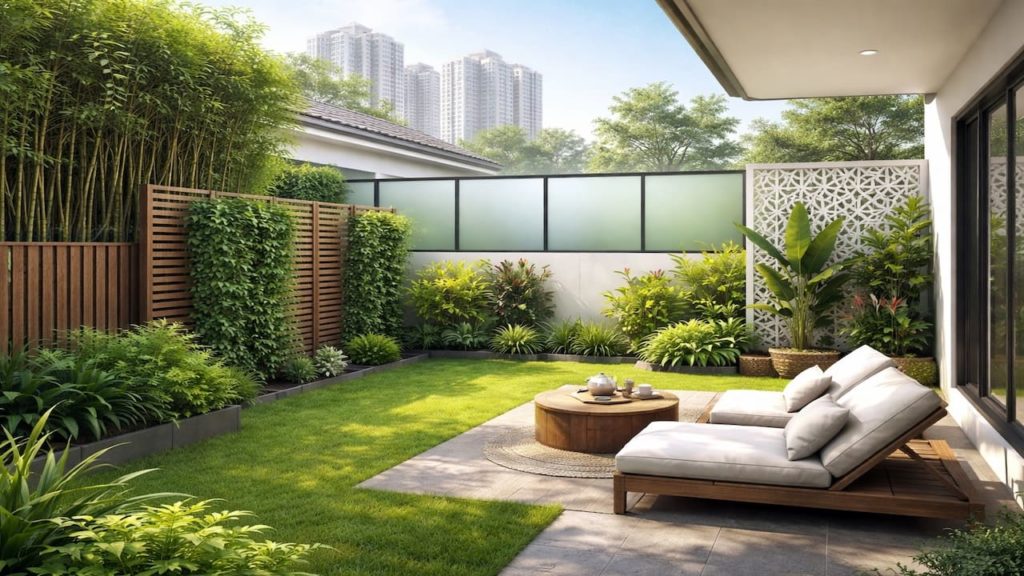
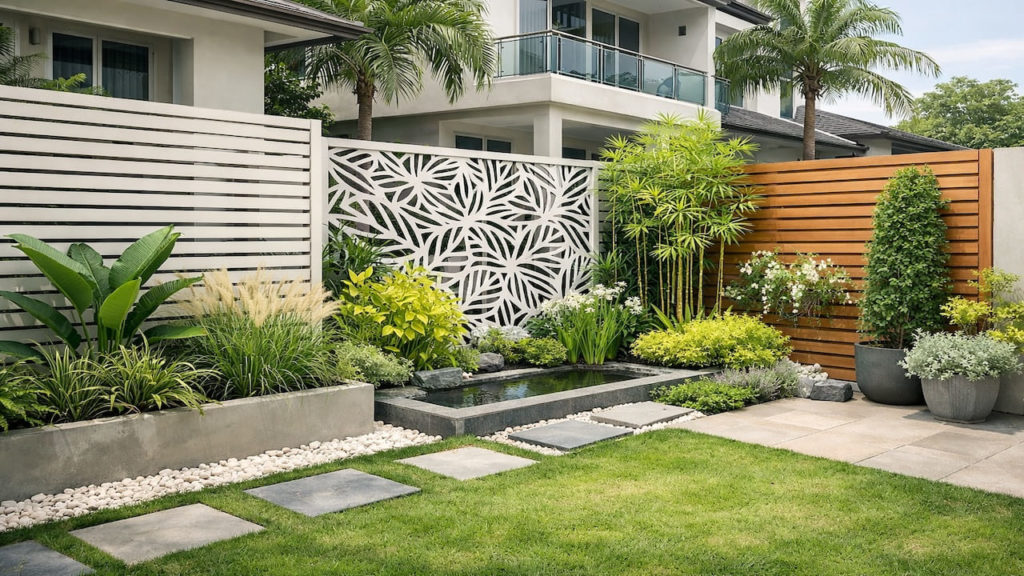
Light-looking screening comes from thin lines, repeated spacing, and a bit of depth between layers, not from one giant surface. Slats, perforated panels, and airy trellis styles filter the view while still letting wind and daylight pass. Plants do the softening, but they need space and trimming in Malaysia humidity or they turn into a wet sponge — the look stays clean when the structure stays simple. Balance.
- Pick vertical slats with consistent spacing rhythm
- Offset panels to block angles not airflow
- Use narrow planters to add depth quickly
- Choose plants with tidy leaf drop behavior
- Keep base clear to reduce damp stains
You may worry slatted panels do not give enough privacy, especially close to neighbors. They do, when you place them slightly angled and add a second layer behind — that layered “filter” hides more than a flat wall.
3. Why screening looks heavy and fails in humid gardens
Screening turns heavy when it blocks wind and traps moisture in shaded corners.
Solid barriers reduce cross-ventilation, so surfaces stay wet longer after rain, and algae or mildew shows up where you least want it. In terrace homes, narrow side yards already struggle for breeze, so a dense screen can make the whole garden feel warmer and smellier. Plants can also backfire if they are packed too tight, because the inside never dries — then you get patchy leaves and messy dieback. Reality.
- Check corners that stay damp past midday
- Notice musty smell near screen bases
- Look for green film on shaded hard surfaces
- Spot plant dieback from trapped wet air
- Find drip points from AC or roof runoff
Some assume the material is wrong, like “this wood is bad” or “this plant is weak.” The system is usually the problem — airflow and water paths decide the outcome more than the shopping list.
4. How to place screening to keep breeze and privacy
Place screens like shutters and plant like curtains so air still crosses the space.
Start by rotating the panel line to block the main viewing angle, then leave a rear gap so wind can pass behind and dry the wall. Add plants as a secondary layer, spaced so you can rinse, prune, and spot pests without digging through a jungle. If you buy a small set of panels, posts, and planters, many setups land around RM250–1,200 depending on height and material, and the biggest value is using the patio more often in humid months. Cross-breeze.
- Angle the main panel to block key views
- Leave rear gap for airflow behind screening
- Keep screen height below ventilation openings
- Stagger plants to fill gaps without crowding
- Redirect runoff away from screen base areas
It can feel risky to leave gaps, because gaps look like “less privacy” in your mind. In reality, gaps plus offset layers hide better from most angles — and the breeze you keep is what stops the damp smell cycle.
5. FAQs
Q1. How do I know where I actually need screening?
Stand where neighbors and passersby stand, then look toward your seating and doors. Block those lines first, not the entire boundary.
Q2. Are plants enough, or do I need panels too?
Plants can work, but they take time and can get too dense in humidity. Panels give instant structure, and plants make it feel softer.
Q3. What is the best way to keep privacy without heat buildup?
Use offset layers with airflow gaps so wind can pass while views are filtered. One solid wall — even a nice one — often traps damp air in wet months.
Q4. How do I prevent mold and algae on screens?
Keep the base dry, avoid trapping leaves, and rinse after storms. If the area never dries, adjust airflow before changing materials.
Q5. How tall should my screening be for a small garden?
Use the minimum height that blocks the main sightline to your seating area. Taller than needed often steals light and makes the space feel tighter.
Pro’s Tough Talk

Alright, I’ve been on site 20+ years and done hundreds of jobs, and “heavy-looking screening” is almost always a bad plan, not bad luck.
Cause one: you slap a solid barrier where the only breeze used to travel, and Malaysia humidity turns the corner into a damp closet. Cause two: you pack plants like a wall, then the inside stays wet and starts smelling like old towels. Cause three: you ignore runoff and drip points, so the base stays dirty and goes green fast.
Do this now: first, block the angle with slats or offset panels instead of a blank wall. Second, leave a gap behind the screen so air can move and dry the wall. Third, plant in staggered layers with space to rinse and prune, not a jungle you fear touching.
Privacy is a geometry problem and I’m not blaming you for wanting peace at home. Some contractors will install whatever you point at because it is quick, but the structure is cold: block airflow and you buy smell and slime.
You know that moment when you step outside after rain and the corner feels weirdly warm and sticky, and that moment when guests arrive and you pretend you cannot smell the damp near the screen—oi, are we building a garden or a mildew museum.
Summary
Light-looking screening comes from smart angles, layered depth, and airflow, which is crucial in Malaysia’s humid wet months.
If your screening makes the garden feel hotter or smellier, it is too solid, too close to walls, or placed across the cross-breeze line.
Start by screening one key sightline with an offset layer then lead into walkway drying and drainage guides so the whole outdoor space stays comfortable after rain.