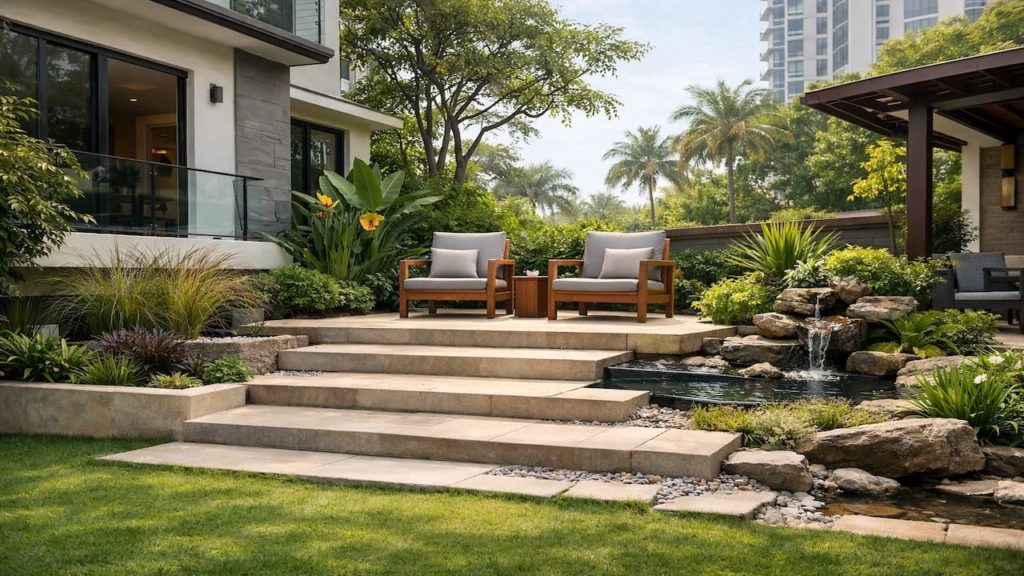
You want a garden seat that feels relaxing, not sticky, and you keep moving chairs because the air feels dead in the wrong spot.
In Malaysia, humidity hangs around, rain shifts wind paths, and terrace homes or condo patios can trap still air between walls and fences.
In this guide, you’ll learn how to place seating where natural breeze helps you feel cooler while keeping the area tidy, usable, and easy to dry after storms.

Hi, I’m Ken. I write practical home guides for Malaysia—no fluff, just what works.
I hold a formal building design qualification and have spent about 20 years on job sites across hundreds of projects. My goal is simple: help you avoid costly mistakes with clear, safe steps—a quick way to decide what to do next.
1. Seating-led garden design: 5 steps
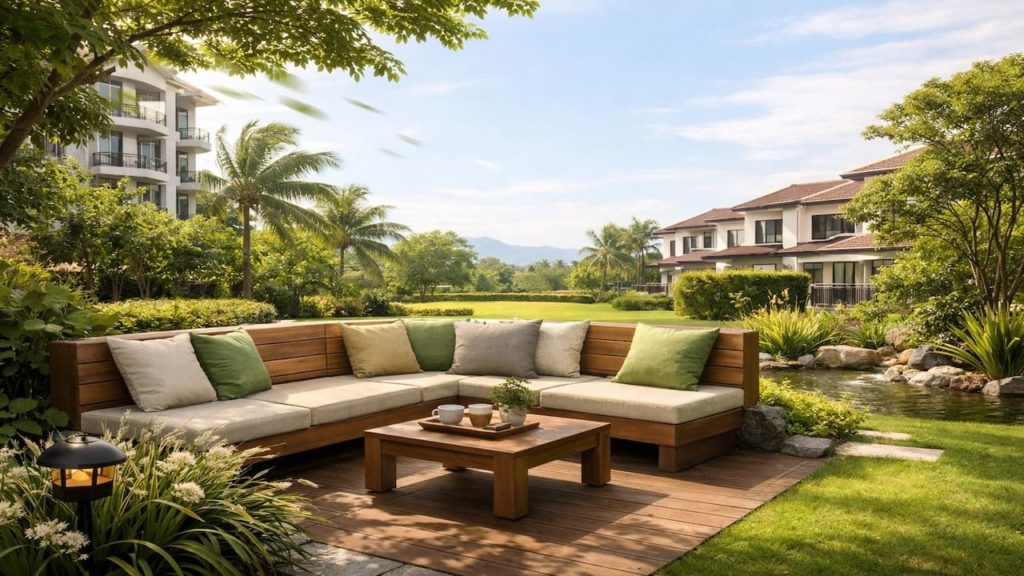
Start the design by choosing the best sitting zone first then build everything around it.
When seating is an afterthought, you end up with a pretty corner that nobody uses during warm wet months. In Malaysia, comfort depends on airflow, shade balance, and quick drying after rain. A seat placed well makes the whole yard feel bigger and calmer. Priority.
- Stand outside and note breeze direction changes
- Pick one main seat zone near daily routes
- Keep a clear walking line to that zone
- Leave open space behind seats for airflow
- Place small tables where dripping will not hit
It is easy to copy a photo layout and put chairs against a wall for symmetry — but walls block wind and trap damp, so the spot feels worse after every rain.
2. Place chairs where breeze flows naturally
Place chairs on the breeze path not inside the wind shadow so comfort feels automatic.
Breeze usually slides along fences and then turns at corners, and your job is to sit where it passes, not where it dies. In terrace homes, the side yard can act like a wind tunnel, while the back corner can feel still and warm. Good placement also reduces musty smell because surfaces dry faster after storms. Sweet spot.
- Face seats across the breeze line for comfort
- Offset chairs away from walls by small gaps
- Avoid deep corners where air stops moving
- Use plants as filters not solid wind blocks
- Keep seating height above splash and puddles
Some people chase full privacy and block every opening, then wonder why the patio feels heavy. Privacy should filter views, not choke airflow — you can hide angles and still let wind reach chairs.
3. Why seating feels hot even when the yard has shade
Shade without airflow still feels hot in humid weather because your body cannot cool.
In Malaysia, humidity reduces evaporation from skin, so moving air matters more than you expect. If seating sits in a wind shadow, heat builds and the space feels sticky even under a roof. Wet surfaces also stay wet longer in still zones, which invites algae film and that damp smell near walls. Physics.
- Check which corner stays wet after rainfall
- Notice where laundry dries slower than usual
- Feel for still air near fences and screens
- Look for green film on shaded paving edges
- Track where mosquitoes hover in calm pockets
You may think the fix is “more shade” or “bigger plants” and keep adding coverage. That often makes airflow worse — fix the breeze path first, then shade becomes comfort instead of a damp cave.
4. How to set a seating zone that stays cool and tidy
Design the seating zone with airflow gaps and fast drying surfaces so it stays pleasant daily.
Start by clearing the breeze lane, then place chairs slightly off the wall, and keep the floor surface easy to rinse and quick to dry. In most cases, cost is mostly time/effort, because you are shifting layout, trimming growth, and opening breathing space. Add a simple landing area so shoes do not drag mud into the seat zone — your routine gets easier. Setup.
- Trim dense plants to reopen breeze lanes
- Angle screens to block views not airflow
- Use textured paving under seats for safer footing
- Route runoff away from the seating edge
- Place lighting to remove dark corner blind spots
People worry the zone will look too empty if you leave gaps for air. Gaps can look intentional when edges are clean — keep one strong line, repeat materials, and the space reads tidy and cool.
5. FAQs
Q1. How do I find the breeze path without tools?
Stand outside at different times and feel for the coolest spot on your skin, especially after rain. Watch how leaves move and where air seems to “slide” along fences.
Q2. Should chairs go against the wall for space saving?
Usually no, because walls block airflow and keep surfaces damp in wet months. Leave a small gap so air can pass behind the seating.
Q3. What if my yard has almost no breeze?
Create a breeze lane by removing blocks like dense screens, clutter, and packed planting at corners. Even small airflow improvements can change comfort in humid weather.
Q4. How do I keep the seating zone tidy during rainy weeks?
Use a simple landing surface, keep planters off the walking edge, and rinse toward a drain outlet. Tidy happens when dirt has a place to stop.
Q5. Will more plants always make seating cooler?
Not always, because dense planting can trap still air and slow drying. Use plants as layers with gaps, and prune to keep the inside breathable.
Pro’s Tough Talk

Alright, I’ve been on site 20+ years and done hundreds of jobs, and I can tell you this: the “hot patio” problem is usually dumb placement, not bad luck.
Cause one is wind shadow, you park chairs in a dead corner and it feels like sitting inside a damp sponge. Cause two is over-screening, you block every opening and kill the only free breeze. Cause three is wet floor design, puddles stay and the smell creeps up after rain.
Do this now: step one, find the breeze lane and clear it by trimming and removing clutter. Step two, pull seating off the wall and angle screens so air still passes. Step three, fix runoff so water exits fast and the seat zone dries quickly.
Comfort is layout not decoration and I’m not blaming you for wanting it to look nice. Some contractors install whatever fits the picture, but the structure is cold: block airflow and you buy heat, slime, and regret.
You know when you sit outside with a drink and sweat anyway, and when you drag the chair twice hunting for a cool spot—oi, come on, are we relaxing or doing cardio in a sauna.
Summary
Seating-led design works when you place chairs on the natural breeze path and protect that airflow with smart gaps and simple surfaces.
If seating feels hot even in shade, you are likely in a wind shadow or trapping damp air with dense screens and packed planting near walls.
Move one chair to the breeze lane today then guide readers to your screening and walkway drying articles to keep comfort and wet-season safety together.