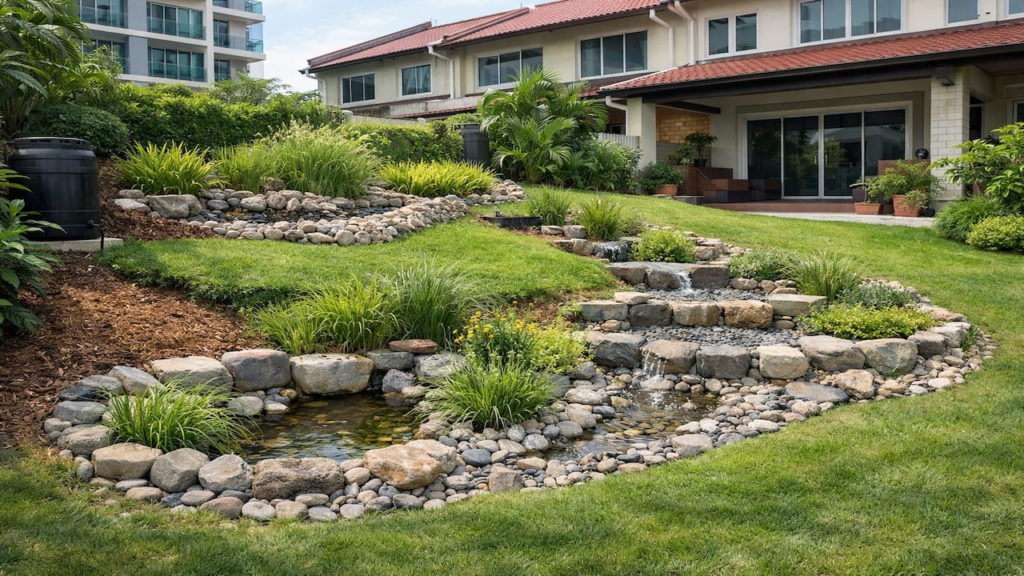
A small garden slope can look harmless until Malaysia rain hits and you get puddles at the door, dark stains at the wall base, and a path that feels slick.
In humid terrace homes and condo patios, tiny runoff patterns become big annoyances because surfaces dry slowly and algae film forms fast after repeated downpours.
In this guide, you’ll learn how to control runoff with simple slope checks. You will map flow, protect walls and doors, and keep the ground drier without heavy digging.

Hi, I’m Ken. I write practical home guides for Malaysia—no fluff, just what works.
I hold a formal building design qualification and have spent about 20 years on job sites across hundreds of projects. My goal is simple: help you avoid costly mistakes with clear, safe steps—a quick way to decide what to do next.
1. Slope garden design: 5 checks
Check runoff like a detective so a small Malaysia slope stops causing daily mess.
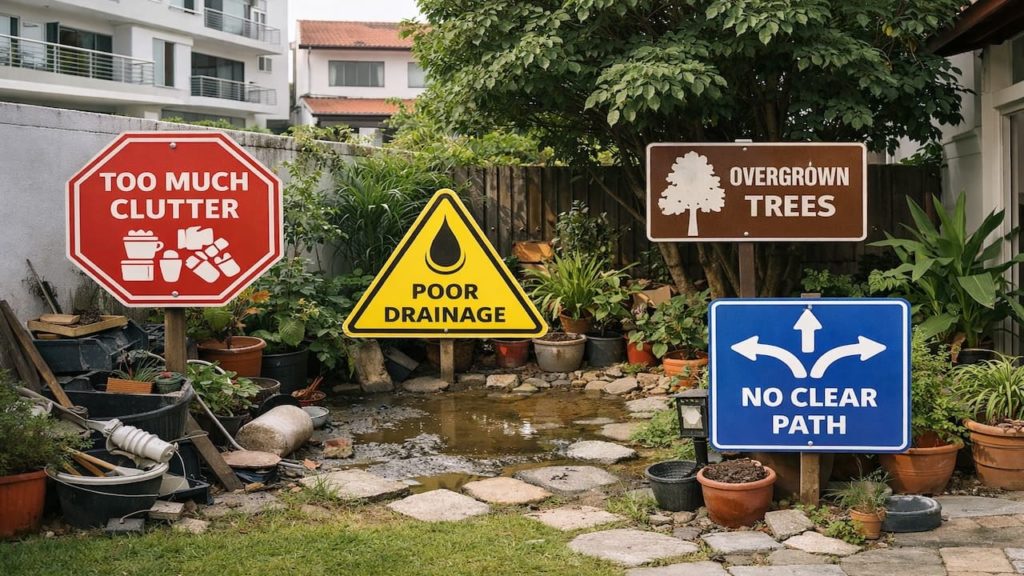
Most slope problems are not “steep hills,” they are tiny low points that funnel water to the worst places—doors, walls, and walkways. Pure physics. In Malaysia wet months, the same flow repeats and builds stains, slime, and frustration over time. A quick set of checks shows what to fix first.
- Pour water and watch flow toward drains
- Mark puddle edges with tape after storms
- Check wall base for splash lines and damp
- Confirm door threshold stays higher than runoff
- Trace downpipe outlet direction and pooling area
You might think you need to re-tile everything, but small layout tweaks often solve most runoff pain. Malaysia rain is brutal, yet predictable. Do these checks, then fix the one path water keeps choosing.
2. Control runoff without heavy digging or cost
Redirect water with surface habits instead of digging trenches around a Malaysia home.
You can control runoff by keeping a clear flow lane, reducing dirt wash, and opening drying space near walls and doors. No drama. In humid housing rows, clutter and soil edges act like mini dams, forcing water to spread across the path. The cost is mostly time/effort, and the payoff is a drier entry after each downpour.
- Clear the main path line of all items
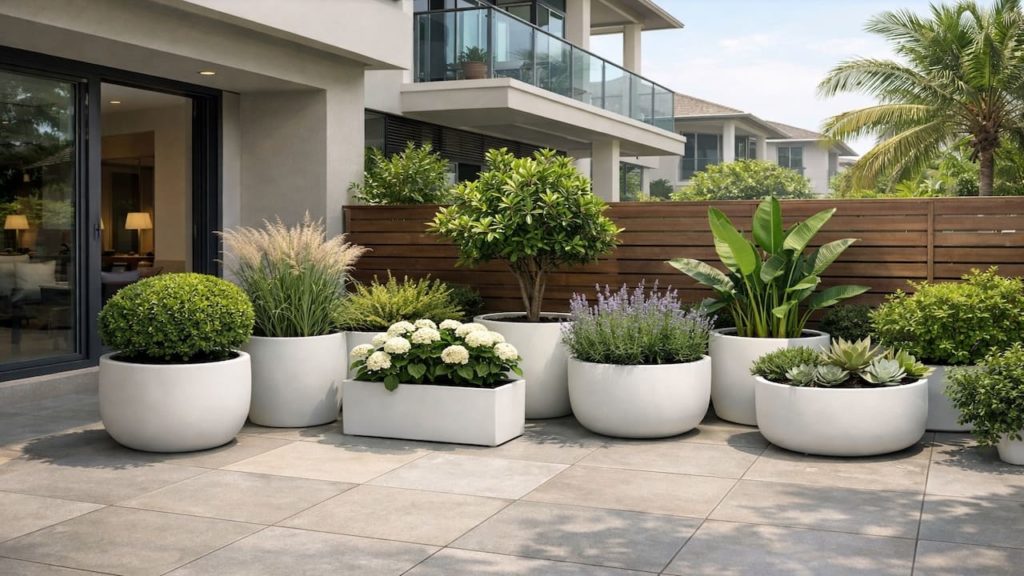
- Pull pots 10 cm off the wall base
- Keep soil lower than the walking surface
- Group plants on one side to free airflow
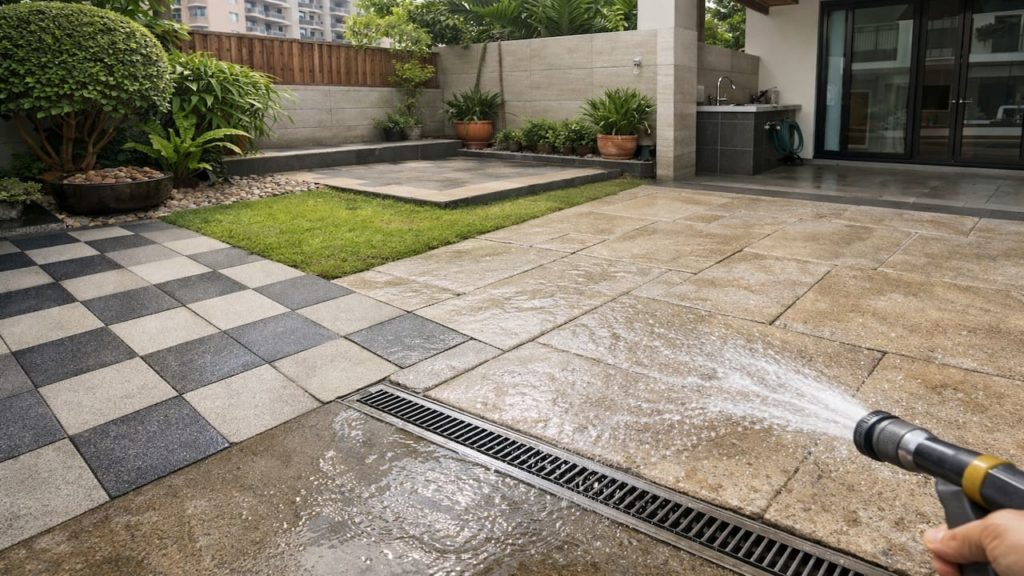
- Rinse the path early before algae thickens
You may worry this makes the garden look empty, but empty floor space is what lets water move and surfaces dry faster. Malaysia humidity punishes packed corners. Control the lane first, then add style back with restraint.
3. Why runoff stains walls and makes paths slick
Runoff becomes a problem when water carries dirt onto the walking line and keeps it wet in Malaysia weather.
On slight slopes, water spreads thin and wide, then settles at the lowest seam near doors and walls. The damp loop. Shade from fences and building lines slows drying, so algae film forms and turns the surface darker and slipperier. Once grime sticks to that film, the yard looks tired even after you rinse.
- Notice low seams where water settles repeatedly
- Spot shaded corners that never fully dry
- Find soil edges that wash grit onto tiles
- Check downpipes dumping water near the door
- See clutter blocking runoff and airflow lanes
You might blame the tile or concrete, but the root cause is slow drying plus dirty runoff. Malaysia rain just exposes it fast. Fix where water gathers, and the slick feeling drops sharply.
4. How to guide runoff away from walls and doors
Guide runoff by creating one clean runoff route that stays open and easy to rinse in Malaysia wet months.
Start by choosing a single flow direction and keeping it free of obstacles, then protect the wall base with a dry buffer strip and clear access to drains. Access first. The cost is mostly time/effort, because you are rearranging and testing, not excavating. Use a simple water pour test after rain to confirm the route works.
- Tape a runoff lane and keep it clear
- Angle movable items to steer water outward
- Flush drains and confirm fast runoff exit
- Shift downpipe splash away from the doorway
- Set one edging line to contain soil wash
You may want a perfect slope everywhere, but you only need one reliable escape route for water—then the rest of the yard can breathe. Malaysia homes win by consistency, not hero projects. Keep the lane clear, and puddles stop camping at your door.
5. FAQs
Q1. How do I check slope direction without tools?
Pour a small bucket and watch the first 10 seconds because that shows the true flow path. Mark the route and test again after the next storm.
Q2. Why do puddles form near walls even on a small slope?
Walls block wind and shade slows drying, so water lingers at the base. Low seams near walls also act like collection lines.
Q3. Can I fix runoff without replacing tiles?
Yes, if you clear the flow lane, open airflow, and stop soil washing onto the path. Many “surface problems” are actually layout and access problems.
Q4. What should I avoid placing near doors in wet months?
Avoid loose soil edges, crowded pots, and anything that blocks runoff toward the drain. Keep a dry buffer strip so the entry dries faster.
Q5. How often should I re-check runoff during rainy season?
Re-check after big storms and once a month, focusing on new puddles and stain lines. Small adjustments beat repeating the same mess.
Pro’s Tough Talk

I’ve been on site 20+ years and I’ve done hundreds of jobs, and I’m telling you this: water doesn’t “appear,” it follows your laziness. In Malaysia humidity, a tiny slope turns into a slippery mess fast.
Three causes: you block the flow lane with junk, you let soil sit higher than the path, and you let downpipes blast water at the wall base. Your yard becomes a tilted frying pan, and the water is the oil running to the lowest spot.
Do three moves now: clear the walking line, pour water and trace the real route, then pull everything off the wall base and open a dry strip. You know when you step out after rain and your slipper skates. You know when you lift a pot and see the green film smiling.
Here’s the cold system: runoff control is access control, and if access is blocked you will never rinse and reset on time. (Seriously?) Don’t blame yourself, and don’t call every contractor a villain, but rushed work skips these boring checks and you inherit the puddle.
Fix the flow lane once like you mean it, or keep paying the wet-season tax with your knees and your patience.
Summary
Slope problems get solved by five checks: trace flow, mark puddles, protect wall bases, keep door thresholds clear, and confirm drains and downpipes behave in Malaysia rain.
If runoff keeps returning, the causes are usually low seams, blocked airflow, soil wash, and clutter that slows drying, so keep one runoff lane open and repeatable.
Today, pour water and mark your runoff lane, then move on to a rainy-season safety guide and a wet-ground door-zone guide for faster drying.