Your small yard looks fine in photos, but it can feel tight the moment you step outside in Malaysia. Space disappears fast.
Heat, sudden rain, and fast plant growth change how space works, so a copied layout can turn messy, damp, and dark. Terrace homes and condos both suffer.
In this guide, you’ll learn how to open a small yard without losing function. You will shape paths, use height smartly, and add light that suits humid homes.

Hi, I’m Ken. I write practical home guides for Malaysia—no fluff, just what works.
I hold a formal building design qualification and have spent about 20 years on job sites across hundreds of projects. My goal is simple: help you avoid costly mistakes with clear, safe steps—a quick way to decide what to do next.
1. Small-yard garden design: 5 steps
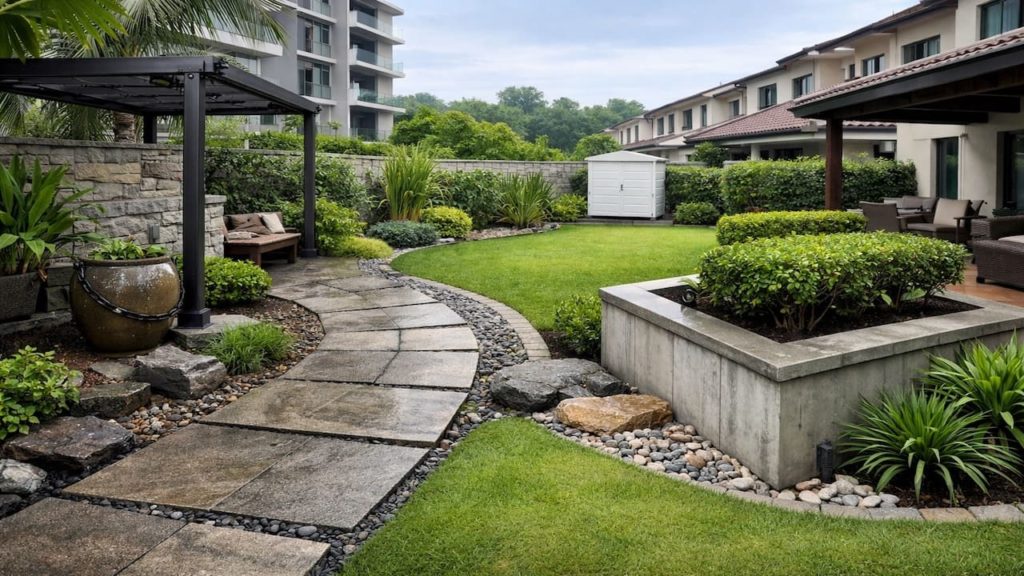
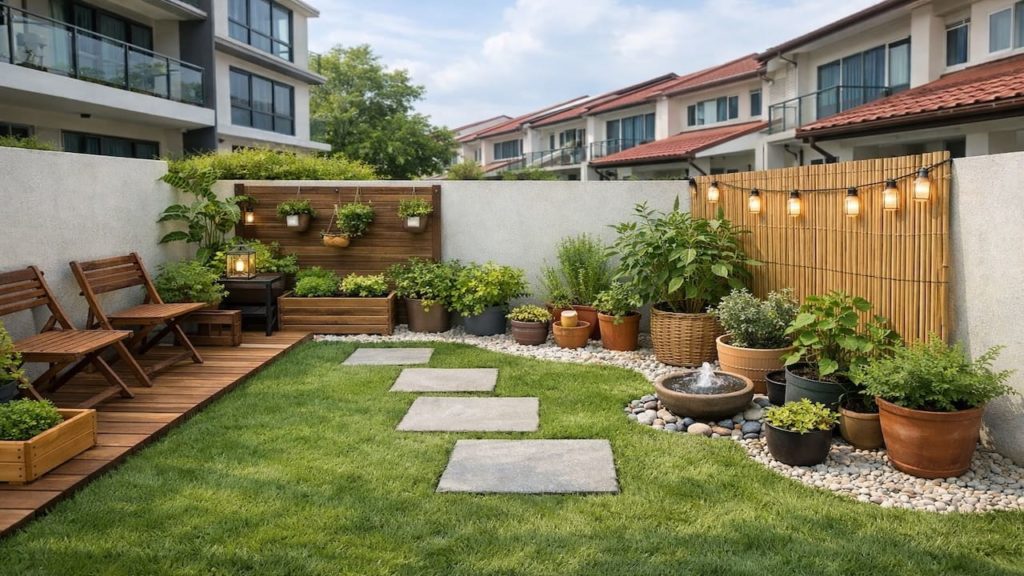
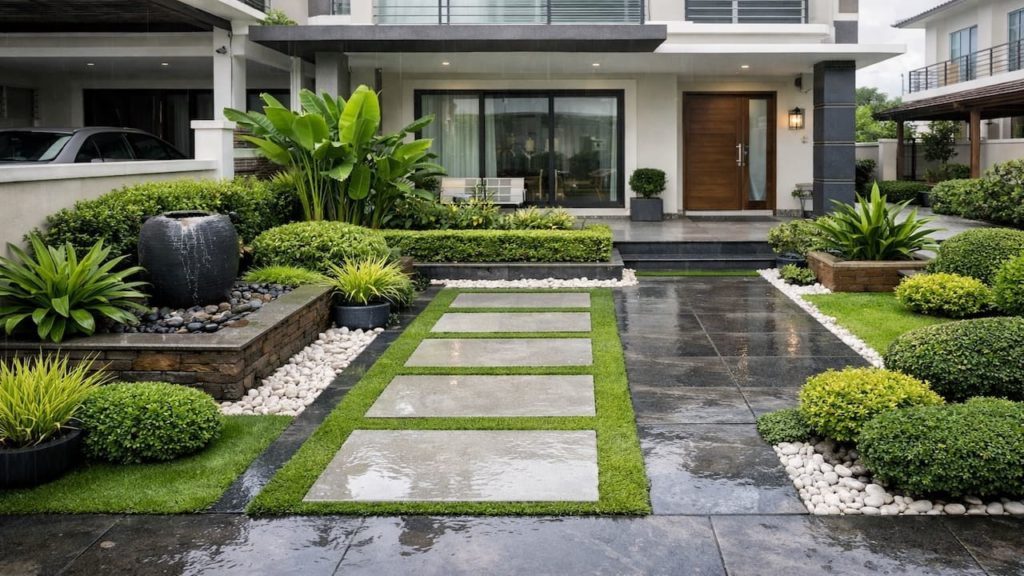
For more space, set the walking path first so the yard reads open beside a Malaysia terrace wall.
A clear route tells your eyes where the boundary is—without it, pots and chairs become obstacles that shrink everything. Flow first. In wet months, the route also keeps you moving when tiles sweat and moss shows up. Test it with tape before you buy materials.
- Mark one main route from door to gate
- Keep furniture off the route at all times
- Align path edges with walls or planters
- Use one surface texture across key zones
- Leave one empty corner as visual breathing room
You might think more plants will hide the tightness, but stuffing edges blocks airflow and keeps humidity trapped. In Malaysia, that means slower drying and more algae. Give the route first, then let greenery frame it.
2. Open space with paths, height, and light
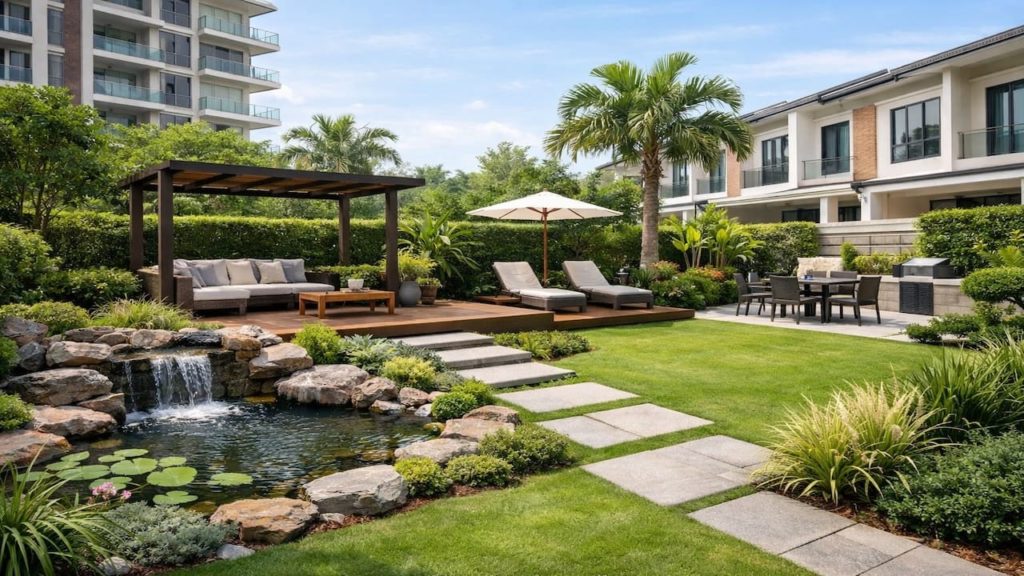
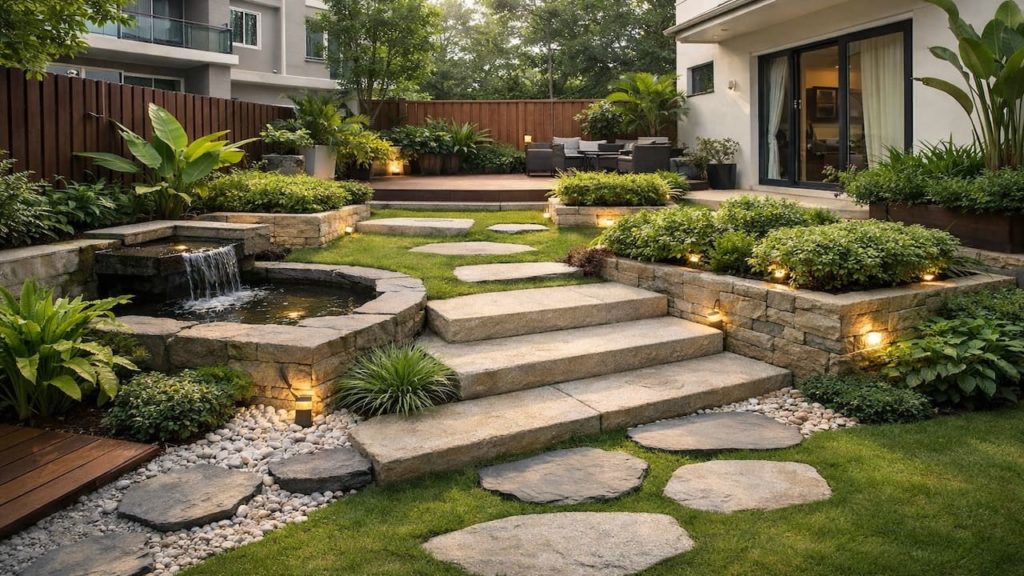
After the route, build upward with slim vertical layers to calm the floor and stretch depth in Malaysia light.
Small gardens fail when everything sits at the same height—your eyes stop at the first clutter line and the yard ends early. Vertical calm. Tall walls and shaded corners make this worse, because darkness compresses distance. Soft light on edges brings the wall back.
- Choose one tall focal plant for the far end
- Hang two planters to lift greenery upward
- Add a slim trellis for shade and privacy
- Place one mirror panel where it stays dry
- Install soft lights to reveal garden depth
Some people worry height will look crowded, but thin lines can feel lighter than bulky pots on the floor. Repeat one material so it looks intentional. Less underfoot, more depth to look at.
3. Why small yards feel cramped in Malaysia homes
Cramped yards are not tiny—they are visually noisy and noise steals depth fast.
Mixed materials, too many pot sizes, and scattered storage break the view into pieces, so your brain reads it as smaller. Visual noise. Malaysia humidity also darkens surfaces and grows algae, which makes corners look closer. Too many tiny items also wreck scale.
- Count how many different pot shapes you use
- Remove one unused item from every corner
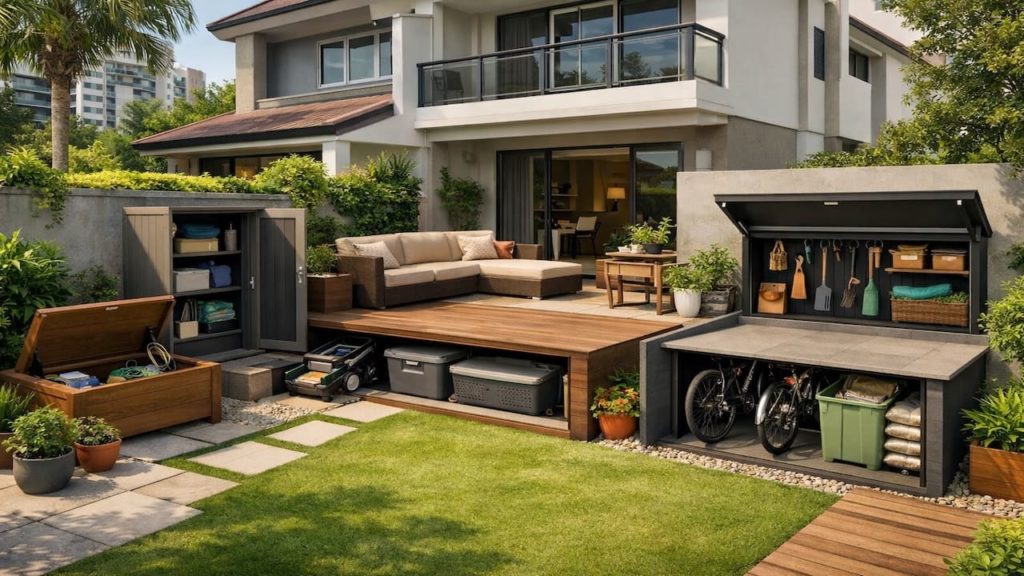
- Group tools into one covered storage box
- Trim plants to show the wall base line
- Clean algae film to brighten the floor
You could say you only need function, but mess kills function first by blocking walking and trapping water. A tidy layout dries faster and attracts fewer pests. Clean structure is control.
4. How to redesign a small yard in 2 hours
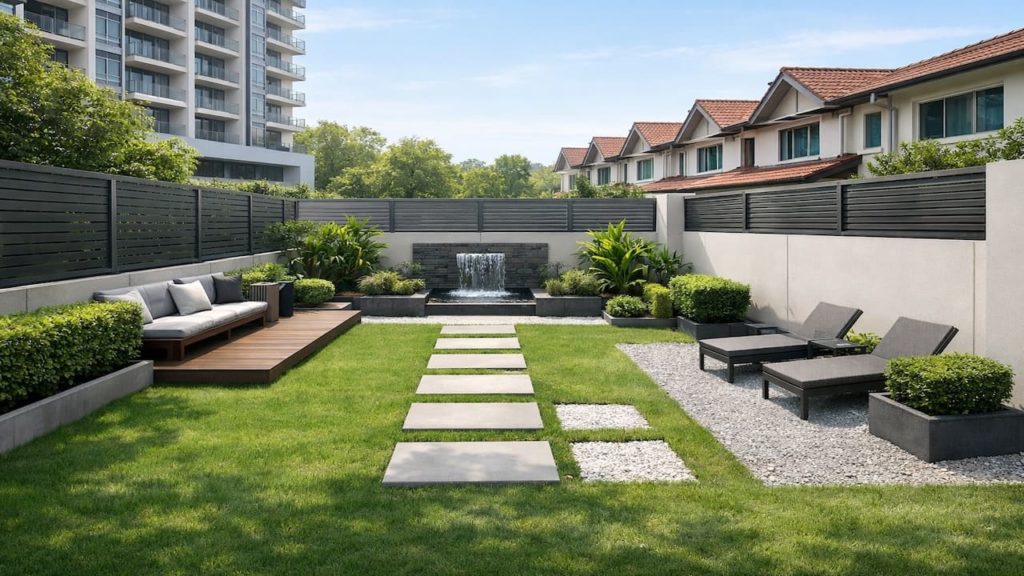
For a fast reset, simplify into three zones so every item has a job and the yard feels open.
Clear the ground, draw the route, then place only what supports that route—everything else waits outside for one day. Zone clarity. In Malaysia rain, this boosts airflow so damp corners dry sooner. It also reduces hidden puddles that feed mosquitoes. Plan RM5–20 for basic marking tape and hooks.
- Empty the yard completely for a clean reset
- Draw a straight path line with masking tape
- Place one focal item at the far edge
- Return only essentials with matching colors and sizes
- Test night lighting and adjust glare away
You may think 2 hours is too short for real change, but most pain comes from bad placement, not lack of plants. Once zones are clear, upgrades stay easy and cheap. Quick reset now, nicer details later.
5. FAQs
Q1. What is the best path width for a small yard?
Aim for a width that lets one person pass comfortably, and keep it consistent. Consistency makes the yard feel longer even when the space is narrow.
Q2. Should I use gravel or tiles in Malaysia rain?
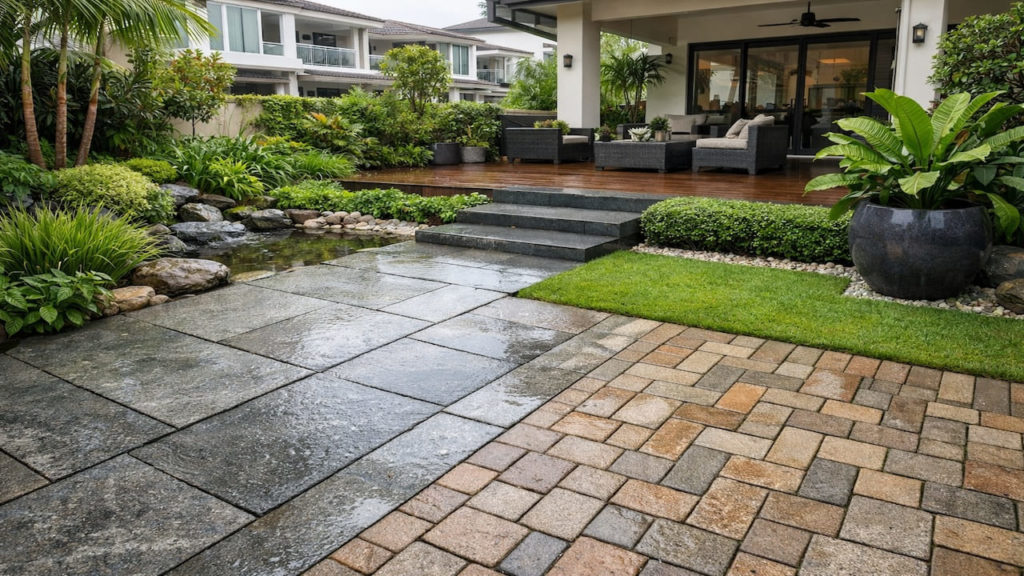
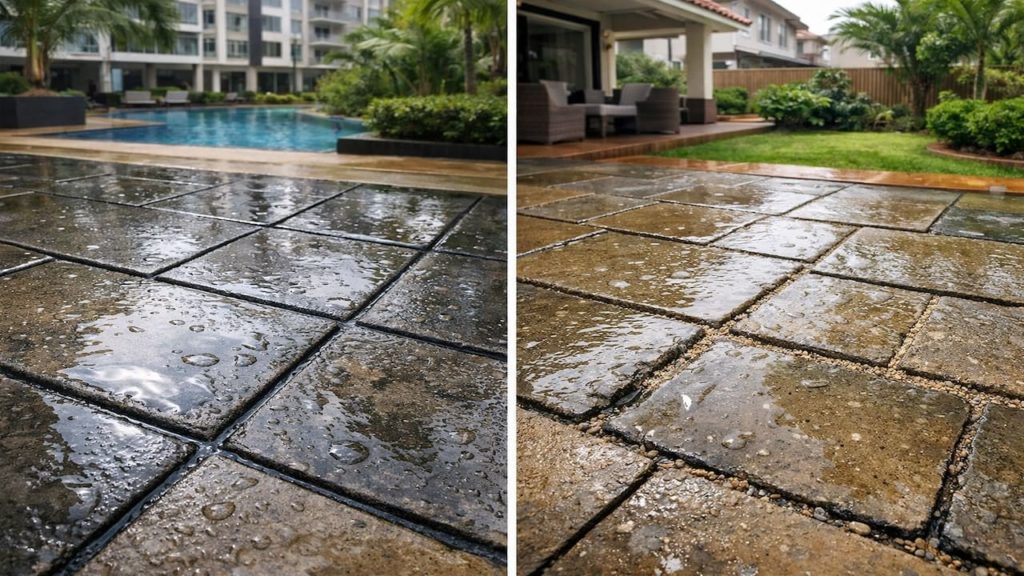
Tiles are easy to rinse but can get slippery when algae grows, so texture matters. Gravel drains well, but it needs edging to stop scatter.
Q3. How do I add privacy without shrinking the yard?
Use a slim screen or trellis with light gaps instead of a solid wall. Vertical privacy keeps airflow moving, which helps in humid homes.
Q4. What lighting works best for small outdoor spaces?
Choose warm, low-glare lights placed near edges, not in the center. Edge lighting shows boundaries and makes depth visible at night.
Q5. How do I keep it low upkeep in wet season?
Limit the number of surfaces you must scrub, and keep drains clear. Fewer objects on the floor means less moss and faster drying.
Pro’s Tough Talk

Listen, I’ve been on site for 20+ years and I’ve done hundreds of jobs, and small yards always punish lazy layout first. In Malaysia humidity, one messy corner turns into a damp box fast. Shoebox living.
Three causes, simple: you block the walking line with storage, you mix too many materials, and you keep everything short. Then you wonder why it feels cramped. A small yard is like a small boat, balance matters or you wobble. Contractors are not devils, but rushed timelines make sloppy results.
Fix it in three moves: clear the floor, mark the path, then rebuild zones with only essentials. When you do that, airflow returns and wet corners stop smelling like a forgotten mop. Relatable moment: you step out barefoot after rain and almost slip.
After that, add height and light, but keep it thin—the path is the spine of the whole yard. Everything else hangs off it. Relatable moment: you switch on the porch light and the corner looks like a cave. Bruh, who built a cave for mosquitoes?
Don’t blame yourself. Don’t burn the contractor. Just stop lying to your eyes about “it’s fine.” If you won’t keep one clear route, the yard will keep eating your weekends. Now go make space, or enjoy your premium outdoor storage room.
Summary
Small yards feel bigger when the walking path is clear, surfaces are unified, and clutter stays off the floor. Simple layout.
In Malaysia, humidity and sudden rain make this urgent because dark corners, algae, and blocked airflow shrink space fast.
If you do one thing today, clear the floor and mark a simple path. Next, open a lighting guide and a wet-season cleaning guide.