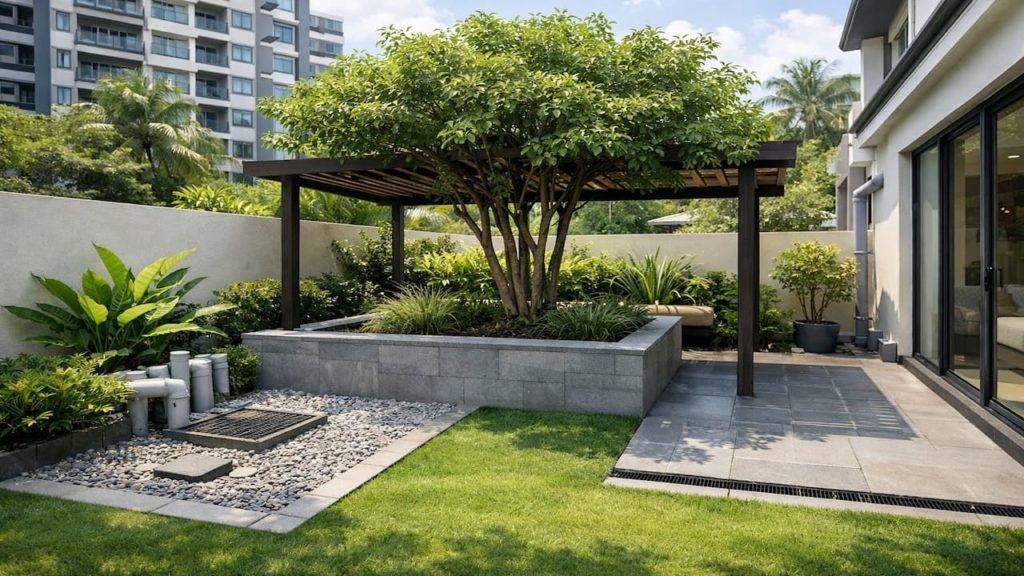
You want shade for a hotter afternoon, but you also fear cracked tiles, lifted slabs, or a surprise plumber bill in a Malaysia home. That worry is valid.
In humid heat with heavy rain, trees grow fast, roots chase moisture, and soil stays soft around pipes and drains. Small terrace yards and condo planters make mistakes show sooner. Wet-season reality.
In this guide, you’ll learn how to get shade without root damage by checking distance, soil, species behavior, and layout rules that fit Malaysia housing.

Hi, I’m Ken. I write practical home guides for Malaysia—no fluff, just what works.
I hold a formal building design qualification and have spent about 20 years on job sites across hundreds of projects. My goal is simple: help you avoid costly mistakes with clear, safe steps—a quick way to decide what to do next.
1. Tree-smart garden design: 5 checks
The smart move is treat shade as engineering not decoration so roots and branches stay compatible with your slab and services.
Malaysia rain can turn a tiny yard into a wet lab where roots test every gap—fast. Growth speed matters more than the “pretty” label at the nursery. Clear checks keep you from paying twice, once for the tree and again for repairs. Calm planning.
- Measure trunk distance from slabs before planting
- Locate water pipes and drains with simple clues
- Choose trees with predictable shallow root behavior
- Plan canopy shade line at midday and evening
- Keep maintenance access for pruning and cleaning
Some people say “roots only go down” and ignore the layout, then act shocked later. In Malaysia soils, many roots travel shallow where oxygen lives. You can still have shade, just place it with intent. Less drama.
2. Shade without root risk near slabs and pipes
You can get comfort quickly if you build shade where roots have safe space instead of forcing a big tree into a tight strip.
Think in zones: hard slab zone, wet service zone, and planting zone—then place the tree where the planting zone is widest. On terrace house sides, the pipe corridor often runs near walls, so “near the wall” is usually the worst idea. Visual comfort. Cleaner walking lines.
- Keep tree center away from slab corners
- Aim shade over seating not over drains
- Use smaller canopy trees for narrow yards
- Shift planting beds away from service lines
- Create a mulch ring to buffer splash
You might feel a small tree cannot cool the space; wrong, because layered shade beats one giant canopy. Combine medium height shade with a pergola or umbrella when needed. That reduces root demand and keeps pipes safer. Practical shade.
3. Why roots crack slabs and chase pipes in humid Malaysia
Root damage happens when water and air pull roots toward your weak points like joints, cracks, and moist pipe trenches.
In Malaysia, soil stays warm and damp, so roots keep growing almost year-round—no true winter pause. Most garden slabs are thin and have joints, so any upward pressure shows as a lip or a crack. Pipes and drains leak tiny moisture, and roots follow that scent like a magnet. Physics. Not luck.
- Roots seek oxygen near the soil surface
- Wet pipe trenches stay cooler and softer
- Slab joints offer gaps for root entry
- Fast growth trees expand roots aggressively in rain
- Poor drainage keeps soil saturated beside foundations
People blame “bad contractors” only, but the structure is simple: tight space plus water sources equals root pressure. Contractors also get pushed when owners demand instant shade in tiny yards. Fix the setup, and everyone wins. Control the forces.
4. How to choose and place trees safely
Pick shade you can live with by matching mature size to your service layout and adding barriers where space is limited.
Start by marking pipes, drains, and slab edges, then choose a smaller or slower tree if clearance is tight—Malaysia terraces often are. If you need upgrades, RM80–600 can cover basic root barrier, soil improvement, and first pruning. One-time planning beats repeated patchwork. Smart compromise.
- Plant at least two meters from slab edges
- Use root barriers along pipes and drains
- Select slow growers for narrow side yards
- Prune early to reduce wind load and stress
- Water deep away from slabs to guide roots
You may think barriers are overkill, but a barrier is cheaper than lifting tiles and chasing leaks. Keep the tree smaller on purpose, and you still get shade where people sit. Do the first placement right, then relax. Future you will thank you.
5. FAQs
Q1. How far should a tree be from a slab?
For small home gardens, start with at least two meters from slab edges and corners, then adjust for mature size. Tight yards need smaller trees, not closer planting.
Q2. Are some roots safer than others?
Yes, slow growers with finer root systems tend to be more predictable in small Malaysia gardens. Avoid aggressive fast growers when your pipes run near walls.
Q3. Can I plant a tree in a large pot instead?
A large container limits root spread and can be safer near services, but it needs stable watering in hot months. Choose a pot that will not tip during storms.
Q4. Do root barriers actually work?
They work best when installed straight and deep along the risk line, not randomly. Barriers guide roots away, but you still must choose a sensible tree size.
Q5. What early signs show root risk?
Look for lifted tile edges, new cracks near joints, and drains that slow down without obvious blockage. Catching it early saves cleanup and repairs.
Pro’s Tough Talk

Listen, I’ve been on site for 20+ years and done hundreds of jobs, and trees are the “nice idea” that turns expensive in Malaysia humidity. Slab cracks.
Cause is 3 things: people plant too close, they pick a fast grower for instant shade, and they ignore where pipes and drains actually run. Roots are like hungry cables, and they will find the softest route every time.
Do this now in 3 steps: find your service lines, move the tree plan away from slabs, and commit to early pruning. You know that moment when one tile edge suddenly feels higher. You know that moment when the drain slows right after rain and you blame “trash” first.
Don’t blame yourself, and don’t blame the contractor alone, physics does not negotiate. Your layout decides where roots will fight, so fix the layout and the fight ends.
Planting a big shade tree in a skinny strip is like parking a truck in a corridor, oi, what did you expect to happen.
Summary
Shade is great, but in Malaysia it must be planned around slabs, joints, drains, and pipe corridors to avoid root pressure. Site reality.
Use distance, species choice, and a clear planting zone so roots have somewhere safe to go, and watch early signs before damage spreads.
Mark your services and choose a smaller tree today so you get real comfort without future cracking, leaks, or constant repair work.