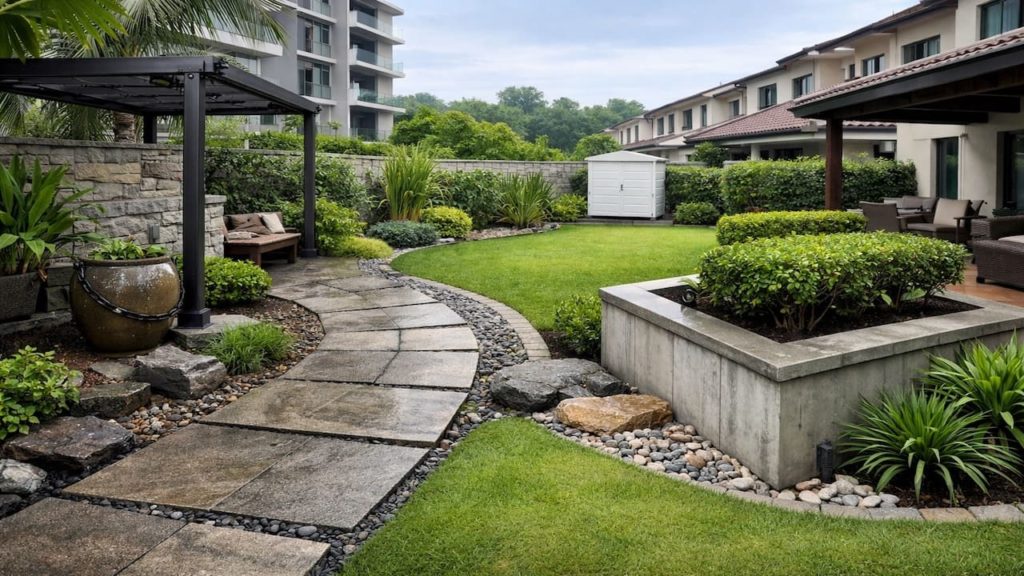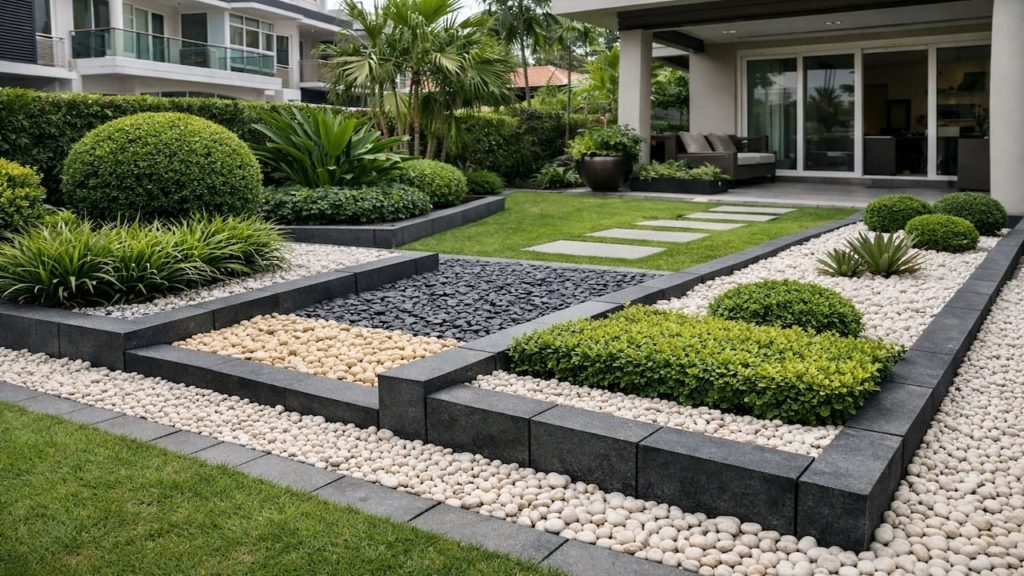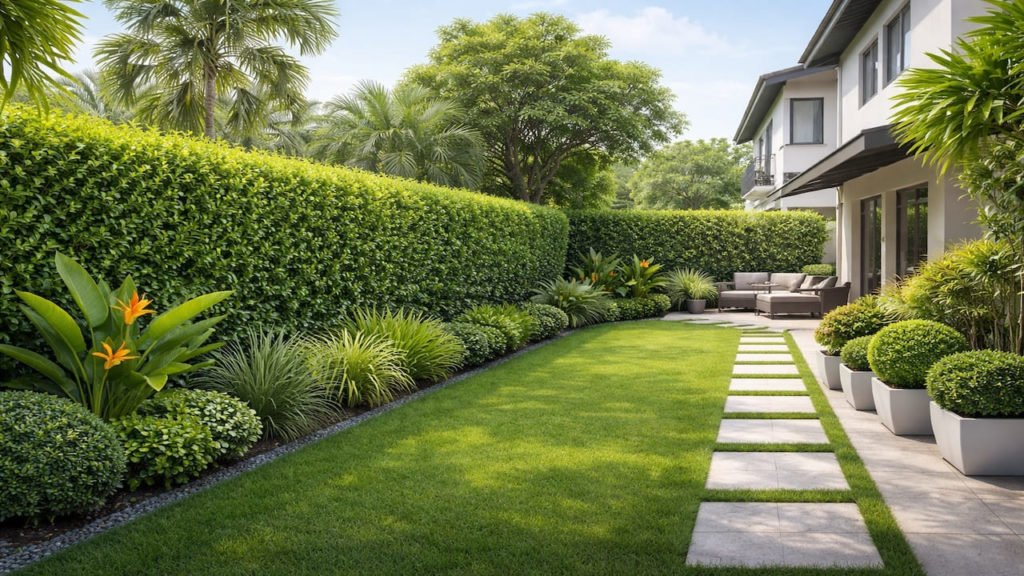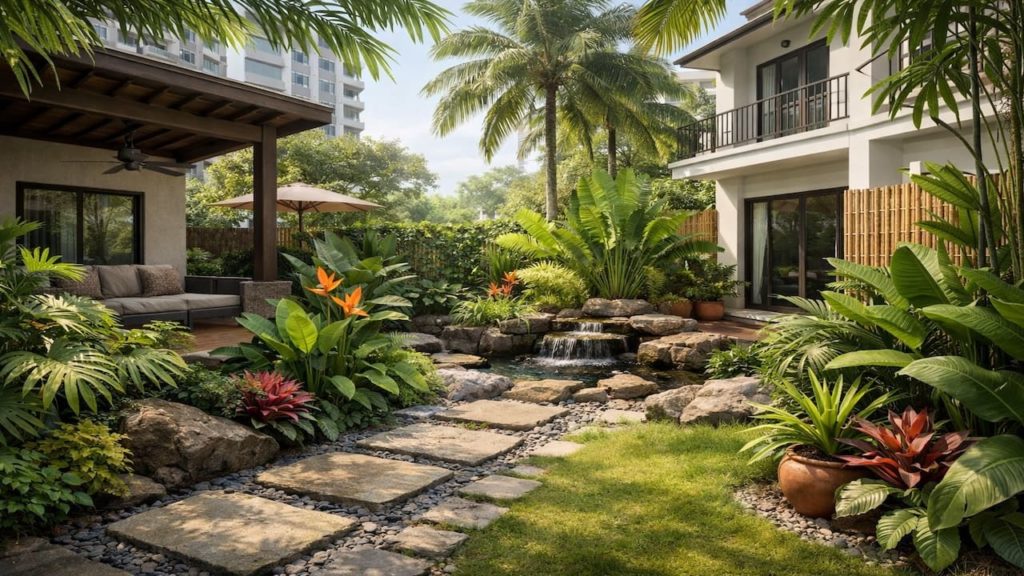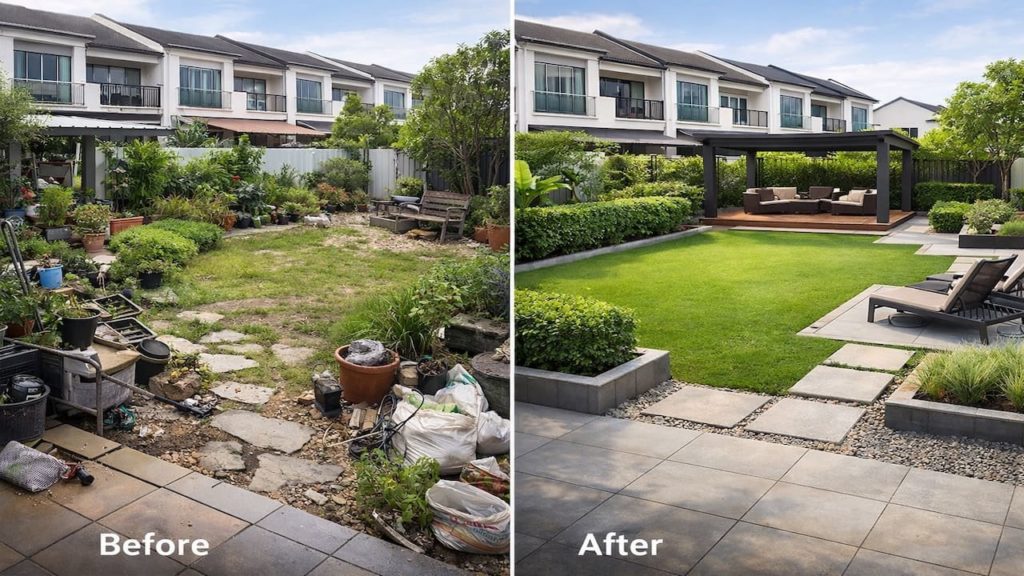
You step outside and the ground is wet again, right where you walk in and out, and it feels like the house is slowly losing the fight.
In Malaysia, sudden downpours, high humidity, and fast algae growth make puddles linger near walls and doors, especially in terrace homes and condos with tight airflow.
In this guide, you’ll learn how to stop wet ground fast and keep it from returning. You will spot the real flow issues, fix the worst puddle zones, and protect entry areas in wet months.

Hi, I’m Ken. I write practical home guides for Malaysia—no fluff, just what works.
I hold a formal building design qualification and have spent about 20 years on job sites across hundreds of projects. My goal is simple: help you avoid costly mistakes with clear, safe steps—a quick way to decide what to do next.
1. Wet-ground garden design: 5 steps
Fix wet ground by controlling the walking line first so puddles stop owning your Malaysia entry zone.
Wet ground is rarely “everywhere,” it is usually one path where water collects and repeats—track that path, then design around it. Water flow. When the main route stays drier, the whole yard feels cleaner, safer, and less stressful after rain.
- Mark puddle spots with tape after rainfall
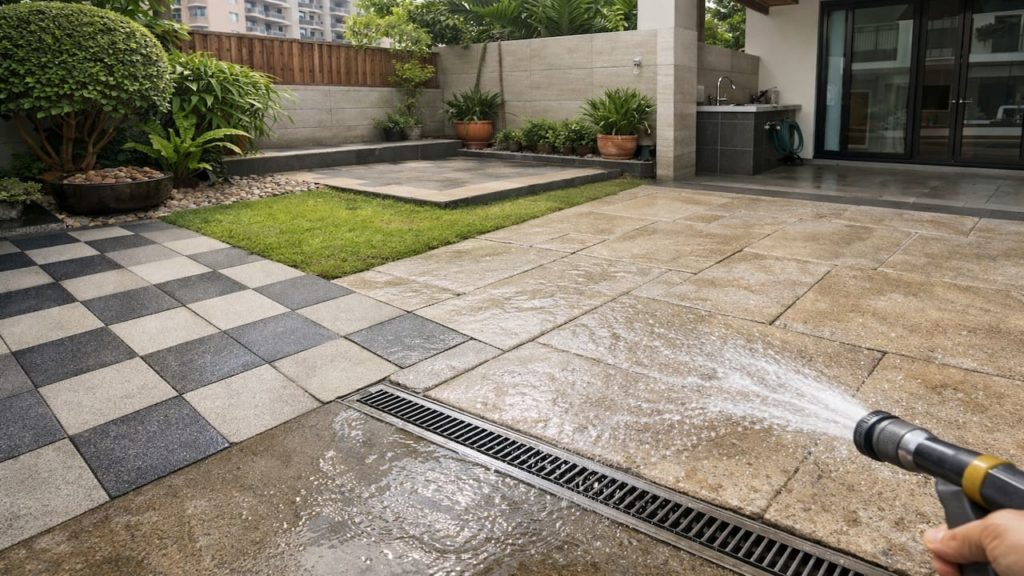
- Trace water direction toward the nearest drain
- Clear the main walking line completely
- Keep soil edges away from door thresholds
- Check downpipe outlets for splash and pooling
You might think you need a new surface, but most fixes start with flow and access, not replacement. In Malaysia wet months, the same low spot repeats until you change the system.
2. Stop puddles near walls and doors quickly
Create a dry buffer strip along walls and doors so water stops sitting at the most sensitive edges.
Walls and door areas stay wet longer because shade and wind blockage slow drying—then grime sticks and the area looks dark. Edge control. Make space for water to move away from the wall base, and make the cleaning loop simple when storms hit.
- Pull pots 10 cm away from wall base
- Raise planters with feet for airflow underneath
- Keep one clear strip beside the door line
- Add edging to stop soil washing onto tiles
- Place doormat zone where splashes actually land
You may want to hide the wet zone with more plants, but dense planting traps moisture and makes puddles last longer. One clean buffer strip—then you can decorate around it.
3. Why wet ground happens around Malaysia homes
Wet ground sticks around because water gets trapped by slope shade and clutter near walls and door routes.
If slope is weak, water moves slowly and collects at the lowest seam, then algae film forms and turns the surface slick. The damp loop. In terrace side passages, walls block breeze, and in condos, covered areas can still stay wet because airflow dies in corners.
- Low spots form where tiles settle unevenly
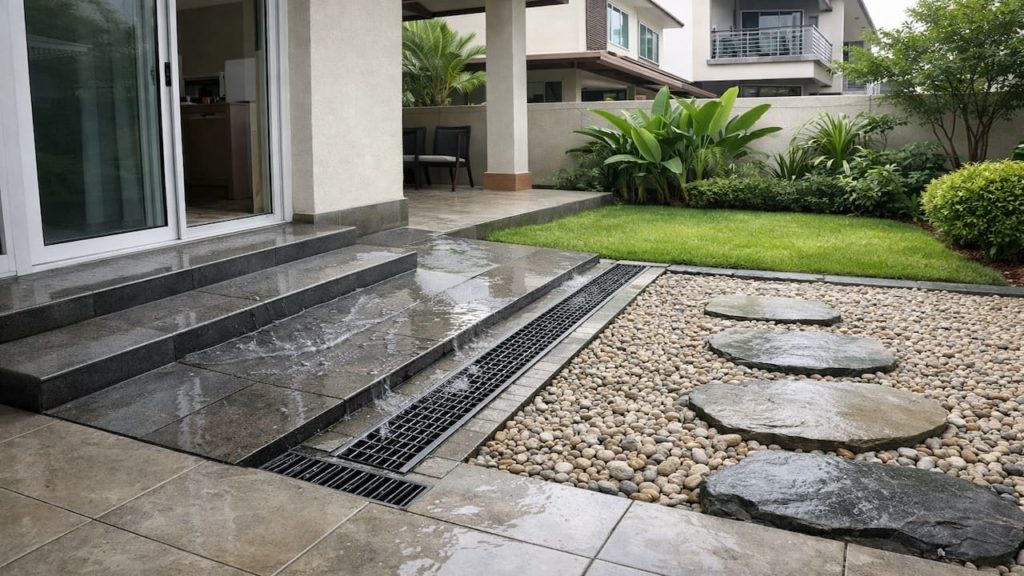
- Downpipes dump water too close to walls
- Clutter blocks runoff and slows drying time
- Soil splash drags dirt onto walking surfaces
- Shaded corners grow algae film much faster
You might blame the rain, but rain is just the trigger, not the reason. Malaysia rain is consistent, so the layout must be consistent too.
4. How to stop puddles for good with simple layout changes
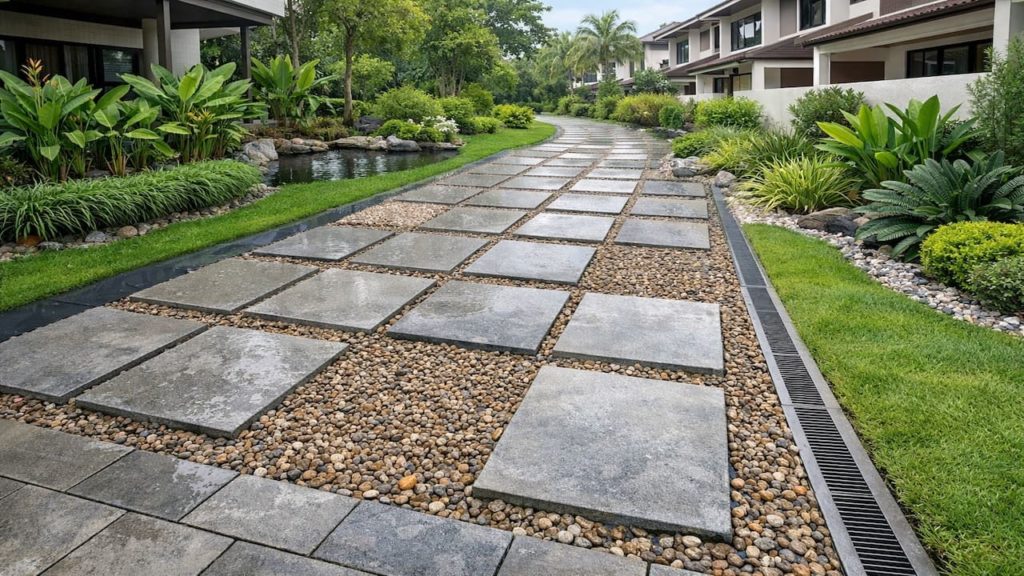
Stop recurring puddles by building one clear runoff route that stays open and easy to rinse.
Do it in order: clear the floor, confirm drain flow, then separate soil from the path so water carries less dirt—small fixes compound fast. System work. Plan RM20–120 for basic drain screens, pot feet, and simple edging if you need quick hardware support.
- Pour water and confirm it reaches the drain
- Flush the drain and remove leaf blockages
- Reposition downpipe splash away from door area
- Set one edging line to protect the path
- Rinse the path early after heavy storms
You may want to fix everything at once, but one reliable runoff route changes daily life immediately. Less puddle time—less slipping and less smell.
5. FAQs
Q1. What is the fastest way to reduce puddles at the door?
Clear the walking line and create a dry buffer strip along the wall base. If water cannot sit at the edge, the door zone dries much faster.
Q2. Why does the same spot stay wet for hours after rain?
That spot is usually a low point or a shaded pocket with weak airflow. Once drying is slow, algae film and grime build and keep it darker and wetter.
Q3. Should I add more plants to hide the wet area?
No, dense plants near walls trap humidity and slow drying. Open airflow beats hiding, then you can add plants back in controlled layers.
Q4. How do I stop soil washing onto tiles?
Separate soil from the path with edging and keep soil slightly lower than the walking surface. A small mulch layer also reduces splash during heavy rain.
Q5. What weekly habit keeps wet ground from returning?
Clear leaves from drains and rinse the path after storms before film thickens. Small resets prevent the slick layer from becoming a scrubbing problem.
Pro’s Tough Talk

Alright, I’ve been on site for 20+ years and I’ve done hundreds of jobs, and wet ground near doors is not “just Malaysia weather.” It’s your layout yelling at you.
Three causes: bad slope so water has no exit, clutter that blocks runoff, and downpipes dumping water like a firehose at the wall base. It’s like trying to dry a towel inside a plastic bag, and it’s like parking your car in a bathtub.
Do three steps now: clear the route, pour water and watch where it really goes, then open a buffer strip along the wall so air can dry it. Relatable moment: you step out in slippers and the floor feels like soap. Relatable moment: you lift a pot and find the green film smiling back.
Here’s the cold system: water always wins when access is blocked, so stop decorating the problem and start building a runoff route. (Seriously?) And no, the contractor isn’t automatically evil, but rushed work skips the boring checks and you inherit the puddle.
Fix the flow once like you mean it, or keep paying the rainy-season tax with your knees and your patience.
Summary
Wet ground near walls and doors is a flow problem, so start by tracing runoff, clearing the path, and keeping a dry buffer strip in Malaysia wet months.
If puddles return, the usual causes are low spots, blocked drains, and clutter that slows drying, so fix access and airflow before you add more items.
Today, clear the walking line and confirm drain flow, then continue with a rainy-season safety guide and a low-upkeep layout guide for steady control.