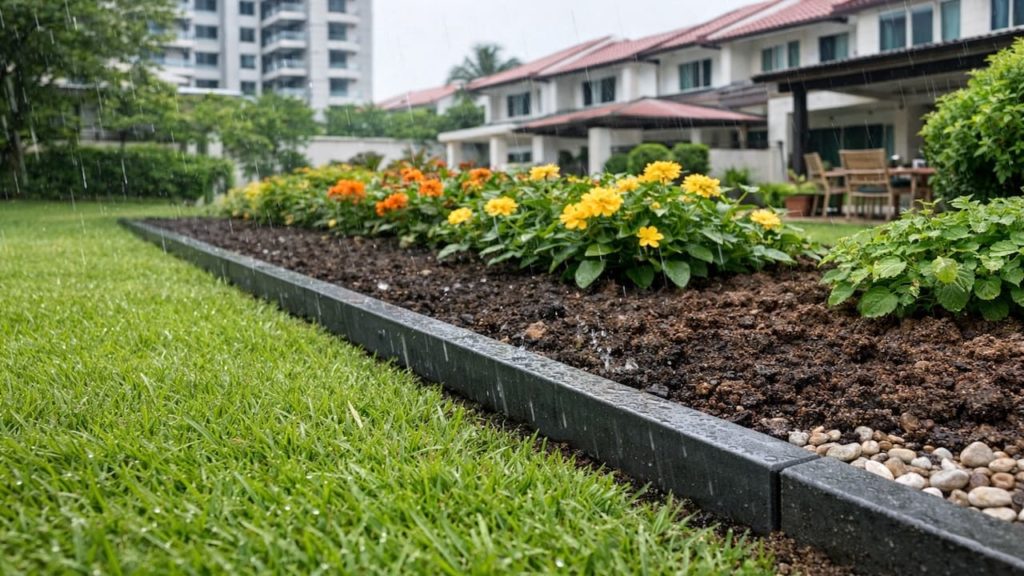
If you searched “garden edging that stays straight” you probably hate borders that shift, blur, or spill soil onto the path after every storm.
In Malaysia, heavy rain, fast plant growth, and humid ground can loosen edging quickly, especially in terrace-house strips and small condo patios. Messy borders can come from soft soil, weak stakes, poor drainage, or edging that is too shallow.
In this guide, you’ll learn how to install straight edging that resists rain and stops soil mixing so your borders stay sharp, cleaner, and easier to maintain in wet season.

Hi, I’m Ken. I write practical home guides for Malaysia—no fluff, just what works.
I hold a formal building design qualification and have spent about 20 years on job sites across hundreds of projects. My goal is simple: help you avoid costly mistakes with clear, safe steps—a quick way to decide what to do next.
1. Garden edging that stays straight: 5 steps
Straight edging stays straight when the base is firm and the line is locked — not when it is simply pushed into mud.
Malaysia rain can soften the top layer of soil fast, so edging that is not anchored will slowly drift and wave. One small bend makes the whole border look cheap. Clean line. Big impact.
- Mark a straight line using string and pegs
- Dig a shallow trench to seat the edging
- Compact the base so the edge cannot sink
- Stake at corners and every long run point
- Backfill and tamp firmly to lock alignment
You might think buying thicker edging solves it. If the base is soft and backfill is loose, even thick edging will drift, so do the steps and lock the line first.
2. Stop soil mixing and messy borders in rain
Stop mixing by separating materials and controlling splash zones.
When Malaysia storms hit, soil splashes into gravel and mulch floats into paths, then everything looks blended and dirty. Separation keeps the “premium” look and reduces cleaning time. Clear borders.
- Keep soil level lower than the edging top
- Add gravel strip as splash guard near walls
- Use weed barrier to separate soil from gravel
- Direct runoff away from borders with gentle slope
- Trim plants so airflow dries borders faster
You may think mixing is unavoidable in wet season. It is common, but you can reduce it a lot by keeping soil contained and giving water a predictable exit route.
3. Why edging goes wavy in Malaysia wet months
Edging goes wavy when water softens soil and pushes material sideways — slow motion failure.
In humid ground, the top layer stays loose, and repeated rain impact plus runoff makes edging creep. If drains clog, water backs up and pushes against the border line. Quiet drift. Annoying.
- Soft soil lets edging sink and tilt over time
- Shallow installs lift and move with runoff flow
- Weak stakes loosen under repeated wet-dry cycles
- Pooled water erodes the trench and shifts alignment
- Heavy mulch and soil press outward after saturation
You might blame the edging material. The real driver is ground behavior, so fix base firmness and drainage and the same edging will hold straight much longer.
4. How to install edging so it stays straight longer
Build a firm seat and anchor the line like a mini retaining edge.
For small Malaysia borders, RM40–200 for stakes, barrier fabric, and base gravel is typical depending on length and what you already have. Spend small once. Save many weekends. The cost is mostly time/effort if you already own a spade and mallet.
- Excavate soft soil and replace with compactable base
- Set edging into trench and check straightness often
- Drive stakes deep into firm ground not loose topsoil
- Use corner braces to stop bending at turns
- Finish with tamped backfill and clean top line
You may think this is overkill for a simple border. In Malaysia wet months, shortcuts show fast, so a firm seat and anchors keep your line crisp and your garden looking cared for.
5. FAQs
Q1. What edging type stays straight best in heavy rain?
Rigid edging with good stakes stays straight best. The install matters more than the material, so focus on trench, compaction, and deep anchoring.
Q2. How deep should I bury edging to stop movement?
Deep enough that the base is seated and the soil presses evenly against it. Shallow edging lifts and shifts when runoff pushes during storms.
Q3. Why does soil keep spilling over my edging?
Usually the soil level is too high or mulch is piled against the edge. Lower the soil line and keep a small buffer so rain does not push it over.
Q4. Do I need weed barrier along the border line?
It helps reduce mixing between gravel and soil and slows weed growth in Malaysia humidity. Overlap seams so soil cannot creep through gaps.
Q5. How do I maintain straight borders in wet season?
After big storms, check for erosion and re-tamp loose sections. A quick fix early prevents the slow wavy drift that gets harder later.
Pro’s Tough Talk

Alright, straight talk. I’ve been on site for 20+ years, done hundreds of jobs, and wavy edging is not “bad luck.” It’s soft ground plus lazy anchoring. Malaysia rain just exposes it like a spotlight.
Three causes. First, people push edging into mushy soil and call it done. Second, they skip stakes or drive them into weak topsoil, so the edge walks away. Third, they ignore drainage, so runoff keeps pushing the line until it looks like a snake.
Do this now. Step 1: re-mark a straight line with string and pegs. Step 2: dig a trench and compact a firm base, then set the edging and check alignment. Step 3: stake deep, tamp backfill hard, and keep soil level below the top edge.
Rule is simple firm base plus deep stakes keeps borders straight. Aruaru #1: you “fix” it by pushing it back with your foot, then next rain it moves again. Aruaru #2: mulch floods onto the path and you sweep forever. What is this, edging or a moving animal?
I’m not blaming you and I’m not saying every contractor is useless, but the structure is cold: if you don’t lock the line, the rain will redraw it for you. Go lock it, or enjoy your new wavy art installation, boss.
Summary
Straight garden edging comes from a firm seated trench, deep staking, and soil levels that do not spill over during storms.
If borders keep getting messy, focus next on drainage and splash control, because Malaysia rain pushes soil outward and blurs the line when water has no clean route.
Do the 5 steps this week and anchor the edge line before wet season shifts it again then read a gravel or boundary stain guide to keep the whole yard sharp.