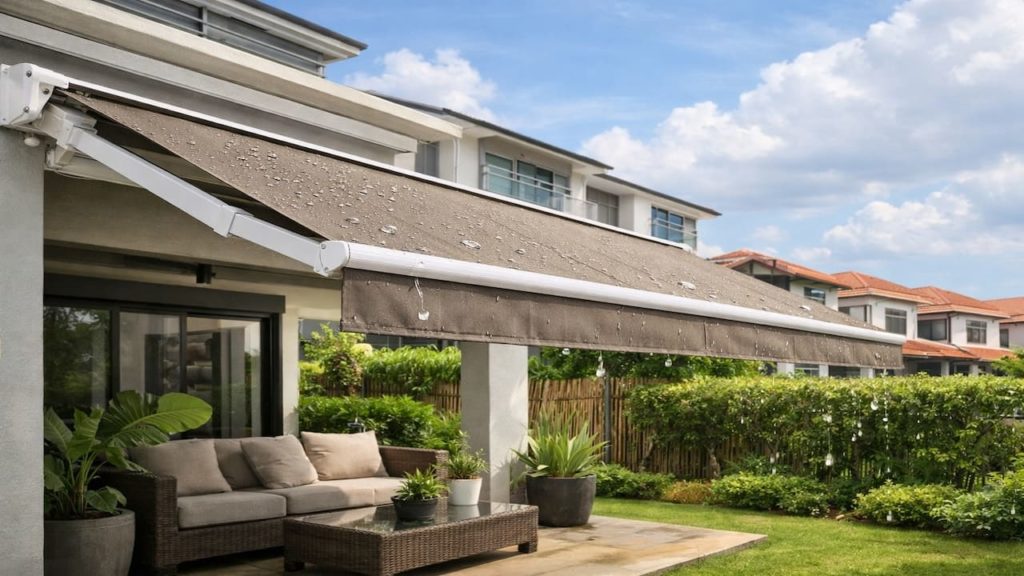
You set up a laundry corner outside, but it keeps getting splashed, the wall stays damp, and clothes take forever to dry. In Malaysia, laundry zones need smart placement because humidity fights you daily.
Sudden rain, damp shade, and still-air corners around terrace homes and condo balconies can trap moisture and create musty smells. If runoff hits the area or airflow is blocked, the corner becomes a wet box instead of a drying spot.
In this guide, you’ll learn how to set a laundry corner with no splash and faster drying while keeping walls and floors cleaner in wet months. You will also learn quick checks, small fixes, and simple habits that reduce damp buildup.

Hi, I’m Ken. I write practical home guides for Malaysia—no fluff, just what works.
I hold a formal building design qualification and have spent about 20 years on job sites across hundreds of projects. My goal is simple: help you avoid costly mistakes with clear, safe steps—a quick way to decide what to do next.
1. Garden laundry corners that work: 5 checks
Laundry corners succeed when water and air are controlled not when you buy stronger detergent.
In Malaysia, quick drying is mostly airflow plus keeping surfaces dry—humidity punishes still corners. Laundry zone. Start by checking where rain splashes, where runoff flows, and where the breeze actually moves. A good corner also prevents damp wall stains that keep coming back.
- Stand there after rain and note splash zones
- Check wall base for damp marks and algae lines
- Test airflow using a ribbon or light cloth
- Look for puddles that remain longer than 20 minutes
- Confirm you can hang and remove clothes easily
Some people choose the tightest corner to hide laundry, but tight corners trap moisture and slow drying. Reality. Airflow first, privacy second.
2. No splash no damp wall and quick drying
Block splash while keeping breeze so the corner dries instead of steams.
Rain splash and hose splash wet the floor, then that moisture evaporates slowly and keeps the wall damp in Malaysia humidity. Splash control. Use partial covers and splash guards that do not seal the area, and keep clothes away from walls so air can circulate. Small spacing changes often cut drying time more than you expect.
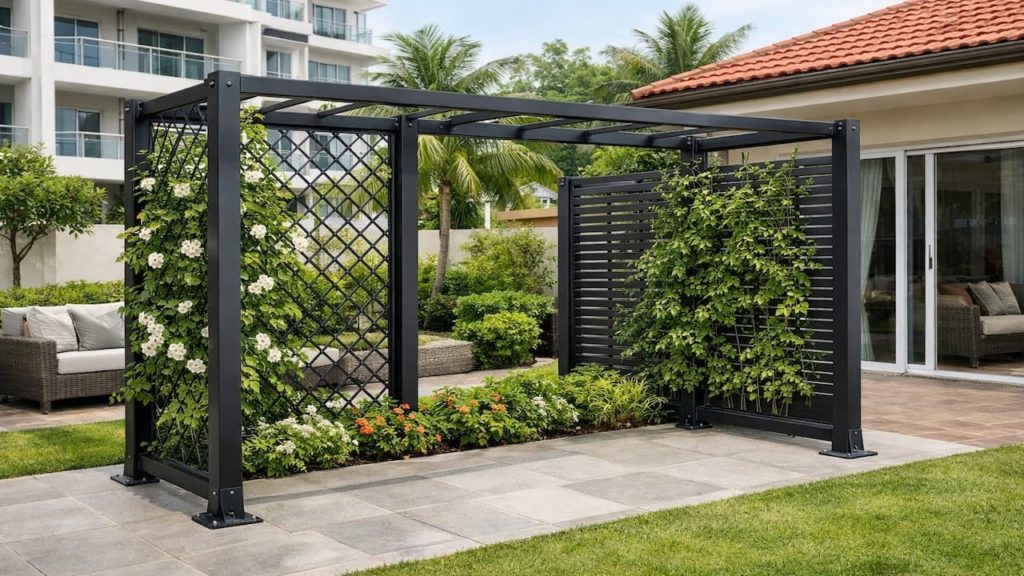
- Add a small roof cover with ventilation gap
- Use a splash guard panel on the rain-facing side
- Keep drying racks 20 cm away from walls
- Angle racks to face the prevailing breeze direction
- Raise items off wet floors using hooks and rails
You might think more shade helps, but too much shade with no wind just keeps everything damp and smelly. Balance. Block splash, keep airflow, and drying speeds up.
3. Why laundry corners stay damp in Malaysia homes
Humidity plus trapped air slows evaporation and feeds mold.
Even when it is not raining, Malaysia air can be moist enough that water leaves fabric slowly, especially in shaded corners and enclosed balconies. Damp walls happen when water splashes and then cannot dry, so algae and stains develop at the base. Still air also lets musty odors linger in fabrics and in the corner itself. This is why the same spot feels “always wet.”
- Notice musty smell after overnight drying attempts
- Spot damp wall base that stays darker all day
- Check for blocked airflow from dense plants or screens
- Find floor slope sending water toward the wall base
- See condensation on metal racks in early mornings
It is easy to blame weather, but the real cause is moisture input plus no exit airflow and poor drainage direction. Mechanism. Reduce splash and improve airflow and the corner changes fast.
4. How to upgrade a laundry corner without renovation
Create a dry base and a breeze path so the setup stays easy daily.
Start by ensuring water drains away from the wall, because a wet base keeps the corner damp even when clothes are removed. Then improve airflow with spacing, open gaps, and a simple fan if needed on still days. For basic supplies like hooks, a squeegee, a small cover, and anti-slip mats, RM10–180 is common depending on what you already have. Keep everything easy to wipe and quick to dry.
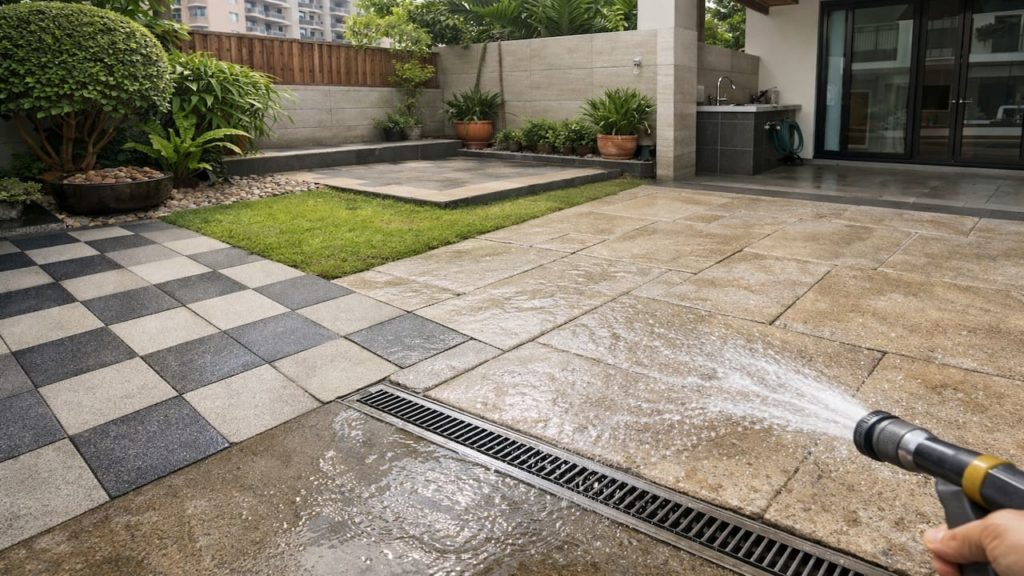
- Squeegee floor dry after rain or rinsing use
- Add anti-slip mat that dries fast and lifts water
- Install wall hooks to keep items off surfaces
- Use a small fan to boost airflow on humid days
- Store detergents in sealed boxes to avoid damp lumps
Some people add more racks, but more racks in a damp corner just means more wet fabric and slower drying. Practical. Improve the base and airflow first, then expand only if it still works.
5. FAQs
Q1. Why do clothes dry slowly even when it is sunny?
Humidity can stay high even in sun, and corners often have weak airflow. If air does not move, evaporation slows and fabric stays damp longer.
Q2. How far should I keep laundry from the wall?
Keep at least 15–30 cm clearance so air can circulate and walls do not get damp from trapped moisture. This also reduces wall stains and algae growth.
Q3. Should I use a roof cover over a laundry corner?
A small cover helps reduce rain splash, but keep ventilation gaps so heat and moisture can escape. Fully sealed covers often worsen dampness.
Q4. What is the fastest daily habit to reduce dampness?
Dry the floor after rain or rinsing by squeegeeing water away from the wall base. A dry base makes the whole corner dry faster.
Q5. What if my corner gets damp wall stains already?
Clean the stain, then fix the cause by redirecting runoff and improving airflow. If stains return quickly, check floor slope and splash zones again.
Pro’s Tough Talk

Alright, I’ve been on site 20+ years, done hundreds of jobs, and laundry corners fail because people hide them like a secret. Malaysia humidity loves secrets, because trapped air makes damp stay forever.
Three causes. One, splash hits the wall base and nobody notices until algae draws a green underline. Two, the corner is boxed in, so airflow dies and clothes dry like it’s underwater. Three, floor slope sends water toward the wall, then you’re basically running a mini swamp.
Do this in 3 steps. First, find splash and runoff direction after rain, then block splash with a partial guard. Second, pull racks away from walls and create a breeze path, even with a small fan. Third, keep the base dry by squeegeeing and storing items off the floor.
Don’t blame yourself, and don’t blame every contractor either, but the structure is cold. People install racks and forget drainage and airflow, because it is “not pretty work.” Dry base plus airflow decides drying speed and that is the whole truth.
Aruaru: you hang laundry at night and it still feels damp the next morning. Aruararu: the wall base turns green and you pretend it’s “just dirt.” Oi, want quick drying or a mold nursery? Fix the corner, or keep sniff-testing shirts like a detective.
Summary
Laundry corners work when splash is blocked, walls stay dry, and airflow moves across the drying area. In Malaysia humidity, still corners slow drying and invite musty smells.
If the wall stays damp or stains spread, fix runoff direction and floor drying habits first, then improve spacing and ventilation. Do not seal the corner, because trapped air makes it worse.
Move one rack off the wall and dry the floor today then read a drainage-around-the-house guide or a mold prevention guide to keep the whole area cleaner. Small airflow wins change daily laundry life.