You want garden lighting that feels warm and inviting, not bright like a parking lot or so dim that steps feel risky. In Malaysia, wet evenings and humidity make glare and shadows more annoying than you expect.
Rainy-season surfaces reflect light, plants shift in the breeze, and narrow terrace walkways can create harsh shadow bands. If lights are too high, too strong, or aimed wrong, you get glare in your eyes and dark patches on the ground.
In this guide, you’ll learn how to create warm garden lighting that guides steps safely without glare or harsh shadows. You will also learn simple placement checks, quick upgrades, and habits that keep lighting tidy through wet months.

Hi, I’m Ken. I write practical home guides for Malaysia—no fluff, just what works.
I hold a formal building design qualification and have spent about 20 years on job sites across hundreds of projects. My goal is simple: help you avoid costly mistakes with clear, safe steps—a quick way to decide what to do next.
1. Garden lighting that feels warm: 5 tips
Warm lighting is a placement problem more than a brightness problem.
In Malaysia, you want soft visibility because wet tiles and damp paths can be slippery—comfort and safety. Lighting plan. Start by mapping where feet go, where eyes look, and where reflections bounce after rain. The best setup uses multiple small light points instead of one harsh source.
- Walk the path at night and mark dark spots
- Check eye-level glare when facing doors and gates
- Notice reflective wet tiles causing bright hotspots
- Locate steps and edges that need gentle guidance
- Confirm wiring and fixtures stay above splash zones
Some people add one brighter light to fix darkness, but that usually creates glare and deeper shadows. Reality. Use more small lights, not one big beam.
2. Guide steps without glare or harsh shadows
Light the ground from the side so edges show without blinding you.
Step guidance works when light reveals texture and height changes, not when it shines into your eyes. In Malaysia humid nights, glare feels worse because surfaces are moist and reflective. Aim lights low, shield the source, and use soft spread to avoid sharp shadow lines. The path should feel calm, not dramatic.
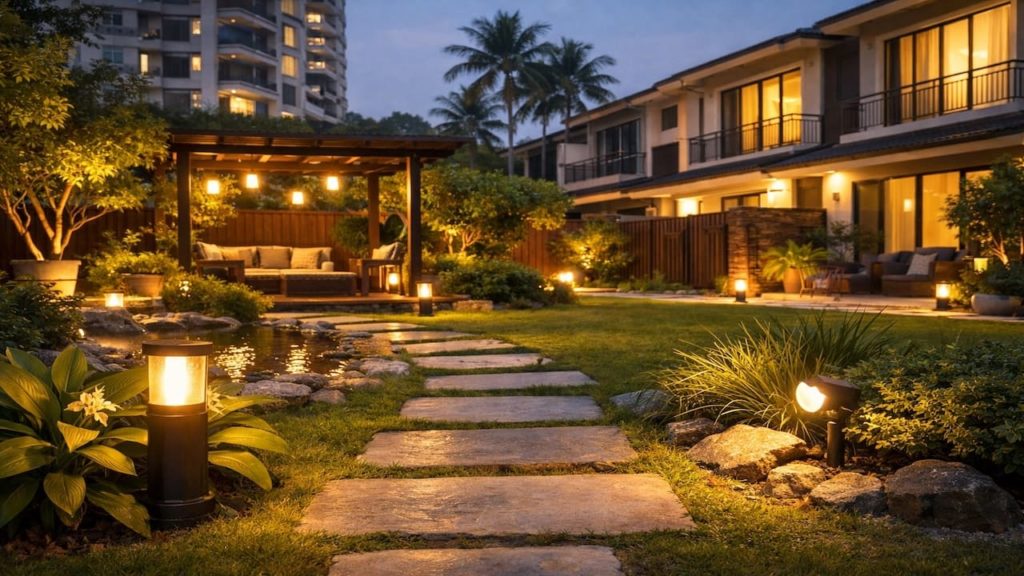
- Place lights low and aim across the path
- Use shielded fixtures to hide the bright source
- Space lights evenly to avoid dark gaps and bands
- Wash walls gently to reduce deep plant shadows
- Choose warm color temperature for relaxed ambience
You might think uplights look premium, but strong uplights often cause harsh shadows and glare on wet nights. Tradeoff. Use subtle uplight only as accent, not as your main path light.
3. Why garden lighting feels harsh in Malaysia evenings
Wet surfaces amplify glare and plants create moving shadow patterns.
After rain, tiles and concrete reflect light like a mirror, so even a small fixture can feel harsh. Malaysia breezes also move leaves, so shadows flicker and distract when lights are pointed at dense plants. If the light source is visible, your eyes adjust to the bright spot and the ground looks darker. That is why “bright” can feel unsafe.
- Check visible bulbs that shine directly into eyes
- Spot flickering leaf shadows across steps and edges
- Notice bright hotspots on wet tile corners and joints
- Find deep black zones behind one strong light source
- See glare bouncing from light walls and windows
It is easy to blame the bulb, but the bigger cause is aim, height, and shielding. Mechanism. Hide the source and spread light gently and the harshness disappears.
4. How to build warm step lighting with simple upgrades
Layer light in small doses and keep fixtures easy to maintain.
Start with step edges, corners, and the first few meters from the door, because that is where you need confidence when it is wet. Then add a soft wash on one wall or fence to reduce shadow contrast. For basic supplies like low-voltage lights, clips, and a few fixtures, RM20–250 is common depending on how many points you add. Keep fixtures easy to wipe, because humidity can leave film on lenses.
- Add two low lights at each step zone
- Install a wall wash light to soften shadow contrast
- Use motion sensor for entry area without over-brightness
- Keep cables tidy and protected from rain splash
- Clean lenses monthly to maintain soft output
Some people chase fancy smart lights, but bad placement still creates glare and dark patches. Priority. Place and shield first, then add controls if you want.
5. FAQs
Q1. What color temperature feels warm for garden lighting?
Warm tones generally feel most relaxing for seating and walkways. Choose warm-white lighting that makes surfaces visible without looking blue or clinical.
Q2. How do I avoid glare when I walk toward the house?
Hide the light source with shielding and aim light across the path rather than straight at eye level. Keep fixtures lower and use more points with lower intensity.
Q3. Are solar lights good enough in Malaysia?
They can work if they get enough sun during the day and the panels stay clean. In rainy months, output may drop, so use them as accent or backup rather than the only step guidance.
Q4. Why do my steps look darker even after adding lights?
One bright source can make your eyes adjust and deepen surrounding shadows. Spread light with multiple small fixtures and soften contrast with a wall wash.
Q5. How often should I maintain outdoor lights in humid weather?
Wipe lenses and check fittings monthly during wet months. Humidity film and insects can reduce brightness and create uneven light patterns.
Pro’s Tough Talk

Alright, I’ve been on site 20+ years, done hundreds of jobs, and harsh garden lighting is almost always user error. Malaysia wet nights turn tiles into mirrors, and one bright light becomes a glare cannon.
Three causes. One, people put lights too high and point them straight out, so you get blinded. Two, they use one strong fixture, so shadows go jet black behind it. Three, they aim at plants, so moving leaves throw flicker shadows and your steps look like a zebra crossing.
Do this in 3 steps. First, hide the light source and aim low across the path, not into faces. Second, add more small lights instead of one big one, spacing them evenly. Third, soften contrast with a gentle wall wash and clean lenses regularly.
Don’t blame yourself, and don’t blame every contractor either, but the structure is cold. People buy “bright” and forget “comfortable,” because brightness sells in the shop. Shielded low light guides feet best and that is the truth.
Aruaru: you install lights, then you still use your phone torch to walk. Aruararu: the path looks bright, but the step edge disappears and you do the slow careful shuffle. Oi, want warm ambience or a glare festival? Aim it right, or keep squinting like a detective.
Summary
Warm garden lighting works when you layer small lights, hide glare, and aim across the ground so steps and edges are clear. In Malaysia wet evenings, reflections and moving plant shadows can make harsh lighting feel unsafe.
If your lighting feels sharp, lower the aim, add shielding, and spread light points evenly before increasing brightness. Keep fixtures clean so humidity film does not turn warm light into dull glare.
Test one path at night and adjust one light angle today then move to a slippery tile guide or a bench corner comfort guide to make the outdoor area safer and more inviting. Small placement wins transform the mood.